

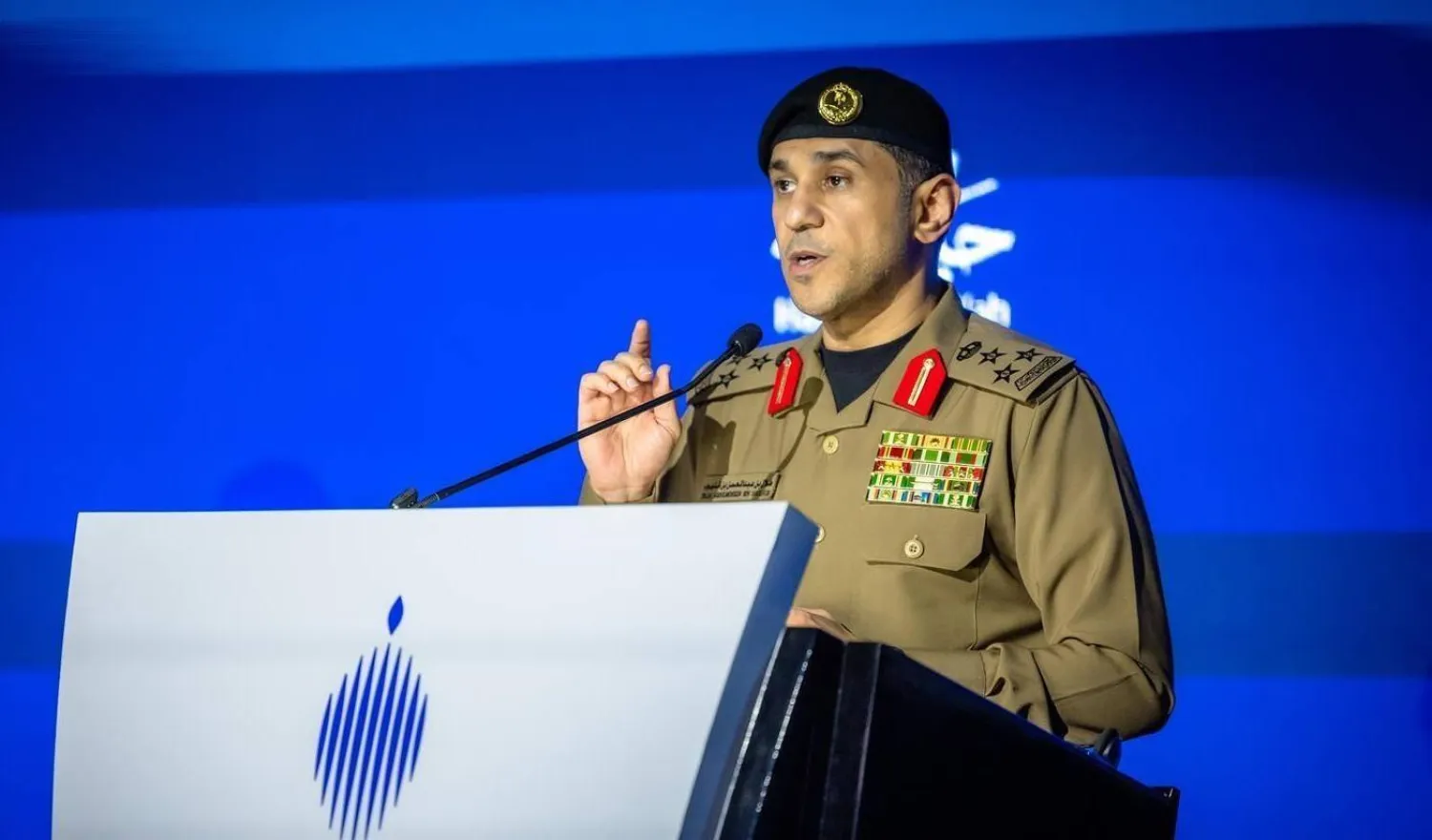

Crowd Management: A Saudi Industry Built on Advanced Planning, Coordination

Brig. Gen. Talal bin Abdulmohsen bin Shalhoub (SPA)
TT

Crowd Management: A Saudi Industry Built on Advanced Planning, Coordination

Brig. Gen. Talal bin Abdulmohsen bin Shalhoub (SPA)

Saudi Arabia’s Interior Ministry said strict enforcement of Hajj regulations, pilgrims’ compliance with movement schedules and efficient crowd management, carried out with the Presidency of State Security and other authorities, had enabled worshippers to perform the rituals safely, smoothly and with peace of mind.

Brigadier General Talal bin Abdulmohsen bin Shalhoub, the ministry’s security spokesman, said managing and organizing Hajj reflected Saudi excellence, delivered by national hands under a leadership that has placed service to the Two Holy Mosques and their visitors at the top of its priorities and mobilized all capabilities to that end.

Speaking to Asharq Al-Awsat, Brig. Gen. bin Shalhoub said crowd management had become “a Saudi industry” built on advanced planning, field execution, and constant monitoring, with immediate intervention to handle crowd density in Makkah and the holy sites, ensuring smooth movement and pilgrim safety.

He said advance planning rested on proactive strategies that deploy smart technologies and highly qualified personnel, in full coordination with all government agencies involved in the Hajj operation.

The Hajj system, he said, operates through integration and advanced planning, with support and guidance from the country’s leadership and direct follow-up by Interior Minister Prince Abdulaziz bin Saud bin Naif, chairman of the Supreme Hajj Committee.

The season is managed through precise plans designed to achieve the highest levels of security and safety for pilgrims.

Brig. Gen. bin Shalhoub said the work of the Hajj Security Forces was not confined to Makkah and the entrances to the holy sites, but also covered full supervision of the “No Hajj Without a Permit” campaign.

He said the campaign’s field track was carried out with high efficiency, alongside an intensive media effort involving all government agencies, foremost the Ministry of Hajj and Umrah and the Communications, Space and Technology Commission, through awareness messages in multiple languages and formats.

The goal, he said, was clear: to allow pilgrims to perform their rituals in full security and safety and to ensure that no one violates Hajj security instructions.
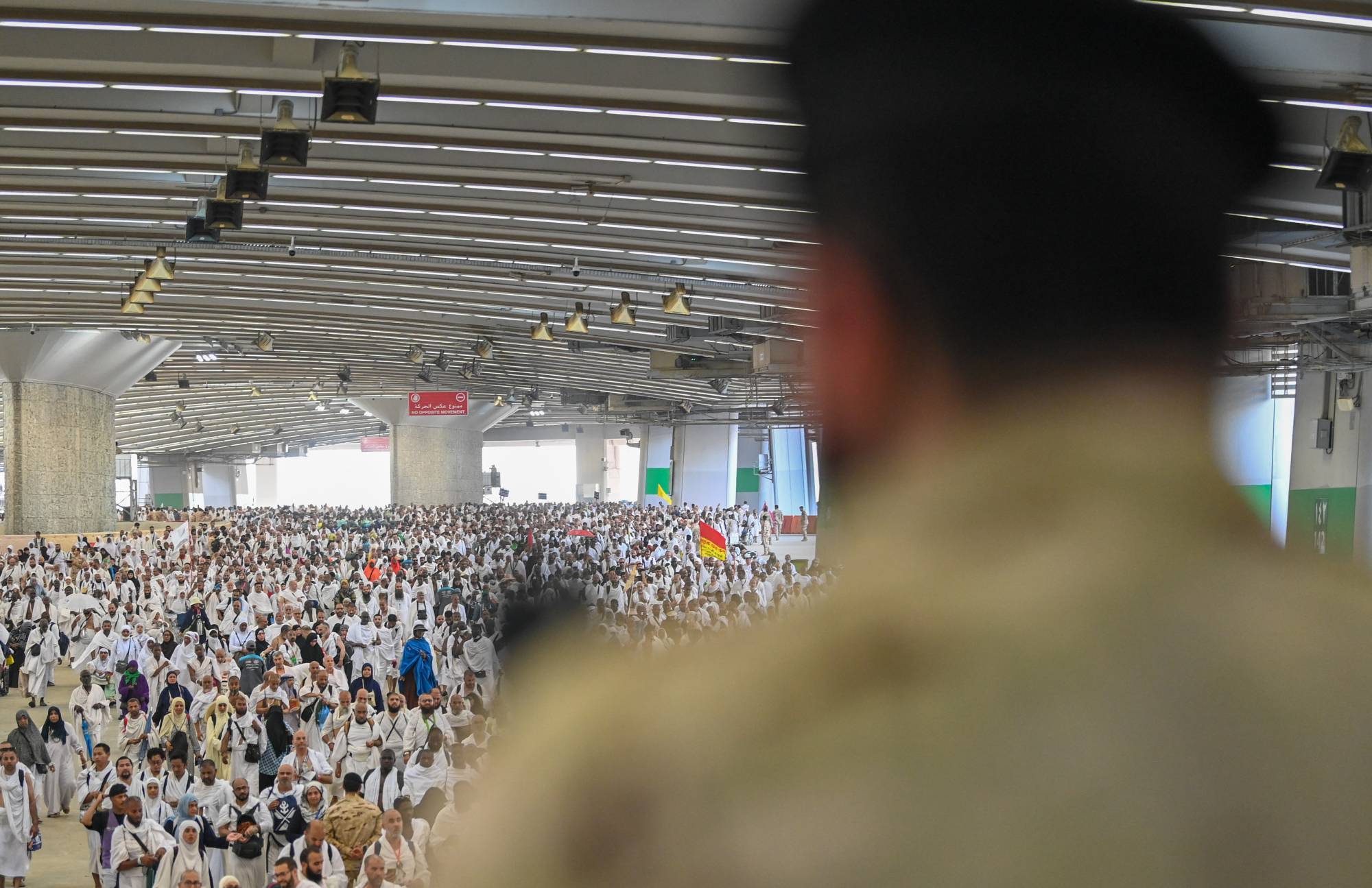
Security efforts to organize and protect pilgrims, alongside humanitarian efforts assisting the Guests of God in performing the stoning ritual at the Jamarat (Photo: Ali Khumaj)

Speaking at a press briefing at the Hajj Media Forum in Makkah on Wednesday, the Interior Ministry’s security spokesman said the Hajj Security Forces, in coordination with all participating authorities, were continuing to organize the rituals during the days of Tashreeq and to enforce Hajj regulations and instructions until the end of the season.

He said field security and traffic plans had enabled pilgrims to move to Arafat early, depart for Muzdalifah smoothly and easily, and return to Mina safely and securely, with movement flowing without disruption.

He thanked security personnel across all sectors, including the military, as well as all those serving the Two Holy Mosques and their visitors.

He said the Hajj Security Forces, working in coordination with all authorities involved in the season, would continue organizing the rituals during the days of Tashreeq and enforcing Hajj regulations and instructions until the end of Hajj.

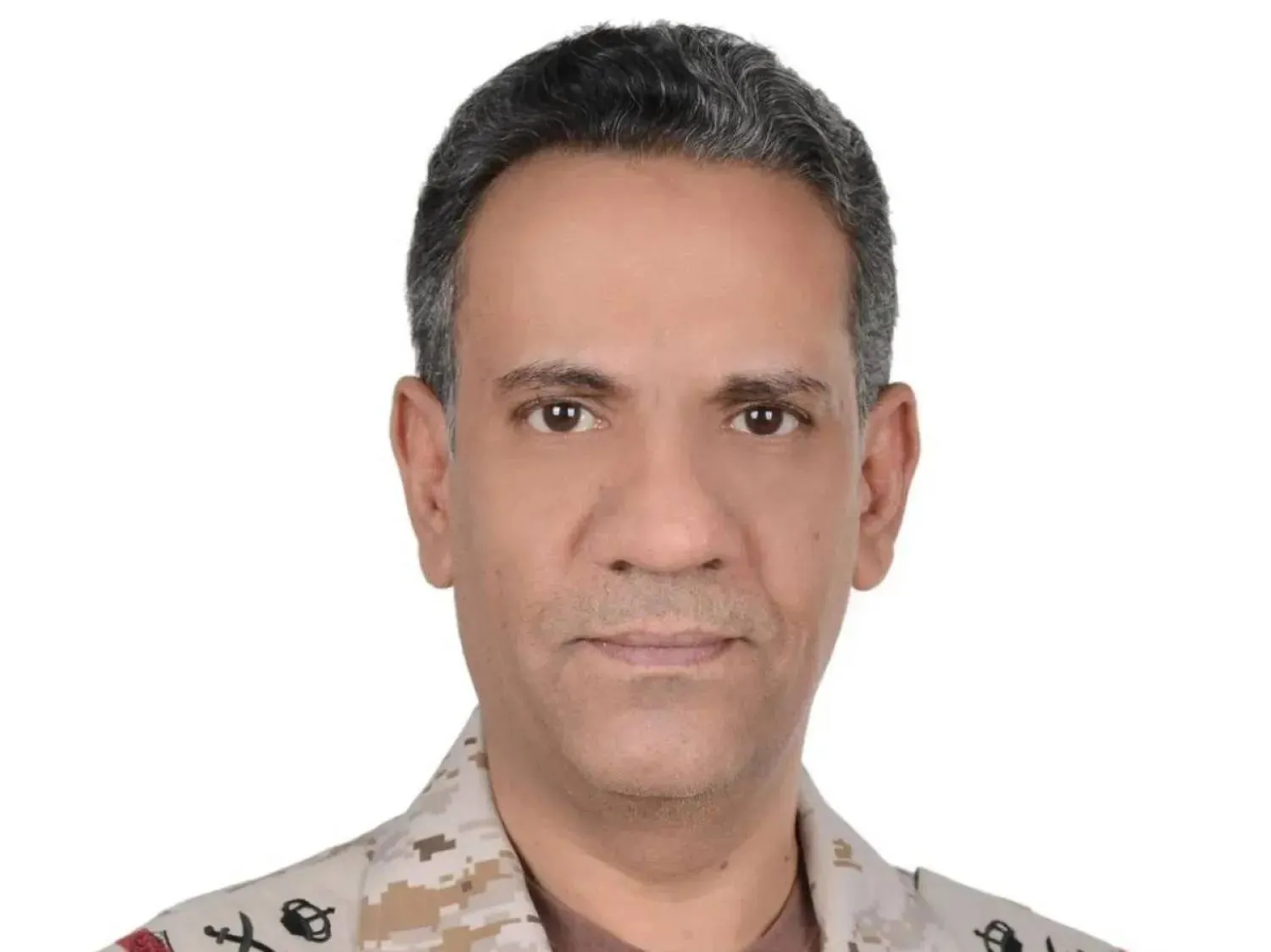


GCC Sec-Gen Condemns Iran's Continued Destabilizing Behavior, Repeated Attacks on Member States

Secretary-General of the Gulf Cooperation Council (GCC) Jasem Albudaiwi. SPA
TT

GCC Sec-Gen Condemns Iran's Continued Destabilizing Behavior, Repeated Attacks on Member States

Secretary-General of the Gulf Cooperation Council (GCC) Jasem Albudaiwi. SPA

Gulf Cooperation Council (GCC) Secretary-General Jasem Albudaiwi expressed his condemnation and denunciation in the strongest terms of Iran's continued destabilizing behavior regarding regional security and stability, its repeated brutal targeting of the United Arab Emirates (UAE), the Kingdom of Bahrain, the Sultanate of Oman, the State of Qatar, the State of Kuwait, and the Hashemite Kingdom of Jordan, as well as its dangerous attacks on commercial vessels.

Albudaiwi stated that Iran's behavior constitutes a grave violation of the principles of international law, the United Nations Charter, and UN Security Council Resolution 2817, as well as a direct undermining of maritime security and freedom of navigation, SPA reported.

He noted that these repeated, brutal Iranian attacks not only hinder all endeavors aimed at achieving security and stability in the region, but also reveal a systematic insistence on perpetuating chaos, in blatant defiance of international law and the international community's shared will to establish peace.

He underlined that the GCC supports all measures taken by the UAE, Bahrain, Oman, Qatar, Kuwait, and Jordan to bolster their security, safeguard their sovereignty, and protect their peoples and residents across their territories.


Saudi Leadership Offers Condolences to Emir of Qatar on Passing of Former Emir Sheikh Hamad bin Khalifa Al Thani

Joint photo of King Salman bin Abdulaziz Al-Saud and Saudi Crown Prince Mohammed bin Salman bin Abdulaziz Al-Saud - File Photo
TT

Saudi Leadership Offers Condolences to Emir of Qatar on Passing of Former Emir Sheikh Hamad bin Khalifa Al Thani

Joint photo of King Salman bin Abdulaziz Al-Saud and Saudi Crown Prince Mohammed bin Salman bin Abdulaziz Al-Saud - File Photo

Custodian of the Two Holy Mosques King Salman bin Abdulaziz Al Saud sent a cable of condolences to Emir of the State of Qatar Sheikh Tamim bin Hamad Al Thani on the passing of former Emir of Qatar Sheikh Hamad bin Khalifa Al Thani.

The Custodian of the Two Holy Mosques said in his cable that Sheikh Hamad bin Khalifa Al Thani dedicated much of his life to serving his country and people.

He extended his heartfelt condolences and sincere sympathies to Sheikh Tamim bin Hamad Al Thani, the late emir's family, and the people of Qatar, praying that the deceased be granted Allah's mercy and forgiveness and that his family be granted patience and solace.

For his part, Prince Mohammed bin Salman bin Abdulaziz Al Saud, Crown Prince and Prime Minister of Saudi Arabia, also sent a cable of condolences to Emir of the State of Qatar Sheikh Tamim bin Hamad Al Thani on this sad incident.

In his cable, the Crown Prince said that Sheikh Hamad bin Khalifa Al Thani had played a significant role in Qatar's development and prosperity.

He extended his heartfelt condolences to Sheikh Tamim bin Hamad Al Thani and the late emir's family, praying that Allah Almighty grant the deceased mercy and forgiveness and reward him for his service to his country and people.


Gulf States Condemn Repeated Iranian Attacks, Tehran's Destabilizing Behavior

Air defense interceptions are seen in the sky above Doha on July 12, 2026. AFP
TT

Gulf States Condemn Repeated Iranian Attacks, Tehran's Destabilizing Behavior

Air defense interceptions are seen in the sky above Doha on July 12, 2026. AFP

Gulf states condemned on Sunday repeated Iranian attacks targeting Qatar, Bahrain, Kuwait, Oman, the United Arab Emirates, and Jordan, saying such assaults represent a blatant violation of state sovereignty and a direct threat to regional security and stability.

The Saudi Ministry of Foreign Affairs expressed the Kingdom's condemnation and denunciation, in the strongest terms, of Iran's continued destabilizing behavior toward regional security and stability, its violations of the principles of international law, the UN Charter, the Charter of the Organization of Islamic Cooperation, and the principles of good neighborliness.

This includes Iran's repeated attacks on commercial vessels, threatening the security and freedom of navigation, and its continued heinous assaults on Kuwait, Bahrain, Qatar, the UAE, Oman, and Jordan.

The Kingdom reaffirmed its categorical rejection of Iran's violation of the sovereignty of brotherly states and its continued threats to regional security and stability.

The Omani government also lambasted on Sunday an attack on its territory, state media announced, with Iran's Guards saying they targeted it during a barrage aimed at countries across the Gulf.

The Oman News Agency said on X that "the Sultanate of Oman affirms its condemnation and denunciation of this attack,” which came just hours after the country hosted Iran's foreign minister to address security issues in the Strait of Hormuz.

Doha too condemned the Iranian attacks against its territory and its neighbors.

"Qatar condemns in the strongest possible terms the renewed attacks carried out by the Islamic Republic of Iran," the foreign ministry said in a statement, also referring to the targeting of Jordan, the UAE, Bahrain, Oman and Kuwait and calling the barrages a "dangerous escalation.”

In Kuwait, the Ministry of Foreign Affairs expressed the country's strongest condemnation and denunciation of the egregious Iranian attacks that targeted it. It affirmed that these repeated assaults reflect a persistent hostile approach, constituting a grave violation of Kuwait's sovereignty and territorial integrity, and a direct threat to its security, stability, and the safety of its citizens and residents.

Furthermore, they represent a clear breach of international law, the United Nations Charter, and Security Council Resolution 2817.

The ministry stressed in a statement that the continuation of attacks constitutes an extremely dangerous escalation, which will increase tension and instability in the region, threaten regional peace and security, and undermine diplomatic efforts aimed at de-escalation and peaceful resolution of crises.

The ministry reiterated that Kuwait's security, sovereignty, and territorial integrity are inviolable, and that Kuwait reserves its full rights to take necessary measures to protect its security and preserve its sovereignty, in accordance with the provisions of international law and the UN Charter.