


Saudi Crown Prince: We Will Continue with Our Duty in Looking after Two Holy Mosques, Serving Pilgrims

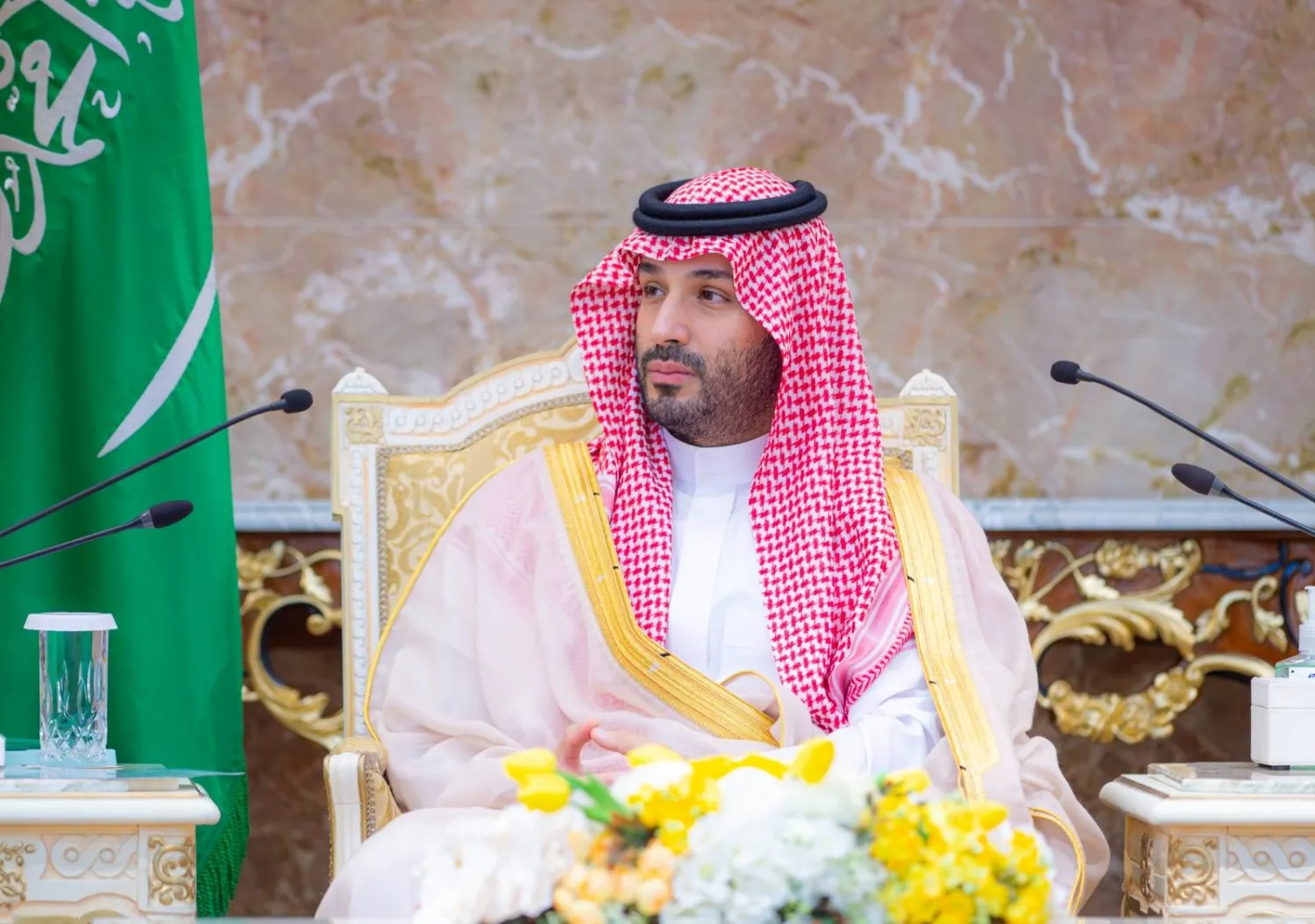
Prince Mohammed bin Salman bin Abdulaziz Al Saud, Saudi Crown Prince and Prime Minister, is seen at Thursday's reception at the Mina Palace. (SPA)
TT

Saudi Crown Prince: We Will Continue with Our Duty in Looking after Two Holy Mosques, Serving Pilgrims

Prince Mohammed bin Salman bin Abdulaziz Al Saud, Saudi Crown Prince and Prime Minister, is seen at Thursday's reception at the Mina Palace. (SPA)

Prince Mohammed bin Salman bin Abdulaziz Al Saud, Saudi Crown Prince and Prime Minister, declared on Thursday that his country has the honor of looking after the two holy mosques and holy sites, and serving the pilgrims.

He vowed that it will continue to forge ahead along this path that was paved by past kings, starting with the founder King Abdulaziz bin Abdulrahman Al Saud

On behalf of Custodian of the Two Holy Mosques King Salman bin Abdulaziz Al Saud, Crown Prince Mohammed held at the Royal Court in Mina Palace the annual reception for senior Islamic figures, guests of the two holy mosques, government agencies, and heads of delegations and Hajj affairs offices that had taken part in this year’s annual pilgrimage.

The guests included Albanian President Bajram Begaj, Chadian President Mahamat Idriss Deby Itno, Vice President of Türkiye Cevdet Yilmaz, Vice President of the Maldives Hussain Mohamed Latheef, Egyptian Prime Minister Mostafa Madbouly, PM of Mauritania Mokhtar Ould Djay, PM of Guinea Amadou Oury Bah and Syrian Foreign Minister Asaad al-Shaibani.

Crown Prince Mohammed welcomed the guests and congratulated them on the occasion of Eid al-Adha, which started on Wednesday.
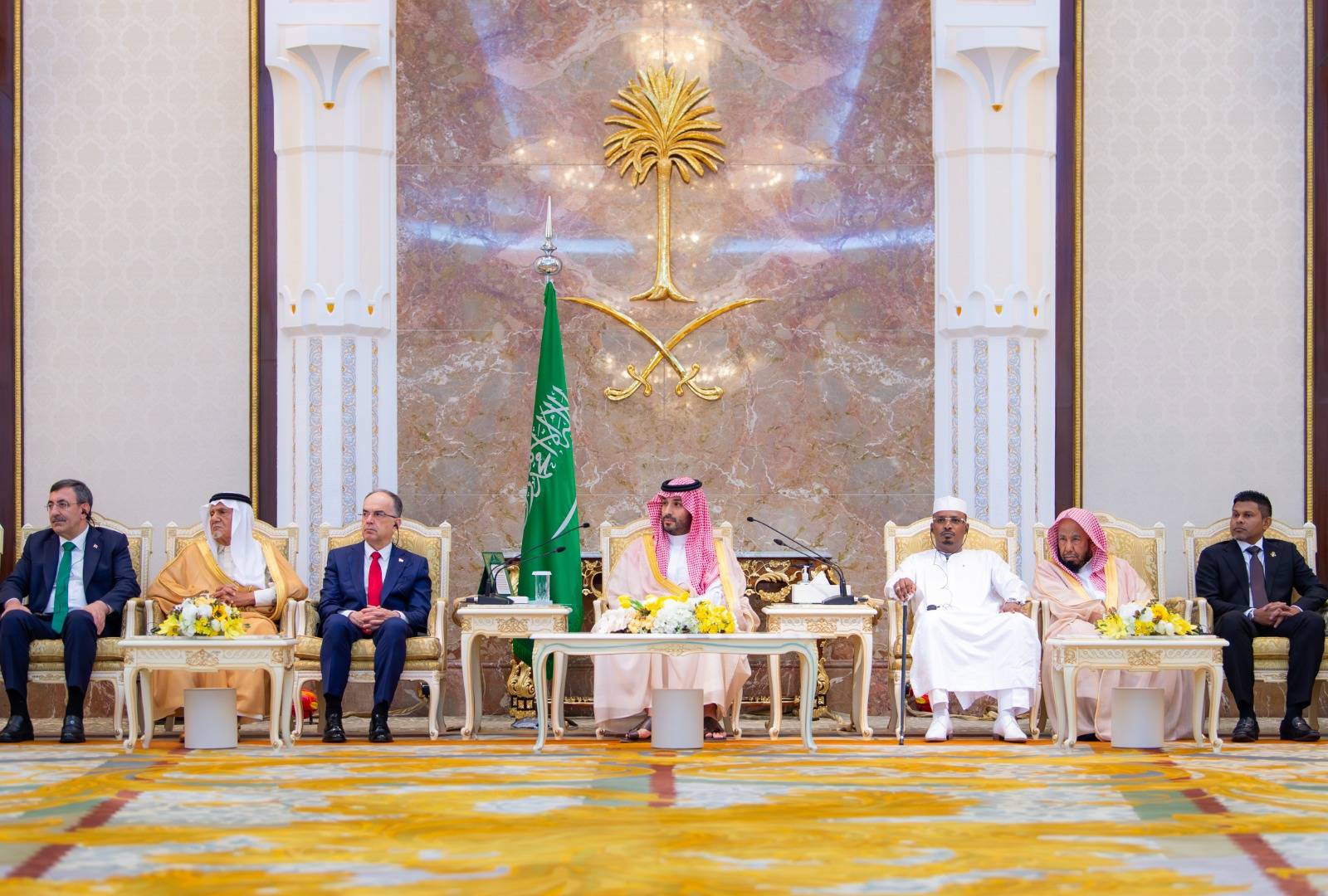
Prince Mohammed bin Salman bin Abdulaziz Al Saud, Saudi Crown Prince and Prime Minister, receives leaders, senior Islamic figures, and guests at the Mina Palace on Thursday. (SPA)

He asked God Almighty to accept the pilgrimage of those who performed the Hajj and hoped that they would return to their homes safely. He also hoped that the Almighty would protect the Kingdom and ensure its security and prosperity.

Present at the reception was Saudi Hajj and Umrah Minister Dr. Tawfig Al-Rabiah, who hailed the efforts and preparations for the pilgrimage that had kicked off in 2025 and were overseen by King Salman and Crown Prince Mohammed.

Their efforts reflect the firm care the Kingdom shows to the guests of the two holy mosques, he added.

Al-Rabiah said that under the supervision of the Supreme Hajj Committee and efforts of more than 60 government agencies, performance was unified and efforts were integrated.

He stressed that in the field of service development, direct contracting was opened for pilgrim affairs offices in a competitive environment among qualified national companies. Applications for more than one million pilgrims were processed more than six months before the start of the Hajj, in a historic achievement that reflects the high level of readiness and early preparation to serve the pilgrims.

On the security level, he noted that the "No Hajj without a permit" campaign was intended to reinforce discipline and facilitate crowd management in a safe environment, ensuring that the pilgrims performed the Hajj smoothly and with ease.

Al-Rabiah explained that more than 8 million cubic meters of water were provided in Makkah and the holy sites.
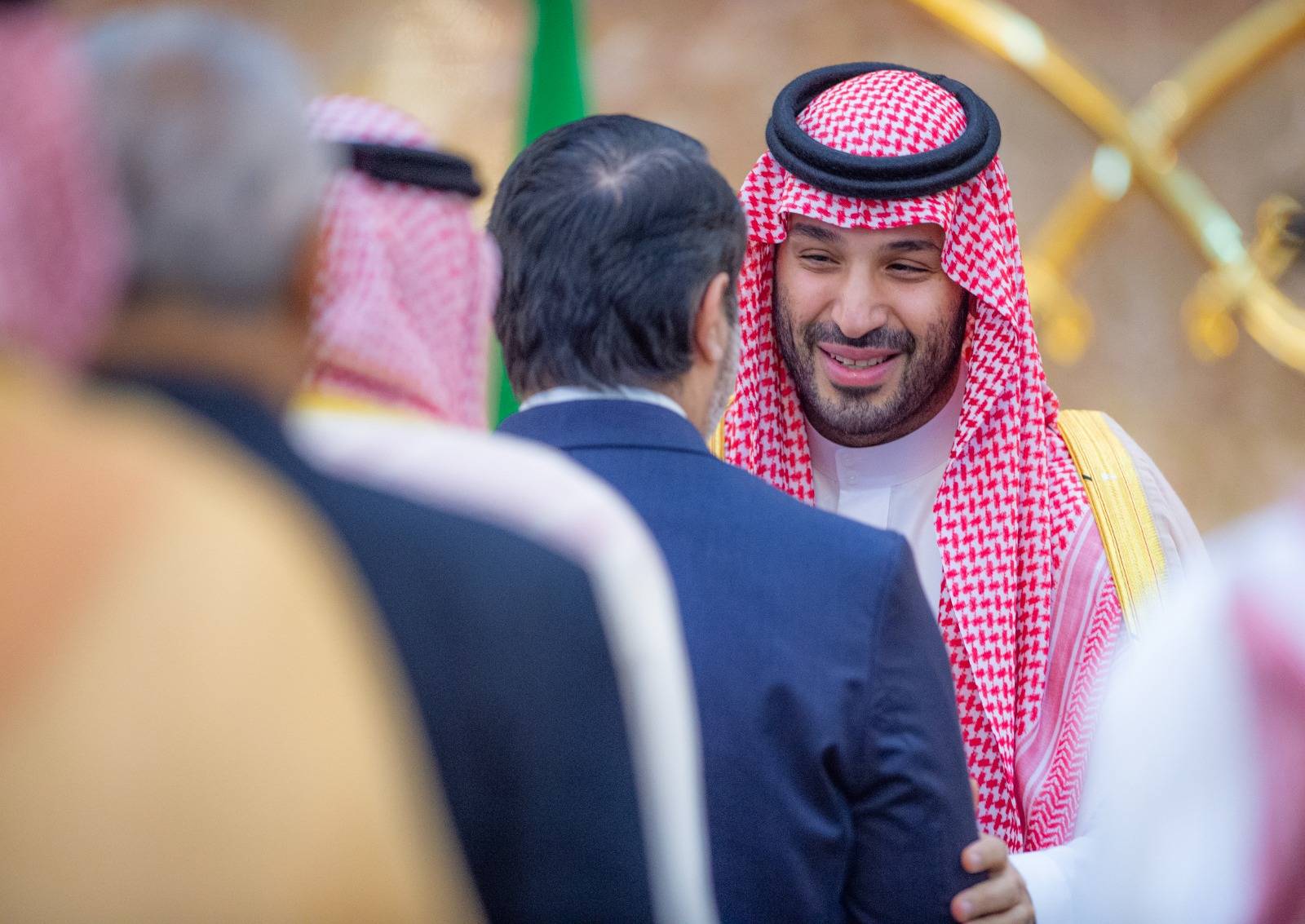
Prince Mohammed bin Salman bin Abdulaziz Al Saud, Saudi Crown Prince and Prime Minister, greets the guests at the Mina Palace. (SPA)

More than 173,000 flights were received from 366 destinations around the world, and more than 5,300 trips were made on the Haramain train, and more than 2,000 on the Al-Mashaer train, he continued. More than 24,000 buses were involved in transporting the pilgrims.

The Royal Commission for Makkah City and Holy Sites implemented more than 25 development projects, added Al-Rabiah.

On digital transformation, the "Nusk" application was developed to provide more than 130 digital services that facilitate the pilgrims’ journey from their country until the completion of the rituals, he added.

Digital services helped improve the efficiency of procedures related to the Hajj, such as organizing contracts, issuing visas, employing monitoring and control systems, and utilizing data analysis and artificial intelligence, he explained.

Crown Prince Mohammed threw a luncheon banquet in honor of the guests.

In a post on the X platform, Syrian FM Shaibani said he was "honored to meet Crown Prince Mohammed at the annual reception at the Mina Palace."

He added that he conveyed to him the greetings of President Ahmed al-Sharaa, expressing Syria's "appreciation for Saudi Arabia’s efforts in serving the Hajj pilgrims and the praising the warm welcomed accorded to the Syrian pilgrims."



Saudi Arabia Declares This Year’s Hajj an Exceptional Success

The holy sites were marked by organization and harmony, in a scene that embodied the combined efforts of the various participating bodies. (SPA)
TT

Saudi Arabia Declares This Year’s Hajj an Exceptional Success

The holy sites were marked by organization and harmony, in a scene that embodied the combined efforts of the various participating bodies. (SPA)

Prince Saud bin Mishaal bin Abdulaziz, Deputy Governor of the Makkah region, announced on Friday the “exceptional” success of this year’s Hajj, saying it was supported by an integrated system of security, organization and services that enabled pilgrims to perform their rituals with ease and reassurance.

He said the success was achieved first by God’s grace, then through the unlimited support and directives of the Saudi leadership, which provided the necessary capabilities and resources, as well as close follow-up of all stages of preparation, work and implementation.

Prince Saud bin Mishaal said the Hajj reflected the image of a country working with sincerity and dedication to serve the guests of God.

The holy sites were marked by organization and harmony, in a scene that embodied the combined efforts of the various participating bodies, he added.

This year’s Hajj affirmed Saudi Arabia’s ability to manage crowds efficiently and capably, he declared, saying pilgrims performed their rituals in an atmosphere of security, reassurance and care befitting the honor of the place and its sanctity.

Prince Saud bin Mishaal said the achievements made during Hajj were the result of the leadership’s approach, which has made serving pilgrims both an honor and a priority.

Support was present and work continued with a spirit of responsibility and dedication, he stressed, adding that the success of the season was not the end of the work, but the start of new responsibilities and a pledge renewed each year to preserve Saudi Arabia’s status as a beacon of security and generosity and a destination for serving Islam and Muslims.

Pilgrims are seen at the Prophet’s Mosque after they completed the Hajj. (SPA)

At the end of his announcement, the deputy governor prayed to God to preserve Saudi Arabia’s security and stability, protect its leadership and bless the efforts of all those who contributed to the success.

Meanwhile, pilgrims in a hurry to leave Mina departed the holy sites after completing the stoning of the devil on the second day of Tashreeq, the 12th day of Dhu al-Hijjah. They then performed the farewell tawaf of the holy Kaaba in Makkah with humble hearts and prayers, concluding their Hajj.

Hundreds of thousands of pilgrims headed to Madinah to visit the Prophet’s Mosque. Others departed the Kingdom, while those who wished to stay overnight continued to complete the stoning on the third day of Tashreeq.

The Grand Mosque witnessed heavy movement around the Kaaba, amid a high level of readiness by the General Authority for the Care of the Affairs of the Two Holy Mosques, in cooperation with relevant bodies, as part of an integrated operational plan for this year’s Hajj.

The concerned authorities mobilized all their capabilities to facilitate the movement of pilgrims leaving early and ensure smooth movement inside the Grand Mosque, enabling them to perform their rites with ease.

In a related development, the Authority completed preparations to receive pilgrims arriving to visit the Prophet’s Mosque after performing Hajj. The operational plan focused on preparing the Prophet’s Mosque and all its facilities to receive visitors and worshippers in a safe and well-equipped environment.


Saudi Arabia, Syria Sign MoU on Combating Cross-Border Corruption Crimes

The MoU was signed by Nazaha President Mazin Al-Kahmous and Chairman of Syria’s Central Commission for Control and Inspection Eng. Amer Al-Ali. (SPA)
TT

Saudi Arabia, Syria Sign MoU on Combating Cross-Border Corruption Crimes

The MoU was signed by Nazaha President Mazin Al-Kahmous and Chairman of Syria’s Central Commission for Control and Inspection Eng. Amer Al-Ali. (SPA)

Saudi Arabia, represented by the Oversight and Anti-Corruption Authority (Nazaha), and Syria, represented by the Central Commission for Control and Inspection, signed on Thursday a memorandum of understanding (MoU) on preventing and combating corruption and boosting cooperation between the two sides.

The MoU was signed by Nazaha President Mazin Al-Kahmous and Chairman of Syria’s Central Commission for Control and Inspection Eng. Amer Al-Ali.

The MoU aims to boost cooperation in combating cross-border corruption crimes and exchanging relevant information and expertise. It seeks to develop and strengthen the institutional capacities of both sides.

During the signing ceremony, Al-Kahmous and Al-Ali discussed ways to strengthen cooperation between their countries in protecting integrity and combating corruption.

They reviewed key measures and practices implemented by Nazaha to promote transparency, protect integrity, and combat corruption, in addition to reviewing Syria’s efforts and experience in the same field.


Saudi Interior Minister Meets Jordanian, Malaysian Counterparts

Saudi Minister of Interior and Chairman of the Supreme Hajj Committee Prince Abdulaziz bin Saud bin Naif bin Abdulaziz receives his Jordanian counterpart Mazen Al-Faraya  in Makkah on Thursday. (SPA)
Saudi Minister of Interior and Chairman of the Supreme Hajj Committee Prince Abdulaziz bin Saud bin Naif bin Abdulaziz receives his Jordanian counterpart Mazen Al-Faraya in Makkah on Thursday. (SPA)
TT

Saudi Interior Minister Meets Jordanian, Malaysian Counterparts

Saudi Minister of Interior and Chairman of the Supreme Hajj Committee Prince Abdulaziz bin Saud bin Naif bin Abdulaziz receives his Jordanian counterpart Mazen Al-Faraya  in Makkah on Thursday. (SPA)
Saudi Minister of Interior and Chairman of the Supreme Hajj Committee Prince Abdulaziz bin Saud bin Naif bin Abdulaziz receives his Jordanian counterpart Mazen Al-Faraya in Makkah on Thursday. (SPA)

Saudi Minister of Interior and Chairman of the Supreme Hajj Committee Prince Abdulaziz bin Saud bin Naif bin Abdulaziz received in Makkah on Thursday his Jordanian counterpart Mazen Al-Faraya and Minister of Home Affairs of Malaysia Datuk Seri Saifuddin Nasution bin Ismail.

The separate meetings discussed security cooperation and coordination between their countries. The ministers also reviewed several issues of mutual interest.

The Jordanian and Malaysian ministers praised the capabilities and integrated services provided by the Kingdom of Saudi Arabia to serve Hajj pilgrims. They commended the high level of organization and coordination within the Hajj system, which allowed pilgrims to perform their rituals with ease and tranquility.

Also on Thursday, Prince Abdulaziz bin Saud reviewed the workflow at several health facilities operated by the Ministry of Interior’s medical services at the holy sites.

He inspected the Ministry of Interior Medical Services Clinics Complex and reviewed its specialized medical, pharmaceutical, and laboratory clinics, in addition to critical-care units and support services operating within the healthcare system provided to pilgrims under the supervision of specialized medical, technical, and administrative personnel.

The minister viewed a visual presentation highlighting the efforts of the ministry’s medical services during the Hajj season, the healthcare-provider network, field and seasonal teams and clinics, as well as hospitals and medical centers operating in Makkah, Madinah, and the holy sites.

Prince Abdulaziz bin Saud further reviewed the Medical Services Command and Control Center during the Hajj and its real-time monitoring capabilities for health-facility readiness, case movement, deployment of field teams, and operational-performance indicators. The capabilities support rapid decision-making and boost the efficiency of field medical response.

The tour included the Ministry of Interior Medical Services Field Hospital in Arafat, where the minister reviewed the medical and treatment services provided, including emergency, intensive-care, and resuscitation departments, heat-exhaustion and heatstroke treatment units, as well as preventive, laboratory, and pharmaceutical services.

The minister reviewed efforts by the medical services in operating mobile clinics, medical vehicles, and field teams to provide first aid, health awareness, and preventive guidance and reduce health risks associated with heat exhaustion and infectious diseases.

The efforts included employing modern technologies to enhance field healthcare through the smart health bracelet, visual communication technologies supporting field teams medically, and the use of drones to deliver medical supplies when needed.