Trump to Decide Imminently on Iran Deal, Says Hormuz Strait Must Open

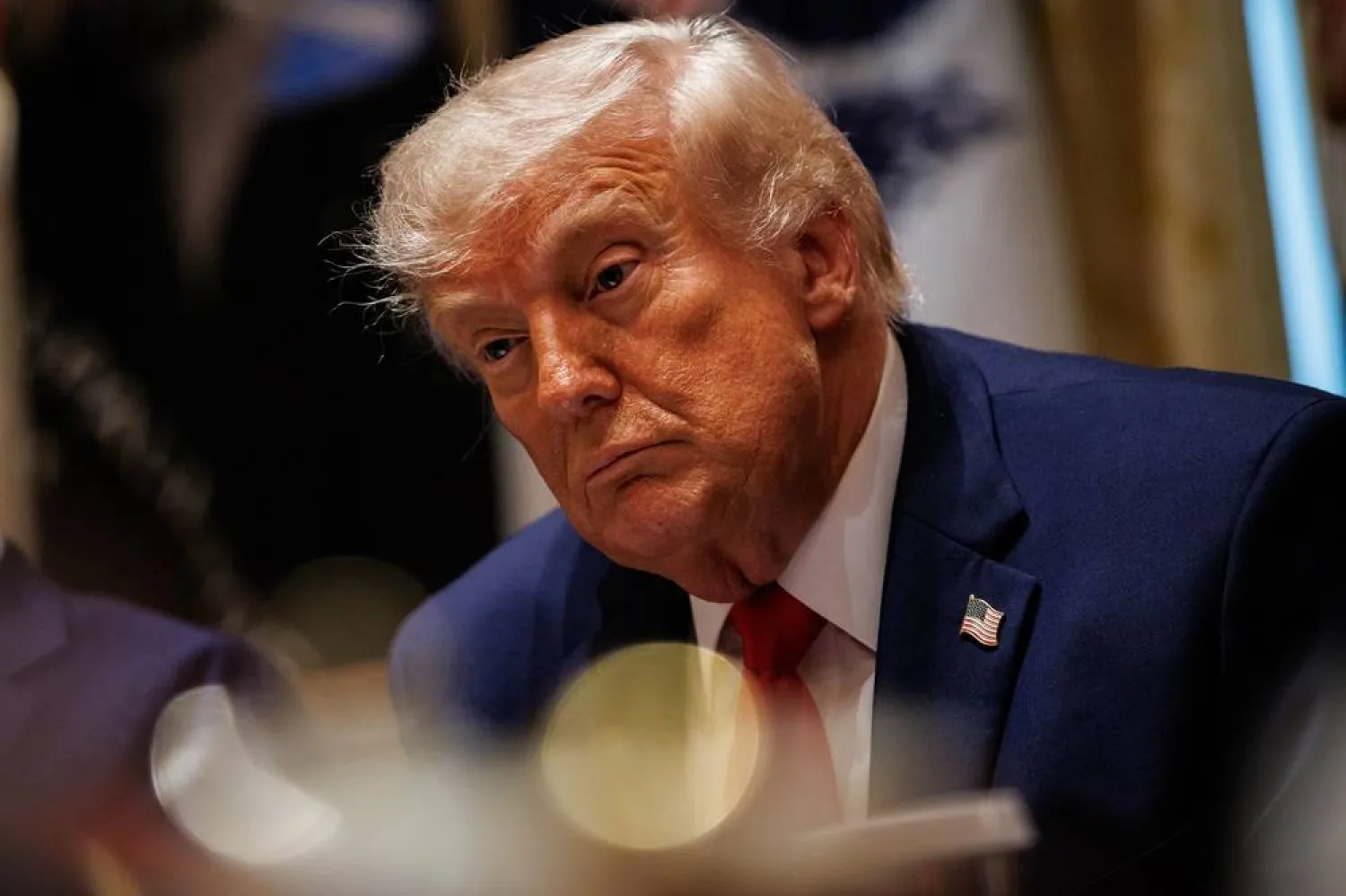
US President Donald Trump looks on during a Cabinet meeting in the Cabinet Room of the White House in Washington, DC, USA, 27 May 2026. (EPA)
TT

Trump to Decide Imminently on Iran Deal, Says Hormuz Strait Must Open

US President Donald Trump looks on during a Cabinet meeting in the Cabinet Room of the White House in Washington, DC, USA, 27 May 2026. (EPA)

US President Donald Trump said he would make a final decision on Friday over a deal with Iran to extend their ceasefire that would need to include opening the Strait of Hormuz and dismantling Tehran's capacity to make a nuclear weapon. 

"I will be meeting now, in the Situation Room, to make a final determination," he said, referring to the White House's nerve center for monitoring global crises. 

Sources had said a deal was in the offing to ‌extend a truce in ‌place since early April for another 60 days ‌to ⁠allow oil and gas ⁠shipments to resume through the strategic waterway while negotiators tackle tricky issues such as Iran's nuclear program. 

"Iran must agree that they will never have a Nuclear Weapon or Bomb. The Hormuz Strait must be immediately open, no tolls, for unrestricted shipping traffic, in both directions," Trump said, adding that nuclear material would be "unearthed" by the US. 

There was no immediate response from Iran, but earlier its top negotiator ⁠Mohammad Baqer Qalibaf had sounded skeptical. 

"We do not trust ‌guarantees and words, only actions are ‌the criterion. No action will be taken before the other side acts," Qalibaf said in a ‌social media post, without elaborating. 

"The winner of any agreement is the ‌one who is better prepared for war the day after." 

THOUSANDS DEAD, GLOBAL ECONOMY SUFFERING 

The war launched by the US and Israel on February 28 has killed thousands of people, mainly in Iran and Lebanon, and caused global economic pain by pushing up ‌energy prices due to Iran's effective closure of the Strait of Hormuz. 

Oil prices fell and stocks rose on ⁠Friday over the potential ⁠deal. 

In his post on Truth Social, Trump said mines would be removed from the strait and ships trapped there may start to go home: "Say HELLO to your wives, husbands, parents, and families from me, your favorite President!" 

He added that no money would be exchanged "until further notice" - a possible reference to Iran's demands for toll payments in the strait, war damage reparations or a release of Iranian funds frozen abroad. 

Kazakhstan has signaled it is willing to take Tehran's stockpile of uranium enriched close to weapons-grade levels if the US reaches a deal with Iran, the head of the UN nuclear watchdog, Rafael Grossi, told the Financial Times. 

Kazakhstan hosts an internationally controlled bank of low-enriched uranium to ensure fuel supplies for power stations in International Atomic Energy Agency member states. 


Iran Warns of Domestic Gas Shortages from War This Winter

 People walk through the rain near Tehran's traditional main bazaar in Tehran, Iran, Saturday, Nov. 7, 2026. (AP)
People walk through the rain near Tehran's traditional main bazaar in Tehran, Iran, Saturday, Nov. 7, 2026. (AP)
TT

Iran Warns of Domestic Gas Shortages from War This Winter

 People walk through the rain near Tehran's traditional main bazaar in Tehran, Iran, Saturday, Nov. 7, 2026. (AP)
People walk through the rain near Tehran's traditional main bazaar in Tehran, Iran, Saturday, Nov. 7, 2026. (AP)

Iran's government has ‌warned of worsening internal gas shortages this winter as a result of damage to processing facilities in the war with the United States that could lead to cuts in supply.

"If the level of consumption is high it is possible that gas cuts will occur all over the country including in Tehran," government spokesperson Fatemeh Mohajerani said in a news conference in Tehran on Tuesday.

Iran, a major oil producer, controls part of the world's biggest natural gas ‌field but has ‌sometimes faced difficulty meeting domestic demand ‌because ⁠of outdated equipment, worsened by ⁠international sanctions. It is now subject to a US blockade of its ports.

The country faced some gas shortages and power cuts even before the conflict that began with a US and Israeli air campaign on February 28, a situation which has now worsened.

Mohajerani forecast a ⁠shortfall of 430 million cubic meters in gas ‌supply this year, compared ‌to about 300 million cubic meters in previous years.

National Iranian Gas ‌Company managing director Saeed Tavakoli said this month there ‌had been damage to four processing plants during the first phase of the conflict early this year, which initially reduced capacity by 230 million cubic meters, of which around 100 million ‌had so far been restored.

Last week the company warned that 11 of Iran's 31 ⁠provinces could ⁠face supply difficulties this winter, naming Mazandaran on the Caspian coast, and Golestan and North Khorasan along Iran's border with Turkmenistan, as most vulnerable.

Political leaders have urged Iranians to use less gas. Parliament Speaker Mohammad Baqer Qalibaf on Sunday called on Iranians to cut their gas use by 10% ahead of the winter.

Iran's First Vice President Mohammad Reza Aref was cited by state news agency IRNA on Monday as saying gas prices could rise as a result of the reduced supply if consumption was excessive.


Iran Slams US’s ‘Repugnant’ $20Mn Reward for Nuclear Info

Iran's Foreign Minister Abbas Araghchi looks on after a session of the United Nations Conference on Disarmament, on the sideline of a second round of US-Iranian nuclear negotiations in Geneva, on Feb. 17, 2026. (AFP/Getty Images)
TT

Iran Slams US’s ‘Repugnant’ $20Mn Reward for Nuclear Info

Iran's Foreign Minister Abbas Araghchi looks on after a session of the United Nations Conference on Disarmament, on the sideline of a second round of US-Iranian nuclear negotiations in Geneva, on Feb. 17, 2026. (AFP/Getty Images)

Iran hit out at the United States' $20 million reward for information on its nuclear program on Wednesday, calling it "repugnant and regrettable".

Foreign Minister Abbas Araghchi urged the United Nations' atomic energy agency and the Security Council to condemn the reward, which was announced last week.

Last Friday, the US military said up to $20 million and "possible relocation" were available for information about the program's "facilities, equipment, and associated personnel".

"Iran calls upon the UN Secretary-General, the Security Council, and the Director General of the IAEA to condemn this repugnant announcement explicitly and unequivocally," Araghchi wrote in a letter addressed to all three.

He repeated Iran's insistence that its nuclear program is peaceful.

US President Donald Trump has repeatedly said Iran's nuclear program was effectively obliterated by the brief US strikes on key Iranian nuclear facilities during the 12-day war between Iran and Israel in June 2025.

Since that war, Iran has blocked International Atomic Energy Agency inspectors from visiting bombed facilities at Fordow, Natanz and Isfahan.

War broke out between Iran and the United States on February 28 when US-Israeli strikes killed the country’s supreme leader Ali Khamenei.

During the war's most intense phase, US-Israeli strikes hit Iranian nuclear sites again, but the scale of the damage remains unclear.

Diplomatic efforts, led by Qatar and Pakistan, have been underway to negotiate an end to the war.

Tehran has insisted Washington accepts a raft of demands including unfreezing assets and lifting sanctions in return for reopening the Strait of Hormuz, the vital energy conduit it has blockaded since the start of the conflict.

Araghchi previously said that talks over Iran's nuclear program would come at a later stage.

Iran's nuclear program has been at the center of tensions for years. In 2018, during Trump's first term, the US withdrew from an agreement struck under Barack Obama that aimed to stop it developing nuclear weapons in return for sanctions relief.


German Military Bans Chinese-Made Drones

 Chinese-manufactured EHANG-E216 passenger drone taxi flies over the Colombo Port city during its first test flight in Colombo on November 11, 2026. (AFP)
Chinese-manufactured EHANG-E216 passenger drone taxi flies over the Colombo Port city during its first test flight in Colombo on November 11, 2026. (AFP)
TT

German Military Bans Chinese-Made Drones

 Chinese-manufactured EHANG-E216 passenger drone taxi flies over the Colombo Port city during its first test flight in Colombo on November 11, 2026. (AFP)
Chinese-manufactured EHANG-E216 passenger drone taxi flies over the Colombo Port city during its first test flight in Colombo on November 11, 2026. (AFP)

The German military has banned the use of Chinese-made drones, including for training, and is replacing them with European models, the defense ministry said on Wednesday.

Citing the need for data and IT security, the ministry said that "Chinese-made models will no longer be used ... and existing systems will be replaced by products from domestic or, where applicable, European sources".

News magazine Der Spiegel first reported on the decision, based on worries the drones could transmit data on military exercises, training grounds or weapons systems to Chinese intelligence services.

The ministry said the armed forces, the Bundeswehr, had used "inexpensive, off-the-shelf drones for training purposes", buying them "with minimal bureaucratic effort".

"To strengthen the Bundeswehr's self-sufficiency and technological sovereignty, Chinese-made models will no longer be used for target or training purposes," its statement said.