


Venice’s Growing Flamingo Population Finds Refuge in Recovering Wetlands

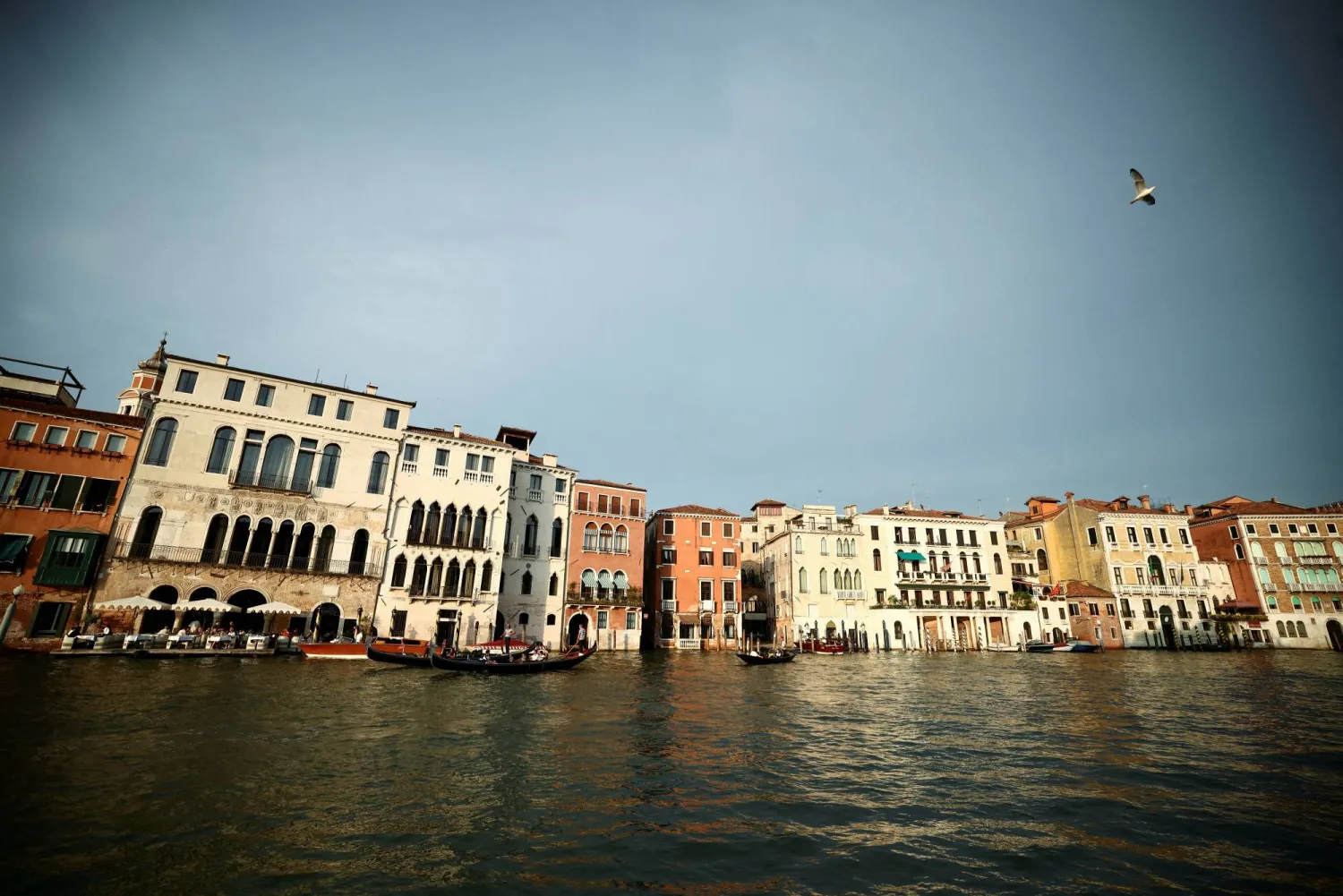
FILE PHOTO: A general view of the Grand Canal, in Venice, Italy, June 23, 2025. REUTERS/Yara Nardi/File Photo
TT

Venice’s Growing Flamingo Population Finds Refuge in Recovering Wetlands

FILE PHOTO: A general view of the Grand Canal, in Venice, Italy, June 23, 2025. REUTERS/Yara Nardi/File Photo

Perhaps nothing better illustrates the flamingo’s status as a newcomer to the Venetian Lagoon than the fact that the local dialect has no word for them.

But the pale pink birds — called “fenicotteri” in Italian — are now flocking to Venice in record numbers, as ecological efforts to restore damaged wetlands could help expand their habitat and possibly induce them to nest in the lagoon, The Associated Press reported.

Flamingos — which most famously nest in Spain and France — started showing up in the vast Venetian Lagoon in the early 2000s, mostly in fishing valleys and mudflats in the lagoon’s furthest reaches, with only rare sightings in the canaled historic center of Venice that is most frequented by global tourists.

Venice Lagoon becomes an unlikely flamingo haven Environmentalists say their arrival in Venice as the European flamingo’s range expands is a sign of the lagoon’s health and suitability as a feeding ground.

Last year, the number of wintering flamingos in Venice peaked at a record of nearly 24,000. That is 8,000 more than the previous year, numbers “that position the Venetian Lagoon as one of the most important wintering spots in its entire habitat range,” said ornithologist Alessandro Sartori.

Sartori surveys the lagoon weekly by boat for signs of nesting, which would indicate a self-sustaining Venetian colony. So far there are no fresh signs after two nesting attempts, in 2008 and 2013, in northern lagoon fishing valleys suffered serious setbacks, including violent hail that killed dozens of birds.

More than 90% of the birds counted in last year’s census were in the northern lagoon, which contains a large area of natural salt marsh. The flamingos are also attracted by the traditional fishing valleys, semi-natural embanked wetlands that provide abundant food but can also bring them into conflict with human activity.

Venice seeks to recover its lost marsh A project to reconstruct salt marshes in the more isolated southern lagoon — past the historic center and the industrial port — raises prospects that flamingo numbers will increase there as well by offering a new habitat in an area of the lagoon where wetland erosion has been especially severe. It could also draw the birds away from competing human uses in the north.

The Venetian Lagoon, covering an expanse of 550 square kilometers (more than 200 square miles), was originally nearly half salt marsh. Today the area of salt marsh — or “barene” in the Venetian dialect — is just about 7%, about half of it reconstructed, said Jane da Mosto, the executive director of We Are Here Venice, the local partner in the EU’s 23.6 million euro ($27.5 million), 5-year WaterLANDS project to restore wetlands across Europe.

The damage is especially stark in the central and southern lagoon, due to the combination of natural erosion and the dredging of shipping channels to access the Marghera industrial port in the 1960s.

“And since then, there’s been much more widespread erosion and loss of sediments from the lagoon to the point that Venice is now on a trajectory to becoming a marine bay,” said da Mosto. The wetlands reconstruction project “is specifically to show that it’s possible to address this trend and change the course of history.”

Rebuilding the salt marshes increases the lagoon’s ability to capture carbon dioxide, a greenhouse gas and driver of climate change, and mitigates the effects of rising sea levels. But da Mosto said much larger areas would need to be restored to produce meaningful climate benefits. The goal of the EU project is to make salt marsh reconstruction scalable.

Flamingos can also benefit as biodiversity increases.

Da Mosto’s team is researching ways to increase biodiversity on the reconstructed marshes, including planting species that can help reduce erosion and make the wetlands more resilient.

The mudflat where they are working contains signs of flamingo activity, chiefly stray pink feathers. On a recent day, a flock of some 30 were perched in the distance — scattering when a pair of squawking oystercatchers alerted them to visitors.

Already, Sartori believes that the reconstruction has begun to draw more flamingos to the area. Over the last three years, he has seen their numbers in the southern lagoon grow from just a handful to as many as 300 to 400 in certain periods.

“The hope is that they can find — as they have found in other parts of the Mediterranean — right here on these barene, places where they can nest,” Sartori said.

Venice’s pink newcomers could draw a different kind of visitor The flamingos' presence in the lagoon underlines the importance of the Venetian ecosystem and offers a new way for visitors to interpret the canaled city and outer islands through their ecological — and not just historical and artistic — significance.

Still, visitors to Venice who hope to casually spy flamingos will probably be disappointed, and AP reporters recently had to travel by boat for an hour to spot any. The flamingos inhabit shallow, difficult-to-access reaches of the lagoon where navigating safely requires close attention to tides and channels.

Even at a distance, the birds are easily disturbed and quick to take flight.

Sartori predicts flamingo spotting — already a possibility from the shores of the small lagoon islands of Murano and Burano but rare in the historic center — could become more common as their numbers continue to grow.

“Obviously this should always be done with respect for the animals, keeping a safe distance and not interfering with their daily lives,” he said.


Drones, AI and White Paint: Europe Races to Protect Infrastructure from Heat

A vehicle from Oslo Airport’s fire rescue services sprays water onto the runway at the airport, to combat heat, in Oslo, Norway, July 15, 2026. REUTERS/Tom Little
TT

Drones, AI and White Paint: Europe Races to Protect Infrastructure from Heat

A vehicle from Oslo Airport’s fire rescue services sprays water onto the runway at the airport, to combat heat, in Oslo, Norway, July 15, 2026. REUTERS/Tom Little

As Europe's railways buckle under record heat, roads melt and power grids strain, countries are turning to an array of fixes for ageing infrastructure, from drones inspecting tracks and AI-powered sensors to a surprisingly simple tool: white paint.

At Norway's Oslo airport on Wednesday, with temperatures set to hit 30 degrees Celsius (86 degrees Fahrenheit), 10 C above normal for the time of year, workers doused the tarmac with water to keep it cool.

It's a marked shift in a country more used to coping with the cold that reflects how Europe is having to adapt to rising temperatures that are stoking wildfires, causing thousands of excess deaths and putting infrastructure under growing pressure.

"In Norway, the asphalt must withstand both extreme cold and fairly warm temperatures," said Jørn Arvid Remark, operating engineer at Norwegian state-owned airport operator Avinor, adding the airport was testing a new heat-resistant asphalt.

The fire brigade sprays around 9,000 liters of water on key parts of the runway, which can get damaged at high temperatures as it softens under the weight of aircraft, Reuters reported.

Europe's roads and railways, many built decades ago, are increasingly struggling to cope.

Temperatures across Western Europe on Wednesday were 5.5 C above the average for July ⁠15, according to the ⁠Reuters Climate Monitor.

"Our infrastructure is in no way prepared for the extreme weather events that we're going to see," said Chris Dodwell, co-head of sustainability center at Impax Asset Management, adding heatwaves, once rare, were becoming regular events.

A 2025 report by leading central banks estimated that severe weather events, including heatwaves, droughts and floods, could cut euro zone GDP by as much as 4.7% by 2030.

Europe's railways have felt the impact acutely.

An EU report in April found that more than 70% of rail managers were seeing growing disruption from extreme weather. Between 2015 and 2024 weather-related interruptions amounted to the equivalent of one to three years of railway service across the region.

Heat can cause tracks to expand, and points, ⁠signals and power to fail. However, extreme weather triggered by high temperatures can be even more disruptive.

"The most critical issue for rail networks is not the heat itself, but the thunderstorms, strong winds and landslides that often follow heatwaves," said Oliviero Baccelli, a professor at Milan's Bocconi University.

"Italy has already experienced significant disruptions to its railway network, particularly on Alpine routes, as a result of climate-related events."

Northern European countries such as Britain face particular challenges because much of their rail infrastructure was designed for a narrower temperature range than networks in southern Europe.

John Lawrence, chair of the IET Railway Technical Network, said many rail components and systems were "in essence frozen in time".

He added it would be a huge cost to heat-proof entire networks, though operators were exploring more stable sleeper designs and technologies such as AI and drones to "speed up the amount of track that can be inspected and monitored".

Britain's Network Rail has pledged to invest  £2.6 billion ($3.5 billion)  between 2024 and 2029 to help its network withstand increasingly extreme weather.

Not all solutions are hugely expensive, however, with some operators using traditional methods to reflect heat. Stockholm's transport authority spent about 100,000 Swedish crowns ($10,300) painting ⁠sections of metro track white in ⁠May and June to reduce the risk of track buckling.

Martin Wilson, engineering director at French rail equipment manufacturer Alstom, said Europe could learn lessons from transport systems such as the Riyadh Metro and Dubai tram, designed to operate in temperatures above 50C (122F).

"Today's heatwaves are often more intense, more frequent and longer-lasting," he said.

"Rising temperatures are increasingly challenging rail systems across Europe."

Roads face similar pressures.

Engineers say northern European highways were built primarily to withstand damage from freeze-thaw cycles, while southern countries such as Spain use asphalt blends better suited to prolonged summer heat.

Finding the right balance is becoming harder as countries contend with both colder winters and hotter summers.

"They may have to adjust their approach," said José Pablo Sáez Villar of the Spanish Civil Engineers Association, referring to planners and road builders in northern Europe.

Paris transport operator RATP has created a heatwave contingency unit and is preparing a climate adaptation plan by the end of the year.

In Norway, officials say warmer, wetter weather is changing how new infrastructure is designed.

"Roads are going to be made more robust," said Grethe Vikane, head of social development and climate at the Norwegian Public Roads Administration.

"So they can withstand both the challenges already being experienced and the consequences of expected climate change."


Russian Haaland Lookalike Says Viral Video Felt ‘Like a Dream’

Anastasia Kostromitina, model of MOTION agency, who has gone viral with striking likeness to Norway's Erling Haaland, poses in Moscow, Russia July 10, 2026. (Reuters)
TT

Russian Haaland Lookalike Says Viral Video Felt ‘Like a Dream’

Anastasia Kostromitina, model of MOTION agency, who has gone viral with striking likeness to Norway's Erling Haaland, poses in Moscow, Russia July 10, 2026. (Reuters)

Friends and family have for a few years told Russian model Anastasia Kostromitina that she looked like Norwegian striker Erling Haaland, but it was not until he became the World Cup's superstar that she decided to take that online.

Earlier this month, she posted a video on Instagram highlighting the resemblance to Haaland -- both in looks and mimicking some of his now-trademark mannerisms and distinctive facial expressions.

It soon spiraled and gathered 6.4 million likes.

"At first, I did not even know what was happening, it felt like a dream," Kostromitina told AFP in Moscow, saying she "never expected" the video to go so viral.

"But I'm happy about it anyway," the 24-year-old added.

Haaland, 25, has been the social media sensation of the World Cup, with the Manchester City player now counting 68.8 million followers on social media.

Haaland sparkled at the tournament scoring seven times -- including a double against Brazil in their last 16 match -- as Norway reached the quarter-finals only to lose 2-1 to England.

Kostromitina had mixed feelings when she was first told she looked like the towering male footballer -- but has now embraced it.

"At first, to be honest, I didn't even understand how I could possibly resemble a male football player. But then I started to take it with a sense of humor and now I'm completely fine with it."

Naturally, she was supporting Norway in the World Cup and was sad when they lost.

"I was really rooting for them and was on the edge of my seat," she said of their last game in the competition.

Russia has been mostly banned from international sport since its 2022 Ukraine offensive and did not take part in the World Cup.

Kostromitina -- who is represented by Moscow-based Motion Model Management -- hoped that Haaland will "see my video, maybe even laugh."


Texas Is Drenched by Heavy Rains as Forecasters Warn That More Storms Could Bring Dangerous Floods

 In this handout photo provided by the Texas Parks and Wildlife Department, game wardens walk through high waters from heavy rains in Uvalde County, Texas, on Tuesday, July 14, 2026. (Texas Parks and Wildlife Department via AP)
In this handout photo provided by the Texas Parks and Wildlife Department, game wardens walk through high waters from heavy rains in Uvalde County, Texas, on Tuesday, July 14, 2026. (Texas Parks and Wildlife Department via AP)
TT

Texas Is Drenched by Heavy Rains as Forecasters Warn That More Storms Could Bring Dangerous Floods

 In this handout photo provided by the Texas Parks and Wildlife Department, game wardens walk through high waters from heavy rains in Uvalde County, Texas, on Tuesday, July 14, 2026. (Texas Parks and Wildlife Department via AP)
In this handout photo provided by the Texas Parks and Wildlife Department, game wardens walk through high waters from heavy rains in Uvalde County, Texas, on Tuesday, July 14, 2026. (Texas Parks and Wildlife Department via AP)

Heavy downpours in South Texas washed out highways and stranded motorists Tuesday as forecasters warned that a threat of more severe weather could bring dangerous flooding to already drenched counties near the border with Mexico.

Storms dumped up to a foot of rain in some rural areas of Texas, leading to dozens of high-water rescues across the region and officials shutting down portions of a busy highway for hours near Uvalde, about 80 miles (129 kilometers) west of San Antonio.

A flood watch also included Kerr County, where catastrophic flooding last year along the Guadalupe River killed more than 100 people.

No deaths or injuries Tuesday were immediately reported.

The National Weather Service warned that storms overnight could dump more than a foot of additional rain to some places into Wednesday, creating potentially catastrophic impacts from flash flooding in areas west of San Antonio.

Texas Gov. Greg Abbott issued a disaster declaration for dozens of counties.

“Intense rain rates and compounding effects from multiple rounds of storms will result in a dangerous flash flooding threat through Thursday,” the National Weather Service said.

Authorities on Tuesday posted videos of a rescue crew in a boat down flooded streets and one vehicle being swept away by fast-moving waters. Five people were rescued by members of the Texas Game Warden Search and Rescue Team and four were rescued by a local game warden, said Maggie Berger, a spokesperson for the Texas Parks and Wildlife Department.

In Uvalde, officials said there had been at least two dozen water rescues. They opened a local event center for anyone displaced by flooding. In Sabinal, officials were also making plans for a shelter.
