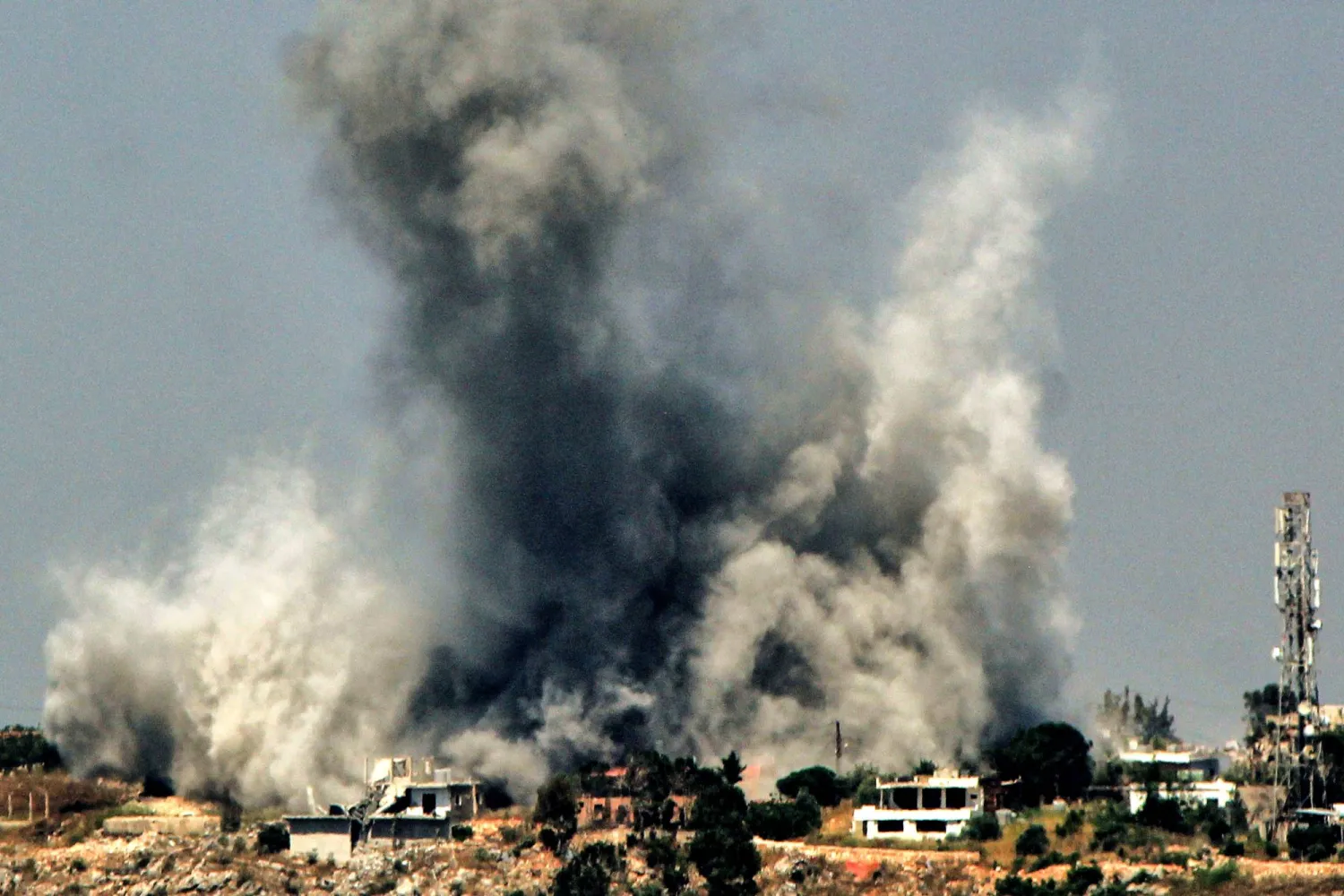

Lebanon announced a partial ceasefire between Hezbollah and Israel on Monday in what would amount to a limited de-escalation of a conflict that has killed thousands of people and inflamed the broader US-Israeli war with Iran. According to Lebanon's embassy in Washington, the agreement would not end the conflict in that country. But it calls for Israel to refrain from strikes on Beirut and its suburbs controlled by Hezbollah, while the Iran-aligned group would halt its attacks on Israel.
Hostilities in southern Lebanon, which Israel invaded in March, continued on Monday evening. Early on Tuesday, the Israeli military said that it intercepted two projectiles that crossed from Lebanon into northern Israel, and that no injuries were reported, Reuters said.
US President Donald Trump, who first announced the agreement, said Hezbollah, through intermediaries, had pledged not to attack Israel. No US president has ever spoken with Hezbollah, with or without intermediaries. The US has designated the group as a terrorist organization.
Trump also said Israeli Prime Minister Benjamin Netanyahu agreed to pull back any troops preparing to attack Beirut.
After Trump's announcement, Netanyahu said Israel would continue military operations in southern Lebanon, where ground forces are pushing toward the Zaharani River, their deepest incursion in Lebanon in 25 years.
Hezbollah lawmaker Hassan Fadlallah said the militia would support a full ceasefire across all Lebanon as a precursor to the withdrawal of Israeli troops. He did not say whether the group would stop its strikes on Israeli territory.
Lebanon said it would seek to expand the ceasefire in talks with Israel in Washington on Wednesday. That could clear the path for renewed efforts to end the three-month-old war that began with US and Israeli attacks on Iran. The process has been stuck in limbo for weeks under a fragile ceasefire as negotiators have been unable to agree on an initial framework for peace talks.
The Israel-Hezbollah war erupted on March 2 as an offshoot of the broader conflict and has been entangled with it ever since.
Iran has insisted on a halt to Israeli attacks in Lebanon as a condition of any deal to end the war, while the US has said the two conflicts are separate.
"The ceasefire between Iran and the US is unequivocally a ceasefire on all fronts, including in Lebanon," Iranian Foreign Minister Abbas Araghchi said in a statement.
IRAN THREATENS TO BREAK OFF TALKS Iranian state media said earlier on Monday that Tehran was halting indirect peace negotiations with the US and might end a ceasefire that has largely held since early April, citing the war in Lebanon.
There was no direct confirmation of the reports from Iranian officials, and Trump told an NBC reporter that he had not heard from Iran. He said in a CNBC interview on Monday that the peace talks had "started to get very boring" and that he did not care if they were over.
"I really don't care, I couldn't care less," Trump said.
Since mid-March, Trump has repeatedly said he is close to signing a peace agreement but has yet to do so. Despite the ceasefire, Iran and the US have exchanged strikes several times over the past week.
Meanwhile, the head of Iran's Revolutionary Guards Quds Force, Esmaeil Qaani, threatened to expand its blockade of the Strait of Hormuz to the Bab El Mandeb Strait, another chokepoint at the mouth of the Red Sea. Iran has already bottled up maritime traffic in the Gulf that before the war provided one-fifth of the world's oil and liquefied natural gas, sending prices sharply higher.
Oil prices rose 4% on Monday on the heightened tensions.