


Rubio: US Has Not Offered Iran Sanctions Relief to Reopen Strait

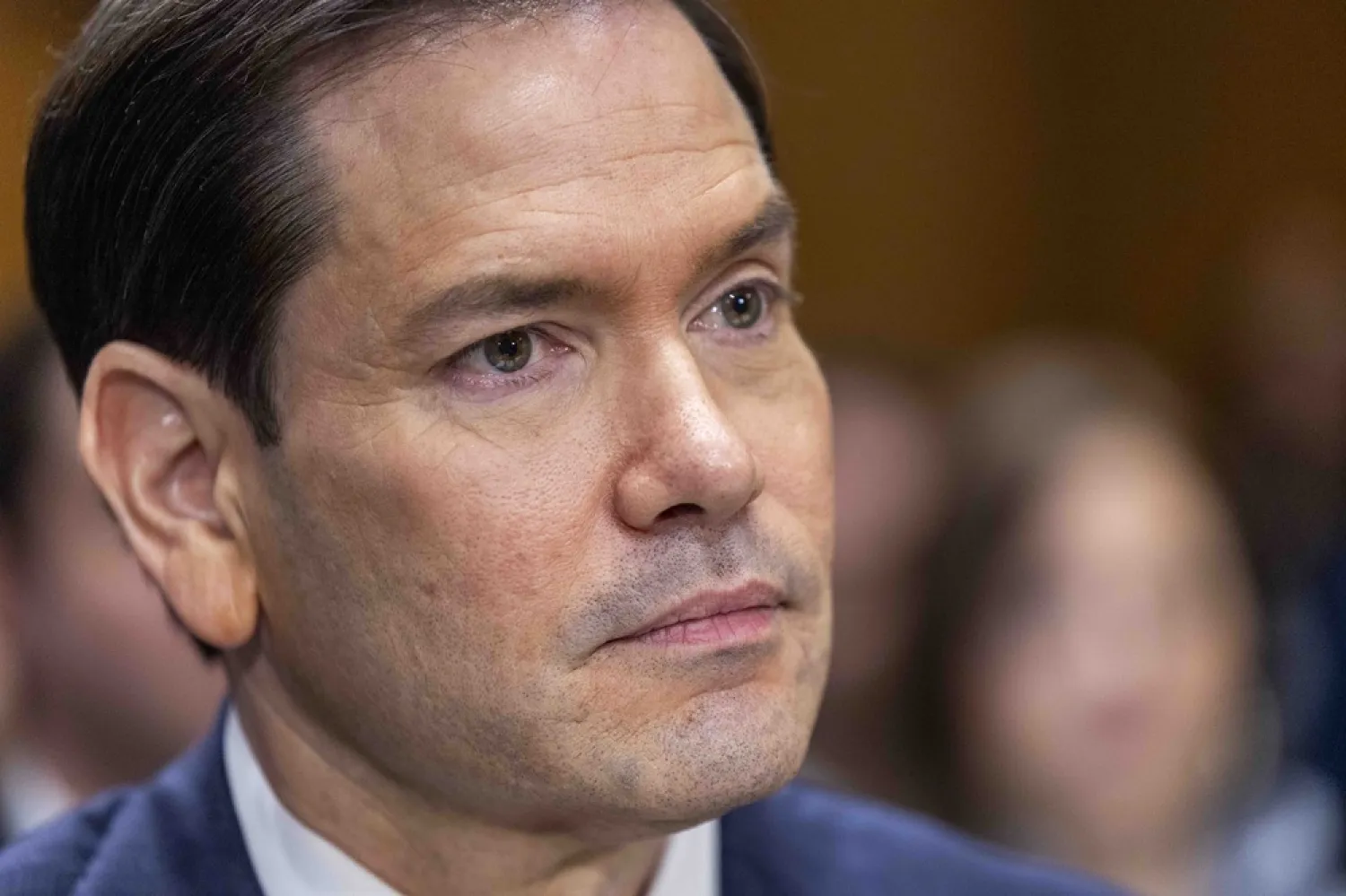
US Secretary of State Marco Rubio testifies before the Senate Foreign Relations Committee hearing on the FY27 Department of State Budget Request on Capitol Hill in Washington, DC, USA, 02 June 2026. (EPA)
TT

Rubio: US Has Not Offered Iran Sanctions Relief to Reopen Strait

US Secretary of State Marco Rubio testifies before the Senate Foreign Relations Committee hearing on the FY27 Department of State Budget Request on Capitol Hill in Washington, DC, USA, 02 June 2026. (EPA)

US Secretary of State Marco Rubio said on Tuesday that President Donald Trump's negotiating team has not offered Iran sanctions relief in exchange for reopening the Strait of Hormuz and insisted that any sanctions relief was tied to Tehran giving up its nuclear program. 

"Right now, everything that's been discussed with them (Iran) is that … any sanctions relief is condition-based, which means it has to be in return for the reason why those sanctions were put in place in the first place, which is their nuclear program," Rubio told a Senate hearing. 

Testifying in Congress publicly for the first time since the Iran war began, Rubio said there will be sanctions relief for Iran if they agree to give up their nuclear activities. 

"Iran is being sanctioned because they've highly enriched uranium. Iran is being sanctioned because of their nuclear activities. If they agree to give up those things, there will be sanctions relief associated with their commitment and compliance with those agreements," he said.  

Rubio testified to ‌the Senate Foreign Relations ‌Committee on Tuesday morning as the Trump administration seeks congressional approval for its proposed 30% cut to ‌the ⁠foreign affairs budget and ⁠a 50% increase in military spending. 

He was to appear at three other hearings later on Tuesday and on Wednesday, as his fellow Republicans have been showing signs of concern about the Iran war. 

Rubio, who also serves as Trump's national security adviser, was a senator from Florida until January 2025, and lawmakers said they hoped their former colleague would spell out a strategy for ending the Iran conflict, which started with strikes by the US and Israel on February 28. 

SENATOR: CONSTITUENTS DIDN'T ASK FOR REGIME CHANGE  

Rubio has joined other top administration officials in speaking to members of Congress about the Iran war behind closed doors, but has not testified publicly on the conflict. 

Senator Jeanne Shaheen, the top Democrat on the foreign relations panel, blasted Rubio for failing ⁠to provide information to Congress about the administration's plans. 

"When I talk to my constituents, they asked ‌for economic relief at home, not regime change in Havana or Caracas or Tehran," she said. 

"Instead, ‌you sent Congress a war powers notification saying we are not in active hostilities with Iran, while the US was conducting strikes against Iran, and Iran ‌was bombing US embassies and bases throughout the Middle East. That was not consultation, it was an attempt to avoid answering to this committee ‌and this Congress about this war." 

Americans have voiced mounting frustration over rising prices, and Trump's fellow Republicans hope he can get the Strait of Hormuz reopened and lower US gasoline prices before November elections that will decide whether the party retains its slim majorities in Congress. 

Trump must also contend with Iran hawks in his party who oppose any concessions to Tehran. 

WILL THERE BE A DEAL TO END WAR? 

Trump and his supporters insist the war will have been worthwhile if ‌it keeps Iran from obtaining a nuclear weapon. Trump also insists that gasoline prices will come down and has insisted for weeks that he will reach a good deal to end the conflict.  

Iran wants ⁠an interim agreement with sanctions ⁠relief that would allow it access to billions of dollars in oil revenue, but Washington has continued to add sanctions against Iranian actors while talks have taken place. 

Rubio did not specify when there might be such a deal. He said Iran had intended to build up its conventional weapons capabilities as a "shield" for its nuclear program.  

"What they tried to do is they were going to try to build a conventional shield and hide behind that conventional shield," he said, spelling out why Trump felt it was imperative to launch the war. 

Lawmakers, including some of Trump's fellow Republicans, have been increasingly questioning the fighting, as the Iran conflict enters its fourth month. 

Last month, the Senate voted to advance a war powers resolution that would end the Iran conflict unless Trump obtains Congress' authorization. Days later, House leaders abruptly postponed a vote on a similar resolution when it looked likely to pass.  

Senators also asked about US forces firing on boats off Venezuela since September, in a campaign the administration says is intended to stop "narco-traffickers" that has killed more than 200 people. 

Some criticized the administration for sharp cuts to US foreign aid, citing reports saying hundreds of thousands of children have died since the US abruptly ended foreign aid programs last year, and the severity of an Ebola outbreak in Africa. 

Rubio said the US would re-engage with the global vaccine alliance Gavi. He said the decision had been made a few weeks ago to re-engage, after the Trump administration pulled funding from Gavi last year.  


Rubio Says US Will Not Accept Iranian Tolls on Hormuz

 Vessels at the Strait of Hormuz, as seen from Musandam, Oman, June 22, 2026. (Reuters)
Vessels at the Strait of Hormuz, as seen from Musandam, Oman, June 22, 2026. (Reuters)
TT

Rubio Says US Will Not Accept Iranian Tolls on Hormuz

 Vessels at the Strait of Hormuz, as seen from Musandam, Oman, June 22, 2026. (Reuters)
Vessels at the Strait of Hormuz, as seen from Musandam, Oman, June 22, 2026. (Reuters)

Washington's top diplomat insisted Tuesday that the US would not accept any attempt to impose tolls or fees on Strait of Hormuz, the key waterway where the UN said it would begin evacuating thousands of sailors stranded by the Middle East war 

The US and Iran have signed a preliminary deal to halt the war, and concluded a first round of talks in Switzerland as part of a 60-day negotiation period to settle outstanding issues like sanctions relief and the fate of Tehran's nuclear program. 

An Iranian blockade that began early in the conflict choked off maritime traffic through the Hormuz strait -- sending global oil prices surging -- but crossings have begun to rise again since the US-Iran deal was inked. 

Iran has repeatedly maintained it will retain control over the waterway, including on Tuesday, when it and Oman said in a joint statement that they would study the administration of the trade route and the costs to be charged for services provided, insisting on their sovereignty over the strait. 

But US Secretary of State Marco Rubio, kicking off a regional tour, reiterated Washington's position that such an arrangement would be unacceptable. 

"It's an international waterway. No country is allowed to charge tolls or fees on an international waterway," he said from Abu Dhabi, adding that he believed "all the countries in this region would agree". 

Tehran's top negotiator, Mohammad Bagher Ghalibaf, had earlier insisted the Strait of Hormuz "will never return" to the pre-war status quo, despite the foes agreeing to set up communication lines to keep it open. 

- Muscat meeting - 

Oman and Iran agreed on Tuesday to press on with discussions about the future administration of navigation in the Strait of Hormuz. 

In a joint statement issued after talks in Muscat, they said a joint working group involving their foreign ministries ‌would be ‌formed to continue the discussions and ‌that they ⁠would consult other ⁠littoral states and relevant parties.  

The move appears to implement a provision of the memorandum of understanding signed last week that calls for Iran to hold talks with Oman and other states on the future management of ⁠navigation and maritime services in the strait, ‌a vital waterway ‌for global oil supplies.  

The agreement was announced following a ‌visit by Speaker Ghalibaf and Foreign Minister Abbas Araqchi, who met Oman's Sultan Haitham bin Tariq and held talks with Omani Foreign Minister Badr Albusaidi.  

In the statement, Oman and ‌Iran, the two states bordering the strait, reaffirmed their commitment to ensuring ⁠safe ⁠passage through the waterway in accordance with international law while underlining sovereignty over their territorial waters.  

Since the start of the US-Israeli war against Iran in February, the strait has been largely closed to commercial shipping. The United States blockaded Iranian ports after Iran started effectively blocking the strait.  

Oman and Iran reaffirmed their commitment to the strait being a secure and open route for international navigation and to promoting maritime safety, freedom of navigation and regional stability. 

The head of the UN's International Maritime Organization, meanwhile, said it would begin evacuating more than 11,000 sailors stranded by the Hormuz blockade in cooperation with Iran, Oman and the United States, adding it had "secured the necessary safety guarantees". 

Traffic through the strait on Monday reached the highest level since the start of the war, according to two maritime tracking platforms, representing just over 40 percent of the normal peacetime level of about 120 vessels per day. 


Tehran Gets Three-Day Holiday for Ali Khamenei Funeral

An Iranian man walks past a banner depicting slain supreme leader Ali Khamenei at Valiasr Square in Tehran on June 15, 2026. (AFP)
TT

Tehran Gets Three-Day Holiday for Ali Khamenei Funeral

An Iranian man walks past a banner depicting slain supreme leader Ali Khamenei at Valiasr Square in Tehran on June 15, 2026. (AFP)

Iran announced Tuesday three days of public holidays in the capital Tehran for late supreme leader Ali Khamenei's funeral ceremonies, state television reported.

"The farewell ceremony and prayers for the martyred leader's body will be held on Saturday and Sunday, July 4th and 5th, in Tehran's Grand Mosalla, and the funeral will be held on Monday, July 6th, and Tehran province will be off for these three days," Iranian Revolutionary Guards Corps (IRGC) commander Hassan Hassanzadeh, in charge of the ceremonies, was quoted as saying.

Earlier, state media said Tehran would be on holiday on July 4 and 5, while the rest of the country will join it on July 6.

Tehran authorities expect an attendance of around 20 million.

The northern city of Qom will also host a tribute on July 7.

Ali Khamenei will be laid to rest on July 9 in the northeastern city of Mashhad, his birthplace.

These two cities will also observe public holidays.

Neighboring Iraq has scheduled ceremonies for July 8.

The funeral was originally planned for March but was postponed due to the war in the Middle East, which was triggered by the US-Israeli attacks in February that killed Khamenei.

Ali Khamenei's son Mojtaba succeeded his father as supreme leader in early March, becoming the third person to hold the position since the regime was established in 1979.

Mojtaba Khamenei was wounded in the bombing that killed his father and other officials. He has not been seen in public since his appointment and communicates solely through official statements.


China’s Newest Aircraft Carrier Sails Through the Taiwan Strait

In this photo released by Xinhua News Agency, China's third conventionally powered aircraft carrier, the Fujian, conducts a maiden sea trial on May 7, 2024. (Ding Ziyu/Xinhua via AP, File)
TT

China’s Newest Aircraft Carrier Sails Through the Taiwan Strait

In this photo released by Xinhua News Agency, China's third conventionally powered aircraft carrier, the Fujian, conducts a maiden sea trial on May 7, 2024. (Ding Ziyu/Xinhua via AP, File)

China’s newest and most powerful of its three aircraft carriers sailed through the Taiwan Strait on Tuesday, the Taiwanese defense ministry said, a day after Taiwan began a five-day military exercise on responding to a Chinese attack.

The Fujian carrier first sailed through the narrow body of water separating China and Taiwan in a trial run last September. It later transited the strait for the first time as a fully commissioned military vessel in December.

China claims the self-governed island as part of its territory and has not ruled out the use of force to bring it under Beijing's control. China regularly sends navy vessels and war planes towards Taiwan in military exercises that have become more frequent in recent years to where they now occur almost daily.

Taiwan on Monday kicked off its own five-day exercise to support its response in case of a possible Chinese military invasion.

The US Navy sends warships through the strait periodically, as do some of its allies, in a warning to Beijing against any attempt to use force to establish its claim to the island.

The Fujian was commissioned in November 2025. It is world’s largest nonnuclear-powered warship, according to the US Naval Institute, and is considered more advanced than China's other two carriers, the Shandong and the Liaoning.
