


Iran Studying Deal to Halt War as Stalemate Persists

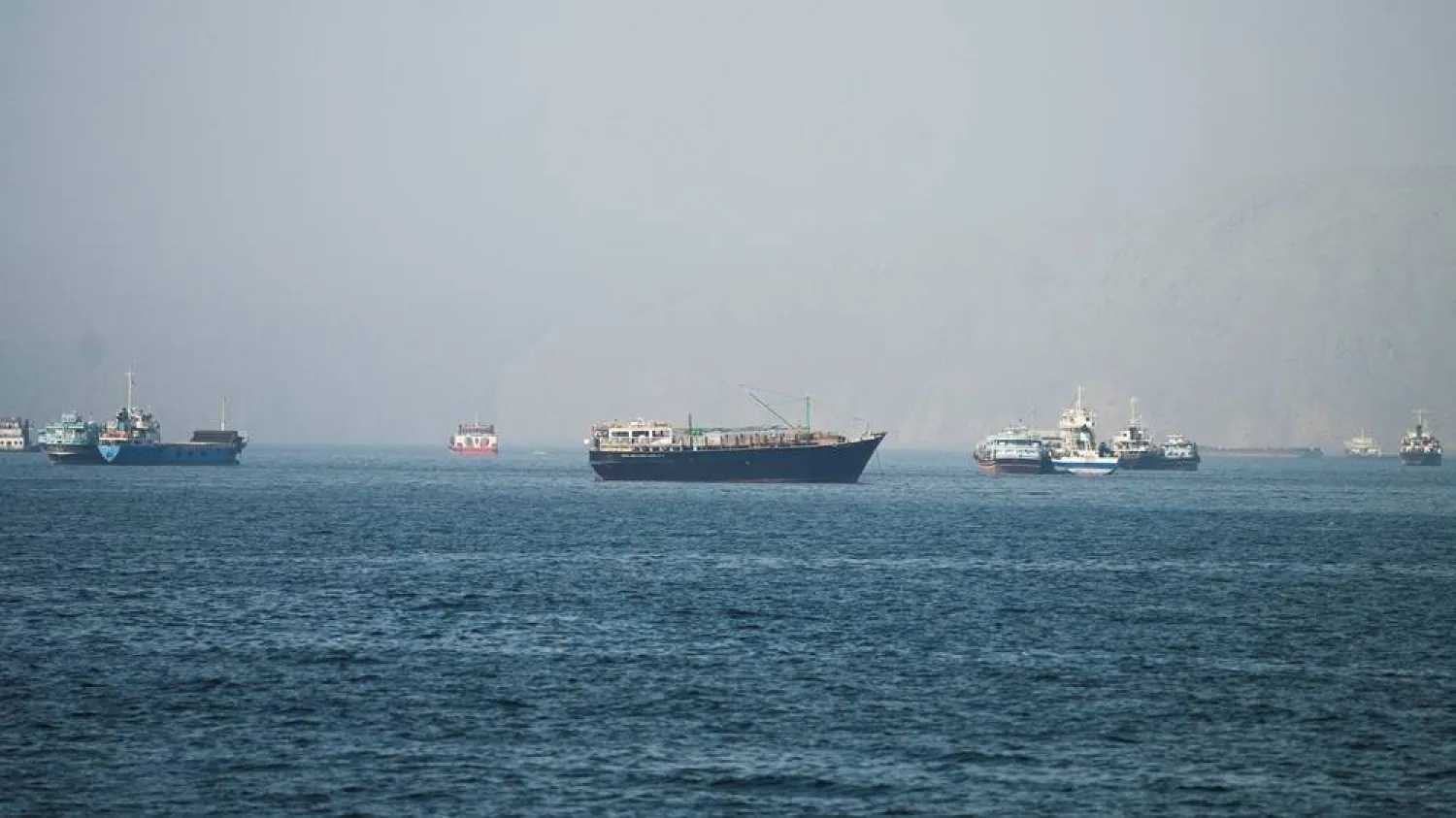
 Vessels are seen at the Strait of Hormuz, as seen from Musandam, Oman, June 1, 2026. (Reuters)
Vessels are seen at the Strait of Hormuz, as seen from Musandam, Oman, June 1, 2026. (Reuters)
TT

Iran Studying Deal to Halt War as Stalemate Persists

 Vessels are seen at the Strait of Hormuz, as seen from Musandam, Oman, June 1, 2026. (Reuters)
Vessels are seen at the Strait of Hormuz, as seen from Musandam, Oman, June 1, 2026. (Reuters)

Iran is reviewing a proposed agreement with the US to halt their war but has not communicated with Washington for a few days, Iranian media reported on Tuesday, after US President Donald Trump said negotiations were ongoing.

More than three months after the US and Israel launched strikes against Iran, the conflict has morphed into a stalemate with the pivotal Strait of Hormuz largely shut.

Iran has not yet responded to a proposed final text of a temporary deal, and was taking a "stern" approach given what it sees as a history of US non-compliance and longstanding mistrust, Mehr News Agency cited a source as saying.

The semi-official Fars agency, also citing a source, added that messages on the possible deal, or memorandum of understanding, had stopped a few days ago, with the last one being Tehran's "clear message" over Lebanon, where Iran is seeking a stop to Israel's incursion against its ally Hezbollah.

Trump said on Monday that negotiations were continuing and there would be a deal over the next week to extend a ceasefire agreed in early April and reopen the strait.

Since mid-March, he has ‌repeatedly said he ‌is close to a deal, which would postpone thorny issues including the future of Iran's nuclear program.

A ‌ceasefire ⁠has largely held ⁠since early April, but Iran and the US have exchanged strikes several times over the past week.

Oil prices fell more than 1% on Tuesday. A senior International Energy Agency official warned that oil inventories could hit historically low levels.

ISRAEL KEEPS UP STRIKES IN LEBANON

The war that began on February 28 has killed thousands of people, mainly in Iran and Lebanon.

It has caused global pain by pushing up energy prices since Iran effectively closed the Strait of Hormuz, which previously carried about a fifth of global supplies of oil and liquefied natural gas.

It also triggered the latest round of conflict between Israel and Lebanese group Hezbollah, with Israel pursuing its deepest incursion into Lebanon in 25 years.

On Tuesday, Israel kept up strikes on a string of towns in southern Lebanon, Lebanese security ⁠sources said, despite a US-mediated partial ceasefire announced on Monday.

That would entail Israel refraining from strikes on ‌Beirut and Hezbollah-controlled southern suburbs of the Lebanese capital, while the Iran-aligned group would halt attacks ‌on Israel.

But the announcement failed to reassure many Lebanese, 1.2 million of whom have been displaced, and the din of an Israeli drone over Beirut kept residents on ‌edge on Tuesday.

"Every time we return to our homes, there is a warning for us to be displaced again," said Faten Al-Chehime, who fled to a displacement camp from her home in Beirut's southern suburbs on Monday, only two weeks after returning there.

Israeli Prime Minister Benjamin Netanyahu is facing criticism domestically over any agreement to hold back from further attacks on Beirut, ahead of an election later this year he is projected to lose.

IRAN PUSHES FOR LIMITED DEAL

In the wider war, Iran is pushing for a limited interim agreement as it tries to ease economic pressure while avoiding major concessions on its nuclear program, according ‌to Iranian sources.

Tehran is seeking an end to hostilities across all fronts including Lebanon, access to billions of dollars in oil revenues, waivers on crude exports, a lifting of a US blockade on its ports, ⁠and continued leverage over the strait.

Trump ⁠is under pressure to reopen the strait and curb US fuel prices while not making concessions to Iran.

John Bolton, who served as Trump’s national security adviser in his first term and has since become a critic, said the president faced few good options.

"I think he wants to have a deal that opens the Strait of Hormuz, and he can declare victory and get the price of gasoline down," Bolton told Reuters. "But he knows if he makes a bad deal, he'll be justifiably criticized for it, so he's between a rock and a hard place, and he doesn't know what to do."

Iran's Revolutionary Guard Corps said on Tuesday that 24 vessels had transited the strait in the past 24 hours, after obtaining permission from the Guard's navy.

Iran threatened on Monday to expand its blockade to the Bab el-Mandeb Strait, another chokepoint at the mouth of the Red Sea, if Israel resumed strikes on Beirut.

Highlighting the risk at sea, the world's largest shipping group MSC said on Tuesday that one of its vessels was struck by two projectiles while in Iraq's Umm Qasr port the previous day.

The Revolutionary Guards claimed responsibility for the attack, saying it was carried out in retaliation for a US attack on an Iranian vessel in the Gulf of Oman.

The wide-reaching impact of the crisis was laid bare by UN children's agency UNICEF, which said surging transport costs and supply chain disruptions were hindering life-saving aid for Gaza, Lebanon, Democratic Republic of Congo, Mali, Somalia, South Sudan, Nigeria and elsewhere.



EU Says No Place for Serbia’s ‘Glorification’ of War Criminal Mladic

A Bosnian woman looks at the names of victims at the memorial cemetery where the victims of the Srebrenica genocide are buried, following the death of Bosnian Serb Ratko Mladic, former general convicted of Bosnia genocide, in Potocari, Bosnia and Herzegovina, August 28, 2026. (Reuters)
TT

EU Says No Place for Serbia’s ‘Glorification’ of War Criminal Mladic

A Bosnian woman looks at the names of victims at the memorial cemetery where the victims of the Srebrenica genocide are buried, following the death of Bosnian Serb Ratko Mladic, former general convicted of Bosnia genocide, in Potocari, Bosnia and Herzegovina, August 28, 2026. (Reuters)

EU Enlargement Commissioner Marta Kos on Monday criticized Serbia's plans to bury former Bosnian Serb military leader and convicted war criminal Ratko Mladic with state honors.

Mladic died on Thursday while serving a life jail term in The Hague for war crimes committed during the 1990s Bosnian war.

"Regarding Ratko Mladic, the glorification of war criminals is contrary to fundamental European values and has no place in the European Union or in countries that aspire to become members," Kos told reporters.

Serbia's justice minister Nenad Vujic said Friday that Mladic "will receive all the military and state honors to which he is entitled".

Serbian officials were awaiting details on when authorities in The Hague would release the body, he said.

Serbia is among Balkan countries seeking EU accession.

Kos said she would travel to Serbia on September 9.

"Ratko Mladic was a convicted war criminal, serving a life sentence for the genocide in Srebrenica and for crimes against humanity. And this will be the basis on which we will also assess developments," Kos added, speaking on the sidelines of the Bled Strategic Forum, a regional conference, taking place at the Bled lake resort in Slovenia.

Mladic, who had suffered several strokes in recent months, was serving a life sentence for genocide, war crimes, and crimes against humanity during the Bosnian war, including for his role in the Srebrenica massacre, Europe's worst act of bloodshed since World War II.

His conviction for the wartime killings as the former Yugoslavia descended into carnage after the fall of communism led the international press to dub him the "Butcher of Bosnia".

The 1992-1995 war left around 100,000 people dead and 2.2 million displaced.

Mladic was the military face of a brutal trio, led on the political side by ex-Yugoslav president Slobodan Milosevic and former Bosnian Serb leader Radovan Karadzic.


Trump Was Sending Message to Iran with Kharg Island Post, Says Vance

Vice President JD Vance speaks to reporters before boarding Air Force Two at Joint Base Andrews, Md., Aug. 31, 2026. (AP)
TT

Trump Was Sending Message to Iran with Kharg Island Post, Says Vance

Vice President JD Vance speaks to reporters before boarding Air Force Two at Joint Base Andrews, Md., Aug. 31, 2026. (AP)

US President Donald Trump was sending a message to Iran with his social media post about Iran's energy hub of Kharg Island being blown to smithereens, Vice President JD Vance said on Monday.

"The president likes to switch it up ‌on social ‌media a little bit. He ‌would ⁠be the first ⁠to say he doesn't make announcements about military actions on social media, but I think that he's sending a message to the Iranians," Vance said when asked ⁠about Trump's post.

Trump's one-line social ‌media post ‌on Sunday was accompanied by an AI-generated ‌video clip. A US official ‌said on Monday the military had not targeted Kharg Island in overnight strikes. An Iranian official dismissed Trump's post ‌as "laughable".

Attacking Kharg, which handled 90% of Iran's oil exports before the ⁠war ⁠launched by US and Israeli attacks on February 28, would severely disrupt its energy trade and put huge pressure on its economy.

In describing the first known US military strikes since late July, a US official said forces attacked two Iranian launchers on Larak Island.


Iran Sentences Two Women to Death Over 2026 Protests, Say Rights Groups

A woman walks past a wall mural of Iran's slain supreme leader Ali Khamenei, along a street in downtown of Tehran on August 31, 2026. (AFP)
TT

Iran Sentences Two Women to Death Over 2026 Protests, Say Rights Groups

A woman walks past a wall mural of Iran's slain supreme leader Ali Khamenei, along a street in downtown of Tehran on August 31, 2026. (AFP)

Iranian courts have issued death sentences for two women charged over anti-government protests in January, rights groups said Monday, as Tehran ramps up executions of people arrested in the demonstrations.

The two women were sentenced in separate cases but both were related to incidents in the central city of Isfahan, which was a hub of the nationwide protest activity that peaked on the nights of January 8 and 9.

Against the backdrop of the war with the United States, Iran has already executed 29 men on charges related to the demonstrations, according to the Norway-based NGO Iran Human Rights (IHR).

So far, no woman has been executed over the unrest, although Iran has hanged at least 16 women this year on other charges, per IHR.

Taraneh Rahimi, 20, was sentenced to death along with nine men over incidents during the protests in a square in Isfahan that saw two people killed, including a member of the security forces, the Norway-based Hengaw group and US-based Human Rights Activists News Agency (HRANA) said Monday.

Other defendants in the case were given sentences of up to 36 years in prison, including Taraneh's sister Romina, they added.

"Defendants' lawyers did not have access to a substantial portion of the case file and objected that they had not been given sufficient time to review the documents and evidence," HRANA said.

In the other case, Leila Abolhasani, a 43-year-old mother of two teenagers, was convicted by a court in Isfahan of setting fire to a store during the protests, the Dadban legal affairs monitor and HRANA said.

Her relatives have denied the accusation, saying she was only present at the scene and was filming the burning store, the groups said.

But she was convicted on the capital charge of "waging war against God". The case has been sent to the Supreme Court for review.

President Donald Trump in April re-posted a claim on X by a pro-Israel youth activist in the United States that eight Iranian women faced death by hanging, with the US leader urging them to be freed.

However, not all the women had been sentenced to death and some were no longer in custody.

One of the women, Bita Hemmati, had indeed been sentenced to death over the protests on charges of throwing concrete blocks from a building onto police. However, HRANA said in April that her death sentence had been overturned.