
Beirut Southern Suburbs Residents Live Between Displacement, Return

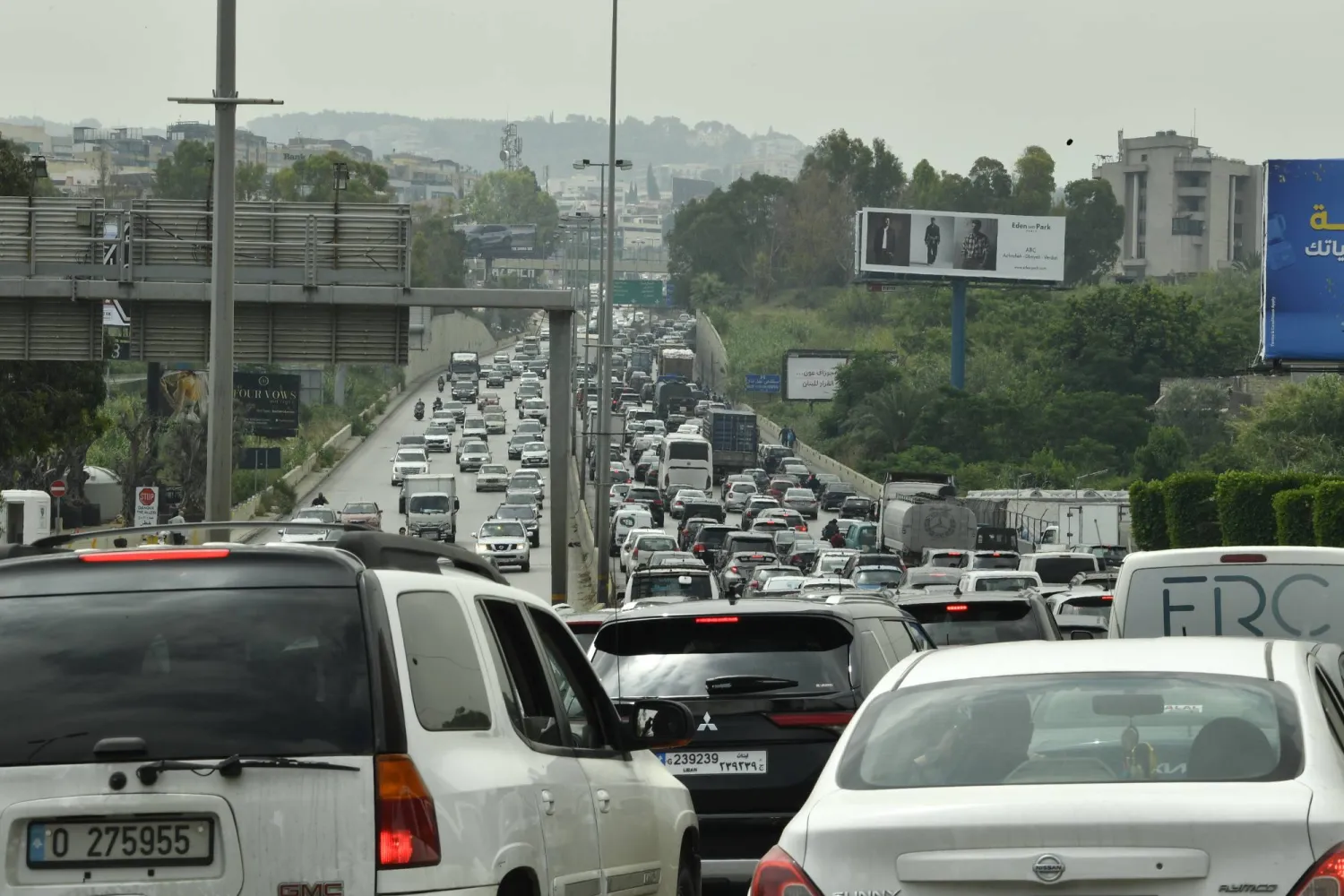
Vehicles drive on the highway as people leave Beirut's southern suburbs after Israel ordered strikes on Dahiyeh, in Beirut, Lebanon, 01 June 2026. EPA/WAEL HAMZEH
TT

Beirut Southern Suburbs Residents Live Between Displacement, Return

Vehicles drive on the highway as people leave Beirut's southern suburbs after Israel ordered strikes on Dahiyeh, in Beirut, Lebanon, 01 June 2026. EPA/WAEL HAMZEH

The latest Israeli threat threw Beirut’s southern suburbs into turmoil within hours. Schools were evacuated, parents rushed to pull their children out of classrooms, and many residents fled their homes in haste. Roads filled with a new wave of displacement, reviving scenes the Lebanese have endured repeatedly in recent months.

But the threat did not end when the warning did. The alert was lifted, but the anxiety stayed. Some people returned to work, but not to a sense of safety. For many, the question is no longer when the strike will come, but how to live under the constant expectation of the next warning.

The home that is no longer safe

Layla Hassan told Asharq Al-Awsat that the latest threat to the southern suburbs did not end for her when the warning expired. The feeling it left behind still follows her. The problem, as she sees it, is no longer tied to a single security incident, but to a permanent state of uncertainty.

She said the natural bond between people and their homes has changed radically. “The home, which once represented the safe space people turned to in fear or danger, has now become one of the sources of anxiety.”

The warning, she said, made returning more complicated than leaving, especially for those responsible for children or other family members.

Life in displacement, despite its hardship and lack of services, can sometimes feel less cruel than the anxiety of returning, she said. Electricity, water, cramped spaces and the strain of daily life become secondary details beside one overriding concern, keeping the family safe.

She added that repeated displacement gradually pushes people to adapt to abnormal conditions, until the mere feeling of safety becomes a goal in itself, even at the cost of the life they once knew.
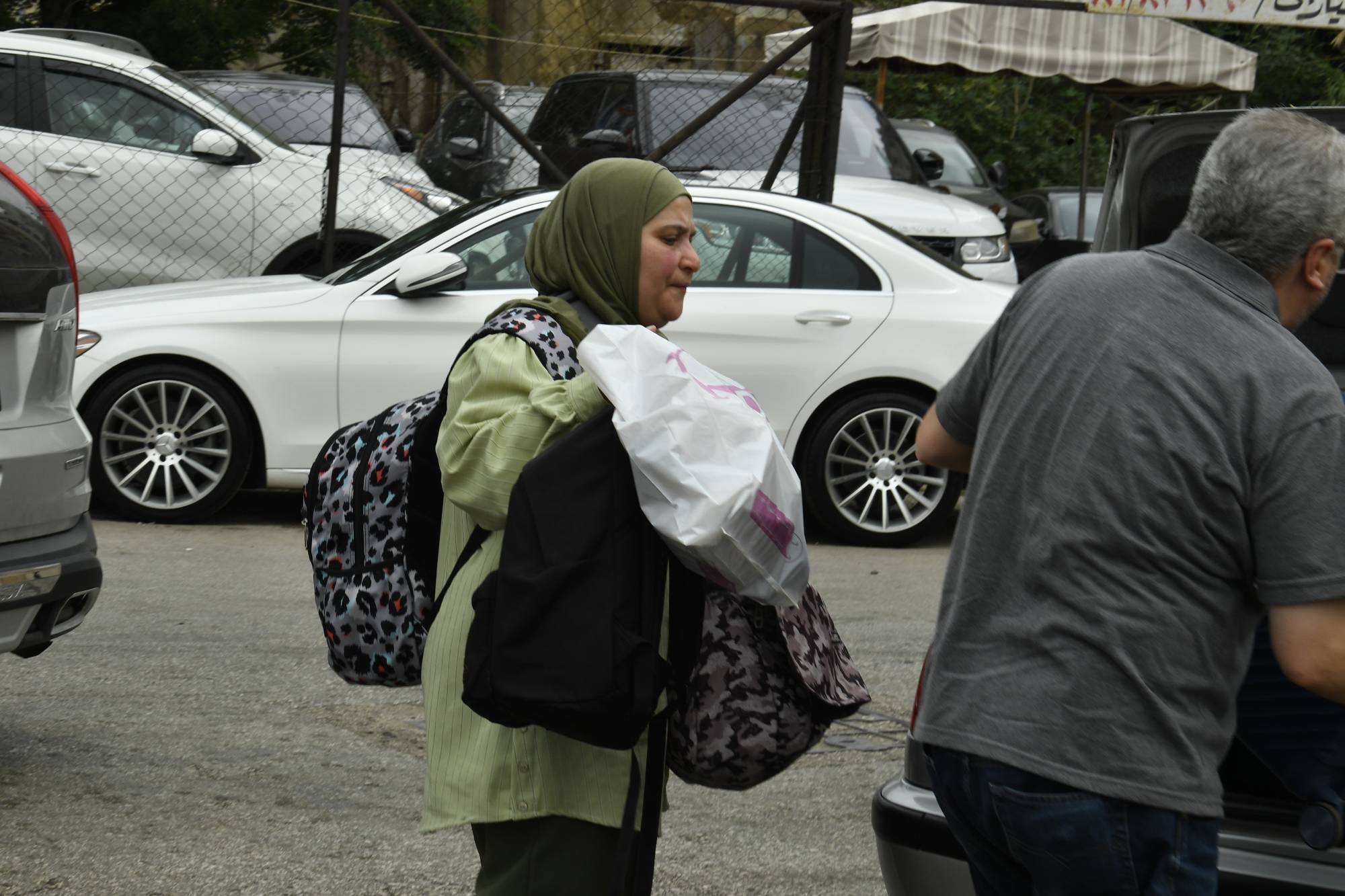
People leave Beirut's southern suburbs after Israel ordered strikes on Dahiyeh, in Beirut, Lebanon, 01 June 2026. EPA/WAEL HAMZEH

Every day begins with fear

Fatima Shams has not returned to the southern suburbs since Monday’s threat. She told Asharq Al-Awsat that “the Lebanese are living today in a state of constant anticipation that has made fear part of the daily routine. Every morning begins with a different question, but the meaning is the same, will this day pass safely?”

She described how the latest threat disrupted the daily lives of families. Her sister was at school when exams were halted and students were urgently evacuated. Within minutes, parents had to leave work and head to schools, caught between traffic-clogged roads and fear of a sudden security development.

“The hardest thing people are living through is not only the fear of strikes, but the constant feeling of instability,” she said. “Families are no longer able to plan their day or their week, because any new warning can overturn everything.”

She said the danger no longer feels confined to one area after warnings and tensions spread to different parts of Lebanon, making insecurity more widespread than ever.

Anticipation is wearing people down

Ali Noureddine, from the southern town of Toul and a resident of Beirut’s southern suburbs, described life for residents as “deadly anticipation.”

He told Asharq Al-Awsat that “the crisis is no longer linked to the warning itself, but to the psychological state that follows it. After every threat, people remain trapped between the possibility of returning to normal life and the possibility of a new escalation.”

He said this constant anxiety drains residents more than direct security incidents, because it turns life into an open-ended wait that no one knows when it will end.

The anxiety, he added, is not limited to the southern suburbs. It reaches the south as well, where families follow news of their towns, homes and areas with no clarity over what comes next.
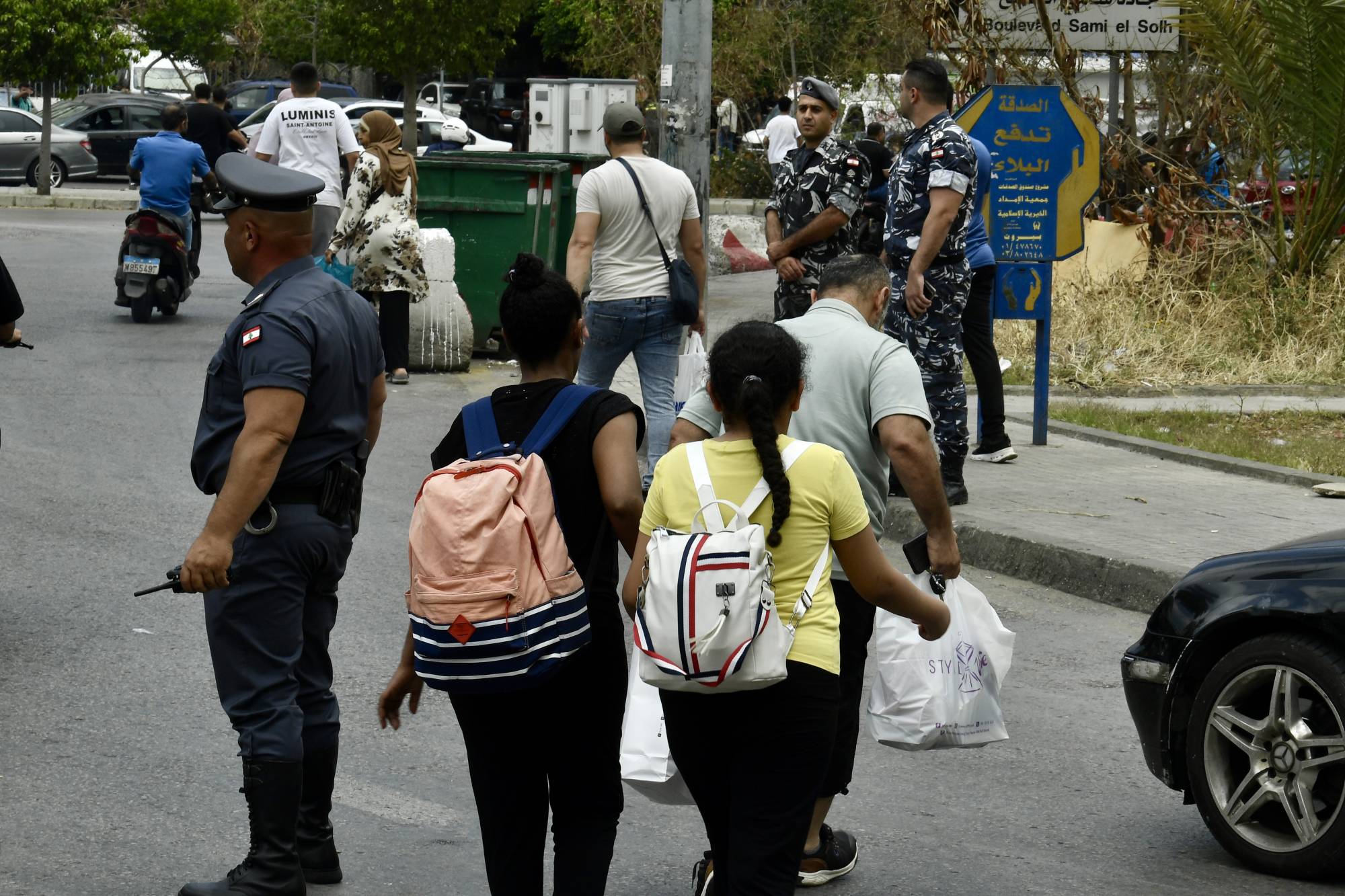
People leave Beirut's southern suburbs after Israel ordered strikes on Dahiyeh, in Beirut, Lebanon, 01 June 2026. EPA/WAEL HAMZEH

We carry our memories in a bag

Layan Abdullah has not returned to the southern suburbs since the latest threat. For the university student, campus life is no longer about lectures, exams and ambitions. It is about displacement and the search for safety.

She told Asharq Al-Awsat that “her life has become a matter of packing belongings into a bag, moving to a new place, then preparing for the possibility of doing it again.”

Her generation, she said, can no longer think about future projects or career plans. The priority has narrowed to getting through the day safely.

She spoke of the harsh feeling that accompanies each displacement, reducing an entire life to a single bag. “A person does not leave behind only walls and furniture, but memories, details and relationships tied to a place.”

She also pointed to the added suffering of families with patients who need continuous medical care. Every move brings new questions about safe roads, access to hospitals and securing treatment, adding another layer of pressure to the psychological burden everyone is carrying.

Displacement from the southern suburbs and fear of losing Bint Jbeil forever

Hassan Bazzi does not describe the latest threat to Beirut’s southern suburbs as a passing security incident. For him, it was a moment that revived deeper fears about his future and the future of his hometown, Bint Jbeil.

He told Asharq Al-Awsat that “he found himself, like thousands of others, facing the prospect of another displacement from the southern suburbs, while carrying the feeling that the distance between him and his southern town, where he had spent years planning to return and settle, is growing day by day.”

“After the latest threat to the southern suburbs, the same feeling returned, that our entire lives have become suspended,” he said. “It is no longer only about where we live today or tomorrow, but about an entire future that we do not know whether we will be able to reclaim.”

He said he owns land and property in Bint Jbeil that he had seen as his life project and source of stability after more than three decades of work. But with the war continuing and the political and military scene growing more complicated, he now feels those plans slipping farther away.

“I imagined I would return to live on my land and take care of what I had built over the years. I thought the hardship of 30 years would give me a chance to rest and settle down. Today, I feel all of that has been postponed indefinitely,” he said.

He said repeated threats and continued displacement from the southern suburbs and the south have left people in a state of accumulated psychological exhaustion, making it hard to think about the future or make any long-term plans.

“I fear our children will grow up not knowing these villages as we knew them, and I fear that waiting to return will become a permanent state,” he said. “That is why displacement from the southern suburbs alone is not what worries me. What worries me more is that a day may come when I feel Bint Jbeil has become just a memory.”


‘Life and Hope’: Lebanon Hospital Resilient After Israeli Attack

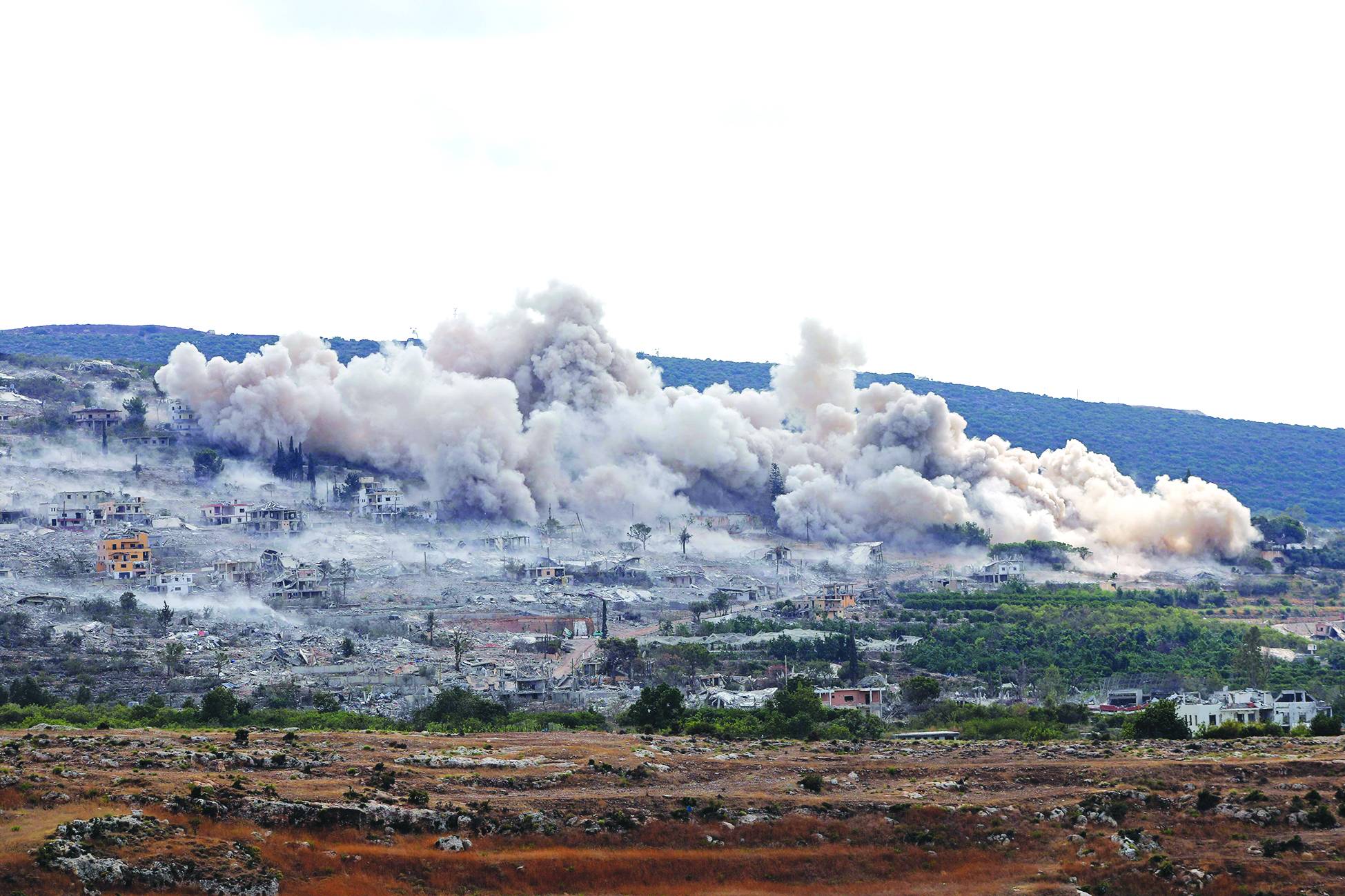
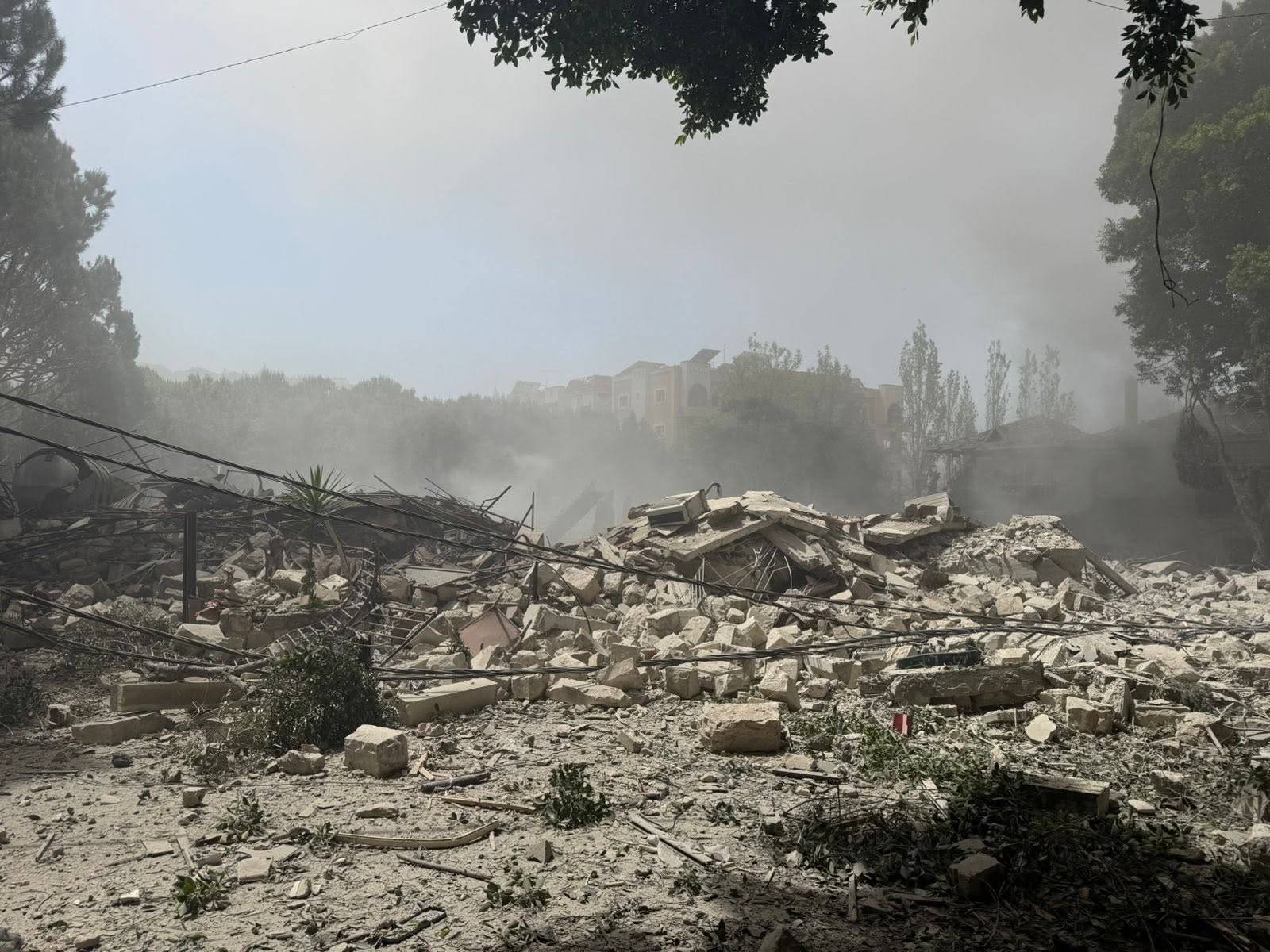
02 June 2026, Lebanon, Tyre: Debris and extensive damage are pictured inside the Jabal Amel Hospital in Tyre after Monday's Israeli strike. (dpa)
TT

‘Life and Hope’: Lebanon Hospital Resilient After Israeli Attack

02 June 2026, Lebanon, Tyre: Debris and extensive damage are pictured inside the Jabal Amel Hospital in Tyre after Monday's Israeli strike. (dpa)

In a south Lebanon hospital heavily damaged by deadly Israeli strikes nearby, Dr. Nasser al-Masri held a new-born baby, calling him "a message of life and hope" despite the war.

Israeli strikes near the Jabal Amel hospital in Tyre on Monday killed four people and wounded 127, including four doctors, 27 nurses, and eight administrative employees, Lebanon's health ministry said.

They also caused "severe and extensive damage" to the facility, it added.

"Despite everything that happened yesterday, there was a scheduled delivery today... (and) the mother insisted on delivering at the hospital," Masri said.

"This baby was born today, he's just a few minutes old... He brought us a message of life and a message of hope for the future."

Glass was scattered across some hospital rooms on Tuesday, while dust and debris covered beds and tables.

Medication was strewn on corridor floors, and staff tried to work as others cleaned up around them.

"We're taking in any patient that comes to us," Masri said, adding that "even two hours after the raids, we were able to work normally, and the administration is determined to stay and work".

Around the hospital, the devastation was stark: a nearby building had been levelled, others were severely damaged and debris was scattered round near parked ambulances.

The roof of the hospital's parking collapsed, crushing several vehicles. Bulldozers worked to clear away the rubble.

- 'Steadfast' -

Inspecting the damage, Mohammad Derbaj, head of the hospital's maintenance department, said that "the civilian buildings were not the intended target, but rather Jabal Amel was targeted in order to put it out of service, but we are steadfast".

"What happened has increased our determination and strength," he added, as the hospital administration "made a decision yesterday that the hospital will return... We will work day and night to restore the hospital to what it was".

Israeli strikes have not spared Lebanese hospitals since the start of the latest Israel-Hezbollah war on March 2.

The health ministry says 17 hospitals have been damaged, with three forced to close, and 128 rescuers and medical personnel have been killed.

The Lebanese Italian hospital in Tyre was also damaged by an Israeli attack in April.

A strike last month near the city's Hiram hospital wounded 13 staff and damaged it, according to the ministry.

At Jabal Amel hospital on Tuesday, Hussein Qassir, head of the intensive care unit, told AFP they transferred patients from one ICU ward after it sustained significant damage in the airstrikes.

"We were expecting a strike near or adjacent to the hospital... but I didn't expect that the intensive care unit would be this damaged (but) the situation could have been so much worse.

"Despite this, we continue... it is our duty."

- 'Criminality' -

Abdinasir Abubakar, World Health Organization Representative to Lebanon, said on Tuesday that "two out of three hospitals" in the Tyre district, Jabal Amel and Hiram, "are damaged although continuing to function, and the third hospital is overwhelmed as it deals with an influx of injured patients".

The historic city in southern Lebanon, which still hosts thousands of displaced people from nearby areas, has been subject to repeated Israeli strikes that have continued despite an April 17 ceasefire agreement that has not been respected by either Israel or Hezbollah.

Israel's military has repeatedly warned residents of Tyre and its surroundings to evacuate in preparation for what it said are operations against Hezbollah.

Staffer Khalil Mustapha, displaced from the border town of Aitaroun, took shelter in the hospital after losing his home.

"I no longer have a home. Israel destroyed it and I came to the hospital. I never expected their level of criminality would reach this point," he said.

Zainab Fakih, who works in the laboratory, was sitting with her colleagues when the attack came.

"We were terrified... We opened the doors and rubble rained down on us, but luckily no one was hurt," she said.

"We didn't think they would bomb the area around the hospital. But we come here because this is our job, even though our families object", fearing for their safety.


Iran War Hands Syria Windfall as Airlines Reroute over Its Airspace

A Jazeera Airways Airbus A320neo takes off from Damascus International Airport, as regional airlines resume their flights to Syria after a hiatus because of the war, in Damascus, Syria, May 31, 2026. Syria's General Authority of Civil Aviation/Handout via REUTERS
TT

Iran War Hands Syria Windfall as Airlines Reroute over Its Airspace

A Jazeera Airways Airbus A320neo takes off from Damascus International Airport, as regional airlines resume their flights to Syria after a hiatus because of the war, in Damascus, Syria, May 31, 2026. Syria's General Authority of Civil Aviation/Handout via REUTERS

Syria recorded nearly 12,000 aircraft transits in May as regional airlines rerouted around airspace disrupted by conflict in the Middle East and into skies that most carriers had avoided for more than a decade.

Figures from Syria's General Authority for Civil Aviation show 11,801 flights crossed Syrian airspace, more than double the 4,267 recorded in February, the last full month before the Iran war disrupted regional aviation. Overflights in May were about 375% higher than in the same month last year.

Syria's airspace was a no-go zone throughout the 14-year civil war that ended with the ousting of President Bashar al-Assad in late 2024.

The turnaround is potentially lucrative for Syria, which increased the fees it charges airlines early this year.

Based on a flat fee of $499 per flight introduced by Syria's new government, last month's traffic could ‌have generated as much ‌as $5.9 million in overflight revenue, according to Reuters calculations.

The General Authority for Civil ‌Aviation ⁠declined to comment on ⁠revenue potential and the new fees.

Airlines were forced to reassess Syria after US and Israeli airstrikes began the Iran war on February 28 the airspace over Iraq and the Gulf that airlines previously relied upon was shut during March.

A ceasefire led to the reopening of airspace in April, but the majority of flights to Europe from Dubai and Doha - two of the world's busiest aviation hubs - have since crossed central Syria rather than Iraq, according to flight-tracking services Flightradar24 and AirNav.

Flying over Syria cuts journey times and fuel costs as airlines try to lessen the impact of the surge in international oil ⁠prices caused by the disruption linked to the Iran war.

SYRIA IS STILL HIGH RISK

Syria ‌upgraded infrastructure at Damascus International Airport after receiving advanced radar and ‌navigation systems from Türkiye late last year, according to Turkish Transport Minister Abdulkadir Uraloglu.

Even so, OPSGroup, an aviation risk monitoring advisory body, said ‌that airspace over Syria is still considered risky and is operating with "procedural control only" - the most basic level ‌of air traffic control.

Traffic remains less than half the levels before Syria's war, according to aviation officials, and the increase in traffic is largely limited to Gulf carriers as Europe's aviation safety agency still recommends airlines avoid flying over the country and region due to the Iran conflict.

Asian and North American carriers are also largely avoiding Middle Eastern airspace.

Syrian authorities, however, are upbeat.

"The increase ‌in overflight traffic reflects the beginning of a real shift in how airlines view Syrian airspace, as a viable and dependable route once again within the regional ⁠air traffic network," General Authority ⁠for Civil Aviation head Omar al-Hosari told Reuters.

He said GACA had updated air routes, reassessed traffic patterns and strengthened navigation, surveillance and air traffic control systems and adopted risk-based safety assessments in line with standards set by the International Civil Aviation Organization.

As part of an overhaul of the payment systems for overflights, GACA has outsourced the collection of charges to Syrian handling agents, as well as OPSGroup and International Flight Planning Solutions, a private Lebanese flight-planning firm.

Syria's flat fee of $499 per flight - divided between a $430 charge and a $69 communication fee - is regardless of aircraft type, size or operation type, according to a GACA document reviewed by Reuters and FAS Aero, one of the handling agents contracted by the government. Handling agents often add further fees on top.

Under Assad, Syria charged $75 for smaller aircraft to fly over the country, or about $1 to 1.25 per metric ton for larger planes, according to OPSGroup and a Syrian aviation official, who spoke on condition of anonymity.

The GACA document also shows a 50% reduction in levies for domestic flights and aircraft registered in Syria, and full exemptions for aircraft belonging to heads of states, official delegations, and search and rescue operations.


Iran Eyes Limited US Deal to Relieve Economic Strain and Buy Time

 A drone view shows vessels at the Strait of Hormuz, as seen from Musandam, Oman, June 1, 2026. (Reuters)
A drone view shows vessels at the Strait of Hormuz, as seen from Musandam, Oman, June 1, 2026. (Reuters)
TT

Iran Eyes Limited US Deal to Relieve Economic Strain and Buy Time

 A drone view shows vessels at the Strait of Hormuz, as seen from Musandam, Oman, June 1, 2026. (Reuters)
A drone view shows vessels at the Strait of Hormuz, as seen from Musandam, Oman, June 1, 2026. (Reuters)

Iran is pushing for a limited interim agreement with the United States in a bid to ease mounting economic pressure and stabilize the situation at home, while avoiding major concessions on its nuclear program, according to sources and analysts.

The approach reflects a familiar playbook for the Iranian regime: absorb pressure, avoid irreversible compromises and keep negotiations alive without shifting core positions, three Iranian sources close to decision-makers said, according to Reuters.

But the latest push is also driven by more immediate concerns. Officials see a narrow deal as a way to buy time, unlock financial relief and contain rising domestic risks over a deteriorating economy without addressing the most contentious issues.

The diplomatic maneuvering follows weeks of escalation after US-Israeli strikes in late February spiraled into a broader regional conflict. Iranian attacks across the Gulf heightened fears over the security of the Strait of Hormuz, a chokepoint for roughly a fifth of global oil and liquefied natural gas supplies.

Three months on, and ‌despite a fragile ‌ceasefire in early April, the conflict has hardened into a stalemate. A US blockade on ‌Iranian ⁠ports and Tehran's ⁠grip on the Strait have sustained mutual pressure, driving up economic costs while leaving the risk of renewed fighting unresolved.

Against that backdrop, both sides have lowered expectations of a comprehensive settlement. Instead, they are exploring what officials describe as a temporary memorandum — effectively an interim deal — aimed at preventing a return to open conflict, while deferring core disputes over Iran's nuclear activities.

TEHRAN SEEKS BREATHING SPACE

For Tehran, such an arrangement is primarily a means of converting military and economic pressure into liquidity, breathing space and de-escalation, without curbing sensitive nuclear work.

Iran is seeking an end to hostilities across all fronts, including Lebanon, access to billions of dollars in oil revenues, waivers on crude ⁠exports, a lifting of the US port blockade and continued leverage over the strait, ‌while postponing decisions on the most contentious issues.

The framework would center on temporary ‌easing and phased access through the waterway, leaving unresolved questions over enrichment capacity and Tehran's stockpile of highly enriched uranium, including material enriched to ‌60%.

Alex Vatanka, a senior fellow at the Middle East Institute in Washington, said Tehran's calculation is shaped less by battlefield ‌risks than by economic pressure and uncertainty.

"Iranian leaders understand that time is not necessarily on their side... their calculation appears to be that dialogue, even limited dialogue, is preferable to entering an open-ended period of economic attrition and uncertainty that could gradually weaken its ability to govern at home and project influence abroad."

TEHRAN FEARS PROTEST REVIVAL

Much rests on the success of negotiations. President Donald Trump is under pressure to reopen ‌the Strait of Hormuz and curb US fuel prices, while fending off criticism from Iran hawks in his own Republican party over any concessions to Tehran.

Iran's leadership also ⁠faces domestic pressures. Years of sanctions, ⁠economic mismanagement and conflict have fueled inflation, currency depreciation and a sharp decline in living standards.

Short-term financial inflows are therefore crucial to Tehran's interest in a preliminary deal, the sources said, as they could keep the economy running, ease immediate pressures and stave off a resurgence of unrest.

In January, Iran's clerical establishment and the Revolutionary Guards killed thousands while suppressing nationwide protests sparked by economic grievances.

Hamidreza Azizi, a visiting fellow at the German Institute for International and Security Affairs (SWP) in Berlin, said a memorandum could also address mounting concerns about the long-term resilience of the system.

"By ending the conflict, reducing economic strain, removing US military pressure around Iran, and creating space for reconstruction, an MoU could help prevent a gradual erosion of state capacity and governance," Azizi said.

STRAIT REMAINS IRAN'S LEVERAGE

The Strait of Hormuz remains central to Iran's leverage. Within the clerical establishment, it is increasingly seen less as a bargaining chip than as a durable strategic asset.

Any arrangement that restores shipping while preserving that leverage would leave Tehran's influence over the chokepoint intact, the sources said, allowing flows to resume while stability remains tied to political negotiation.

One source said a limited deal would effectively restore prewar conditions without forcing Iran to yield to Washington’s demands, adding: "With the start of the war, Trump gave Iran the gift of control over the Strait."