
Ukraine Strike Kills 3 in Russian-occupied Crimea

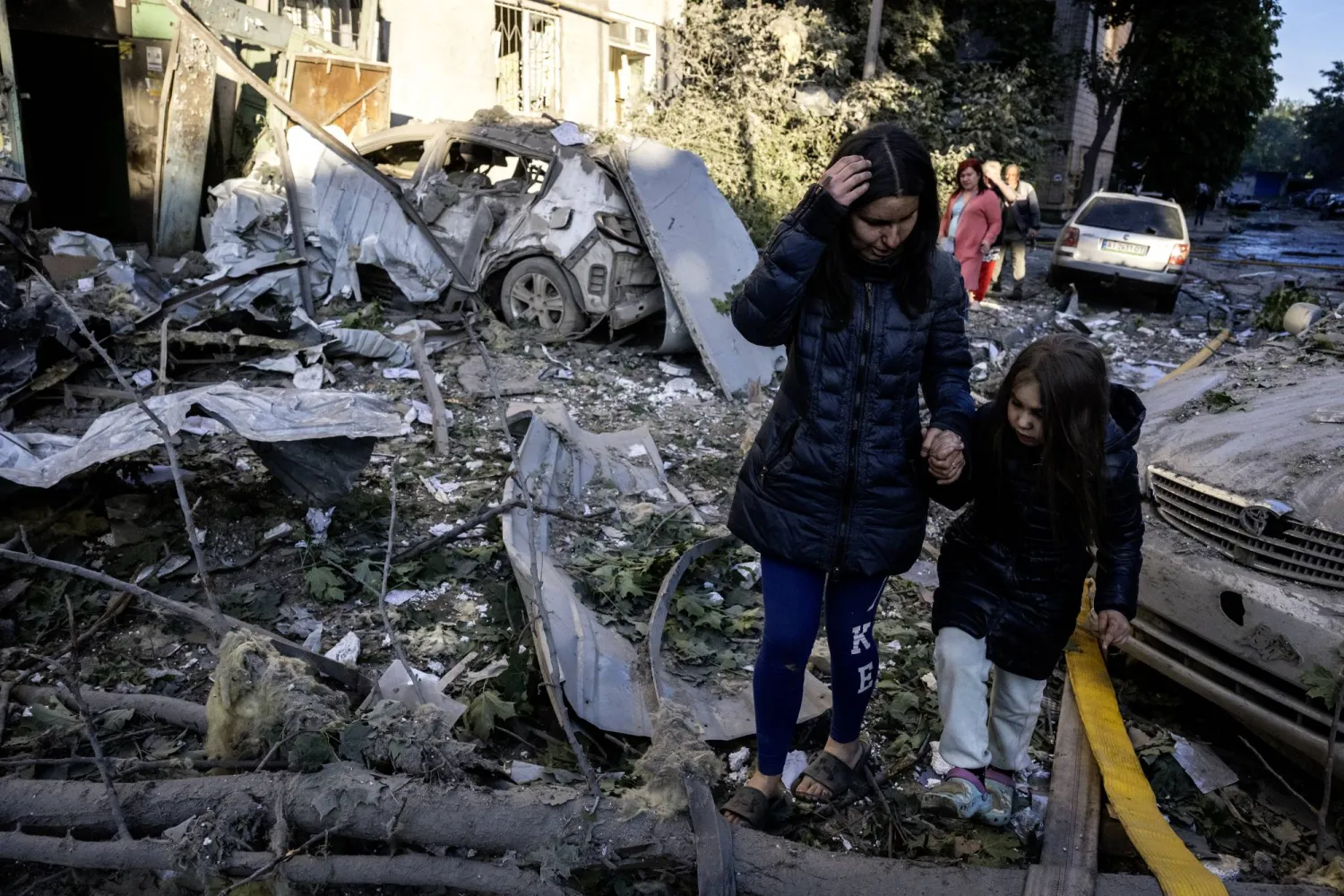
A local woman, Olga, 35, and her daughter Natalia, 6, walk at the site of a Russian strike on a residential area in Kyiv, Ukraine, 02 June 2026, amid the Russian invasion. EPA/MAXYM MARUSENKO
TT

Ukraine Strike Kills 3 in Russian-occupied Crimea

A local woman, Olga, 35, and her daughter Natalia, 6, walk at the site of a Russian strike on a residential area in Kyiv, Ukraine, 02 June 2026, amid the Russian invasion. EPA/MAXYM MARUSENKO

A Ukrainian strike killed at least three people in Crimea, the region's Moscow-installed authorities said Thursday, a day after Kyiv targeted energy and military sites in Saint Petersburg where Russia was hosting an economic forum.

US Secretary of State Marco Rubio warned of a "real" risk of the Ukraine war escalating as Kyiv underlines its ability to strike deep inside Russian territory with the attacks.

Ukraine has described its strikes on Saint Petersburg as "fair" retaliation for a wave of Russian bombardment on its territory.

Sergey Aksyonov, the Moscow-installed head of the Crimea region, said early Thursday that preliminary reports showed a strike on non-residential buildings in Simferopol claimed three lives and wounded seven others, AFP said.

"Emergency services are currently at the scene," Aksyonov wrote on Telegram.

The strike came as 20,000 people from 130 countries were due at the three-day annual Saint Petersburg International Economic Forum (SPIEF) -- an event once dubbed "Russia's Davos".

President Vladimir Putin is to give a keynote address at the forum on Friday and Kremlin spokesman Dmitry Peskov vowed Russia would provide a "systemic" response to Ukraine's strikes on the city.

Black smoke from the strikes was visible from the conference venue as the first sessions started on Wednesday.

Valeria, a 32-year-old businesswoman from Moscow at the forum, told AFP she was used to the threat of attacks.

"We have been living under such attacks for many years now," she said.

- 'Real' escalation risk -

Ukrainian officials have said the Saint Petersburg attack on an oil terminal and the city's Kronstadt military base was meant to disrupt the conference.

"The Petersburg forum is opening with a nice plume of black smoke in the background after Ukrainian strikes," said Sergiy Sternenko, an adviser to the Ukrainian defense minister.

Ukrainian President Volodymyr Zelensky said his country was responding "accordingly" to Russian bombardment.

"It's just a matter of time before we can scale up the intensity of our responses," Zelensky said during a press conference in Kyiv with NATO chief Mark Rutte.

On Wednesday, a drone strike on a bus in Russian-occupied east Ukraine killed at least seven people, Moscow-installed officials said.

Two others were killed, one in the Bryansk region near the Ukraine border and another in the Russian-occupied Kharkiv region, they added.

Meanwhile, Russian attacks left at least 10 dead across Ukraine, local officials said.

Rubio said at a US Senate appropriations panel that Ukraine has "become increasingly effective at conducting long-range strikes deep into Russia".

It's "one of the things that reminds us of why it's important to try to bring this war to an end, if we can, because the risk of escalation is real, more real than it was two years ago," Rubio added.

Speaking earlier to the House Foreign Affairs Committee, Rubio lamented the lack of progress on ending the war, which began with Russia's full-scale invasion in February 2022.

"To this point, neither side has been willing to make concessions, particularly on the Russian side, necessary in order to bring peace about," he said.

"But we stand ready, and we've engaged and invested a tremendous amount of high-level time on that conflict over the last year," he added.

EU foreign affairs chief Kaja Kallas earlier told AFP that Ukraine's attacks had spooked the Kremlin.

"It clearly shows also panic on the Russian side -- why they are increasing the terrorist attacks that they're doing in Ukraine is because they don't know what to do with these things," Kallas said in an interview.

"Putin is losing money, men, and momentum, and that's why he's increasing attacks on civilians."


Rubio Says Iran Using Hormuz as Leverage

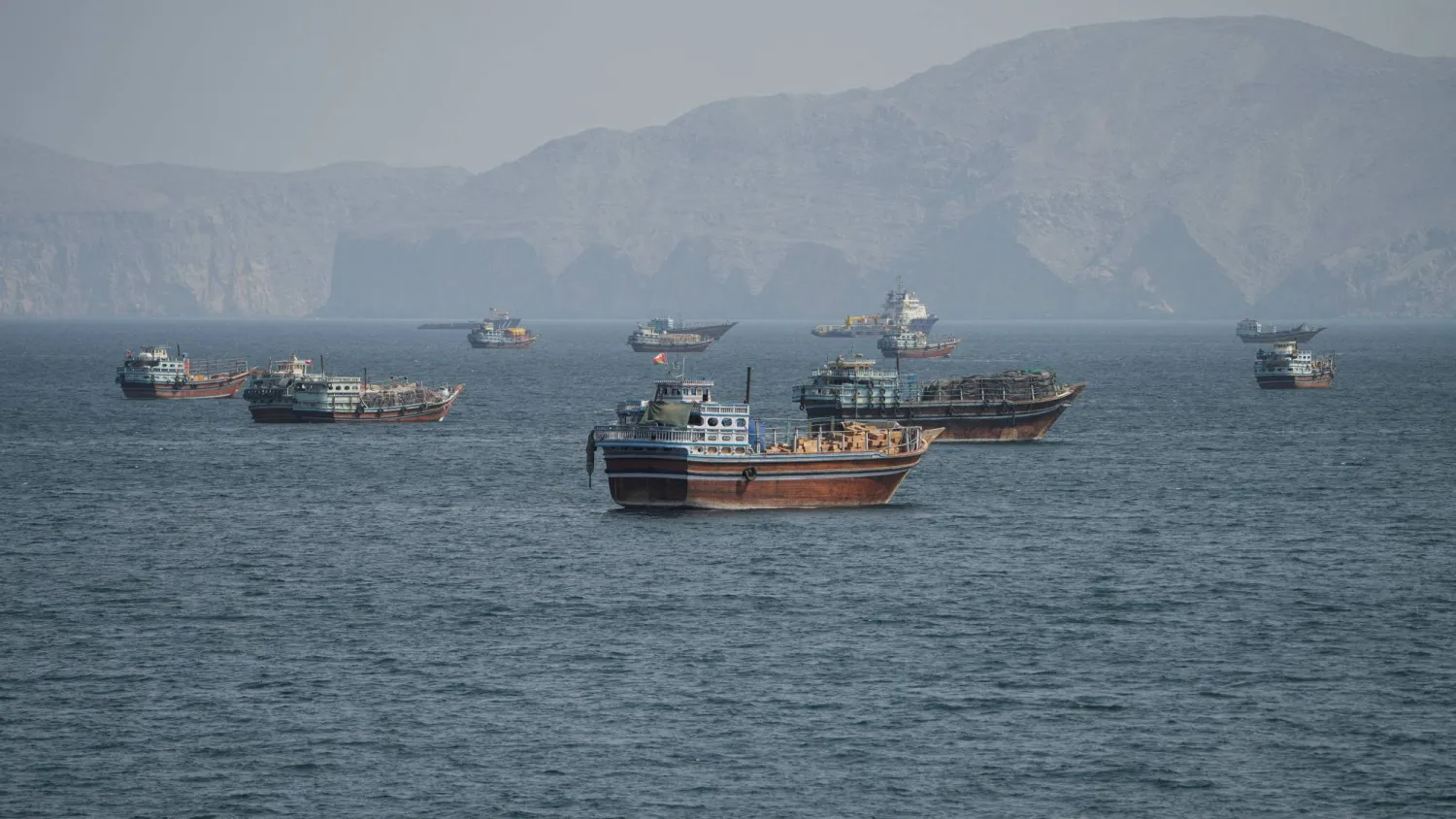
A vessel at the Strait of Hormuz, as seen from Musandam, Oman, July 17, 2026. (Reuters)
TT

Rubio Says Iran Using Hormuz as Leverage

A vessel at the Strait of Hormuz, as seen from Musandam, Oman, July 17, 2026. (Reuters)

US Secretary of State Marco Rubio said Sunday that Iran is using the Strait of Hormuz as leverage in the ongoing Middle East conflict, adding that other countries needed to step up pressure to protect global shipping.

"It's clear that Iran, at least some people in Iran, want to control the straits and hold that as leverage against the world," Rubio told reporters ahead of traveling to the Philippines for a meeting of foreign ministers with the Association of Southeast Asian Nations (ASEAN).

"The United States will do and continue to do what it needs to, to protect global shipping, but other countries need to begin to step up and provide, whether it's hardware or finances, to help carry that burden," he continued.

When asked if there was still a diplomatic off-ramp to the escalating conflict, Rubio said: "I think we're always open to diplomacy. It has to be real. It has to be a deal that they're willing to live by."

A fragile truce between Iran and the United States broke down after reported attacks by Iran on ships in the Strait of Hormuz, the critical international waterway through which a fifth of the global oil and gas supply transited prior to the war.

"They can't have an MoU that's alive if they're violating the terms of it," Rubio said.

"What I will say is that the United States always remains open to a diplomatic solution. We've tried multiple times with Iran, and we'll continue to try."


US Launches More Airstrikes Against Iran After Announcing Another Death of a Service Member

This screen grab made on July 19, 2026 from handout video footage released by the US Central Command (CENTCOM) on July 18, 2026 shows US forces launching what the military says are precision strikes targeting Iranian military capabilities for the eighth consecutive night. (US Central Command (CENTCOM) / AFP)
TT

US Launches More Airstrikes Against Iran After Announcing Another Death of a Service Member

This screen grab made on July 19, 2026 from handout video footage released by the US Central Command (CENTCOM) on July 18, 2026 shows US forces launching what the military says are precision strikes targeting Iranian military capabilities for the eighth consecutive night. (US Central Command (CENTCOM) / AFP)

The United States conducted a new round of airstrikes early Monday targeting Iran after announcing the death of another American service member, and Iran fired missiles toward Jordan that risked widening the conflict into neighboring Israel.

Step by step, the US and Iran have inched closer to all-out war as last month's interim deal meant to permanently end the fighting has crumbled and shipping traffic in the Strait of Hormuz has largely stalled. Both sides have targeted civilian infrastructure relied on by millions of people, while benchmark Brent crude rose Monday above $90 a barrel, further fueling a global energy crisis sparked by the conflict.

The US military said the service member was killed in Iraq on Saturday during the “controlled detonation” of a downed Iranian drone.

“We hit them very hard again tonight,” US President Donald Trump said. “And we did that in honor of the” soldiers killed, he said.

US launches ninth night of Iran strikes

Earlier, the military said its strikes targeted Iran's paramilitary Revolutionary Guard to retaliate for Friday's killing of troops in Jordan. One service member was missing after that attack, and the military's new statement said “unidentified remains” were found Sunday and were being examined. Since the war began, 17 US service members have been killed.

The renewed exchanges of fire, now in their second week, have seen the US target bridges and electrical facilities in Iran.

The US military’s Central Command announced a new round of strikes early Monday, now into their ninth straight night. Central Command said it targeted “Iranian military command centers, air defense and coastal surveillance sites, maritime capabilities, missile and drone launch sites and communications networks.”

There was no immediate word from Iran on any casualties or damage from the attacks. Iranian state media reported explosions being heard in southern and northwestern Iran.

As the strikes began, a ship caught fire early Monday in the Strait of Hormuz near the coastline of Oman, the British military said. The Guard later claimed it was targeting tankers in the strait.

Tehran has retaliated by hitting countries throughout the Middle East.

Bahrain, Jordan and Kuwait again activated air defenses for incoming Iranian drones and missiles. Early Monday, the US Embassy in Bahrain issued a warning saying “Iran may seek to target unspecified locations in central Manama,” the capital, without elaborating.

Iran says a nuclear site under construction was hit

Footage released Sunday by the US military appeared to show strikes carried out by fighter jets and by Tomahawk cruise missiles launched from the sea. One target site appeared to be in a valley of a mountainous region. The Guard often has missile bases and other military equipment tucked into mountain ranges.

Iran’s atomic energy agency said US strikes targeted the construction site of a planned nuclear power plant in the southwest, state television reported.

Satellite images from Planet Labs PBC of the Darkhovin nuclear plant site showed earth clearing but little construction as of July 9. Iran did not previously announce it as being targeted.

The International Atomic Energy Agency said the site, in the “very early stages of construction,” contained no nuclear material when the UN watchdog last visited.

Meanwhile, Jordan's military said it shot down several Iranian missiles. The missiles did not cause casualties or damage, according to Jordan's military.

Israel's military said Iranian missiles launched toward the Jordanian port city of Aqaba just across the border could spill over, warning Israelis to expect the first air-raid sirens in weeks.

Eilat, the Israeli city that neighbors Aqaba, cited security officials as saying two interceptors were launched from its outskirts to prevent the fall of debris.

During the latest fighting, Iran has focused attacks on Arab states rather than Israel, which launched the war with the US on Feb. 28.

Kuwait said one of its power and water desalination plants was attacked for the second time in two days, causing fires. Its Ministry of Electricity, Water and Renewable Energy said the power grid remains stable. In Kuwait, about 90% of drinking water comes from desalination.

International humanitarian law generally protects civilian infrastructure such as bridges and power plants from attack, but such sites can lose protections if used for military purposes. In such cases, attacks must be proportionate and minimize civilian harm.

The Strait of Hormuz remains key to the conflict

Trump has threatened to target Iran’s power stations and bridges to try to compel Tehran to loosen its hold on the Strait of Hormuz, which saw one-fifth of global oil supplies transit before the war. Recent attacks suggest the US military is carrying out that plan.

The US in the past week reimposed a naval blockade on Iranian ports to halt its shipments of crude oil. The military on Saturday said it had redirected six ships and disabled one since then.

The halfway point has passed in the 60 days the deal set out to negotiate the permanent end of the war and other issues, including Iran's nuclear program.

US Secretary of State Marco Rubio told reporters that the US is still open to negotiating with Iran but that “it has to be real.”

“We’re going to continue to respond. If the door opens to diplomacy — if the guys that want to do something productive for Iran win and take control of that system, or take control of the negotiations — that’ll be a very positive development," Rubio said. “That’s not where we are tonight, unfortunately.”

Iranian authorities on Sunday said at least 50 people have been killed and 517 wounded in the latest rounds of US strikes.


Türkiye Condemns Closing of 8 Turkish Schools in Greece

View of the island of Halki from a ferry sailing to the island of Rhodes, off the island of Halki, Greece, April 13, 2021. (Reuters)
TT

Türkiye Condemns Closing of 8 Turkish Schools in Greece

View of the island of Halki from a ferry sailing to the island of Rhodes, off the island of Halki, Greece, April 13, 2021. (Reuters)

Türkiye's foreign ministry on Sunday condemned a decision by Greece to close eight schools catering to the country's Turkish-speaking minority, accusing its neighbor of discrimination.

In a communique, the ministry condemned "systematic practices aimed at undermining the right to education of the Turkish minority in Western Thrace".

"We once again call on Greece to act in accordance with its contractual obligations regarding minority rights and fundamental rights," it added.

The number of Turkish-language schools left in the north-east region of Thrace -- near the border between the two countries -- is now 76.

Greek authorities have said they were closing schools, and not solely in Turkish-speaking areas, because of declining numbers of pupils.

According to 2021 statistics, some 120,000 Muslims of Turkish origin live in Thrace, where they enjoy specific rights in regards to religion and education under the Treaty of Lausanne, signed after the First World War.