


Lebanon-Israel Ceasefire Deal: Complete Cessation of Hezbollah Attacks, Creation of Pilot Zones

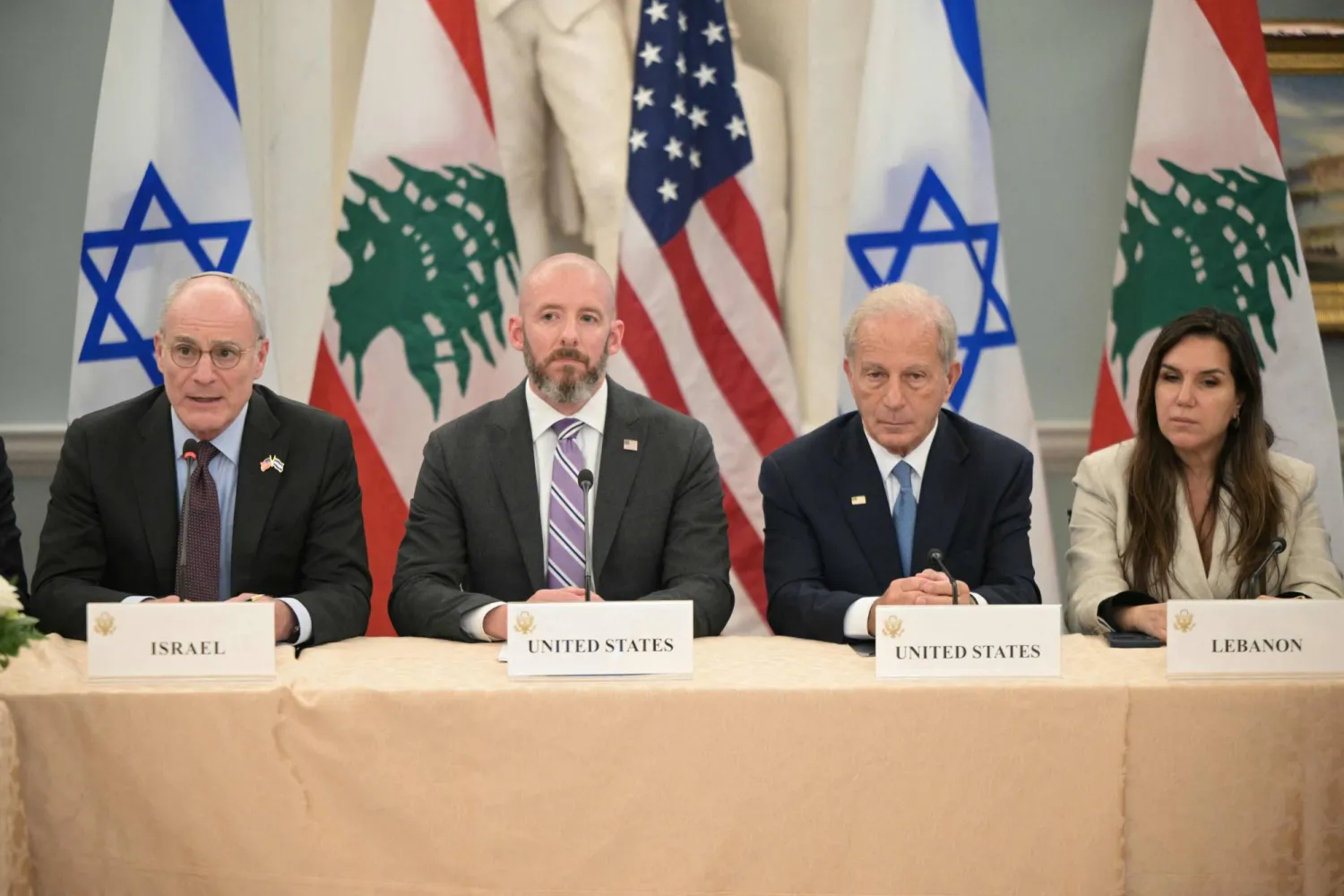
(L/R) Israel's Ambassador to the US Yechiel Leiter, State Department Chief of Staff Daniel Holler, US Ambassador to Lebanon Michel Issa and Lebanese Ambassador to the US Nada Hamadeh attend a meeting between Israeli and Lebanese delegations hosted by the United States at the State Department in Washington, DC, on June 3, 2026. (Photo by Oliver Contreras / AFP)
TT

Lebanon-Israel Ceasefire Deal: Complete Cessation of Hezbollah Attacks, Creation of Pilot Zones

(L/R) Israel's Ambassador to the US Yechiel Leiter, State Department Chief of Staff Daniel Holler, US Ambassador to Lebanon Michel Issa and Lebanese Ambassador to the US Nada Hamadeh attend a meeting between Israeli and Lebanese delegations hosted by the United States at the State Department in Washington, DC, on June 3, 2026. (Photo by Oliver Contreras / AFP)

Israel and Lebanon on Wednesday agreed to a new ceasefire following talks mediated by the United States. Under the agreement, Hezbollah is to stop all attacks on Israel and withdraw its fighters from the area south of the Litani River in southern Lebanon.

In a joint statement, the US, Israel and Lebanon said “the ceasefire is contingent on a complete cessation of Hezbollah fire and the evacuation of all Hezbollah operatives from the South Litani Sector.”

Israel and Lebanon agreed with US guidance “to swiftly advance the creation of pilot zones” in which the Lebanese army “will take exclusive control of the territory to the exclusion of all non-state actors.”

“These steps will enable progress towards a comprehensive peace and security agreement,” the statement said, adding that both sides “rejected any attempt, by any state or non-state actor, to hold Lebanon’s future hostage.”

Hezbollah has yet to comment on the ceasefire. Before it was announced, the group said it had conducted two drone and rocket attacks on Israeli troops inside Lebanon that it said took place just after midnight local time on Wednesday.

In their statement, “Israel and Lebanon reaffirmed that they have no hostile intent toward one another and committed to continuing direct negotiations to build confidence, resolve all outstanding issues, and work toward a comprehensive agreement between the two countries.”

The US reaffirmed that any agreement to cease hostilities must be reached directly between the two governments, brokered by Washington, and not through any separate track.

As for Israel, it said that its security and respect for its territorial integrity can only be achieved through Hezbollah’s disarmament and the dismantlement of its infrastructure across Lebanon.

In the statement, “Lebanon reaffirmed the necessity for mutual respect of internationally recognized borders, the urgent need for full implementation of the cessation of hostilities, underscoring the principles of territorial integrity and full state sovereignty.”

It stressed commitment to enhancing the capacity of the Lebanese army, with US support, to assert effective control across the country. 


Hezbollah’s Qassem Says Iran Deal a Declaration of US-Israeli Defeat

17 June 2026, Lebanon, Beirut: Hezbollah Secretary-General Naim Qassem addresses crowds via a giant screen during the first day of Ashoura at the shrine of former Hezbollah leader Hassan Nasrallah in Beirut southern suburb. Photo: Marwan Naamani/dpa
TT

Hezbollah’s Qassem Says Iran Deal a Declaration of US-Israeli Defeat

17 June 2026, Lebanon, Beirut: Hezbollah Secretary-General Naim Qassem addresses crowds via a giant screen during the first day of Ashoura at the shrine of former Hezbollah leader Hassan Nasrallah in Beirut southern suburb. Photo: Marwan Naamani/dpa

Hezbollah leader Naim Qassem said Friday that the US-Iran deal signed last week was a declaration of defeat by Israel and America, after the agreement also reduced fighting between his group and Israel.

"They wanted a major war... to eliminate our existence," Qassem said in a televised address to mark Ashura.

"We were able to stop this aggression and achieve a great victory... We have shattered the Israeli-American project and entered a new phase," he added.

Iran "was able to reach the memorandum of understanding, which is an official declaration of the defeat of America and Israel.”

Qassem also said Israel has "no option" but to unconditionally withdraw from Lebanese areas it occupies.

"Israel has no option but to withdraw completely from every inch of our Lebanese land... Israel must leave unconditionally," he said.

As Lebanese and Israeli officials hold direct talks in Washington, Qassem said his group would accept "no normalization, no cancellation of the state of hostility, no gains for Israel, and no partial presence on Lebanese soil... Israel must leave humiliated and defeated, and that is what will happen."


Al-Zaidi: No Justification for the Presence of the ‘Resistance’ in Iraq after September

Iraqi Prime Minister Ali Al-Zaidi during his meeting with US Envoy Tom Barrack in Baghdad on June 16, 2026 (Government Media)
TT

Al-Zaidi: No Justification for the Presence of the ‘Resistance’ in Iraq after September

Iraqi Prime Minister Ali Al-Zaidi during his meeting with US Envoy Tom Barrack in Baghdad on June 16, 2026 (Government Media)

Iraqi Prime Minister Ali al-Zaidi said that there is no need for “the resistance” to continue after the withdrawal of US forces from Iraq, in what may be one of the clearest government signals yet regarding the future of armed factions, as the scheduled date to end the international coalition’s mission approaches.

Al-Zaidi added, in press remarks published Wednesday evening, that “most armed factions have already begun handing over their weapons to the state,” stressing that “after the full withdrawal of all US forces (in September), there will be no justification or need for any resistance in Iraq.”

These remarks come ahead of Al-Zaidi’s anticipated visit to Washington next month, at a time when his government has placed the issues of restricting arms to the state and combating corruption at the top of its priorities, alongside efforts to redefine relations with the US on an economic rather than a military basis.

Relations with Washington

Regarding ties with Washington, al-Zaidi explained that they “will shift from military to an economic partnership.”

Al-Zaidi said that “fighting corruption is the top priority,” noting that he has initiated measures in every ministry and department to “dry up the sources of corruption.”

Through his visit to Washington, al-Zaidi aims to boost the government’s chances of securing US and regional investments to ease Baghdad’s severe financial crisis.

US Secretary of State Marco Rubio said that the new Iraqi prime minister will visit Washington soon to meet with US President Donald Trump, adding that they will discuss Iraq’s sovereignty and ensuring that Iran does not interfere in its affairs.

Speaking to reporters in the Bahraini capital, Manama, on Thursday, Rubio said that his country has received positive signals from Iraq, but will closely monitor Iranian influence, as this remains an issue that will continue to be assessed.

Monopoly on Weapons

In response to questions regarding the issue of weapons control, government spokesperson Haider Al-Aboudi told Asharq Al-Awsat that "the Iraqi government's position is clear and firm on the issue of restricting weapons to the state, and that addressing this matter stems from the constitution, law, and the requirements of sovereignty and internal stability."

Regarding reports about some factions refusing to hand over their arms, Al-Aboudi said that "the government manages this file with the logic of the state and law and with a single standard that applies to everyone, which is adherence to the constitution and state decisions.”

“Any weapon outside this framework will be dealt with according to the law and the mechanisms adopted by the competent institutions,” he added.


Drone Strikes Continue to Claim Civilian Lives in Sudan

Two damaged tanks outside the central bank building in Khartoum during fighting. File photo: Reuters
TT

Drone Strikes Continue to Claim Civilian Lives in Sudan

Two damaged tanks outside the central bank building in Khartoum during fighting. File photo: Reuters

Two civilians were killed, and several others were wounded, when a drone struck a fuel station in Rabak, the capital of White Nile state in southern Sudan, as drones continued to hit El-Obeid in North Kordofan on Thursday morning, part of a growing wave of drone attacks across the country.

Local sources said drones hit a fuel station inside Rabak on Thursday morning, killing two civilians and wounding others. The injured were taken to health facilities, while authorities sealed off the area, began assessing the damage and opened an investigation into the attack.

Witnesses said the strike spread panic among residents. Ambulance teams and relevant authorities rushed to the site to deal with the aftermath and secure the area.

At the same time, El-Obeid, the capital of North Kordofan, remained under repeated drone attacks believed to have been carried out by the Rapid Support Forces (RSF). Witnesses said drones launched a fresh raid on the city on Thursday morning. Authorities have not yet announced an official casualty toll.

Several cities in central and western Sudan have seen drone attacks rise since the start of the war. The strikes have expanded and intensified in recent months and weeks, during the fourth year of fighting between the army and the RSF.

El-Obeid has been a frequent target in recent weeks of attacks attributed to the RSF. Rabak and Kosti in White Nile state, as well as Kadugli and Dilling in South Kordofan, have also been hit by similar attacks from time to time.

The Sudanese army, meanwhile, continues to carry out drone strikes on sites in areas held by the RSF. The two sides rarely announce the results or targets of drone raids they launch.

The latest strikes came two days after a drone attack on Tuesday hit the market in the town of al-Siyah in North Darfur. Local reports said the attack killed one person, wounded several civilians and sparked fires that destroyed part of the market, damaging crops and foodstuffs worth millions of Sudanese pounds.

The al-Siyah market serves more than 70 villages. It lies about 60 km north of Mellit, near the border with Libya, and about 100 km northeast of El-Fasher. Witnesses said the attack coincided with the presence of RSF combat vehicles around the market, suggesting the drone may have belonged to the Sudanese army, which has not commented on the incident.

Drones have become a key weapon in the war between the army and the RSF in recent months. Their use has expanded to attacks on military sites and vital facilities in areas controlled by both sides, after fighting had previously centered on direct front lines.

The strikes usually target military bases and headquarters, weapons and ammunition depots, combat vehicles, infrastructure facilities, fuel stations and forces from both sides.

With many military sites located inside cities, and forces from both sides deployed in populated areas, civilians have borne the highest cost. The strikes often kill and wound civilians and damage homes, civilian facilities and basic services.

Since the war erupted in Sudan in April 2023, both sides have widened their use of drones, reaching cities far from the front lines. That has increased civilian losses and deepened humanitarian suffering in targeted areas.

The Associated Press reported on June 15, citing UN High Commissioner for Human Rights Volker Türk, that more than 1,000 civilians were killed in drone attacks in Sudan during the first five months of 2026.

According to the report, Türk said his office had recorded more than 1,000 civilian deaths from drone strikes between January and May this year.

There are no official figures for the number of civilians killed in the war. But the Armed Conflict Location & Event Data Project, known as ACLED, said in its latest reports that at least 59,000 people have been killed during the conflict, and that the true toll is likely far higher because of the difficulty of documenting victims in several combat zones.
