


Putin to Confront Weak Economy at 'Russian Davos', under Threat of Ukrainian Drones

Russia's economy is in its trickiest spot since the start of the war in 2022. Ramil Sitdikov / POOL/AFP
TT

Putin to Confront Weak Economy at 'Russian Davos', under Threat of Ukrainian Drones

Russia's economy is in its trickiest spot since the start of the war in 2022. Ramil Sitdikov / POOL/AFP

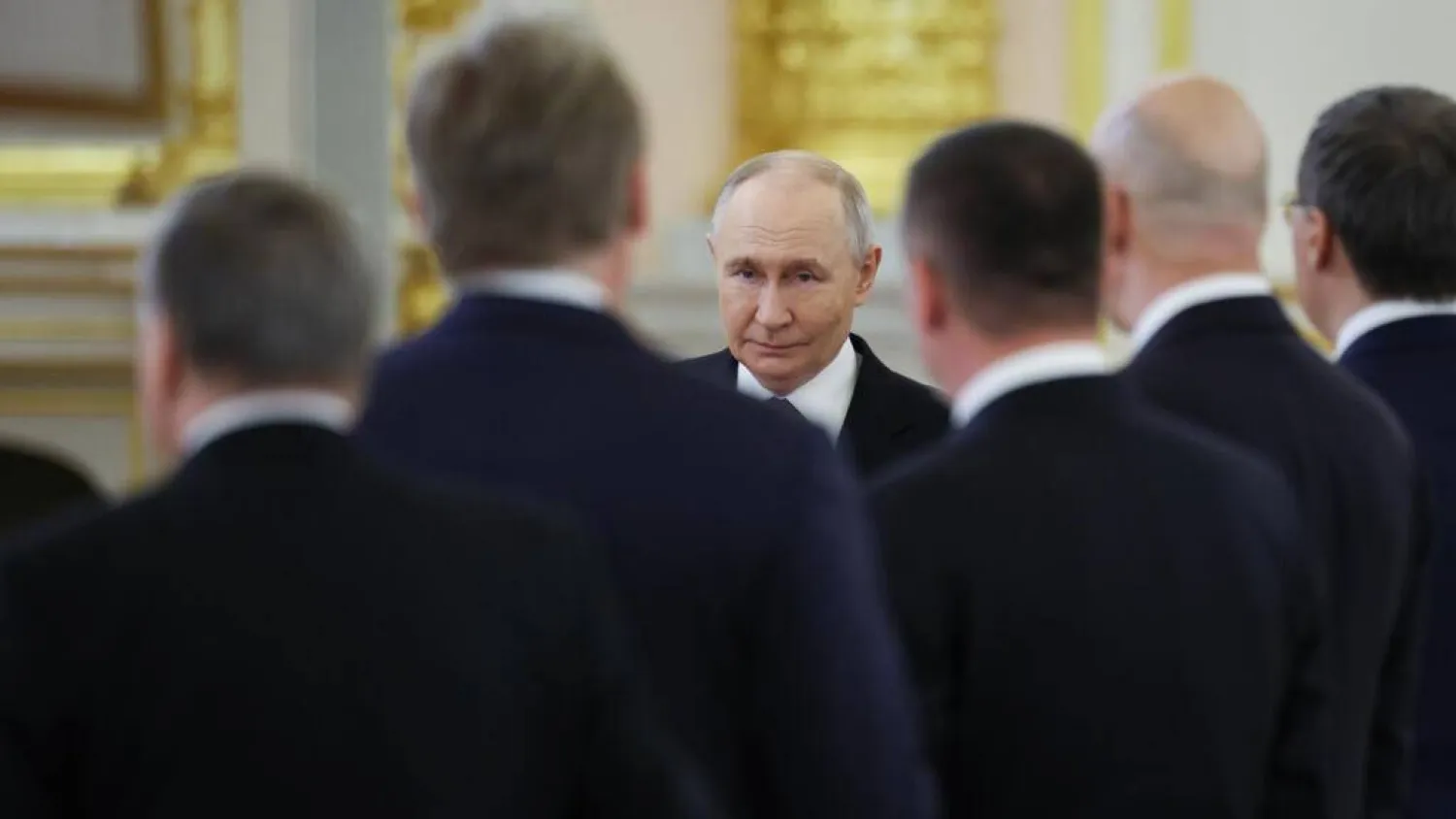
Russia's Vladimir Putin will address a flagship investment forum in Saint Petersburg on Friday, as the war in Ukraine drags the economy into stagnation and days after brazen Ukrainian drone strikes rocked his home city.

Russia's offensive has led to rising prices, tax hikes, two-decade-high borrowing costs, business shutdowns and labour shortages, putting the economy in its trickiest spot since the start of the war in 2022.

Meanwhile, intensifying Ukrainian attacks on Russia's vital energy infrastructure -- oil depots, refineries, exporting hubs -- are threatening to dent Moscow's most important income stream.

In a highly symbolic strike, one attack hit a facility in Saint Petersburg as the conference opened on Wednesday, with arriving dignitaries greeted by a plume of back smoke in the background.

"The Russian economy is entering a stagnation, with high interest rates and high inflationary pressure," Alexander Kolyandr, a London-based Russian economy expert, told AFP on the eve of Putin's speech.

"I don't see the Russian economy entering the 1990s or something similar, it's just a slow degradation of everything," he added.

Russia's GDP contracted by 0.2 percent in the first three months of the year, according to official statistics -- the first quarterly slump in three years.

And the government posted an $80 billion budget deficit in the first four months of 2026 -- equivalent to 2.5 percent of annual GDP and more than was planned for the entire year.

- 'Russian Davos' -

The Saint Petersburg International Economic Forum (SPIEF) was once dubbed "Russia's Davos".

Western investors keen to make a buck in Russia's chaotic and fast-growing economy would gather to strike deals and hobnob with the Russian elite in the early years of Putin's rule.

But since the assault on Ukraine, it has become a marker of the ex-KGB spy's new place in the world.

Drones and machine guns are put on exhibition display.

Guests from China are now the top attendees. Americans and Europeans are few and far between.

Their slimmed-down ranks led by figures such as former Hollywood actor turned Putin-backer Steven Seagal, American conspiracy theorist Candace Owens, and MPs from the right-wing Alternative for Germany party.

Putin has previously used the event to insist the state can handle the billions being pumped into the military campaign, bash Western sanctions as a form of self-harm and insist that life at home will remain stable.

But in recent months, many Russians say life has become more expensive, as the economic costs of the war spread.

Asked by AFP about Russia's economic woes, the Russian leader on Thursday channeled Mark Twain.

"Rumors of my death have been greatly exaggerated," he said, rejecting the idea Russia was on the brink of a full-blown crisis.

- 'Shut down' -

Far away from where Putin will take to the stage on Friday, some small and medium businesses told AFP they were facing closure.

"Basically, we're planning to shut down," Svetlana, the owner of a maternity and kids brand in the Far East city of Khabarovsk, said.

"People are having less kids, tightening their belts, the costs are rising," the 40-year-old told AFP by phone.

Internet blackouts -- imposed by authorities as a means of thwarting Ukrainian retaliatory drone strikes -- mean her card payment terminal is often out of service.

"We are going back to life 18 years ago, when there was no internet or social media," she said.

"I'm tired of worrying about fines because of the new laws and the endless stream of new requirements that keep popping up," she said.

Vera, a 42-year-old owner of a beauty salon in the Moscow region, said her supplies have "doubled in price" this year.

But having survived "near collapse" in 2022, she is confident she can pull through.

"These difficulties are just unpleasantries," she told AFP.

- 'No good solution' -

The "slow degradation" of the economy would be irreversible unless the Kremlin made "political decisions" such as ending the war and restructuring the economy, expert Kolyandr said.

Russia has run a "two-tier" economy since the start of the war, prioritizing the state-dominated defense industry above everything else, he said.

While higher oil prices off the back of the Iran war have increased Russia's revenues, it has not been to the extent needed to refill the state budget, he added.

Labor shortages are also biting, with some 30,000 men a month being recruited for the war.

"There is no good solution," Kolyandr said.

"They will continue to kick the can for as long as possible."


Norway Will Drill in Arctic Regardless of EU’s Position, Says Energy Minister

Norway's Energy Minister Terje Aasland attends a press conference in connection with the new realization of the carbon capture project at the waste incineration plant at Klemetsrud, Oslo, Norway January 27, 2025. (NTB/Ole Berg-Rusten via Reuters)
TT

Norway Will Drill in Arctic Regardless of EU’s Position, Says Energy Minister

Norway's Energy Minister Terje Aasland attends a press conference in connection with the new realization of the carbon capture project at the waste incineration plant at Klemetsrud, Oslo, Norway January 27, 2025. (NTB/Ole Berg-Rusten via Reuters)

Norway will continue developing its oil and gas resources in the Barents Sea regardless of the European Union's support for a moratorium on Arctic hydrocarbon supplies, and no longer sees itself as Europe's "green battery", Energy Minister Terje Aasland told Reuters.

Following Russia's 2022 invasion of Ukraine, Norway has become Europe's largest supplier of natural gas, meeting around 30% of gas demand of both the European Union and Britain.

Last year, the country's gas production was near record levels, while oil output reached its highest level since 2009. Official forecasts, however, show production falling sharply after 2030 unless new resources are discovered and developed.

"In today's geopolitical and security environment, and given the resource situation, I believe continued activity in the Barents Sea serves both Norwegian and European interests," Aasland said in a Reuters interview ahead ‌of ONS, Norway's biannual ‌energy conference, which begins in Stavanger on Monday.

The European Union currently supports a ban ‌on ⁠new drilling in the ⁠Arctic on environmental grounds but is considering revising its policy in response to concerns about energy security.

Anders Opedal, CEO of Equinor, Norway's biggest oil firm, said oil and liquefied natural gas (LNG) from the Barents Sea can be shipped anywhere in the world if rejected by the EU.

"The only thing that will suffer from this is actually European security. We have the flexibility," Opedal told Reuters on Monday.

NORWAY AIMS TO MAINTAIN OUTPUT LEVELS

Aasland said Norway aims to maintain petroleum production and exports at roughly current levels until at least 2035, and Barents Sea production will be key.

"If Norway is to remain a long-term supplier of oil and gas to Europe..., then the ⁠Arctic must be part of that discussion," the energy minister said.

In talks with EU ‌officials, Norway has argued that the parts of the Barents Sea opened to ‌petroleum activity are also ice-free like in the North Sea, and so less prone to oil spills and other environmental impacts, and are ‌helping to sustain jobs and settlement in the country's northern regions bordering Russia.

Aasland believes Norway's arguments are being heard in Brussels, ‌but added that it was the country's sovereign right to develop the Barents Sea resources even if the EU continued to support a moratorium.

"We would develop these areas, and then it will be up to the EU whether they should have a moratorium on buying that gas or oil," Aasland said.

Arctic oil would be sold into global markets regardless, while gas could be exported worldwide as liquefied natural gas from ‌Equinor's Melkoeya LNG plant near Hammerfest, he added.

International Energy Agency Executive Director Fatih Birol has also urged the EU to reconsider its opposition to new Arctic oil and gas developments, ⁠arguing that future supplies ⁠will be needed to support energy security.

Critics of such a move argue that new Arctic projects would take many years to come online and would do little to address Europe's near-term energy challenges.

GREEN BATTERY ‘A FLAWED IDEA’

In addition to oil and gas, Norway produces a surplus of renewable energy most years from an extensive network of reservoirs and waterways feeding hydroelectrical plants, which it has exported to Europe via cross-border power cables.

Norway has previously presented itself as "the green battery" of Europe, but the minister says this idea is now outdated as Norway alone can't balance the European power market.

"It was a flawed idea," Aasland said.

The idea helped drive the construction of new power interconnectors, including links to Britain and Germany, but has drawn some opposition in Norway as European electricity prices have escalated.

Deeper integration with Europe's power system left Norway more vulnerable to continental price swings.

Aasland said Norway will not build new interconnectors but remains committed to strong power sector cooperation with Europe.

He urged countries on the continent to strengthen their stable power supply, weakened by coal and nuclear plant closures and a lack of investment in new gas-fired generation.

Doing so will lower prices and build greater reciprocity when it comes to power flows between different countries.

"The future lies in having a very strong and integrated system," Aasland said.


How Geospatial Data Reduces Project Costs in Saudi Arabia?

An aerial view of the Saudi capital, Riyadh (SPA)
TT

How Geospatial Data Reduces Project Costs in Saudi Arabia?

An aerial view of the Saudi capital, Riyadh (SPA)

Geospatial data forms the backbone of modern urban planning, linking digital information, including boundaries, land use, utilities and transportation networks, to precise geographic locations through coordinates.

Its importance lies in transforming static maps into analytical tools that provide a comprehensive, up-to-date view of urban areas, allowing planners to anticipate growth, identify cities’ needs and make decisions based on reliable data.

In Saudi Arabia, a geospatial database developed by the Ministry of Municipalities and Housing supports urban development by providing historical and recent aerial imagery and continuously updated spatial data, improving the quality and management of development projects.

The database also provides a reliable spatial reference for projects, studies and plans. Aerial surveying in the Kingdom has evolved over 56 years from analog film photography to high-resolution digital imaging and digital cadastral mapping.

Protecting Property Rights

Khalid Al-Ghamlas, Deputy Minister for Urban Planning and Lands at the Ministry of Municipalities and Housing, told Asharq Al-Awsat that the database supports the development of the real estate market and improves urban planning by providing accurate data on locations, boundaries, land use, roads, utilities and services.

He said its main value lies in linking data to geographic coordinates, allowing a property’s spatial reference to remain fixed even when physical features on the ground change.

This improves the reliability of real estate data, helps protect property rights, reduces overlaps and conflicts, and provides greater clarity for investors and decision-makers.

Integrating geospatial data also enables authorities to assess urban development alternatives and scenarios before approval, identify conflicts at an early stage, and pinpoint spatial needs and gaps more accurately, improving planning and implementation and making more efficient use of land and resources.

Khalid Al-Ghamlas, Deputy Minister for Urban Planning and Lands at the Ministry of Municipalities and Housing

Cutting Time and Costs

Al-Ghamlas said the database was expected to “shorten timelines and reduce costs by limiting the need to repeat surveying, field measurement and data collection, and by accelerating the preparation of studies, analyses and designs.”

Early detection of conflicts, along with fewer modifications and less rework during implementation, would also speed up decision-making, improve spending efficiency and raise the quality of project outcomes, he added.

The data supports planning decisions on land use, the distribution of services and utilities, transportation networks and infrastructure. It also helps authorities analyze urban growth trends and continuously monitor changes across cities.

From Aerial Surveying to AI

Saudi Arabia’s aerial surveying system has gradually evolved from black-and-white photography to color imagery, high-resolution digital imaging and digital cadastral mapping, reflecting broader advances in surveying and information systems.

On Oct. 19, 2010, the ministry received ISO 9001:2008 quality management certification covering the production and provision of spatial information, including aerial and ground surveying, photomaps, topographic maps, cadastral surveying and mapping, remote sensing, land information systems and geographic information systems.

The ministry continues to develop its aerial imagery, topographic maps and cadastral mapping systems to improve the integration of spatial information, increase urban planning efficiency and support development initiatives and projects.

It is also expanding the use of geospatial data and modern technologies, including spatial analysis and artificial intelligence, to monitor urban change, identify patterns and support evidence-based planning.


Gold Hits Over 3-month High

Jewelry display at the Korea Gold Exchange store in Seoul (AFP)
TT

Gold Hits Over 3-month High

Jewelry display at the Korea Gold Exchange store in Seoul (AFP)

Gold prices hit their highest level in more than three months on Monday as a subdued dollar lent support, while focus shifted to key US inflation data and a speech later this week by Federal Reserve Chair Kevin Warsh.

Spot gold was up 0.8% at $4,641.27 per ounce, as of 0427 GMT, after hitting its highest level since May 15 earlier in the session. Prices gained more than 5% last ⁠week.

US gold futures ⁠edged 0.4% higher to $4,697.70, Reuters reported.

A wavering dollar teetered near multi-month lows in a market unsettled by the US Treasury's promise to buy back more long bonds. A weaker US dollar makes greenback-priced bullion more affordable for holders of other currencies.

Gold is looking sprightly to start the week and has ⁠stepped back into bid mode and is taking its cues primarily from the softer dollar and focusing on what higher yields may be signaling about underlying economic strains and policy uncertainty, said Tim Waterer, chief market analyst at KCM Trade.

The July Personal Consumption Expenditures (PCE) price index data and Fed Chair Warsh's speech at the Jackson Hole symposium this week will be watched for fresh clues on the US interest rate outlook.

"Traders will be listening closely for any shift in tone on the ⁠policy path ⁠and how it sits with recent bond-market developments. A balanced or cautious tone that leaves room for flexibility would likely keep the door open for gold to extend its gains," Waterer said.

On the geopolitical front, the US threatened Iran with what it called "the greatest financial offensive ever marshalled" as it prepared to roll out economic sanctions that target Iran's trade partners. Oil prices slipped more than $1 a barrel as investors took profits ahead of the expected announcement.

Among other metals, spot silver steadied at $68.98 per ounce. Platinum rose 0.1% to $1,878.88, while palladium was flat at $1,350.00.
