
Palestinians Suffer from Lack of Proper Toilets Across Gaza’s Vast Tent Cities

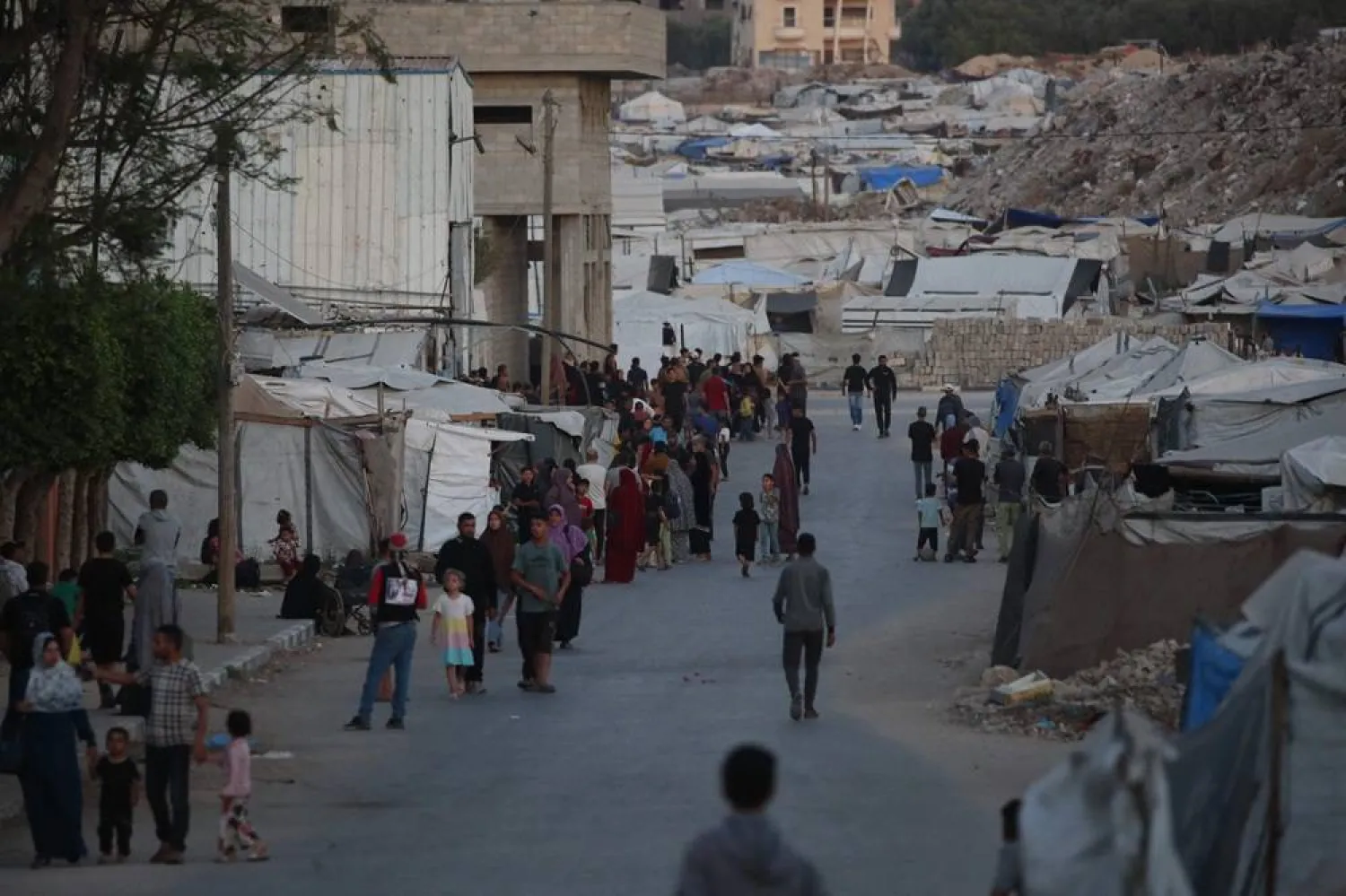
Palestinians walk along the street on a hot day at the Nuseirat refugee camp in the central Gaza Strip on June 5, 2026. (AFP)
TT

Palestinians Suffer from Lack of Proper Toilets Across Gaza’s Vast Tent Cities

Palestinians walk along the street on a hot day at the Nuseirat refugee camp in the central Gaza Strip on June 5, 2026. (AFP)

In their bare-bones tent in southern Gaza, Mostafa Shaaban built his family’s makeshift toilet behind a curtain in a corner. He dug a shallow pit in the sandy soil, poured a concrete slab around it, fixed a bottomless bucket over the hole, then topped it off with a battered, plastic toilet seat.

It reeks with a foul odor and buzzes with flies and mosquitoes only a few feet from where they sleep and prepare meals. Every week, Shaaban has to dig the sewage sludge out of the pit. But at least it’s more private than the fetid communal latrines used by hundreds of other people in their sprawling tent camp.

“I did not want the kids and my wife to use any public toilet. It is humiliating,” said the 38-year-old Shaaban, who was driven from his home city of Rafah by Israeli forces two years ago and eventually settled in a tent camp in Khan Younis.

“The situation is revolting,” he said of having the toilet inside the tent, “but at least it has more dignity.”

There is not a single proper toilet across the vast tent cities housing most of Gaza’s 1.7 million Palestinians left homeless by the war. Displaced families have largely been left on their own to dig their own latrines, some shared by extended families.

At communal camp toilets, men, women and children wait in long lines then do their business behind a thin cloth or sheet of metal separating them from the crowd of strangers outside. Women fear walking to the communal toilets at night.

The result is a hygienic nightmare as horrible smells drift among the tightly packed tents and pools of sewage collect from leaking cesspits or from people dumping the contents of their latrines. More than 80% of the sewage pumping stations in Gaza have collapsed under Israel’s bombardment and offensives over the past 2 ½ years, rights groups say.

Some aid groups have carried out projects to improve family toilets, but they have been small scale and supplies are limited. It remains far from certain when reconstruction of Gaza will begin.

The US-backed official overseeing the ceasefire in place since October has blamed Hamas for holding up the process by failing to reach an agreement on disarmament. The ceasefire deal calls for the entry of major construction and repair equipment into Gaza even before disarmament, and so far little has entered.

“It’s the most basic right. Making a toilet is more important than food and water, because you see the insects everywhere, the smell covers everyone,” said Shaaban’s wife, Iman Mansour, who is pregnant with their third child. “We want something clean.”

Building a latrine is not cheap. Shaaban said it took him a long time to set up his toilet because he had to buy the pipe for the latrine hole and the concrete to seal around it. The concrete often crumbles, so he has to buy more when he can afford it.

A porcelain toilet seat runs from 1,700 to 2,000 shekels ($500 to $680), out of reach for most families. In any case, a seat in a tent latrine would simply be set over the hole to provide a more comfortable seat, unable to flush. So people improvise, using chairs or buckets with the bottom knocked out. Or they just squat over the hole.

One vendor working out of a tent in Khan Younis makes metal sheets to fit around a latrine hole that at least are easier to clean, selling them for 100 shekels ($34).

In one of the camps around Khan Younis, Khaled Kollab laboriously cleared the sewage drain and pools of untreated wastewater next to his tent. His tent latrine is a simple squat toilet with no seat, which he said was made of ramshackle supplies because he couldn’t afford anything better. His 3-year-old daughter, Sila, stood nearby, her body covered in lesions.

“You go into this toilet and feel humiliation and shame,” Kollab said.


Sudan Court Sentences RSF Leader to Death in Absentia

Burnt shops lies down closed in downtown in Khartoum, Sudan June 25, 2026.  REUTERS/El Tayeb Siddig
Burnt shops lies down closed in downtown in Khartoum, Sudan June 25, 2026. REUTERS/El Tayeb Siddig
TT

Sudan Court Sentences RSF Leader to Death in Absentia

Burnt shops lies down closed in downtown in Khartoum, Sudan June 25, 2026.  REUTERS/El Tayeb Siddig
Burnt shops lies down closed in downtown in Khartoum, Sudan June 25, 2026. REUTERS/El Tayeb Siddig

A court in Sudan's army-controlled city of Port Sudan on Sunday sentenced paramilitary leader Mohamed Hamdan Dagalo and 15 others to death in absentia over charges of killing a regional governor and war crimes in Darfur, state media reported.

The ruling, issued by a judiciary functioning under the army, is the first against the leadership of the Rapid Support Forces (RSF) since war broke out between the group and the Sudanese army in April 2023.

The court convicted Dagalo and the other defendants of war crimes, crimes against humanity, genocide and attacks on civilians and public facilities, state news agency SUNA reported.

Those sentenced include Dagalo's brother and deputy, Abdelrahim Hamdan Dagalo, as well as several RSF officers and tribal leaders from Arab communities in West Darfur, AFP said.

The case centers on the killing of West Darfur governor Khamis Abbakar in June 2023, shortly after RSF forces seized El-Geneina, the state capital.

Abbakar was killed hours after accusing the RSF and allied militias of carrying out attacks against civilians.

UN experts determined that between 10,000 and 15,000 people, mostly from the Massalit ethnic group, were killed in El-Geneina during the violence.

The RSF has repeatedly denied allegations of genocide and other war crimes.

The court said it would refer the case to the Supreme Court for review and seek the arrest and extradition of those convicted through Interpol and other international channels.

Sudanese army leader Abdel Fattah al-Burhan and Daglo had jointly led the 2021 coup that derailed Sudan's transition to civilian rule, before falling out over plans to integrate the RSF into the regular army, a dispute that eventually led to war.

Now in its fourth year, the conflict between the army and the RSF has killed tens of thousands of people, displaced more than 11 million and triggered what the United Nations describes as the world's largest displacement and hunger crises.


New Syrian Parliament Meets for First Time in Damascus

 Members of Syria's newly formed People's Assembly attend the body's inaugural session, the first parliament session since the end of the rule of ousted Syrian President Bashar al-Assad, in Damascus, Syria, July 12, 2026. REUTERS/Khalil Ashawi
Members of Syria's newly formed People's Assembly attend the body's inaugural session, the first parliament session since the end of the rule of ousted Syrian President Bashar al-Assad, in Damascus, Syria, July 12, 2026. REUTERS/Khalil Ashawi
TT

New Syrian Parliament Meets for First Time in Damascus

 Members of Syria's newly formed People's Assembly attend the body's inaugural session, the first parliament session since the end of the rule of ousted Syrian President Bashar al-Assad, in Damascus, Syria, July 12, 2026. REUTERS/Khalil Ashawi
Members of Syria's newly formed People's Assembly attend the body's inaugural session, the first parliament session since the end of the rule of ousted Syrian President Bashar al-Assad, in Damascus, Syria, July 12, 2026. REUTERS/Khalil Ashawi

Syria's new parliament convened for the first time on Sunday, 19 months after opposition factions led by President Ahmed al-Sharaa toppled Bashar al-Assad, a milestone in the country's political transition despite the chamber's current limited powers.

Sharaa, in a speech at parliament in Damascus, told lawmakers to "make this council a model of responsibility and competence" and described it as "a platform for truth and justice".

"Syria is writing a glorious history that reflects its heroism, and we face the responsibility of building both the nation and the individual," he said.

The parliament has been seen as a test of Sharaa's pledge to build an inclusive new order in Syria, which was run as a police state by the Assad family for decades, with a legislative chamber that was seen as a rubber stamp.

Under the country's interim governing arrangements, two-thirds of the members of the 210-seat chamber were chosen last year by regional electoral colleges, while Sharaa named the remaining third on July 1.

Officials have said this system was necessary because years of war had left millions displaced and made it impossible to rely on accurate population records or voter rolls.

Critics say it gives the executive branch extensive control over the selection process.

Sharaa has said he supports holding general elections once infrastructure and documentation allow.

A temporary constitutional declaration introduced in 2025 granted parliament limited authorities, and there is no requirement for the government to win a parliamentary vote of confidence.

The Assembly can propose and approve laws. It has a 30-month term that is renewable, and it assumes legislative authority until a permanent constitution is adopted and elections are organized.


Israeli Attacks in Gaza Kill Five People, including a Girl, Say Medics

11 July 2026, Palestinian Territories, Nuseirat: A vehicle damaged in an Israeli strike is seen at the scene in the Nuseirat refugee camp in the central Gaza Strip, where a Palestinian was killed and others were wounded. (dpa)
TT

Israeli Attacks in Gaza Kill Five People, including a Girl, Say Medics

11 July 2026, Palestinian Territories, Nuseirat: A vehicle damaged in an Israeli strike is seen at the scene in the Nuseirat refugee camp in the central Gaza Strip, where a Palestinian was killed and others were wounded. (dpa)

Israeli attacks killed at least five people in the Gaza Strip on Sunday, including a 9-year-old girl, Palestinian health officials said.

Medics said Israeli gunfire directed at a tent encampment on the eastern side of the Al-Bureij refugee camp in central Gaza killed 9-year-old Tala Abu Matar. The Israeli military did not immediately comment on the girl's death.

An airstrike at a metal foundry in Gaza City's Sabra neighborhood killed four people. Witnesses said the site was hit with three Israeli missiles.

Israel's military told Reuters it had struck "terrorist" infrastructure, without giving further details.

The ceasefire agreed in October 2025 between Israel and Hamas halted major fighting in the enclave, but it has failed to stop Israeli attacks that have killed more than 1,000 Palestinians since it took effect. Four Israeli soldiers have been killed by militants in Gaza over the same period.

The latest violence comes as Hamas leaders visited Cairo for further talks over implementing the second phase of US President Donald Trump's Gaza peace plan.

The discussions include Hamas disarmament and Israeli army withdrawals, according to sources close to the talks, adding that there had not yet been a breakthrough.

Nearly all of Gaza's 2 million people, most of whom have been displaced several times, now live on a tiny strip of land along the coast, mainly in makeshift tents or damaged buildings, under Hamas control.