


What is Expected from Today's OPEC+ Major Producers Meeting?

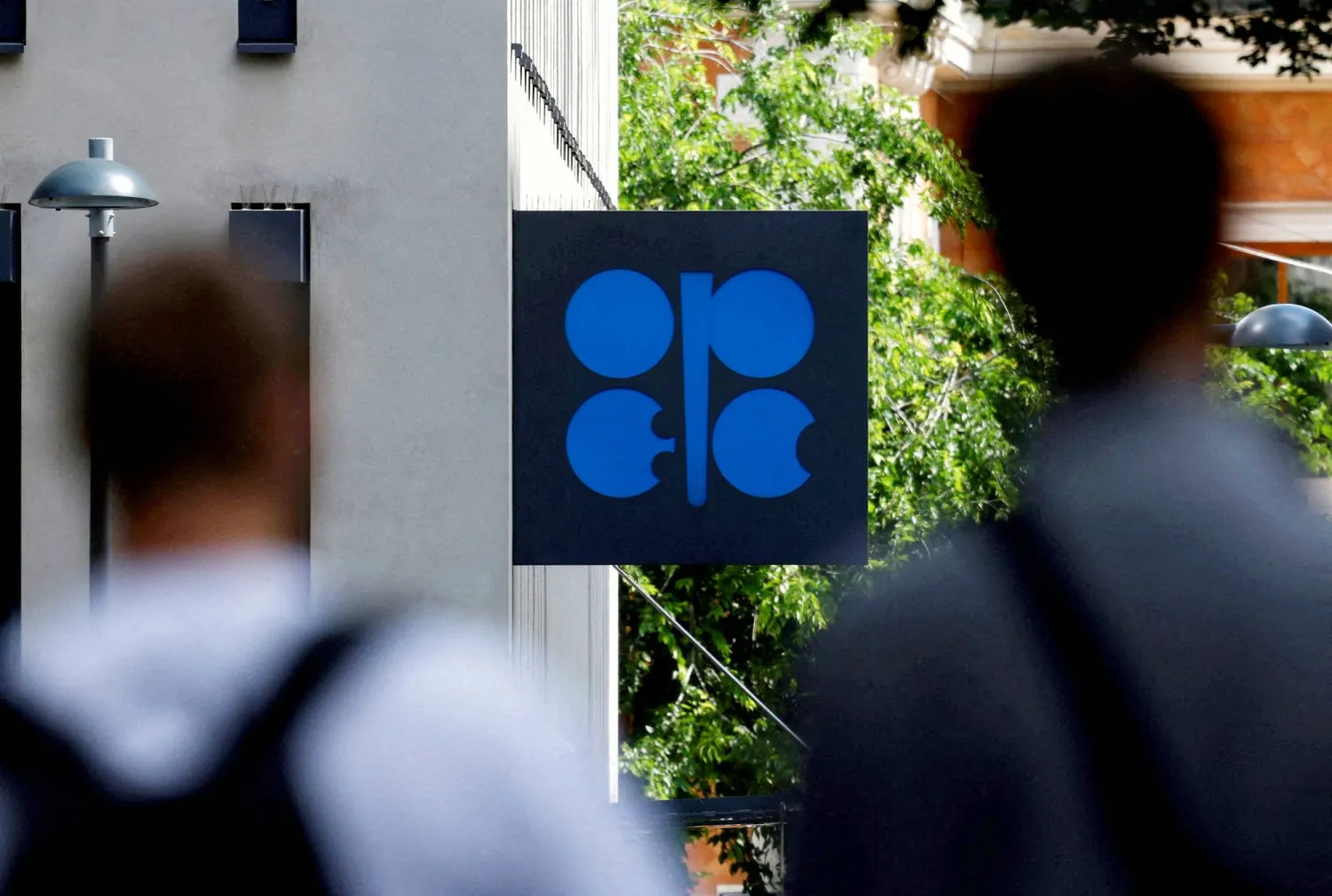
A view shows the logo of the Organization of the Petroleum Exporting Countries (OPEC) outside its headquarters in Vienna, Austria, May 28, 2024. REUTERS/Leonhard Foeger/File Phot
TT

What is Expected from Today's OPEC+ Major Producers Meeting?

A view shows the logo of the Organization of the Petroleum Exporting Countries (OPEC) outside its headquarters in Vienna, Austria, May 28, 2024. REUTERS/Leonhard Foeger/File Phot

All eyes turn Sunday to a series of intensive and simultaneous ministerial meetings of the Organization of the Petroleum Exporting Countries (OPEC) and the OPEC+ alliance. These meetings are taking place under exceptional circumstances in global energy markets, as producers strive through these multiple platforms to lay out the foundations for a new phase of balance and strategic certainty.

Three consecutive meetings will be held today, reflecting the precise institutional nature of managing this phase. It begins with the OPEC Administrative Conference, followed by the 66th meeting of the Joint Ministerial Monitoring Committee (JMMC), responsible for monitoring compliance levels, ensuring alignment, and approving current compensation plans, culminating in the 41st ministerial meeting of the broader OPEC+ alliance—a meeting the global investment community is eagerly anticipating.

This coordinated effort is driven by positive momentum and close coordination, epitomized by the important meeting that brought together Saudi Energy Minister, Prince Abdulaziz bin Salman, with Russian Deputy Prime Minister Alexander Novak on the sidelines of the St. Petersburg International Economic Forum a few days ago.

The meeting reflected great optimism about the alliance's ability to lead the market with a flexible vision, with discussions focusing on the following positive points:

* Securing Energy Supplies: The Saudi affirmation that the world today needs "every molecule of energy" possible, reflecting the Kingdom's and the alliance's commitment to their role as a safety valve for the global economy.

* Flexibility and Readiness: OPEC+'s high ability to adapt and confront emergent geopolitical and logistical changes, while precisely revising future demand forecasts to ensure investment sustainability.

* Preparing for the Future: Coordination between the two poles aims to prepare a solid ground for the smooth and gradual return of supply flows once temporary logistical factors in the region subside.

Expectations and Targets

Instead of focusing on transient fluctuations, observers expect today's meeting to affirm collective commitment and reaffirm full solidarity among the seven major alliance countries – Saudi Arabia, Russia, Iraq, Kuwait, Kazakhstan, Algeria, and Oman – to ensure long-term market stability through the approval of flexible production policies. Sources told Reuters that production targets are expected to increase by approximately 188,000 barrels per day for next July, reflecting a cautious and measured approach that allows for quick and gradual intervention options based on daily market data.

Fitch

This flexible move aligns with the in-depth analysis presented by Fitch Ratings in its latest reports. The agency affirmed that the current closure of the Strait of Hormuz represents "a temporary and transient logistical shock" and in no way indicates a structural or permanent shift in global oil market trends.

The agency maintained its strategic view that global supplies will collectively exceed demand throughout 2026, based on the absence of any severe damage to oil infrastructure in the region, and the exceptional ability to achieve a rapid and intensive recovery of production in the Middle East once the strait is expected to reopen by the end of next July – assuming an actual closure period of approximately five months.

According to Fitch's base scenario, the average Brent crude price will hover around $87 per barrel throughout 2026, noting that the absence of production capacity due to the temporary logistical disruption will reduce supplies by approximately 2.9 million barrels per day compared to 2025.

However, the agency anticipates a sharp market rebound towards a surplus starting in September, with the surplus (oil glut) reaching approximately 4 million barrels per day in the last quarter of 2026, supported by strong growth from non-OPEC producers. This will exert downward pressure on prices, restoring the market to its natural equilibrium.

Fitch concludes that this dynamic lends significant effectiveness to OPEC+ plans, as the alliance possesses the ability to exceed previous quotas and pump additional quantities to ensure demand is met and prevent any structural shortages, solidifying the alliance's role as a strategic institution that transforms geopolitical challenges into real opportunities to support energy security, global economic growth, and sustainability.



UN Convention Boosts Confidence in Saudi Arabia’s Cross-Border E-Commerce Transactions

 Riyadh, Saudi Arabia (SPA)
Riyadh, Saudi Arabia (SPA)
TT

UN Convention Boosts Confidence in Saudi Arabia’s Cross-Border E-Commerce Transactions

 Riyadh, Saudi Arabia (SPA)
Riyadh, Saudi Arabia (SPA)

Saudi Arabia’s Cabinet, chaired by Custodian of the Two Holy Mosques King Salman bin Abdulaziz, has approved the Kingdom’s accession to the United Nations Convention on the Use of Electronic Communications in International Contracts, bolstering the legal standing of cross-border digital transactions and electronic contracts in international trade.

The 2005 New York convention, drafted by the United Nations Commission on International Trade Law (UNCITRAL), aims to ensure that electronic contracts and communications used in international trade receive the same legal recognition and enforceability as paper-based documents.

The Cabinet decision gives Saudi companies and their international partners a clearer, more reliable legal framework, helping ease digital trade, cut procedural costs and strengthen the competitiveness of Saudi Arabia’s business environment globally.

Legislative environment

The move builds on Saudi Arabia’s efforts to modernize its business legislation and align it with international best practices and standards.

It is expected to make electronic communications easier to use in international contracts and commercial transactions, while increasing trust and legal certainty over their validity and enforceability.

Commerce Minister and Chairman of the Saudi Center for Competitiveness and Business Dr. Majid Al-Qasabi said the Cabinet’s ratification of the UN convention on the reliable use of electronic communications and transactions in international contracts would facilitate global trade and support business competitiveness and its legislative frameworks.

Legal certainty

International trade expert Dr. Fawaz Al-Alami told Asharq Al-Awsat that the significance of the step went beyond recognizing electronic contracts and communications, saying it marked a shift in how trust is built in international trade.

“Today, the speed of completing a transaction is no longer the only measure of competitiveness. Clear legal rules governing it, and the ability of parties in different countries to operate within a common and understandable framework, have become key factors in commercial decision-making,” he said.

Al-Alami said joining the international framework would give Saudi companies greater confidence to operate in global markets, particularly as digital trade and electronic services expand rapidly.

Faster deals

The move also sends an important signal to foreign investors and trading partners that Saudi Arabia is not simply keeping pace with digital transformation, but is building a legal framework suited to modern trade, Al-Alami said.

Its value, he added, would ultimately depend on implementation.

“The clearer, more reliable and less complex electronic procedures become, the more they will reduce the cost of doing business and speed up dealmaking, and in turn strengthen the competitiveness of the Saudi economy,” he said.

Al-Alami said the measure might appear technical, but was fundamentally part of Saudi Arabia’s shift toward an economy that is more open, digital and connected to global markets.

Automated systems

The government’s move is also expected to strengthen trust between Saudi companies and their foreign counterparts.

Negotiations, offers, acceptances and document exchanges can take place electronically under a clearer international legal framework, reducing administrative time and costs, reliance on paper documents and traditional correspondence, disputes over the evidentiary value of electronic communications, and legal uncertainty when dealing with companies abroad.

The convention also addresses key issues, including the time and place at which an electronic communication is sent and received.

It also sets out rules for contracts formed through automated systems without human review at any stage, an increasingly important issue as digital trade and automation expand.


OPEC Further Lowers 2026 Global Oil Demand Growth Forecast

FILE PHOTO: People walk past an installation depicting barrel of oil with the logo of Organization of the Petroleum Exporting Countries (OPEC)  in Baku, Azerbaijan November 19, 2024. REUTERS/Maxim Shemetov/File Photo
FILE PHOTO: People walk past an installation depicting barrel of oil with the logo of Organization of the Petroleum Exporting Countries (OPEC) in Baku, Azerbaijan November 19, 2024. REUTERS/Maxim Shemetov/File Photo
TT

OPEC Further Lowers 2026 Global Oil Demand Growth Forecast

FILE PHOTO: People walk past an installation depicting barrel of oil with the logo of Organization of the Petroleum Exporting Countries (OPEC)  in Baku, Azerbaijan November 19, 2024. REUTERS/Maxim Shemetov/File Photo
FILE PHOTO: People walk past an installation depicting barrel of oil with the logo of Organization of the Petroleum Exporting Countries (OPEC) in Baku, Azerbaijan November 19, 2024. REUTERS/Maxim Shemetov/File Photo

OPEC on Wednesday lowered its forecast for world oil demand growth in 2026 to 580,000 barrels per day, a copy of its monthly report showed, marking the fourth straight downward revision.

The producer group continues to see a smaller impact on consumption since the Iran war started than other forecasters such as the International Energy Agency, which expects demand to decline in 2026, Reuters reported.

The Organization of the Petroleum Exporting Countries also raised its forecast for 2027 oil demand growth, according to the report on OPEC's website.


Bank of America Pledges $250 Billion for US Infrastructure Financing

Signage is seen at the Bank of America Tower in Manhattan, New York City, New York, US, November 2, 2022. (Reuters)
TT

Bank of America Pledges $250 Billion for US Infrastructure Financing

Signage is seen at the Bank of America Tower in Manhattan, New York City, New York, US, November 2, 2022. (Reuters)

Bank of America said on Wednesday it plans to deploy $250 billion by July 2027 to support US digital and infrastructure projects, a move it says will boost the country's economic growth and help create tens of thousands of jobs.

The Wall Street bank said its "Critical Infrastructure Finance Initiative," launched on the heels of the nation's 250th anniversary celebrations, will provide primary market lending, investments, ‌capital markets services, ‌and banking and advisory offerings.

The announcement underscores how ‌major ⁠US financial institutions are seeking ⁠to capitalize on rising demand for AI data centers, critical minerals and energy infrastructure upgrades.

It comes days after Morgan Stanley said it would facilitate roughly $1.5 trillion over the next decade to finance technology and infrastructure projects.

Last year JPMorgan Chase launched a $1.5 trillion plan to facilitate, finance and invest in industries deemed critical to the US national security and economic resilience, including defense, ⁠energy and advanced manufacturing.

BOOSTING GROWTH, CREATING JOBS

Bank of ‌America's financing will target three areas: ‌digital infrastructure, including data centers and computing; energy and power infrastructure, including renewable generation ‌and energy storage; and core infrastructure such as transportation and natural gas.

"Meeting ‌America's growing infrastructure needs requires mobilizing capital at scale across increasingly interconnected sectors," said Karen Fang, global head of infrastructure and sustainable finance at Bank of America.

"Delivering these projects requires integrated financing solutions spanning corporate and project-level capital in both public ‌and private markets."

The $250 billion target will be measured over an 18-month period from January 1, 2026, to July ⁠4, 2027, ⁠the bank said.

"If we all do our job right, we should be deploying more capital," said Fang, who is also co-head of global capital solutions at BofA, when asked about potential deployment of more capital after July 2027.

Many projects require new infrastructure to be built before becoming operational, she said.

In the United States, infrastructure construction loans typically have terms of five to seven years. Once projects are completed and operating, they are often refinanced with longer-term debt lasting 10, 15 or 20 years, Fang said.

She said greater infrastructure investment would help drive economic growth and create long-term jobs.

"Infrastructure spending will lead to economic growth and prosperity," she said.