


US Draft Resolution at IAEA Demands Iran Open Up on Sites, Uranium Stocks

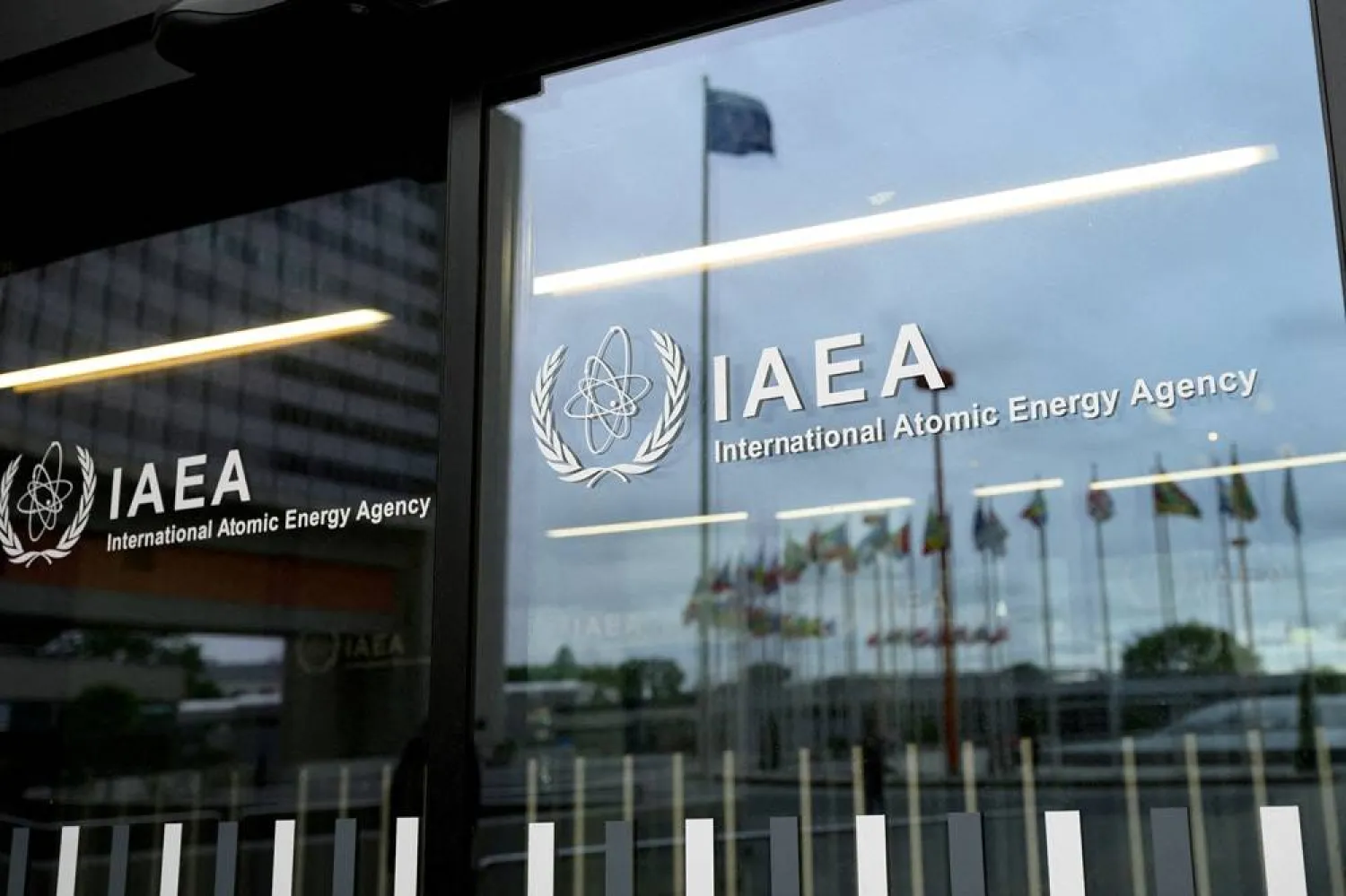
The IAEA logo is displayed in front of the agency’s headquarters in Vienna, Austria, June 5, 2026. (Reuters)
TT

US Draft Resolution at IAEA Demands Iran Open Up on Sites, Uranium Stocks

The IAEA logo is displayed in front of the agency’s headquarters in Vienna, Austria, June 5, 2026. (Reuters)

The US is lobbying other countries on the UN nuclear watchdog's Board of Governors to back a draft resolution demanding that Iran tell the agency what happened to its bombed nuclear sites and the enriched uranium stored there.

The US-drafted text, seen by Reuters on Sunday and circulated ahead of this week's quarterly meeting of the 35-nation board, risks complicating talks between Washington and Tehran.

Iran has typically retaliated against resolutions against it at the International Atomic Energy ‌Agency, escalating its nuclear ‌activities or scaling back cooperation.

Previous IAEA board resolutions on ‌Iran, ⁠submitted by the US, ⁠Britain, France and Germany, have passed by wide margins. One adopted in November demanded that Iran inform the agency "without delay" about the status of its enriched uranium stock and damaged sites - something that has yet to happen.

STATEMENT OF INTENT

The US draft says Iran must "provide the Agency with precise information on nuclear material accountancy and safeguarded nuclear facilities in Iran" and grant "all access it requires to verify this information." Both steps are described as "essential ⁠and urgent" and must be taken "without delay".

The text stops short ‌of referring Iran to the UN Security Council, ‌a move some diplomats had said was under consideration. That would have followed up on a ‌June 12, 2025 resolution declaring Iran in breach of its non-proliferation obligations.

Israel began ‌bombing Iran's nuclear sites a day later.

The US mission to the IAEA declined to comment.

While circulating a draft does not guarantee it will be formally submitted to the board, which would then vote on it, it signals an intention to do so.

Current US-Iran talks aim ‌to extend their ceasefire and pave the way for broader negotiations, including on Iran's nuclear program.

US President Donald Trump has ⁠said his goal is ⁠to ensure Iran cannot develop nuclear weapons, something Iran denies seeking.

RUSSIA ACCUSES US OF UNDERMINING COOPERATION

While June's strikes destroyed or badly damaged uranium-enrichment facilities, much of Iran's enriched uranium is believed to have survived.

Trump has said he wants Iran's highly enriched uranium removed, particularly what remains of the 440.9 kg (972 lbs) enriched to up to 60% purity - a short step from roughly 90% weapons grade - that the IAEA estimates Iran had when Israel first attacked. That amount would be enough, if further enriched, for 10 nuclear weapons, according to an IAEA yardstick.

Russia's ambassador to the IAEA told reporters on Friday a resolution would only antagonize Iran.

"It was exactly the United States who undermined this cooperation," he said, referring to the fact the IAEA had access to Iran's sites until the bombing started.

Russia and China have opposed all recent resolutions against Iran.


Israel Defense Minister Says Will Use ‘Force’ Against Iran if It Prevents Lebanon Deal Implementation

 A car with Iranian and Hezbollah flags attached to it as displaced people make their way back to their homes in southern Lebanon following an interim deal between the US and Iran, in Sidon, Lebanon, June 24, 2026. (Reuters)
A car with Iranian and Hezbollah flags attached to it as displaced people make their way back to their homes in southern Lebanon following an interim deal between the US and Iran, in Sidon, Lebanon, June 24, 2026. (Reuters)
TT

Israel Defense Minister Says Will Use ‘Force’ Against Iran if It Prevents Lebanon Deal Implementation

 A car with Iranian and Hezbollah flags attached to it as displaced people make their way back to their homes in southern Lebanon following an interim deal between the US and Iran, in Sidon, Lebanon, June 24, 2026. (Reuters)
A car with Iranian and Hezbollah flags attached to it as displaced people make their way back to their homes in southern Lebanon following an interim deal between the US and Iran, in Sidon, Lebanon, June 24, 2026. (Reuters)

Israeli defense minister vowed on Saturday to respond with "great force" if Iran attacked Israel in an attempt to prevent the implementation of an agreement with Lebanon aimed at securing peace between the two countries. 

"If Iran tries to attack Israel to prevent the implementation of the agreement, we will act against it with great force," Israel Katz said in a video statement, adding that the agreement with Lebanon had dealt a "strategic blow to the Iranian axis". 

Lebanon and Israel, under US sponsorship, signed an agreement on Friday hoping to end hostilities between them, but experts say it does not guarantee Israeli withdrawal from Lebanon and its implementation depends on Hezbollah and its backer Iran. 

Hezbollah leader Naim Qassem condemned the agreement on Saturday, accusing the government of surrendering Lebanese sovereignty and declaring the agreement null and void. 

Lebanon took the historic step of negotiating directly with Israel despite them having no diplomatic relations, as a reaction to Tehran-backed Hezbollah drawing the country into the Middle East war on March 2. 

Israel said it will not leave occupied Lebanese territory unless the group is disarmed. 

Katz added on Saturday that Israeli forces had been ordered to prepare for an extended stay in the so-called occupied security zone in southern Lebanon, after Israel and Lebanon agreed on the framework to end hostilities. 

"The prime minister and I have instructed the army to prepare for an extended stay in the security zone," Israel Katz said in a video statement, referring to an area up to 10 kilometers (six miles) inside the Lebanese territory. 

"The important principle established in the agreement is that there will be no redeployment by Israel in southern Lebanon, no withdrawal, as long as the terrorist organization Hezbollah is not disarmed throughout Lebanon," he said. 


UN Estimates Nearly 6.8 Mn People May Be Affected by Venezuela Quakes

 Buildings damaged by the earthquakes stand three days after earthquakes struck Catia La Mar, Venezuela, Saturday, June 27, 2026. (AP)
Buildings damaged by the earthquakes stand three days after earthquakes struck Catia La Mar, Venezuela, Saturday, June 27, 2026. (AP)
TT

UN Estimates Nearly 6.8 Mn People May Be Affected by Venezuela Quakes

 Buildings damaged by the earthquakes stand three days after earthquakes struck Catia La Mar, Venezuela, Saturday, June 27, 2026. (AP)
Buildings damaged by the earthquakes stand three days after earthquakes struck Catia La Mar, Venezuela, Saturday, June 27, 2026. (AP)

Close to seven million people may have been impacted by the twin earthquakes in Venezuela, which have killed nearly 1,000 people and left tens of thousands missing, the United Nations estimated on Saturday.

The UN migration agency said it had examined available population and damage data and had determined that "up to 6.76 million people could be affected by the devastating earthquakes that struck Venezuela on 24th June".

The projections, which include up to two million people in Caracas alone, "highlight the potentially vast humanitarian impact of the disaster", the International Organization for Migration (IOM) warned in a statement.

Entire buildings have crumbled in La Guaira, located to the north of Caracas, following devastating twin tremors of magnitude 7.2 and 7.5 on Wednesday.

The national death toll stands at 920, while people remain trapped under the rubble in the coastal city and elsewhere.

And UN aid chief Tom Fletcher told AFP Friday that more than 50,000 people were missing.

IOM said it had worked with Microsoft AI for Good Lab on initial satellite mapping analysis, which showed that 31.5 percent of buildings in the town of Catia La Mar had been damaged.

Such assessments, it said, were helping humanitarian responders identify the communities most affected and to prioritize where to deliver life-saving aid, even as ground assessments continue.

"The first hours and days after a disaster are decisive. They shape everything that follows," IOM chief Amy Pope said in the statement.

"IOM is scaling up rapidly: prepositioned relief items are already being deployed, and we are working with the Government and partners to deliver emergency shelter, essential supplies, and protection," she added.

Warning that displacement was sure to rise in the country, which was already facing a humanitarian crisis before the quakes hit, Pope stressed that "a swift response is essential as we deliver life-saving assistance and support the people of Venezuela through the difficult days and months ahead".

The UN migration agency stressed that needs were "immediate and significant", with families who have lost everything requiring everything from emergency shelter, safe water and sanitation services to health care and protection support.

IOM said that it had prepositioned emergency relief supplies in Caracas which were "now being prepared for distribution to communities with the greatest needs".

It called on the international community to act swiftly to support the response, stressing that "timely humanitarian assistance will save lives, alleviate suffering and help affected communities begin the long road to recovery".


Tanker Struck in Hormuz as Iran, US Trade Attacks in Worst Escalation Since Peace Deal

Vessels at the Strait of Hormuz, as seen from Musandam, Oman, June 18, 2026. (Reuters)
TT

Tanker Struck in Hormuz as Iran, US Trade Attacks in Worst Escalation Since Peace Deal

Vessels at the Strait of Hormuz, as seen from Musandam, Oman, June 18, 2026. (Reuters)

A tanker reported being struck by a projectile in the Strait of Hormuz on Saturday, Britain's maritime security agency said, after the United States and Iran each launched strikes in the worst escalation since they signed an interim peace deal.

The warring sides each accused the other of violating the agreement reached two weeks ago to end the four-month-old conflict.

Washington said it hit Iranian targets overnight, while Iran said it had struck targets linked to US forces on Saturday in response.

Saturday's attack on a tanker in the strait followed another on a cargo ship on Thursday that triggered the latest escalation.

Iran has made a fresh bid to assert control over the world's most important energy shipping route, which has begun to reopen over the past two weeks after months of disruption.

Britain's UKMTO maritime security agency said the tanker hit on Saturday had sustained damage to its bridge, with all crew reported safe. The Joint Maritime Information Center, run by a coalition of navies protecting shipping, said it had raised its security ‌threat level as ‌a result of recent incidents.

Iran has not directly commented on reports of specific attacks on ships. But Iranian ‌state ⁠television reported that ⁠the Revolutionary Guards had fired "warning shots" towards unspecified vessels attempting to pass through channels not approved by Iran, and that this was now prompting other ships to seek Iranian permits before attempting to cross the strait.

Bahrain reported an Iranian drone attack. The US military did not immediately respond to the reports.

IRAN ASSERTS CONTROL OVER VITAL STRAIT

Iran has accused the United States of failing to uphold the interim agreement, in particular by failing to sustain a promised ceasefire in Lebanon, which US ally Israel invaded in March in pursuit of the Iran-backed group Hezbollah.

Israel and Lebanon have repeatedly agreed US-brokered ceasefires, the latest of which was announced on Friday. But these have so far had only limited overall impact, with ⁠Israel insisting it will not withdraw from a swathe of territory it has seized and Hezbollah repeatedly rejecting calls ‌to give up its arms as long as Israeli troops remain in place.

Lebanese state television reported ‌an Israeli drone strike on Saturday in the Nabatieh area in the south, which has seen Israeli strikes throughout the conflict.

The Israeli military said it had targeted a ‌person who posed a threat to its forces.

Hezbollah leader Naim Qassem rejected the day-old Israel-Lebanon agreement as surrender, and said it was "null and void".

Mohsen ‌Rezaei, an adviser to Iran's supreme leader, said Washington had violated the war-ending memorandum of understanding by supporting what he called proxy forces in the region and creating tensions in the Strait of Hormuz.

Iranian state television said the Revolutionary Guards had delivered "a decisive response" after US forces hit a communications tower in the port city of Sirik. Iran's Mehr news agency said the Iranian port was operating normally with ‌no damage reported to facilities or equipment.

Bahrain said Iran's latest attacks violated the memorandum of understanding.

Hundreds of ships, including tankers laden with oil, have been blockaded inside the Gulf since war broke out. As they began leaving ⁠through the strait over the past ⁠two weeks, oil prices have tumbled close to pre-war levels on the resulting surge in supply.

But fully resolving the global energy crisis would require sustaining two-way traffic through the strait at pre-war levels, likely to be possible only if shippers accept it as safe.

Washington has been promoting a southern lane along the coast of Oman, while Tehran, which ultimately aims to charge fees for use of the strait, wants ships to use a northern route through its waters and under its control.

Ebrahim Azizi, head of the Iranian parliament's national security committee, said on Saturday that any violation of Iran's shipping instructions would be met decisively.

'VIOLENCE WILL BE MET WITH VIOLENCE,' VANCE SAYS

US Vice President JD Vance, President Donald Trump's chief negotiator on the conflict, said the Americans had adhered to the ceasefire deal, and Iran was to blame for any return to conflict that might result from its actions.

"Iran signed a ceasefire agreement. We have honored it. If they have disagreements about how the MOU is being applied, they can pick up the phone. But violence will be met with violence," Vance said on X.

As has regularly been the case throughout the war, the escalation unfolded over the weekend while markets were closed, giving the sides two days to stake out tough positions and exchange fire without causing any immediate oil price impact.

Previously, including the last two weekends, bitter words on Friday and Saturday were followed by more ameliorative positions from both sides in time for markets to reopen on Monday. Before the renewed outbreak of violence, oil prices fell about 3% on Friday, on course for a steep weekly fall.
