


Saudi Insurers’ Profits Jump to $251 Million on Investment Boom

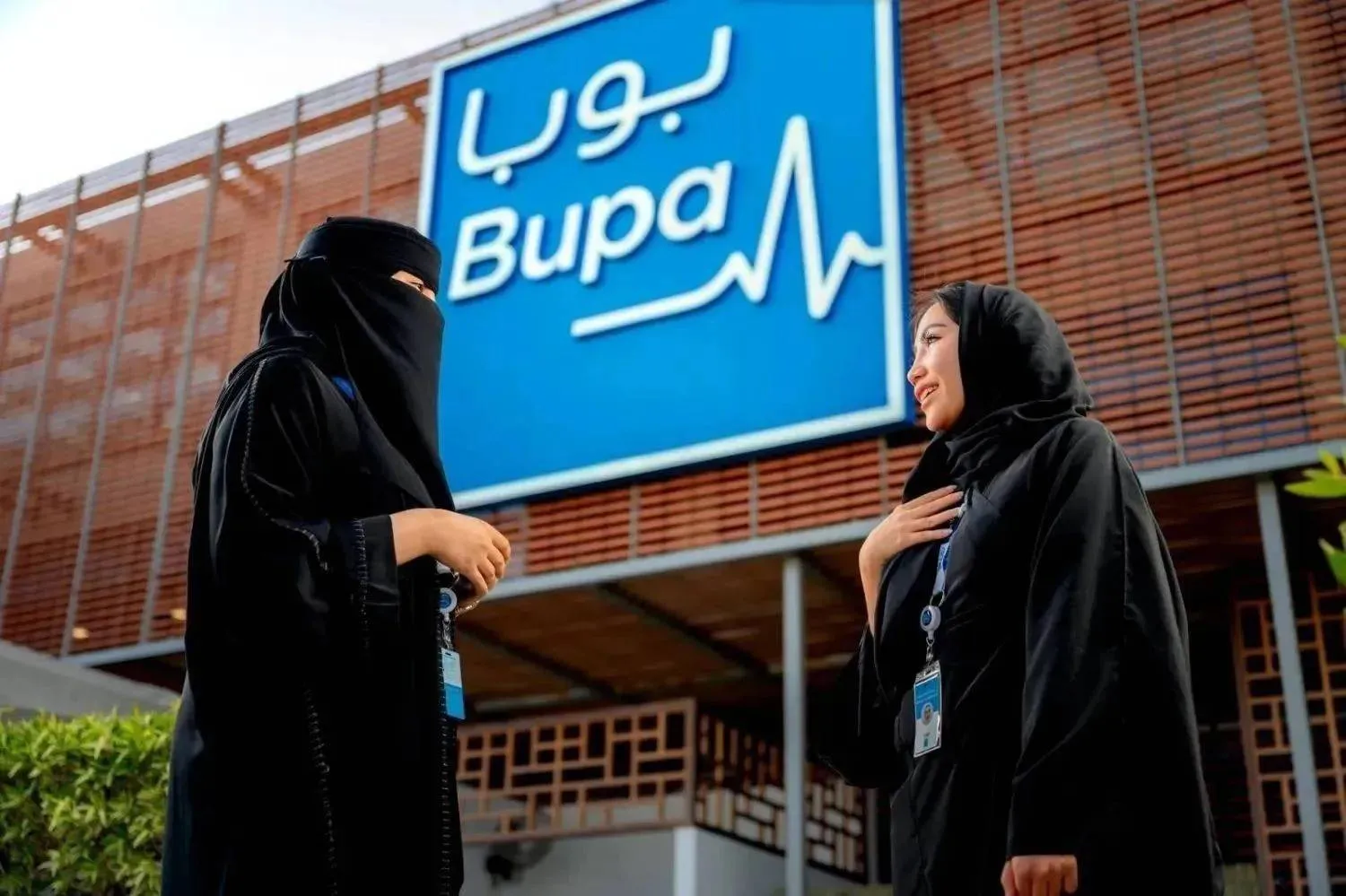
Two employees of Bupa Arabia pose beside one of the company’s office buildings. (Bupa Arabia website)
TT

Saudi Insurers’ Profits Jump to $251 Million on Investment Boom

Two employees of Bupa Arabia pose beside one of the company’s office buildings. (Bupa Arabia website)

Saudi Arabia’s insurance sector is enjoying a period of strong recovery and growing operational stability, driven by the economic momentum generated by Vision 2030 projects and a tightening regulatory framework.

Reflecting this maturity, the combined net profits of 26 insurance companies listed on the Saudi Exchange (Tadawul) rose 34 percent in the first quarter of 2026 to SAR 943 million ($251.2 million), up from SAR 701 million ($186.8 million) a year earlier.

The sharp increase was fueled by a dual engine: continued growth in mandatory and health insurance business and a significant rise in investment income from insurers’ portfolios.

Industry profits were supported by expanding insurance activity, rising enrollment in health and motor insurance programs, stronger investment returns among leading companies, operational expansion, improved underwriting quality, and more effective risk management and reinsurance strategies.

Market Leaders Dominate Growth

Quarterly results highlighted an increasing concentration of profits among the sector’s largest players, widening the gap between market leaders and smaller insurers.

Seventeen companies reported profits, including 11 that recorded year-on-year earnings growth, while nine companies posted quarterly losses. Analysts say the divergence could accelerate mergers and acquisitions as smaller firms face mounting solvency requirements.

Bupa Arabia emerged as the sector’s dominant performer, accounting for roughly 41 percent of total industry profits. The company reported net earnings of SAR 387.3 million, supported by lower retained reinsurance contract expenses and stronger investment performance.

The Company for Cooperative Insurance (Tawuniya) ranked second with net profit of SAR 288.1 million, up 10 percent from a year earlier. The increase was driven by higher recoveries from reinsurance companies and growth in its investment portfolio.

Al Rajhi Takaful placed third, posting a 25 percent increase in profit to SAR 113.5 million, benefiting from operational expansion and stable investment returns.

Risk Management and Investment Gains

Commenting on the results, Dr. Suleiman Al-Humaid Al-Khalidi, a financial markets analyst and member of the Saudi Economic Association, said the first-quarter performance reflects the sustained operational momentum the sector has enjoyed in recent years.

“The sector continues to benefit from growth in health and motor insurance, along with improved risk-management and investment practices among major insurers,” Al-Khalidi told Asharq Al-Awsat.

He added that continued expansion in health insurance and strong investment returns should provide further support through 2026, particularly if interest rates remain favorable and Vision 2030-related economic activity continues.

According to Al-Khalidi, most of the sector’s earnings growth came from leading companies such as Bupa Arabia, Tawuniya, and Al Rajhi Takaful, which possess large insurance portfolios and broad customer bases. Their scale gives them a greater ability to generate sustainable growth and capitalize on operational efficiencies.

He also cited improved reinsurance outcomes, stronger investment returns, more disciplined underwriting, enhanced pricing practices, and better claims management as key contributors to profitability.

Consolidation on the Horizon

Mohamed Hamdy Omar, chief executive of G World, said the results indicate that the sector has entered a phase of strong recovery and operational stability.

He noted that market concentration has become increasingly apparent, with the largest companies capturing most of the industry’s earnings. The trend highlights the competitive gap between leading insurers and smaller firms.

Omar attributed the record profits to a combination of strategic and operational factors, particularly improvements in risk management and reinsurance. Disclosures from major insurers showed declining net retained reinsurance costs and higher recoveries from reinsurers, suggesting more effective contract structuring and risk transfer.

Omar expects the sector’s upward trajectory to continue, accompanied by a wave of mergers and acquisitions. With nine companies still reporting losses, pressure is likely to increase on smaller insurers to consolidate into financially stronger entities capable of meeting regulatory and competitive demands.

He also pointed to expanding opportunities in health and motor insurance, as well as newer products such as latent-defect insurance, travel insurance, and property-related coverage. However, he warned that aggressive price competition remains one of the industry’s main challenges, emphasizing the need for risk-based pricing to prevent profit erosion.

New Capital Framework

The sector’s outlook is also being shaped by regulatory reform. In April, the Saudi Insurance Authority announced the mandatory adoption of a Risk-Based Capital (RBC) Framework beginning Jan. 1, 2027. The framework will replace the current solvency regime for insurance and reinsurance companies.

The authority said the move is part of the National Insurance Sector Strategy and aims to strengthen efficiency, sustainability, and the sector’s contribution to Vision 2030 goals.

Under the new framework, insurers will be required to maintain capital levels that correspond to the nature and scale of the risks they assume, enhancing confidence in the sector and improving risk-management standards. The authority also said the framework would provide insurers with greater flexibility in investment allocation and allow them to raise capital through subordinated debt instruments.

The reform will help increase risk-based capital in Saudi Arabia’s insurance sector from SAR 25 billion to SAR 50 billion by 2030, broadly aligning the Kingdom’s solvency standards with international models while adapting them to the Saudi market.


Türkiye Pressures Iraq to Operate Kirkuk-Ceyhan Pipeline at Full Capacity Before July 27

A worker carries out maintenance on the Kirkuk-Ceyhan pipeline, which transports oil from Iraq to Türkiye for export abroad. REUTERS
TT

Türkiye Pressures Iraq to Operate Kirkuk-Ceyhan Pipeline at Full Capacity Before July 27

A worker carries out maintenance on the Kirkuk-Ceyhan pipeline, which transports oil from Iraq to Türkiye for export abroad. REUTERS

Baghdad and Ankara are racing to draft a new strategic oil transport agreement as the deadline for a landmark 1973 accord approaches on July 27.

High-level talks opened in Ankara, led by Turkish Energy and Natural Resources Minister Alparslan Bayraktar, with an Iraqi delegation that included the deputy foreign and oil ministers.

The talks focused on an alternative to the current agreement, after Türkiye firmly rejected Baghdad’s request to extend the existing terms for another year.

Ankara is pressing to raise operations on the Kirkuk-Ceyhan pipeline to its full capacity of 1.5 million barrels per day, up from current limited flows of no more than 180,000 bpd. It has threatened to halt exports immediately by the end of the month if no deal is reached, with the final decision resting with President Recep Tayyip Erdogan.

A Turkish-Iraqi meeting in Istanbul on the Development Road project, with ministers from Qatar and the UAE participating via video conference (Turkish Ministry of Transport and Infrastructure)

Arbitration crisis

Ankara says there is no point extending an agreement that has already gone through international arbitration in Paris. It wants a broader deal lasting five to 10 years, with binding clauses requiring Iraq to pay compensation for any unused capacity.

The pressure follows the March 2023 shutdown of the pipeline after an International Chamber of Commerce ruling ordered Türkiye to pay Baghdad $1.5 billion in damages. The halt cost Iraq more than $23 billion before pumping partially resumed late last year.

Bayraktar wrote on X that he met senior officials from Iraq’s oil and foreign ministries in Ankara on Wednesday to discuss energy cooperation, including the Iraq-Türkiye crude oil pipeline that runs from Kirkuk to the port of Ceyhan in Türkiye’s southern province of Adana.

The Iraqi delegation included Deputy Foreign Minister Hussein Bahr Al-Uloom, Deputy Oil Minister Naser Azez Jabbar, and Iraq’s ambassador to Ankara, Majid Al-Lachmawi.

The Kirkuk-Ceyhan pipeline (Turkish media)

New opportunities for cooperation

Bayraktar said the talks focused mainly on the crude oil pipeline between the two countries, as well as wider opportunities for cooperation in natural gas and electricity.

He said Ankara looked forward to working closely with the new Iraqi government to improve existing energy infrastructure and support it through new and innovative links.

Within Ankara’s geopolitical vision for the region, Bayraktar said Türkiye does not see the joint Development Road project merely as a trade corridor for goods.

Instead, he described it as an “integrated strategic energy route” that could strengthen regional supply security and boost trade within the region. He said partnership on the file was crucial to stabilizing regional energy markets.

The Development Road project includes a road and railway extending from Iraq to Türkiye and its ports. It runs about 1,200 km inside Iraq and aims to move goods between Gulf states and Europe.

Turkish sources said Türkiye had rejected extending the agreement on Iraqi oil exports through the Kirkuk-Ceyhan pipeline under the current terms set when it was signed on July 27, 1973.

Ali Nizar, head of Iraq’s state oil marketer SOMO, said the government had informed Türkiye of the extension proposal to keep talks on the pipeline’s future moving without interruption.

Ankara says there is “no benefit in extending an agreement that has been subject to arbitration” and is demanding a new deal. It has proposed a mechanism to guarantee full use of the pipeline, along with other options, including extending it to southern Iraq.

The port of Ceyhan is a vital outlet for Iraqi oil exports. Iraq’s main oil export terminal in Basra has been affected by the closure of the Strait of Hormuz since the start of US-Israeli attacks on Iran in late February, and was also affected by Israeli attacks last year.

Turkish pressure

Türkiye halted oil flows in March 2023 after the International Chamber of Commerce in Paris ordered it to pay Baghdad $1.5 billion in compensation for unauthorized exports by the Kurdistan Regional Government from 2014 to 2018 through the pipeline.

Türkiye, however, said it had not violated the agreement and that Iraq owed it $1.4 billion in compensation.

Türkiye said the pipeline had been ready to resume flows since late 2023 after repairs to some faults.

Before it stopped in 2023, the pipeline carried 450,000 bpd of oil. Estimates suggest the halt in oil exports to Türkiye caused Iraq more than $23 billion in economic losses.

Flows through the pipeline resumed late last year, but a second arbitration case covering the period from 2018 onward remains pending. Another case is before a US court over the enforcement of the arbitration ruling.

Reports said Türkiye was pressing to raise operations on the Kirkuk-Ceyhan pipeline to its full capacity of 1.5 million bpd, compared with current weak flows of no more than 180,000 bpd.

In the current negotiations, Türkiye is seeking a long-term strategic agreement lasting five to 10 years. The deal would include binding clauses requiring Iraq to pay financial compensation for any unused or wasted pipeline capacity throughout the contract period.

Turkish officials said that if talks hit a dead end and the two sides fail to draft a new agreement before the end of the month, Ankara could ask Iraq to stop oil flows through the pipeline immediately.

The sources said the final decision on whether to halt flows or give Iraq more time to reach a deal would remain with Erdogan.


Kuwait's KPC Asks Some Oil Pipeline Bidders to Form Consortiums

This photograph shows a view of one of Kuwait's first Q8 fuel station ahead of its official inauguration in Kuwait City on July 2, 2026. (Photo by YASSER AL-ZAYYAT / AFP)
TT

Kuwait's KPC Asks Some Oil Pipeline Bidders to Form Consortiums

This photograph shows a view of one of Kuwait's first Q8 fuel station ahead of its official inauguration in Kuwait City on July 2, 2026. (Photo by YASSER AL-ZAYYAT / AFP)

Kuwait Petroleum Corporation is asking some global funds bidding for a $7 billion stake in its oil pipeline network to recruit other investors to help consolidate bids, three sources familiar with the matter told Reuters.

This will also ensure smaller investors that have relationships with KPC can get involved, said the sources, who did not want to be identified publicly as they were not authorized to speak to the media.

The deal is part of a broader push by Gulf state oil companies and sovereign ⁠investors to raise ⁠funds from infrastructure assets and attract foreign capital, as they look to diversify away from oil and fund domestic investment plans.

Here are some key details:

Blackstone has emerged as a bidder in the KPC deal.

It is the first time it has taken part in a wave of ⁠Gulf national oil company infrastructure deals that have attracted rivals like BlackRock and its Global Infrastructure Partners (GIP), as well as KKR and others.

Saudi Aramco, Abu Dhabi's ADNOC and other regional energy companies have pursued similar asset strategies in recent years.

Aramco signed an $11 billion lease and leaseback deal for its Jafurah gas processing facilities with a consortium of funds managed by GIP in a deal that closed in October.

BlackRock's GIP, Brookfield, EIG Global Energy Partners, KKR and Apollo have also ⁠advanced to ⁠the next stage of the sales process, the sources said.

KPC, EIG, KKR, Apollo, Blackstone, Brookfield and BlackRock declined to comment.

The pipeline sale has lost bidders since the process began, with Macquarie dropping out of the race, while a financing package of around $6 billion is taking shape to support the eventual winner, Reuters has previously reported.

KPC launched the transaction in the early stages of the US-Israeli war on Iran, underscoring Kuwait's intent to press ahead with its fundraising plans despite the geopolitical backdrop.


EU Tells Armenia 'You Can Count on Us' as Russia Keeps Up Economic Pressure

Armenian Prime Minister Nikol Pashinyan and European Commission President Ursula von der Leyen hold a joint press conference following their talks in Yerevan on July 2, 2026. (Photo by Karen MINASYAN / AFP)
TT

EU Tells Armenia 'You Can Count on Us' as Russia Keeps Up Economic Pressure

Armenian Prime Minister Nikol Pashinyan and European Commission President Ursula von der Leyen hold a joint press conference following their talks in Yerevan on July 2, 2026. (Photo by Karen MINASYAN / AFP)

The European Union pledged an additional €18 million in economic support for Armenia on Thursday and liberalized some export rules for its goods as Brussels seeks to shore up support for the South Caucasus country amid Russian trade pressure.

Moscow imposed wide-ranging trade restrictions on Armenia in the lead-up to a parliamentary election in June, which saw the incumbent Civil Contract party clinch 49.8% of the votes.

Russia accused the West of interfering in the vote, and joined Armenia's opposition in alleging election violations.

The restrictions from Moscow — imposed as ⁠Armenia has sought closer ⁠ties to the West and membership of the EU — have hit many key Armenian exports, including fresh produce, flowers, fish and alcoholic products.

Armenia is a member of a Russian-led economic union, and Moscow accounted for about 35% of Armenia's foreign trade last year, compared with 11% ⁠for the EU, according to government statistics.

On a visit to the Armenian capital Yerevan on Thursday, European Commission President Ursula von der Leyen told Prime Minister Nikol Pashinyan that Brussels would boost its support and help bring Armenian goods to European markets faster.

"I know Armenia is still facing significant economic pressure from Russia," Reuters quoted von der Leyen as saying. "But rest assured: when pressure mounts on our partners, the EU steps up... You can count on us."

Von der ⁠Leyen said ⁠the EU would remove tariffs from nearly 80% of Armenian exports heading to the EU, streamlining access to the bloc's roughly 450 million consumers.

The €18 million disbursement announced on Thursday is part of a broader €52 million package the EU drew up for Armenia in early June.

On a visit to Azerbaijan on Wednesday, von der Leyen said Brussels had pledged €200 million in grant funding to boost transport, energy and digital links across the South Caucasus that is designed to support peace between Azerbaijan and Armenia after nearly 40 years of war.
