


Iran Halts Israel Operation after First Post-truce Clash

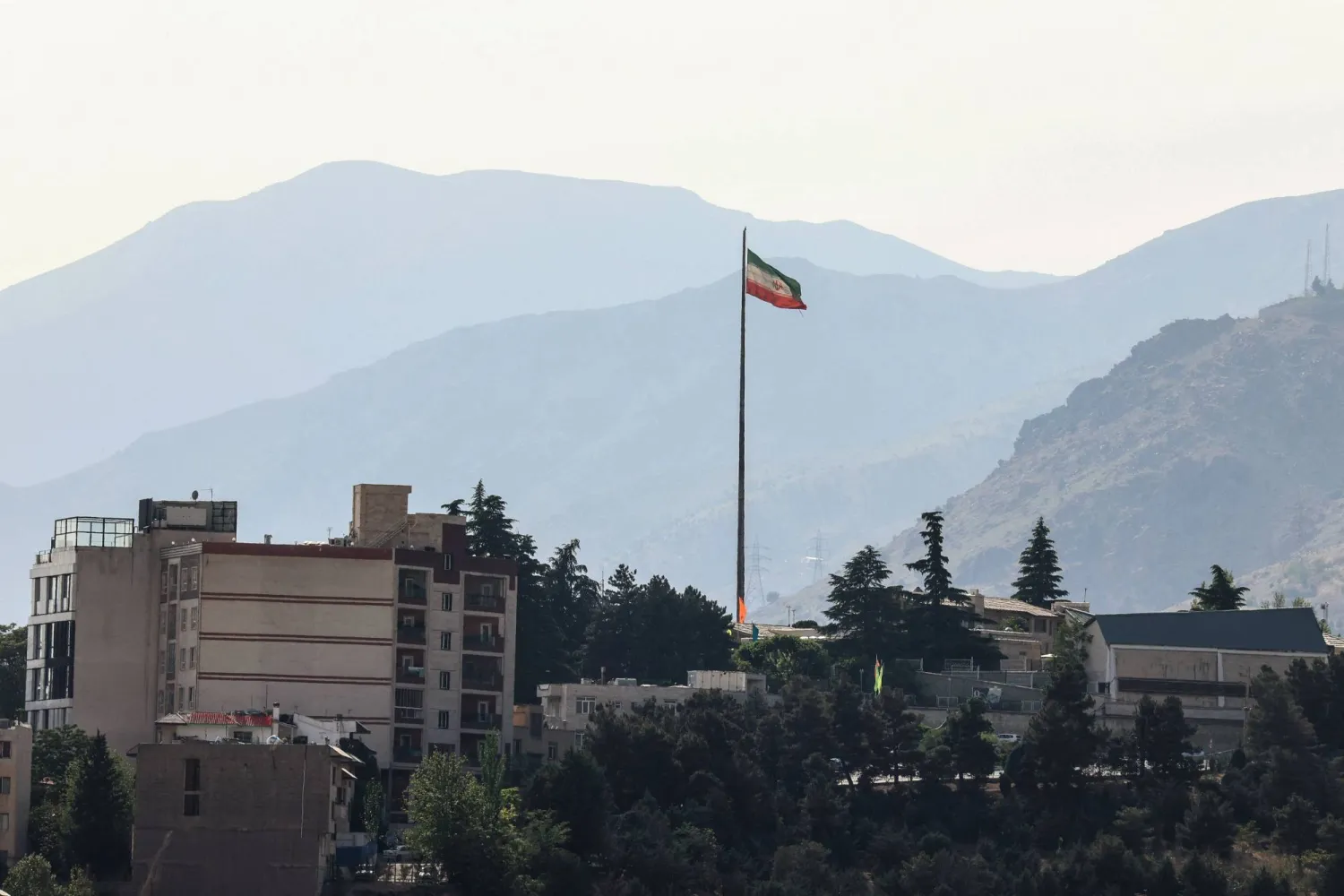
The Iran flag flutters from a tall flagpole over high-rise buildings in northern Tehran on May 12, 2026. (AFP)
TT

Iran Halts Israel Operation after First Post-truce Clash

The Iran flag flutters from a tall flagpole over high-rise buildings in northern Tehran on May 12, 2026. (AFP)

Iran on Monday said it was ending its latest military operation against Israel after the first exchanges of fire between the foes since a shaky ceasefire began, but warned it could inflict a more "crushing" response.

Iran fired dozens of missiles at Israel overnight and Israel responded by targeting military sites in the Islamic republic, sparking fears the escalation could usher in a new full-scale conflict after the April 8 truce.

"Israel and Iran must immediately stop 'shooting.' President DONALD J. TRUMP," the US leader wrote on his Truth Social network.

Minutes later, he added in a new post that "final negotiations" towards peace were proceeding "subject to ignorance or stupidity getting in its way."

Iran's military command then said it was halting the operation against Israel after delivering a "painful response".

But it warned "that should acts of aggression and hostility continue, including in southern Lebanon, much more severe and crushing measures than before will follow".

Shortly after, Israel's army intercepted three projectiles fired from Lebanon, according to an AFP journalist near their shared border, with the military confirming the munitions had targeted its forces operating in Lebanon's south.

"Some of the projectiles were intercepted prior to crossing into Israeli territory, and an additional projectile fell near -army- soldiers. No injuries were reported," the military said.

Tehran's earlier strikes followed attacks by Israel against targets of the Iran-backed Lebanese group Hezbollah in the southern suburbs of Beirut.

Iran had repeatedly warned it would strike Israel if the Lebanese capital was targeted.

No casualties have been reported in either Israel or Iran after the exchange of fire.

The Israeli military said it struck and dismantled Iranian defense systems deployed across several areas in the country. Iran fired nearly 30 missiles towards Israel since Sunday night, an Israeli military official said.

An AFP correspondent also saw a missile fall in agricultural land in the area of Najha, in the countryside of the Syrian capital Damascus, causing a fire around the impact site but no reported human casualties.

"Material damage is minor, but the psychological impact is significant. The area is home to children, farm caretakers, livestock and solar power installations," said Fadil Ataya, a local farmer.

A military source told the Tasnim news agency that "Iran is prepared for a long-term war with the Zionist regime and for strikes against US interests" in the region.

It also remains unclear who is leading decision-making in Tehran with Mojtaba Khamenei, said to have been wounded in a US-Israeli strike, yet to appear in public after taking over from his father Ali Khamenei who was killed on the first day of the war on February 28.

The European Union's top diplomat Kaja Kallas called on both sides to "sit down to a negotiation table and agree", adding that "the region does not need an escalation."




Israel Signs Three-billion-euro Arms Export Deal with Greece

Greece to buy a defense system from Israel (Reuters)
TT

Israel Signs Three-billion-euro Arms Export Deal with Greece

Greece to buy a defense system from Israel (Reuters)

Israel's defense ministry announced Monday it had signed a deal with Athens worth approximately three billion euros (almost $3.5 billion) to set up the "Achilles Shield" aerial defense system for Greece. 

"Under the deal, Israel will build Greece a comprehensive, multi-layered air defense array, drawing entirely on Israeli-made systems and on the extensive operational experience Israel's defense establishment has gained during the war," the ministry said in a statement. 

"This is the largest defense export deal in the history of Israel-Greece relations, and one of the largest in the history of the State of Israel," it added. 

The deal was signed by the Israeli defense ministry's director general, Major General (Res.) Amir Baram, and his Greek counterpart, Ioannis Bouras, in Tel Aviv. 

A Greek defense ministry source had told AFP in late July about an upcoming purchase of Israeli-made anti-missile, anti-aircraft and anti-drone systems, part of a broader defense investment for the Achilles Shield of 4.2 billion euro ($4.8 billion). 

In a statement, the Greek Defense Ministry said the multi-billion euro purchase was part of "the greatest reform of its armed forces in its history". 

Greek Defense Minister Nikos Dendias was quoted in the statement as saying that recent technological developments "have long rendered existing defense doctrines completely obsolete". 

"Greece is the first country in the European Union to adopt" a multi-layered air defense system such as the Israeli one, he added. 

According to the Israeli Defense Ministry, the export deal includes the David's Sling, Barak MX and SPYDER interception systems, air surveillance radars, and "a new national command and control system". 

All the equipment is manufactured by Israeli defense contractors Rafael and Israel Aerospace Industries and its subsidiary ELTA Systems. 

A supplementary 26 million euro deal was also signed to provide Greece with Rafael's defense systems against drones, the ministry said. 

"Israel and Greece share common strategic interests and face shared regional challenges," said Defense Minister Israel Katz, quoted in the statement. 

"At a time when actors with hegemonic ambitions are seeking to expand their influence and undermine stability in the region, Israel and Greece will continue to deepen their defense and strategic cooperation," he said, in a likely reference to Türkiye. 

Greece is now one of only four European NATO members to spend at least three percent of GDP on its military, amid decades of tensions with neighboring Türkiye. 

Israel has also increasingly locked horns with Türkiye, having struck a disused military base in northwest Syria, claiming it wanted to avert Turkish troops deploying to the facility. 

In 2023, Israel signed a deal with Germany to provide the Arrow 3 anti-ballistic missile defense system, which was expanded in December for a total value of $6.5 billion, the country's largest-ever military export contract. 


World Leaders Need to See Rising Oceans in Pacific, Says UN Official

View of a rock formation at the Pacific Ocean in Cabo San Lucas, Baja California state, Mexico on August 4, 2023. AFP
TT

World Leaders Need to See Rising Oceans in Pacific, Says UN Official

View of a rock formation at the Pacific Ocean in Cabo San Lucas, Baja California state, Mexico on August 4, 2023. AFP

Leaders from the world's top economies should stand on a Pacific atoll to see the reality of record sea level rise, a top UN official said in Palau on Monday.

Noting last week's deadly floods in Nepal, United Nations Deputy Secretary-General Amina Mohammed said rising seas in the Pacific were the "other side of that story".

"We do already know that a warming climate is changing the world's ice at extraordinary speeds, not only threatening the communities below glaciers but adding more water to our oceans," she told reporters.

Mohammed was speaking in Palau, where Pacific leaders have gathered for an annual summit to discuss challenges including climate change, crime and regional security.

The United Nations is pushing for G20 leaders to attend and make commitments at a meeting hosted by the tiny nation of Tuvalu in October, ahead of the upcoming UN climate summit in Türkiye, according to Mohammed.

"We think they should turn up and really engage with the world on what they need to do," she said, even though there are concerns few leaders outside the Pacific will make the trip.

Tuvalu, which is among the most vulnerable countries in the climate crisis, is preparing to relocate its population after scientists predicted most of its land may become inundated.

Palau's minister for the environment Steven Victor said the Pacific was "not begging for any handouts" but had fewer resources to deal with rising seas that threaten its communities the most.

"We need them to come and see," he said.

A UN report published Monday showed a record pace of sea level rise driven by warming oceans and glacier melt.

Up to 1.2 billion people could be displaced by 2050, with Pacific island countries experiencing sea level rise at twice the global average, it said.

It also highlighted a financing gap, with developing countries needing $310-$365 billion to adapt, yet having only $26 billion in adaptation finance available in 2023.

- Coral reefs under pressure -

Coral reefs are facing a "staircase of decline", with global hard coral cover declining 9.5 percent due to climate change over 40 years, another report released Monday in Palau by scientists found.

The Global Coral Reef Monitoring Network analyzed data from 37,000 reefs in 120 countries, finding a narrowing window between major bleaching events.

Although reefs can recover after bleaching if they have enough time, the frequency of marine heatwaves means only partial progress is made.

The study found a major bleaching event every five to six years since 2010.

"We are steadily eroding the conditions they need to recover," said the study's lead author Manuel Gonzalez Rivero.

"Climate change is driving more frequent and severe marine heatwaves, but local pressures such as poor water quality, overfishing and coastal development are making reefs even less able to withstand them," he added.

Among the worst affected are reefs in Australia, the Pacific and Caribbean.

Around 100 million people live within five kilometers (3.1 miles) of a coral reef, a 46 percent increase over two decades.

The ocean was a highway for Pacific nations, connecting its people, but was in crisis, Palau's President Surangel Whipps said on Sunday.


Iran FM Accuses ‘Serpent’ Netanyahu of Tricking US into War

16 March 2018, Austria, Vienna: Abbas Araghchi, Deputy Foreign Minister of Iran, gives an interview in Vienna. (dpa)
TT

Iran FM Accuses ‘Serpent’ Netanyahu of Tricking US into War

16 March 2018, Austria, Vienna: Abbas Araghchi, Deputy Foreign Minister of Iran, gives an interview in Vienna. (dpa)

Iran's Foreign Minister Abbas Araghchi on Monday called Israeli Prime Minister Benjamin Netanyahu a "serpent", accusing him of tricking Washington into going to war with the country.

"In Hebrew, Netanyahu openly crows that he suckered the US Administration into a war on Iran on behalf of Israel. Netanyahu explicitly laughs about how he 'influenced' America through 1,000 hours of airtime on US networks," Araghchi said in a post on X.

"In English, he praises POTUS' leadership. Serpent," he added.

War broke out between Iran and the United States on February 28 with US-Israeli strikes killing Iranian Supreme Leader Ali Khamenei along with senior military officials.

Iran retaliated with attacks across the region as the conflict continued to spread.

An April ceasefire put an end to the most intense fighting, but sporadic attacks mainly near the Strait of Hormuz have dimmed prospects for a final peace agreement, and the US recently shifted toward a campaign of what it calls "economic asphyxiation" of Iran.

The US struck the Iranian island of Larak late Sunday, its first such attack in a month.

In response, Iran says it launched attacks on Jordan and the UAE.

Last week, Netanyahu dismissed any prospect of an Iran-US deal and called Iran's leaders "savages".