


Unlocking the Shield: Saudi Arabia Expands Global Partnerships in Critical Minerals

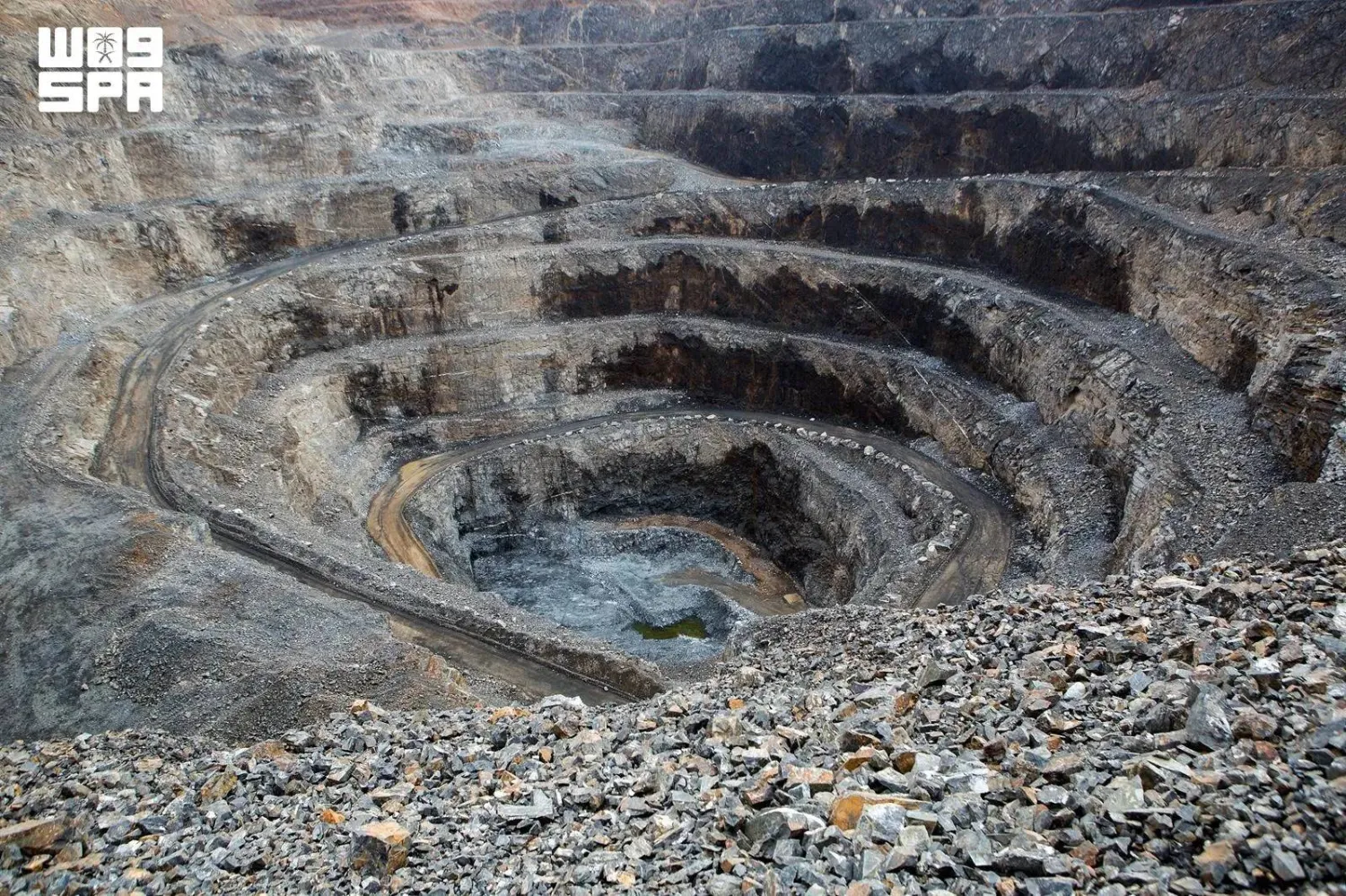
Spanning Saudi Arabia’s western coast, the Arabian Shield is among the world’s oldest geological formations. (SPA)
TT

Unlocking the Shield: Saudi Arabia Expands Global Partnerships in Critical Minerals

Spanning Saudi Arabia’s western coast, the Arabian Shield is among the world’s oldest geological formations. (SPA)

Long before Saudi Arabia emerged as an energy powerhouse, geological forces beneath the Earth’s surface were quietly enriching deposits of significant value.

Spanning Saudi Arabia’s western coast, the Arabian Shield is among the world’s oldest geological formations. Estimated to have formed between 500 and 900 million years ago through a series of volcanic, tectonic, and continental collisions, this craton preserves a remarkable record of the region’s evolution and hosts a rich concentration of critical minerals.

Today, the ancient landscape is home to some of the world’s most in-demand natural resources, further positioning the Kingdom as a rare-earth pioneer, the Saudi Press Agency reported on Monday.

Since the launch of Vision 2030, the importance of critical minerals has become a strategic priority, with the mining sector, led by Minister of Industry and Mineral Resources Bandar Alkhorayef, recognized as the third pillar of the Kingdom’s national economy. As Saudi Arabia accelerates efforts to expand renewable energy, advanced manufacturing, and digital infrastructure, critical minerals are becoming central to the nation’s industrial development and global competitiveness.

Although small in volume, rare earth elements—a group of 17 metallic elements—are indispensable components of Saudi Arabia’s $2.5 trillion mineral endowment and of modern technologies such as electric vehicles, wind turbine, aircraft systems, and data centers.

Therefore, as demand for advanced technology continues to rise, securing a consistent supply of critical minerals has become a global imperative for countries transitioning to clean energy and AI deployment. International attention is shifting beyond access to resources alone toward the development of a resilient, integrated value chain encompassing mining, processing, refining, and advanced manufacturing.

As a result, the Kingdom is uniquely positioned to benefit from this transformation, with substantial mineral discoveries reinforcing Saudi Arabia’s emergence as a premier hub for mining investments and multilateral cooperation.

This week, Alkhorayef concluded a high-level diplomatic visit to the Russian Federation, a country renowned for its vast reserves of critical minerals, including nickel, cobalt, platinum group metals, and rare earth elements.

For a century, Saudi Arabia and Russia have maintained warm bilateral relations, and the Minister’s attendance at the St. Petersburg International Economic Forum (SPIEF) this week follows a memorandum of understanding (MoU) signed between the two countries on the sidelines of the 2024 Future Minerals Forum in Riyadh.

The agreement aims to deepen collaboration across the critical-minerals value chain, while underscoring their shared commitment to joint exploration, technology exchange, and investment in mineral processing and advanced manufacturing.

Saudi Arabia’s visits to Russia over the past few years subsequently reaffirm the Kingdom’s intent to build enduring international partnerships. The country’s efforts to engage in high-level dialogue also highlight Saudi Arabia’s resolve to secure its own supply chains while equally contributing to the stability and growth of global markets.

In November 2025, the industry minister announced the value of rare earth element discoveries had reached $100 billion - an increase of 90% since 2018. He also revealed that studies conducted by the Saudi Geological Survey identified two advanced-stage exploration areas containing an estimated 644 million tons of resources, with an average grade of 0.3% total rare earth oxides.

Four additional locations have also been targeted for further evaluation, increasing the estimated resource from 364 million to 714 million tons, with concentrations up to 1.66%.

One of the most significant discoveries lies beneath the Jabal Sayyid and Jabal Quraiyah geological sites. Considered two of the world’s most auspicious mining prospects, the underground mines are located within a highly lucrative mineral belt valued at approximately $51.3 billion.

However, the Kingdom’s ambitions extend far beyond extraction. Recognizing that the greatest economic value is often generated further along the supply chain, the country is actively pursuing a blueprint to develop an integrated critical minerals ecosystem. The roadmap aims to expand Saudi Arabia’s capabilities in mining, separation, refining, and advanced manufacturing, enhancing economic value within the Kingdom while supporting global supply chain resilience.

Underpinning this strategy is a growing network of international partnerships and cooperation agreements aimed at advancing critical minerals value chains, attracting investment, facilitating technology transfer, and supporting the development of processing and manufacturing capabilities. These efforts are complemented by ongoing discussions with global industry leaders to establish processing and separation facilities that leverage both domestic and international feedstock.

By transforming the country’s mineral wealth into a catalyst for economic leadership, technological innovation, and supply chain security, Saudi Arabia is positioning itself as a key player in the global energy transition. Much like the vast Arabian Shield, these ambitions are rooted in ancient foundations that now drive a bold, forward-looking vision.

Saudi Arabia is not just shaping its own future — it is helping build the resilient supply chains needed to support global growth and development for decades to come.



Shell Raises Gas Output Guidance for Q2, Flags Stronger Gas Trading Results

The logo of British multinational oil and gas company Shell is displayed during the LNG 2023 energy trade show in Vancouver, British Columbia, Canada, July 12, 2023. (Reuters)
TT

Shell Raises Gas Output Guidance for Q2, Flags Stronger Gas Trading Results

The logo of British multinational oil and gas company Shell is displayed during the LNG 2023 energy trade show in Vancouver, British Columbia, Canada, July 12, 2023. (Reuters)

Shell slightly increased its guidance on Tuesday for its second-quarter integrated gas production, although output would be down sharply from the first three months of the year due to the impact of the Middle East conflict.

The ‌British oil ‌major also expects trading and optimization at its ‌integrated ⁠gas segment to ⁠be "significantly higher" in April-June than in the first quarter, the group said in a quarterly trading update.

Trading results at its chemicals and products unit, which includes the group's big oil trading desk, are expected to be in line with the previous quarter's strong performance.

Oil majors including Shell and its European peers BP and TotalEnergies ⁠reported strong oil trading in the first quarter, ‌benefiting from price volatility due to ‌the US-Israeli war with Iran.

Shell guided for its integrated gas output ‌in the April-to-June period to be about 610,000 to 650,000 barrels ‌of oil equivalent per day, down around 30% from the 909,000 boed it produced in the first quarter.

It previously expected a range of 580,000 to 640,000 boed.

Production at Shell's Pearl gas-to-liquids plant in Qatar ‌was halted in March after an attack on Ras Laffan Industrial City damaged one of the facility's two ⁠trains. Shell ⁠has said repairs could take about a year.

About 20%, or 550,000 boed, of Shell's oil and gas production comes from the Middle East, with around 10% of that Qatar-related.

Shell also forecast a $1 billion to $6 billion working-capital inflow in the second quarter, compared with an $11.2 billion outflow in the first quarter, reflecting the impact of volatility in commodity prices. Working capital is a liquidity measure of current assets minus liabilities.

Shell guided for higher indicative refining margins of about $20 per barrel and chemicals margins of about $240 per ton in the second quarter, although it said the realized margins were lower than those levels due to market dislocations.


Oil Prices Gain as Focus Shifts to Supply Recovery and Demand

FILE - Iraqi oil workers at an oil installation at Beiji in northern Iraq Tuesday, February 29, 2000. (AP Photo/Jassim Mohammed, File)
TT

Oil Prices Gain as Focus Shifts to Supply Recovery and Demand

FILE - Iraqi oil workers at an oil installation at Beiji in northern Iraq Tuesday, February 29, 2000. (AP Photo/Jassim Mohammed, File)

Oil prices edged higher on Tuesday as traders looked beyond easing geopolitical tensions in the Middle East and turned their attention to supply increases and demand prospects.

Brent crude futures gained 85 cents, or 1.2%, to $72.84 a barrel, while US West Texas Intermediate crude rose 74 cents, or 1.1%, to $69.29 a barrel as of 0645 GMT, after settling down at around pre-Iran war levels on Monday.

"The steps towards recovery in supply have eased the immediate risk premium, but the market remains wary of putting too much faith in the ‌stability of ‌the current truce given the on again-off again nature of US-Iran relations," ‌said ⁠Tim Waterer, chief market ⁠analyst at KCM Trade.

"We will be watching for early signs of demand response, particularly from China. The market has priced in a lot of the positive supply news, so the next leg in oil prices will depend on whether physical reality matches the optimistic headlines."

President Donald Trump said on Monday the US would either reach a deal with Iran or "finish the job," renewing his threat of military action as Tehran projects defiance following the funeral of former Supreme Leader Ali ⁠Khamenei.

Investors have been keeping a close eye on talks between the US ‌and Iran over the fate of shipping through ‌the Strait of Hormuz while tracking the recovery in Gulf oil exports.

On Monday night, Iran's Revolutionary Guards ‌fired at least two missiles at commercial ships transiting the Strait of Hormuz, Axios reported, citing ‌two US officials. The commercial ships suffered significant damage but had no casualties, the report said.

Despite the recent surge in strait ‌activity, oil flow recovery is proving slower than expected, ANZ analysts said in a note.

"The initial rebound in tanker transits through the Strait of ⁠Hormuz has stalled, ⁠with vessel crossings remaining in single digits and no sustained recovery evident," they said.

"While the interim US-Iran agreement has reduced immediate geopolitical risks, shipping operators remain cautious, limiting the speed at which crude exports can return to normal levels."

The Organization of the Petroleum Exporting Countries and its allies including Russia agreed on Sunday to further increase output targets by 188,000 bpd from August, on top of similar increases for June and July.


Saudi Arabia Grants ACWA Exclusive Green Hydrogen Export Rights

The ACWA headquarters in Saudi Arabia. (ACWA)
TT

Saudi Arabia Grants ACWA Exclusive Green Hydrogen Export Rights

The ACWA headquarters in Saudi Arabia. (ACWA)

Saudi Arabia’s Acwa, the world’s largest private water desalination company, a leader in the energy transition, and a first mover into green hydrogen at scale, has received government approval granting the company the exclusive right to export green hydrogen and its derivatives produced in the Kingdom to international markets, including green ammonia, green methanol and green fuels.  

The approval comes as global demand for clean molecules accelerates and as Saudi Arabia moves to convert its renewable resource advantage into long-term export revenues. The government approval supports the Kingdom's strategic objectives of establishing Saudi Arabia as a global leader in clean energy exports and accelerating the development of a diversified, low-carbon economy under Vision 2030, said Acwa in a statement on Tuesday.  

Under the approval, Acwa has also been assigned to develop projects for the production, transmission and export of electricity generated from renewable energy sources to European and Arab markets, supporting regional energy security while enabling the export of competitively priced clean electricity from the Kingdom.  

Dr. Samir Serhan, Chief Executive Officer of Acwa, said: "This government approval reflects the Kingdom's confidence in Acwa’s ability to deliver strategic infrastructure at scale and reinforces our responsibility to help position Saudi Arabia as a leading global exporter of clean energy.” 

“Green hydrogen and renewable electricity exports represent the next chapter in the Kingdom's energy leadership, creating new opportunities for economic growth while contributing to global energy security and the energy transition,” he added.  

“We are honored to support this national ambition and remain committed to delivering the infrastructure that creates long-term value for the Kingdom and its partners around the world,” he said.  

The mandate builds on Acwa’s established leadership in renewable energy, desalination and its position as a first mover into green hydrogen at scale. The latter includes its role in developing NEOM Green Hydrogen, which is one of the world's largest green hydrogen projects.  

It further reinforces the company's position as a strategic national partner in the infrastructure that advances the Kingdom's long-term economic diversification, industrial development and global energy leadership.  

Acwa’s current portfolio of 111 assets spans 16 countries, with SAR 468.9 billion / USD 125 billion of assets under management.  

Serhan added: “This mandate expands Acwa’s role in contributing to the Kingdom's future clean energy economy and defines the next architecture of Saudi Arabia’s energy export strategy.” 

“Our experience in developing, financing, constructing, and operating large-scale renewable energy and green hydrogen projects provides the execution foundation that this assignment demands,” he stressed. 

“We look forward to working closely with government entities, strategic partners, and international stakeholders to develop the integrated export infrastructure that connects Saudi Arabia's abundant renewable resources with growing global demand for clean molecules and clean electricity.”  

The approval further strengthens Acwa’s long-term growth strategy by adding a sovereign export dimension to an already diversified infrastructure platform, spanning renewable energy, green hydrogen, electricity transmission, and energy infrastructure, while reinforcing Saudi Arabia's position as a reliable supplier of sustainable energy solutions to global markets.
