Seven Georgians Tried in France over Theft of Rare Russian Books

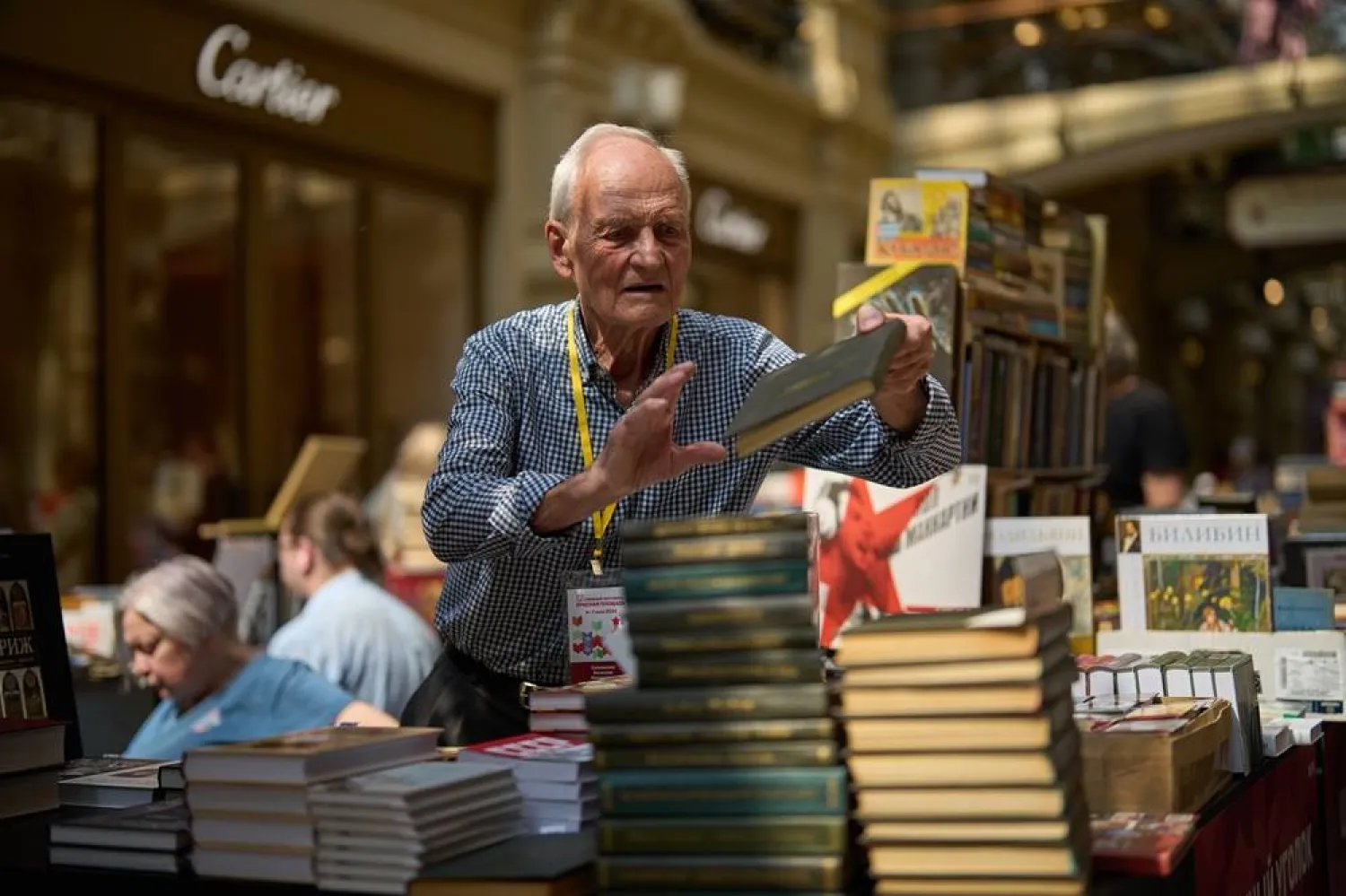
 A bookseller holds a book while standing at a book shop in the GUM department store, during the annual Red Square Book Festival, celebrating Alexander Pushkin's birthday in Moscow, on Friday, June 5, 2026. (AP)
A bookseller holds a book while standing at a book shop in the GUM department store, during the annual Red Square Book Festival, celebrating Alexander Pushkin's birthday in Moscow, on Friday, June 5, 2026. (AP)
TT

Seven Georgians Tried in France over Theft of Rare Russian Books

 A bookseller holds a book while standing at a book shop in the GUM department store, during the annual Red Square Book Festival, celebrating Alexander Pushkin's birthday in Moscow, on Friday, June 5, 2026. (AP)
A bookseller holds a book while standing at a book shop in the GUM department store, during the annual Red Square Book Festival, celebrating Alexander Pushkin's birthday in Moscow, on Friday, June 5, 2026. (AP)

Seven Georgian nationals will be tried in Paris starting Tuesday for the theft of rare editions of Russian literary classics from prestigious French libraries, including works by Alexander Pushkin.

The trial is the latest case seeking justice for a spate of similar thefts in recent years from libraries across Europe, suspected to be the work of an organized network.

The thefts targeted rare Russian classics worth millions of euros in total, including by 19th-century literary greats Pushkin and Nikolai Gogol.

The defendants on trial in France have been charged with criminal conspiracy and intent to commit an offence, while some of them are also charged with theft of an exhibited cultural object. They face up to 10 years in prison.

Two are being tried in absentia, with warrants out for their arrests.

Two others -- identified only as Mikheil Z. and Beqa T. -- have already been convicted and imprisoned in other countries for similar crimes and have been temporarily handed over to France.

Mikheil Z., 50, was sentenced last year in Lithuania to three years and four months in prison for the organized theft of 19th-century publications valued at 606,000 euros ($698,000).

Beqa T., 49, was sentenced to three years and six months in prison in Estonia.

French investigating judges suspect the defendants were part of "an organized criminal network", according to parts of the investigation seen by AFP.

The thefts, which also hit Germany, Switzerland and the Czech Republic, spurred the creation of a joint investigation team under the European Union police and justice coordination agencies Europol and Eurojust that led to several arrests in 2024.

- 'Strengthening its protection' -

The crimes in France took place in 2023 at the Diderot Library of the Ecole Normale Superieure (ENS) in the eastern city of Lyon, and at the National Library of France (BnF) and the University Library of Languages and Civilizations (BULAC) in Paris.

According to investigators, the thieves went to the libraries to consult rare and valuable works, photographing and measuring them, and returned later to replace them with virtually undetectable copies.

Between March and October 2023, Mikheil Z. went to the BnF 40 times to request access to manuscripts, mainly by Pushkin, claiming he was doing research on democracy in 19th-century Russian literature.

In November, the library realized nine works had been replaced with copies, with an estimated loss of 650,000 euros.

Mikheil Z. admitted to investigators that he stole the works but denied working with the other defendants, claiming he was driven by greed and had sold the books in Russia.

In June 2024, Russia's Litfond auction house listed in its catalogue a second edition of Pushkin's "The Prisoner of the Caucasus", a book corresponding to a copy stolen from the BnF.

The auction house told French authorities it had documentation proving the book was acquired from its owner in Russia in 2014/2015.

In the eyes of the investigative judges, the thefts may be linked to a desire to repatriate Russia's cultural heritage at a time when Moscow's relations with Europe have been increasingly strained over the Russian invasion of Ukraine.

None of the stolen works have been found, though BnF lawyer Alexandre de Konn said the institution "has not given up hope of recovering these works".

The library "remains true to its mission: to continue making heritage open to the public while constantly strengthening its protection", he told AFP.


Red Sea Film Foundation Marks Record Presence in the Race for Oscars with 12 Supported Films

Red Sea Film Foundation Marks Record Presence in the Race for Oscars with 12 Supported Films
TT

Red Sea Film Foundation Marks Record Presence in the Race for Oscars with 12 Supported Films

Red Sea Film Foundation Marks Record Presence in the Race for Oscars with 12 Supported Films

A record 12 Red Sea Film Foundation-supported films have entered the race for Best International Feature Film at the 99th Academy Awards, representing 12 countries across Saudi Arabia, the Arab world, Africa and Asia.

Eleven have been selected as the official submissions of their respective countries: "A Matter of Life and Death, Roqia, Soumsoum, the Night of the Stars, The Stories, Guria, Four Seasons in Java, Sink, Strawberries, Ben’Imana, We Are All Strangers, and The Other Side of the Sun."

They are joined by Angh, which won the Platform Award at the 2026 Toronto International Film Festival. Under new Academy rules introduced for the 99th Academy Awards, the Platform Award winner is among a select group of international festival prize winners eligible to submit directly for consideration in the category, according to SPA.

CEO of the Red Sea Film Foundation Faisal Baltyuor said: “The Red Sea Fund backs a broad slate of films each year, and for twelve of them to reach the Oscars race is an extraordinary moment of pride for the Red Sea Film Foundation. For eleven, being chosen by their countries as the official submission is in itself a significant recognition of the filmmakers and their work, and a testament to the talent and the stories emerging from Saudi Arabia, the Arab world, Africa and Asia. It reflects the growing impact of our commitment to empowering filmmakers and championing their creative visions, from the earliest stages of development through to the international stage. It has been a privilege to be part of their journeys, and we wish them every success as they continue in the Academy Awards race.”

The milestone caps a strong year for Foundation-supported cinema across Cannes, Venice and Toronto. At TIFF 2026 the Foundation marked its largest presence at the festival with eight supported films, culminating in Angh’s Platform Award, while Ben’Imana — now Rwanda’s official submission — won the Caméra d’Or at Cannes earlier in the year.

The shortlist for Best International Feature Film will be announced on December 15, 2026, with nominations on January 21, 2027. The 99th Academy Awards take place on March 14, 2027, in Los Angeles.


22 Private Museums in Aseer Document Region's Cultural Heritage

Nationwide, licensed private museums rose to 118 at the end of 2025, up 19 from 99 a year earlier, with Aseer accounting for about 18.6% of the total - SPA
TT

22 Private Museums in Aseer Document Region's Cultural Heritage

Nationwide, licensed private museums rose to 118 at the end of 2025, up 19 from 99 a year earlier, with Aseer accounting for about 18.6% of the total - SPA

Aseer Region had 22 licensed private museums at the end of 2025, tying Makkah Region for the highest number in the Kingdom, ahead of Riyadh Region with 20 and Eastern Region with 17, according to the Ministry of Culture's State of Culture in Saudi Arabia 2025 report.

Established by individuals dedicated to collecting and preserving heritage, the museums hold agricultural tools, cooking and storage vessels, traditional weapons, coins, documents, attire, jewelry, and craft equipment, SPA reported.

Together they document the lives of people across the region's varied environments, from the Sarawat highlands to the Tihama foothills and the coast, each of which shaped distinct styles of housing, dress, tools, and crafts.

The museums also enrich Aseer's tourism offering, complementing its historical sites, heritage villages, and folk arts, and can be built into travel and cultural itineraries.

Nationwide, licensed private museums rose to 118 at the end of 2025, up 19 from 99 a year earlier, with Aseer accounting for about 18.6% of the total.

A survey of 39 private museums found that 41% hold between 100 and 5,000 items and another 41% have more than 10,000. However, about 60% have no website and 66% lack social media accounts, underscoring the need to strengthen their digital presence and widen public access.


Ghassan Salame to Asharq Al-Awsat: Lebanon’s War-Damaged Heritage Could Take a Generation to Restore

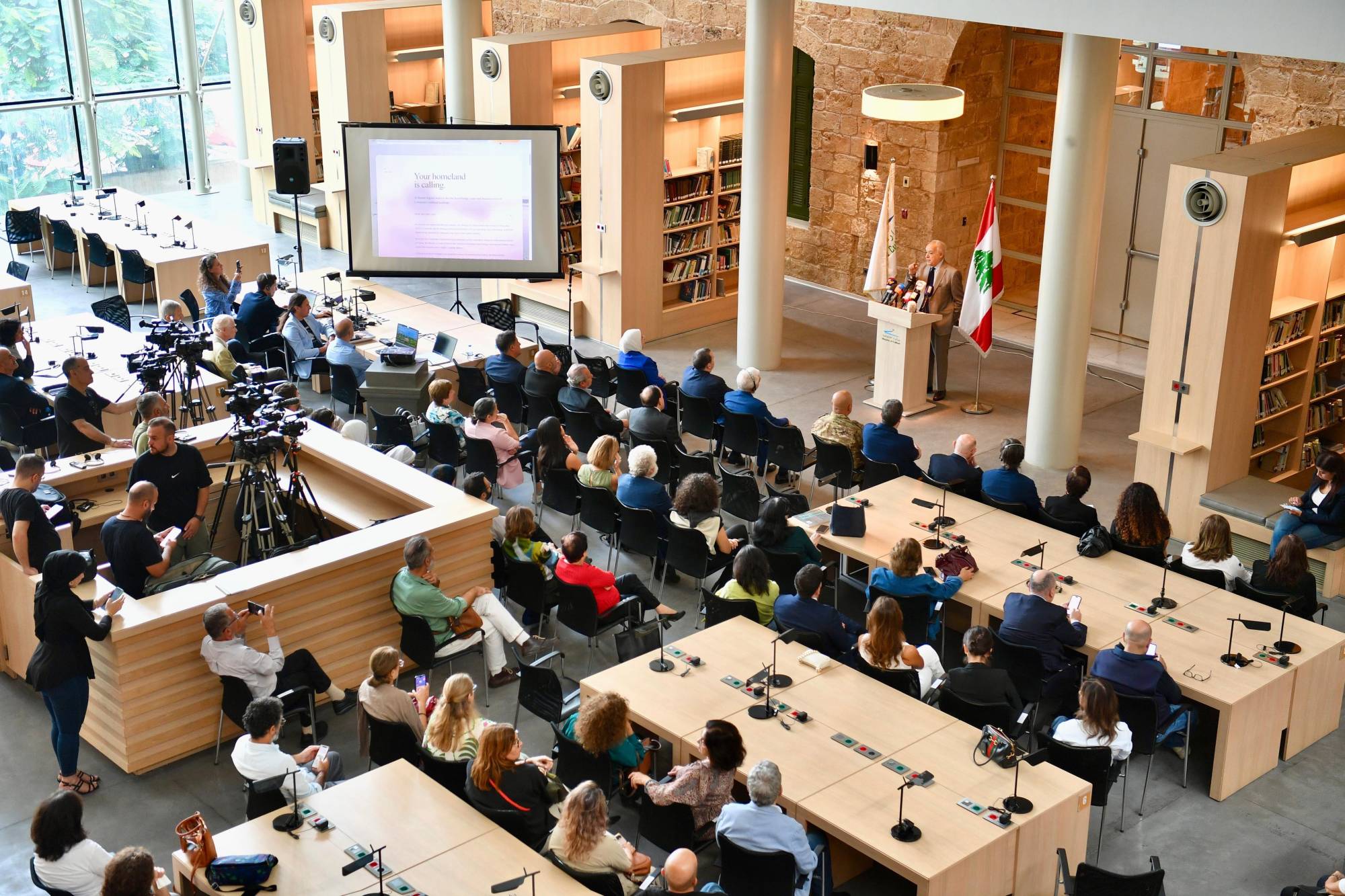
The platform was launched at the Lebanese National Library in Beirut. (Ministry of Culture)
TT

Ghassan Salame to Asharq Al-Awsat: Lebanon’s War-Damaged Heritage Could Take a Generation to Restore

The platform was launched at the Lebanese National Library in Beirut. (Ministry of Culture)

Family photographs, home videos, letters, interviews and old songs are finding a new home in a digital archive created by Lebanon’s Culture Ministry to preserve personal memories as part of the country’s collective history.

Presented at the National Library, the “Archiving Lebanon’s Heritage” platform aims to build a global digital archive of Lebanon’s tangible and intangible heritage, including its natural and personal heritage, for future generations.

Developed by the ministry in partnership with the Heritage International Institute (HII) and other international organizations, the platform invites contributions from Lebanese at home and abroad, as well as anyone with accounts or records of the country’s past.

The initiative was unveiled in the presence of Culture Minister Ghassan Salame, Italian Ambassador Fabrizio Marcelli, HII President Sergio Iovino and Lebanon’s Director General of Antiquities Sarkis Khoury.

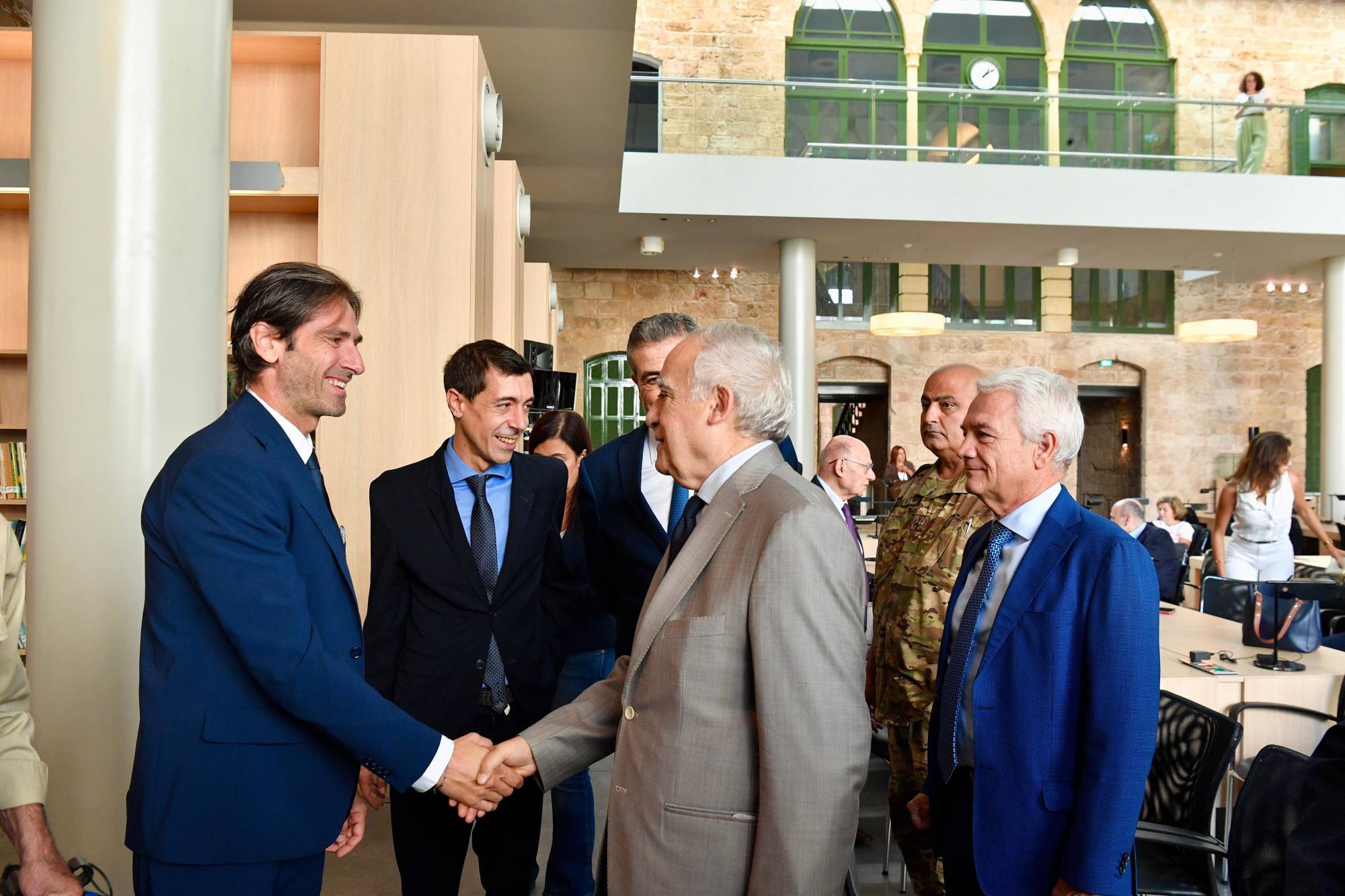
Salame with Italian Ambassador Fabrizio Marcelliat the launch ceremony. (Ministry of Culture)

Treasures hidden in Lebanese homes

Speaking to Asharq Al-Awsat, Salame explained that the latest war had damaged archaeological sites, historic markets and Lebanon’s tangible and intangible cultural heritage.

“I cannot put a precise figure on these losses. They certainly exceed millions of dollars, and restoring what was damaged could take an entire generation,” he noted.

The minister stressed that the war had affected all Lebanese in one way or another, describing its impact as “the theft of our intimate history, a history that is priceless.”

He stressed the importance of preserving existing heritage through modern technologies that can extend the lifespan of photographs, documents and other historical records.

Salame pointed out that private collections may contain materials more significant than those held by some public institutions.

While preparing the exhibition “Between the Lines of the Constitution” to mark the centenary of Lebanon’s Constitution, organizers discovered valuable documents preserved by families because a relative had held a particular position or worked in a field connected to them.

“These are treasures hidden in homes and within families,” Salame observed, stressing that the scale of these private collections should not be underestimated.

The platform accepts digital copies rather than originals. Contributors wishing to donate original documents can deposit them with the National Library for safekeeping. A written agreement protects contributors’ intellectual property rights, which remain exclusively theirs. They may also withdraw their materials from the platform at any time.

Lebanese Culture Minister Ghassan Salame delivers remarks at the event. (Ministry of Culture)

Contributors control access

Donors can decide how widely their submissions are shared, from keeping them in a completely private, protected archive to authorizing their publication.

Iovino described the initiative as providing the foundations for a “digital fortress” open to millions of Lebanese expatriates, as well as friends of Lebanon and people around the world.

Contributors, he stressed, retain full ownership of their memories and control over their accessibility.

Khoury urged Lebanese not to be discouraged by the heritage lost to war.

“Our story does not end with these losses or with the damage to our tangible and intangible heritage,” he told Asharq Al-Awsat. “We are the ones who create our heritage, as we have throughout history. Our memories help save what remains.”

Italy pledges continued support

Marcelli reaffirmed Italy’s commitment to preserving Lebanon’s cultural heritage, citing its involvement in restoring the Beirut National Museum and other museums damaged by the port explosion.

He also highlighted recent restoration work at the historic Mar Mikhael railway station, carried out in cooperation with UNESCO and the UN refugee agency.

Although these projects differ, they share a common goal: preserving historical evidence and making it accessible to the public. The new initiative, however, shifts the focus from monuments and institutions to the lives of individuals, families and communities.

Marcelli underscored the value of microhistory, which examines everyday experiences rather than focusing exclusively on major political events, wars, institutions and prominent figures.

The basic idea is that studying a seemingly marginal event, an ordinary person or a small community can reveal important insights into how an entire society functions, he said.