


Riyadh Air Eyes Gradual Expansion as New Aircraft Arrive

Riyadh Air’s new aircraft enters Saudi airspace (X)
TT

Riyadh Air Eyes Gradual Expansion as New Aircraft Arrive

Riyadh Air’s new aircraft enters Saudi airspace (X)

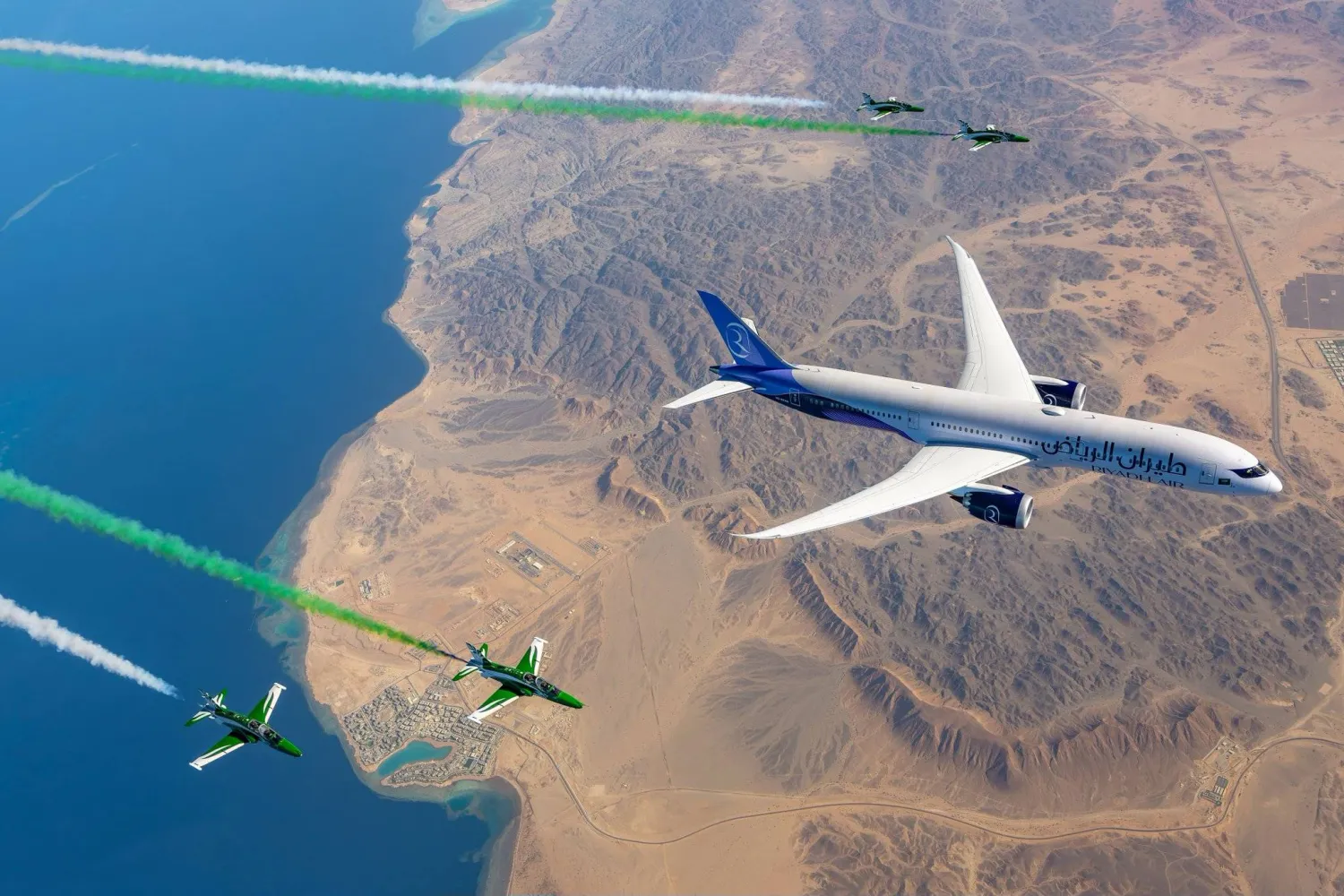
Riyadh Air has completed its structural setup phase and has moved formally into operations, advancing a gradual, carefully planned expansion strategy built around rapid fleet growth and the approaching commercial launch of Saudi Arabia’s new national carrier.

The arrival of its third Boeing 787 Dreamliner in Riyadh, along with the official start of ticket sales for its first domestic and international destinations, marks a new stage for the airline as it prepares to build a growing network focused on expanding operating capacity and targeting high-demand global markets.

The steps put into practice the goals of Vision 2030, which seeks to turn Riyadh into a global logistics hub and a key link for air transport and luxury hospitality between continents.

Osamah Alnuaiser, senior vice president of marketing and corporate communications at Riyadh Air, said the arrival of the third aircraft was a “historic moment” for the company, coming days after it received its first two planes.

He said the milestone crowned more than three years of work since the signing of the first deals with Boeing, under a plan to build a fleet of more than 182 aircraft.

Speaking to Asharq Al-Awsat, Alnuaiser said the new carrier had moved from establishment to actual operations. He said the company had started intensive operational tests, including daily nonstop flights between Riyadh and London, to assess service and product quality and test its operating model before the full commercial launch.

Five destinations

Alnuaiser said the company had officially started selling tickets to five destinations - Jeddah, Cairo, Dubai, Madrid and Manchester - calling the move the beginning of a route network that will expand gradually in the coming period.

He said Riyadh Air was preparing to receive more aircraft in sequence over the coming months, supporting plans to expand destinations and increase operating capacity. The company is currently operating four daily flights between Riyadh and Jeddah, he said, as part of a strategy to strengthen air links between the Saudi capital and major economic and tourism centers worldwide.

Alnuaiser said the company was constantly studying new domestic and international destinations. The goal, he said, was not merely to increase flights but to diversify destinations and connect Riyadh with major capitals and cities, in line with the aim of turning the capital into a global aviation hub.

Innovation

Alnuaiser said innovation and leadership were central pillars of Riyadh Air’s strategy, both in passenger services and in the digital and operational experience the airline is seeking to deliver.

Asked about the challenges facing the global aviation sector, Alnuaiser said geopolitical events and supply chain disruptions were common challenges for airlines. Riyadh Air, he said, was focused on seizing opportunities and selecting markets with strong demand and promising growth prospects.

He said the company expected to have more than 11 aircraft before the end of this year, with monthly deliveries of Boeing 787 aircraft continuing, along with the start of Airbus A321 deliveries at year’s end. That, he said, would strengthen fleet diversity and operational flexibility.

The expansion comes as Riyadh Air accelerates preparations to launch commercial operations, as part of Saudi Arabia’s plans to strengthen the aviation sector and increase international air connectivity, in line with Vision 2030 targets to make the Kingdom a global transport and logistics hub.

Aircraft delivery ceremony

Saudi Arabia’s new carrier celebrated the delivery of the new aircraft at a special ceremony in Riyadh attended by several ministers and officials.

Yasir Al-Rumayyan, governor of the Public Investment Fund and chairman of Riyadh Air, said at the ceremony that the moment embodied Vision 2030’s goals of strengthening the Kingdom’s connection to the world and supporting economic diversification.

He said the new national carrier was moving to cement Saudi Arabia’s position as a global transport and logistics hub, while Riyadh Air continued to build a new model for air travel linking Riyadh with the world.
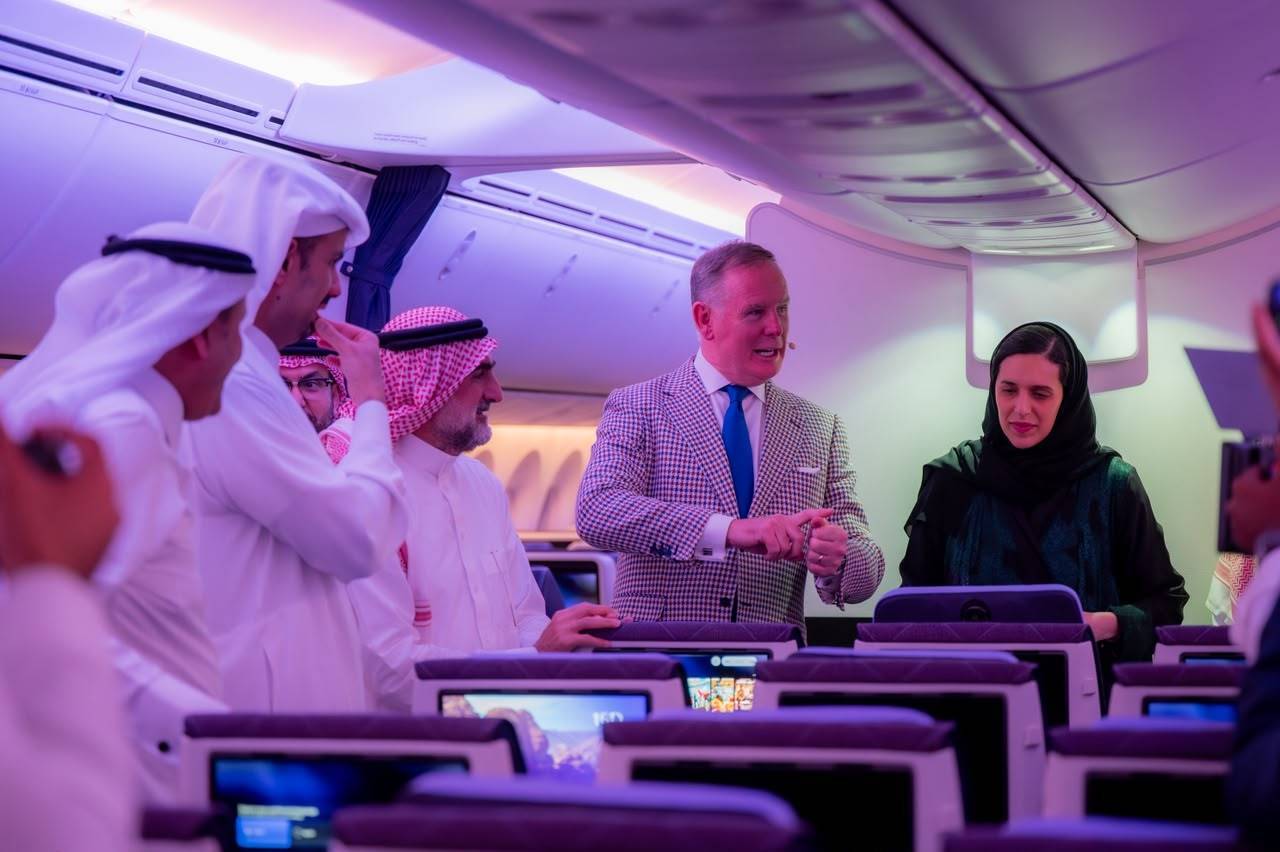
Al-Rumayyan and Douglas, along with other officials, are seen inside the cabin of the new plane (X)

Saudi Arabia as a global hub

As Riyadh Air approaches commercial operations, Saudi Arabia’s aviation sector is expanding rapidly, led by several national carriers. Saudia operates more than 530 flights a day to over 100 destinations worldwide, while flynas runs about 2,000 flights a week, or about 285 a day.

Riyadh Air has started trial operations with daily flights to London before expanding to other destinations, while flyadeal reaches 38 domestic and international destinations through a network of 159 air routes.

The origins of Riyadh Air

The Riyadh Air project grew out of a vision to establish a new national carrier that would support the goals of Vision 2030.

On March 12, 2023, Saudi Crown Prince Mohammed bin Salman announced the launch of Riyadh Air as a company wholly owned by the Public Investment Fund. The airline is intended to connect the Saudi capital with more than 100 destinations worldwide by 2030.

Raid Ismail, PIF’s head of direct investments for the Middle East and North Africa, said Riyadh Air had started where others had left off. He said the region had seen expansion in low-cost carriers over the past two decades, but had not seen the creation of a major integrated airline built on a modern model from the start.

According to available information, the company has focused since its establishment on technology, innovation and the customer experience, positioning itself as a key enabler of growth in Saudi Arabia’s tourism sector, stronger international air connectivity and higher visitor numbers.

Ismail said the new carrier aims to make Riyadh an attractive destination and a major transit point for travelers, helping connect the Saudi capital to global destinations and supporting access to major projects such as Qiddiya, Diriyah and Riyadh Season, as well as other tourism and development destinations across the Kingdom.

He said establishing a new company gave Riyadh Air greater flexibility to build a modern operating model based on digital technologies, sustainability and an improved passenger experience, which became one of the main foundations of the airline’s strategy from the project’s launch.
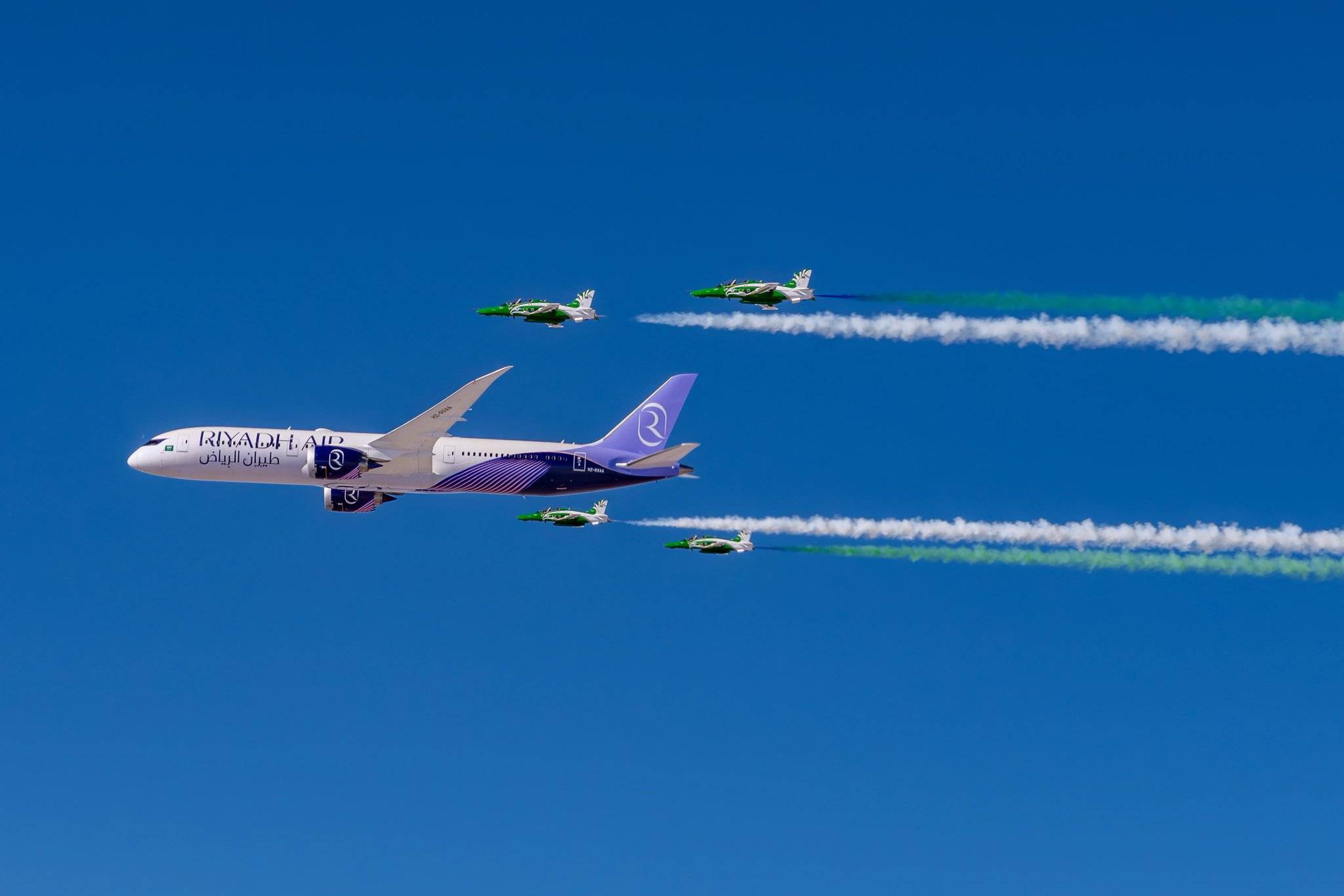
Riyadh Air has started trial operations with daily flights to London before expanding to other destinations (X)

Reviving the golden age of aviation

Riyadh Air’s strategy is to reshape the air travel experience by combining luxury services with modern digital technologies.

Chief Executive Officer of Riyadh Air Tony Douglas has said the new national carrier does not aim only to transport passengers, but to redefine the entire journey through digital innovation and seamless connectivity.

Douglas said the company pays close attention to the smallest details, drawing inspiration from the golden age of aviation, when air travel was part of a complete hospitality experience.

He said Riyadh Air aims to restore that concept by offering a refined, distinctive experience on the ground and in the air, thereby strengthening its position as a global player in luxury air travel.

According to officials, artificial intelligence will be a central part of the operating model, through digital services capable of personalizing the passenger experience, suggesting activities, events and suitable options during the journey, and providing a smooth digital experience that allows passengers to complete services easily and quickly.

Riyadh Air says it is targeting an existing market with strong demand that still needs more services and options. Douglas said Saudi Arabia’s young population and wide use of digital technologies provide a favorable environment for the company’s growth.

He said the new carrier would play an important role in supporting the Kingdom’s tourism goals by making it easier for visitors to reach Riyadh and other Saudi destinations, and by strengthening Saudi Arabia’s position on the global travel map.



FII Institute Names Princess Maha bint Mishari Al Saud as CEO

Princess Maha bint Mishari bin Abdulaziz Al Saud (Asharq Al-Awsat file photo)
TT

FII Institute Names Princess Maha bint Mishari Al Saud as CEO

Princess Maha bint Mishari bin Abdulaziz Al Saud (Asharq Al-Awsat file photo)

The FII institute, run by a global nonprofit foundation of ⁠Saudi sovereign wealth ⁠fund PIF, has named ⁠Princess Maha bint Mishari bin Abdulaziz Al Saud as its CEO, according to ⁠the ⁠institute's website.

“With more than 25 years of leadership experience spanning healthcare, academia, strategic partnerships, and international engagement, Dr. Al Saud has built a distinguished career centered on creating impact through collaboration and institution-building. She has worked across the public, private, and nonprofit sectors to advance initiatives that strengthen organizations, expand opportunity, and improve lives,” the website said.

Before joining FII Institute, she served as Vice President of External Relations and Advancement at Alfaisal University.

She has helped expand strategic partnerships, deepen international engagement, and elevate the university’s global standing in education, research, and innovation.

“A recognized advocate for leadership, healthcare transformation, education, and human development, Dr. Al Saud has represented Saudi Arabia at major international forums, including the G20, and the fourth Eurasian Women’s Forum,” FII Institute said.

“Dr. Al Saud holds an MBBS degree and is certified by the American Board of Internal Medicine, having completed her residency training at George Washington University. Her executive credentials include the Senior Executive Leadership Program at Harvard Business School, IMD Business School and she holds the prestigious, peer-reviewed distinction of Master of the American College of Physicians (MACP),” it added.


Egypt Clears Arrears to Oil and Gas Companies

People walk past a shop selling football jerseys in Khan el-Khalily Bazar in Cairo on June 9, 2026. (AFP)
TT

Egypt Clears Arrears to Oil and Gas Companies

People walk past a shop selling football jerseys in Khan el-Khalily Bazar in Cairo on June 9, 2026. (AFP)

Egypt's Minister of Petroleum Karim Badawi said on Wednesday that the full settlement of arrears owed to oil and gas partners marked a turning point for the sector.

Badawi ‌said payment ‌of the arrears, "restores ‌investor confidence ⁠and paves the ⁠way for increased upstream activity and accelerated project development".

Egypt had accumulated about $6.1 billion in arrears to foreign oil companies by June ⁠30, 2024 due to ‌a ‌prolonged foreign currency shortage that delayed payments ‌and weighed on investment and ‌gas output. The shortage has since eased, though some companies have said that arrears kept ‌accumulating.

The minister said clearing the debt removed ⁠a ⁠key obstacle to new investment inflows and would support increased exploration, drilling and field development activity, including projects in the Mediterranean where development typically requires significant capital spending and years of work before production begins.


Saudi Economy Demonstrates Competitive Strength, Expands 3% in First Quarter

A view of the Saudi capital, Riyadh. (SPA)
TT

Saudi Economy Demonstrates Competitive Strength, Expands 3% in First Quarter

A view of the Saudi capital, Riyadh. (SPA)

Saudi Arabia’s economy has once again demonstrated the strength of its fundamentals and its ability to withstand regional shocks, posting real GDP growth of 3 percent year-on-year in the first quarter of 2026, despite escalating tensions across the Middle East that have disrupted supply chains and global trade flows.

The final official figures surpassed the earlier flash estimate of 2.8 percent. The upward revision reflected higher estimates from the General Authority for Statistics (GASTAT), which raised growth projections for both oil and non-oil activities to 2.9 percent. The Kingdom had recorded growth of 5.2 percent in the fourth quarter of 2025.

Saudi Arabia’s performance amid logistical challenges, including shipping disruptions through the Strait of Hormuz, recently received backing from an International Monetary Fund mission.

Following consultations in Riyadh, IMF experts said the Kingdom had successfully mitigated the effects of regional conflict and eased logistical bottlenecks through resilient infrastructure, the rapid deployment of the East-West pipeline and Red Sea ports, and strong financial buffers provided by the Public Investment Fund and a stable banking sector.

The IMF nevertheless revised its 2026 growth forecast for Saudi Arabia to 2 percent from a previous estimate of 3.1 percent, citing regional instability.

Broad-based expansion

According to GASTAT, first-quarter growth was driven by gains across all major sectors of the economy. Oil and non-oil activities each expanded 2.9 percent year-on-year, while government activities rose 1.5 percent.

On a seasonally adjusted basis, real GDP declined 1.2 percent from the fourth quarter of 2025, reflecting a 6.8 percent contraction in oil activities. Government and non-oil sectors, however, continued to post quarterly growth of 1.4 percent and 0.3 percent, respectively.

Financial services, insurance and business services recorded the strongest performance among detailed sectors, growing 5.4 percent year-on-year and 1.1 percent quarter-on-quarter.

Manufacturing activities, excluding oil refining, expanded 4 percent annually. Crude oil and natural gas activities grew 3.6 percent from a year earlier, despite a 7 percent quarterly decline linked to shipping disruptions.

Consumption and investment remain strong

Government final consumption expenditure rose 11.3 percent year-on-year and 8.5 percent quarter-on-quarter, while private consumption increased 5.3 percent annually.

Gross fixed capital formation climbed 3.9 percent year-on-year and 7.5 percent quarter-on-quarter, underscoring continued investment momentum. Exports increased 1.4 percent from a year earlier, while imports fell 5.5 percent.

Non-oil activities remained the primary driver of economic growth, contributing 1.7 percentage points to overall GDP expansion. Oil activities added 0.8 percentage points, while government activities and net taxes contributed 0.3 and 0.2 percentage points, respectively.

The IMF also praised the Saudi Central Bank (SAMA) for maintaining a countercyclical capital buffer of 100 basis points, noting that the Saudi riyal’s peg to the US dollar continues to bolster monetary-policy credibility and financial stability.

On structural reforms, the fund welcomed the recalibration of the Public Investment Fund’s 2026-2030 strategy, aimed at allocating capital more selectively and encouraging greater private sector participation.

It said continued progress toward the objectives of Vision 2030, including deeper capital markets, stronger alignment between education and labor market needs, and broader adoption of artificial intelligence and logistics technologies, remains essential to achieving sustainable economic diversification and safeguarding prosperity for future generations.