


Russia Says it is Discussing 'Reformatting' of Military Facilities in Syria

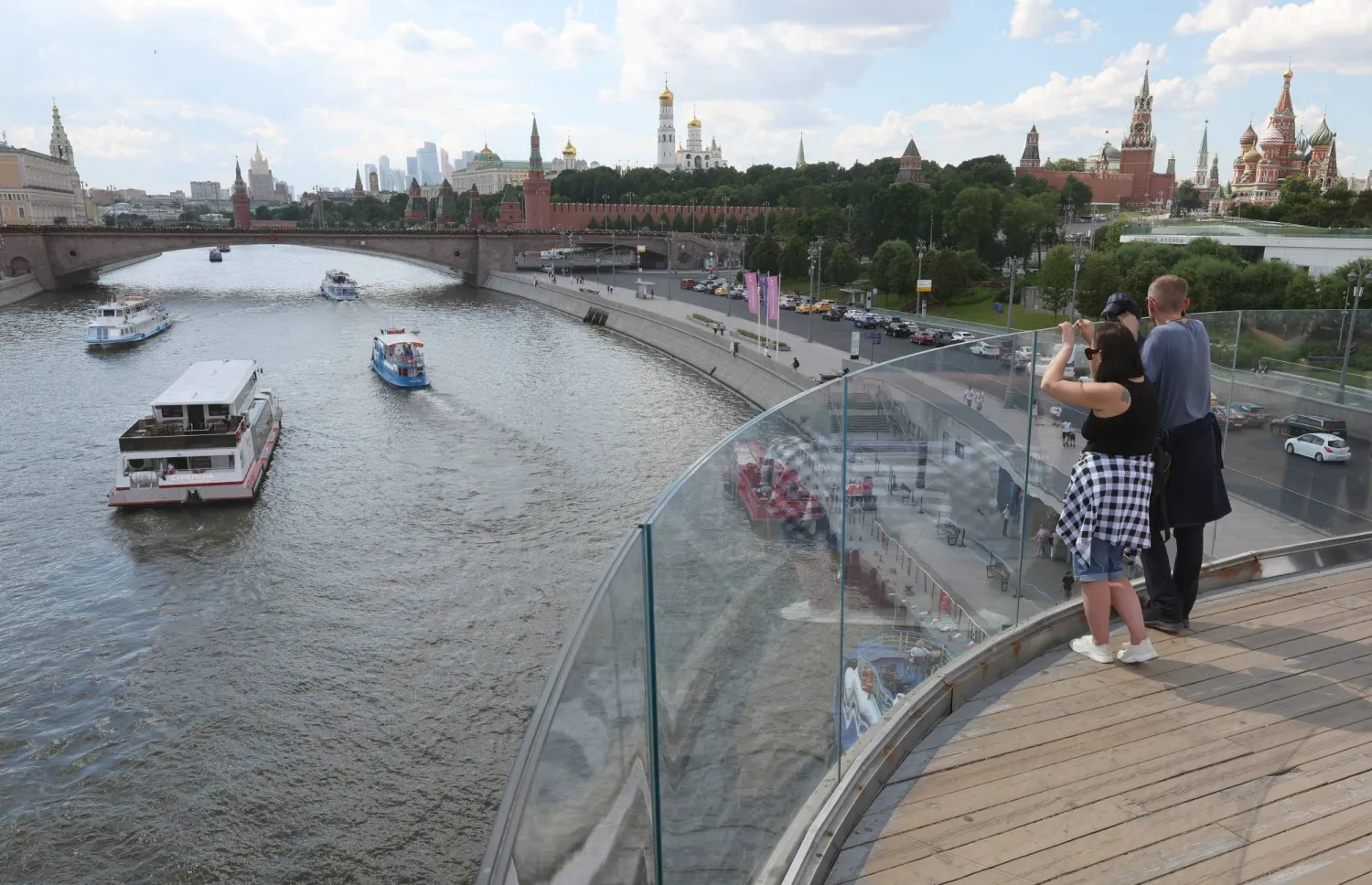
People rest outside the Kremlin on a warm summer day in downtown Moscow, Russia, 05 June 2026. EPA/MAXIM SHIPENKOV
TT

Russia Says it is Discussing 'Reformatting' of Military Facilities in Syria

People rest outside the Kremlin on a warm summer day in downtown Moscow, Russia, 05 June 2026. EPA/MAXIM SHIPENKOV

Russia's foreign ministry said on Wednesday that cooperation with Syria was developing very actively and that Moscow was discussing with Damascus a "possible reformatting" of its military facilities in Syria.

The December 2024 ousting of Syrian president Bashar al-Assad, a close Russian ally, raised questions about the future of Russia's Hmeimim airbase in Latakia and its naval facility at Tartous. But Moscow has since built relations with Ahmed al-Sharaa, who is now Syria's president.

"Russian-Syrian ⁠cooperation is developing ⁠very actively," Foreign Ministry spokeswoman Maria Zakharova said when asked about reported plans for the creation of a logistics hub in Tartous to distribute goods imported from Russia across Syria.

"Within the framework of contacts with Syrian partners, the issue of ⁠Russia's military presence in Syria is also being discussed, including in the context of a possible reformatting of the functionality of Russian military facilities,” Reuters quoted her as saying.

The bases in Syria are an integral part of Russia's global military presence: The Tartous naval base is Russia's only Mediterranean repair and resupply hub, while Hmeimim is a major staging post for military and mercenary activity in Africa.

Russia intervened militarily in Syria in ⁠2015 ⁠to back Assad in a civil war. Reuters reported in 2024 that Russia was pulling back forces from front lines in northern Syria and from posts in mountains dominated by Assad's Alawite community, but was not leaving its Mediterranean bases in Hmeimim and Tartous.



Israeli Army Says One Soldier Killed, Three Wounded in South Lebanon

An Israeli army vehicle operates in East Zawtar, as seen from West Zawtar, southern Lebanon, October 1, 2026. REUTERS/Mohamed Azakir
TT

Israeli Army Says One Soldier Killed, Three Wounded in South Lebanon

An Israeli army vehicle operates in East Zawtar, as seen from West Zawtar, southern Lebanon, October 1, 2026. REUTERS/Mohamed Azakir

The Israeli army said Thursday that one soldier was killed and three others were slightly wounded in south Lebanon, where the military has occupied a band of territory since invading in March in response to Hezbollah attacks.

"Captain Eliav Haim Tzapalamus, aged 21, from Haifa, a combat officer in the 603rd Battalion, 7th Brigade, fell in combat in southern Lebanon," the army said.

Tzapalamus is the 17th Israeli soldier to be killed since a ceasefire was reached in June between Israel and Hezbollah.

Israel and Lebanon have agreed to a framework deal that involves the disarmament of Hezbollah, a gradual withdrawal of Israeli forces and the deployment of the Lebanese army to the region.

On Thursday, visiting EU foreign policy chief Kaja Kallas told AFP in Beirut that the bloc favored avoiding a security vacuum and extending a UN peacekeeping mandate in south Lebanon.

The EU's top diplomat also said that the bloc would soon be launching a training mission for the under-resourced Lebanese army.

Israeli airstrikes and ground operations in Lebanon have killed more than 4,300 since March, according to Lebanese official figures.


Yemeni Forces Consolidate West Coast Gains, Reinforce Bab al-Mandab Positions

 Yemeni government fighters sit in the back of a vehicle near Dhubab, Taiz Governorate, Yemen, in this still image taken from video released October 5, 2026.    Southern Giants Brigades/Handout via REUTERS
Yemeni government fighters sit in the back of a vehicle near Dhubab, Taiz Governorate, Yemen, in this still image taken from video released October 5, 2026. Southern Giants Brigades/Handout via REUTERS
TT

Yemeni Forces Consolidate West Coast Gains, Reinforce Bab al-Mandab Positions

 Yemeni government fighters sit in the back of a vehicle near Dhubab, Taiz Governorate, Yemen, in this still image taken from video released October 5, 2026.    Southern Giants Brigades/Handout via REUTERS
Yemeni government fighters sit in the back of a vehicle near Dhubab, Taiz Governorate, Yemen, in this still image taken from video released October 5, 2026. Southern Giants Brigades/Handout via REUTERS

Yemeni armed forces consolidated gains along the western coast and reinforced positions overlooking the Bab al-Mandab Strait as they pushed ahead in al-Wazi'iyah district in western Taiz province under Operation “Dawn of Yemen.” Fighting with the Houthis continued in the southern Taiz countryside and on fronts around the city.

The armed forces said they had neutralized more than 1,800 Houthi fighters in recent hours. Army figures put Houthi losses at nearly 10,000 killed or wounded over two weeks of air and ground strikes across multiple fronts.

Nation Shield forces, the Giants Brigades and the Joint Forces took full control of the Kahboub front, according to Yemeni military media. The advance strengthens government forces’ hold on heights overlooking Bab al-Mandab and boosts their ability to secure the strategic corridor as operations continue along the western coast.

Taiz province’s emergency committee suspended classes at public, community and private schools, institutes, colleges and universities in districts that have come under Houthi control. It also placed government employees there on temporary leave, citing exceptional security conditions.

The United Nations warned of a worsening humanitarian situation in Taiz as Houthi attacks spread, displacement rises and aid access faces growing restrictions. Major roads remain closed, adding to pressure on services and limited resources.

The eastern road into Taiz city remains closed, the United Nations said in a recent report. Road closures between Aden and Taiz have disrupted a major supply route from warehouses in Aden, hampering aid agencies’ ability to reach those affected and meet growing needs.


Iraq Rejects Syrian Request to Repatriate 4,000 Suspected ISIS Detainees

Members of the Iraqi border forces patrol along a concrete wall on the Iraqi-Syrian border, in the town of al-Baghuz in the Al-Qaim district of western Iraq, on January 21, 2026. (AFP)
TT

Iraq Rejects Syrian Request to Repatriate 4,000 Suspected ISIS Detainees

Members of the Iraqi border forces patrol along a concrete wall on the Iraqi-Syrian border, in the town of al-Baghuz in the Al-Qaim district of western Iraq, on January 21, 2026. (AFP)

Iraq has rejected Syria's request to repatriate thousands of suspected ISIS members transferred from Syrian detention centers to Iraqi custody earlier this year, a senior Iraqi security official said on Wednesday.

Iraqi National Security Advisor Qasim al-Aboudi said that a meeting had been held recently between Syria, Iraq and the United States to discuss the fate of the prisoners.

Al-Aboudi said Syria had requested that the 4,000 Syrian prisoners be handed over to be tried in Syria, but Iraq refused. Iraq has repatriated about 50 Syrian detainees who were determined not to be ISIS members, he told The Associated Press, while the Syrian prisoners remaining in Iraq include about 400 who are believed to be high-level members of the extremist group.

“Iraq is conducting investigations, and anyone proved to have committed crimes in Iraq will be tried under Iraqi law,” he said.

Some prisoners could later be transferred to their home countries to complete their sentences, he said.

Syria did not immediately respond to requests for comment.

More than 5,700 prisoners with alleged ISIS ties — including some 4,000 Syrians — were transferred from northeast Syria to Iraq after fighting broke out in January between Syrian government forces and the Kurdish-led Syrian Democratic Forces, which had long guarded the detention centers where they were held.

Some ISIS-linked prisoners managed to flee during the chaos of the clashes, and there were fears that a larger-scale escape would take place. While the extremist group lost control of the territory it once seized in Iraq and Syria years ago, its cells still periodically carry out attacks in both countries.

The discussions about the prisoners' fate come as the United States has ended a 12-year mission to fight ISIS in Iraq, with the last US troops withdrawing from the country last month.

Al-Aboudi said Iraq has asked for financial support from the US and other countries taking part in the global coalition against ISIS to help with the costs of housing the prisoners.

“Iraq asked for an allocation of $500 million. The coalition promised support, but Iraq is still waiting,” he said.

A US defense official and the office of Tom Barrack, the US envoy to Syria and Iraq, referred questions about the prisoners to Iraqi and Syrian authorities.

Many of the prisoners transferred to Iraq had been held in Syria for years without charges. Rights groups have raised concerns about detention conditions in both countries.