FII Institute Names Princess Maha bint Mishari Al Saud as CEOhttps://english.aawsat.com/business/5282409-fii-institute-names-princess-maha-bint-mishari-al-saud-ceo
FII Institute Names Princess Maha bint Mishari Al Saud as CEO
Princess Maha bint Mishari bin Abdulaziz Al Saud (Asharq Al-Awsat file photo)
The FII institute, run by a global nonprofit foundation of Saudi sovereign wealth fund PIF, has named Princess Maha bint Mishari bin Abdulaziz Al Saud as its CEO, according to the institute's website.
“With more than 25 years of leadership experience spanning healthcare, academia, strategic partnerships, and international engagement, Dr. Al Saud has built a distinguished career centered on creating impact through collaboration and institution-building. She has worked across the public, private, and nonprofit sectors to advance initiatives that strengthen organizations, expand opportunity, and improve lives,” the website said.
Before joining FII Institute, she served as Vice President of External Relations and Advancement at Alfaisal University.
She has helped expand strategic partnerships, deepen international engagement, and elevate the university’s global standing in education, research, and innovation.
“A recognized advocate for leadership, healthcare transformation, education, and human development, Dr. Al Saud has represented Saudi Arabia at major international forums, including the G20, and the fourth Eurasian Women’s Forum,” FII Institute said.
“Dr. Al Saud holds an MBBS degree and is certified by the American Board of Internal Medicine, having completed her residency training at George Washington University. Her executive credentials include the Senior Executive Leadership Program at Harvard Business School, IMD Business School and she holds the prestigious, peer-reviewed distinction of Master of the American College of Physicians (MACP),” it added.
Maersk Raises Emergency Fuel Surcharge Due to Middle East Conflicthttps://english.aawsat.com/business/5327326-maersk-raises-emergency-fuel-surcharge-due-middle-east-conflict
FILE PHOTO: A truck transports a Maersk container at APM Terminals at the Port of Los Angeles, California, US, March 4, 2026. REUTERS/Mike Blake/File Photo
Maersk Raises Emergency Fuel Surcharge Due to Middle East Conflict
FILE PHOTO: A truck transports a Maersk container at APM Terminals at the Port of Los Angeles, California, US, March 4, 2026. REUTERS/Mike Blake/File Photo
Danish shipping group Maersk said on Thursday it was increasing its emergency fuel surcharge (EFS) on all export collections and import deliveries due to the ongoing conflict in the Middle East.
Oil prices rose on Thursday on worries about supply from the Middle East region amid an increase in attacks on shipping in the Gulf and the Strait of Hormuz, while the US cut output as a hurricane menaced offshore production.
Maersk said in a statement it was increasing its EFS to 20% as of October 12, and that it would continue to review the surcharge regularly.
IMF Reaches Staff Deal with Pakistan, Potentially Unlocking $1.2 Bnhttps://english.aawsat.com/business/5327319-imf-reaches-staff-deal-pakistan-potentially-unlocking-12-bn
IMF Reaches Staff Deal with Pakistan, Potentially Unlocking $1.2 Bn
FILE - The logo of the International Monetary Fund is visible on its building, April 5, 2021, in Washington. (AP Photo/Andrew Harnik, File)
The International Monetary Fund has reached a staff-level agreement with Pakistan on reviews of some of its lending programs, potentially unlocking about $1.21 billion in financing pending board approval, the fund said on Wednesday.
If the board approves the deal, Pakistan could access about $1 billion under the Extended Fund Facility and $210 million under the climate-focused Resilience and Sustainability Facility, bringing total disbursements under the two programs to around $5.7 billion.
Pakistan remains reliant on external financing to bolster foreign exchange reserves and meet debt repayments.
"Supported by the EFF, the authorities have successfully navigated the impact of the Middle East conflict, and strong policies have helped preserve macroeconomic stability," Reuters quoted the fund as saying.
Risks remain elevated, however, due to geopolitical tensions, volatile energy prices, tighter global financial conditions and trade disruptions, the IMF said.
Pakistan is the most vulnerable major Asia-Pacific economy to a prolonged Middle East conflict, given its dependence on Gulf energy imports, remittances and financing support from the region, Ahmad Mobeen, principal economist at S&P Global Market Intelligence, said earlier this year.
Taiwan’s Foreign Minister Welcomes Partnership with Saudi Arabia to Support Vision 2030 and High-Tech Industrieshttps://english.aawsat.com/business/5327299-taiwan%E2%80%99s-foreign-minister-welcomes-partnership-saudi-arabia-support-vision-2030
Taiwan’s Foreign Minister Welcomes Partnership with Saudi Arabia to Support Vision 2030 and High-Tech Industries
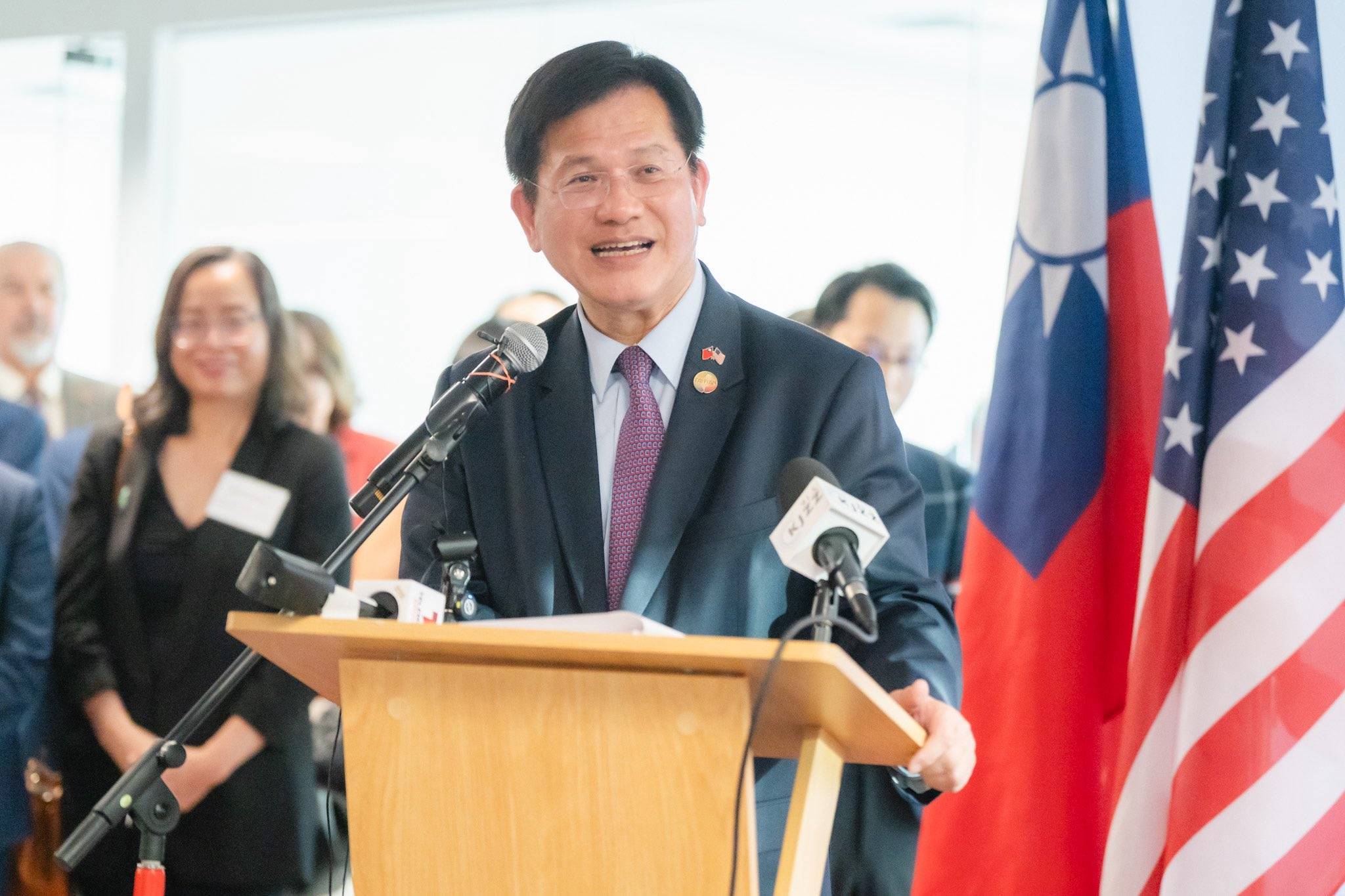
Taiwanese Minister of Foreign Affairs Lin Chia-lung (X)
Taiwanese Minister of Foreign Affairs Lin Chia-lung emphasized that Taiwan attaches great importance to fostering strong economic and investment partnerships with Saudi Arabia and the broader Middle East.
He praised major regional development initiatives, led by Saudi Arabia's Vision 2030, and renewed Taiwan’s readiness to deploy its technological capabilities and resources to foster sustainable cooperation in advanced industries.
Lin made his remarks in response to questions posed by Asharq Al-Awsat newspaper, which covered prospects for economic and technological collaboration, investment opportunities under Vision 2030, Taiwan’s economic performance, as well as its position on regional geopolitical challenges and global energy security.
The Taiwanese Foreign Minister during the opening of a new Taiwan office in the city of Phoenix, Arizona (X)
Economic Cooperation with Saudi Arabia & Vision 2030
In response to a question regarding economic, industrial, and technological ties with the Kingdom, Lin highlighted the global transition from traditional oil-based economies toward digital technology, semiconductors, and artificial intelligence (AI).
"We are aware that Saudi Arabia is actively pushing forward with Vision 2030 and transitioning toward modern technologies. We believe Taiwan is the ideal partner for Middle Eastern nations in these sectors," Lin stated.
Addressing future investment plans, Lin noted: "We are currently looking for partner countries in the Middle East that are willing to engage in normal exchanges and interactions with us.”
“Whenever such engagement is established, we stand fully prepared to invest and allocate our resources—whether in Saudi Arabia, Oman, Qatar, or other friendly nations that maintain strong relations with our international allies,” he added.
Robust Economic Performance and Market Growth
Regarding Taiwan’s economic trajectory and challenges, Lin strong growth indicators, noting that Taiwan’s economy grew by 8.68% last year, with projections expected to exceed 11% this year, fueled by technological innovation and surging global demand for semiconductors and AI technology.
The minister further pointed out that Taiwan’s stock exchange has become the fourth largest in the world, outperforming major G7 economies such as France, the UK, and Italy.
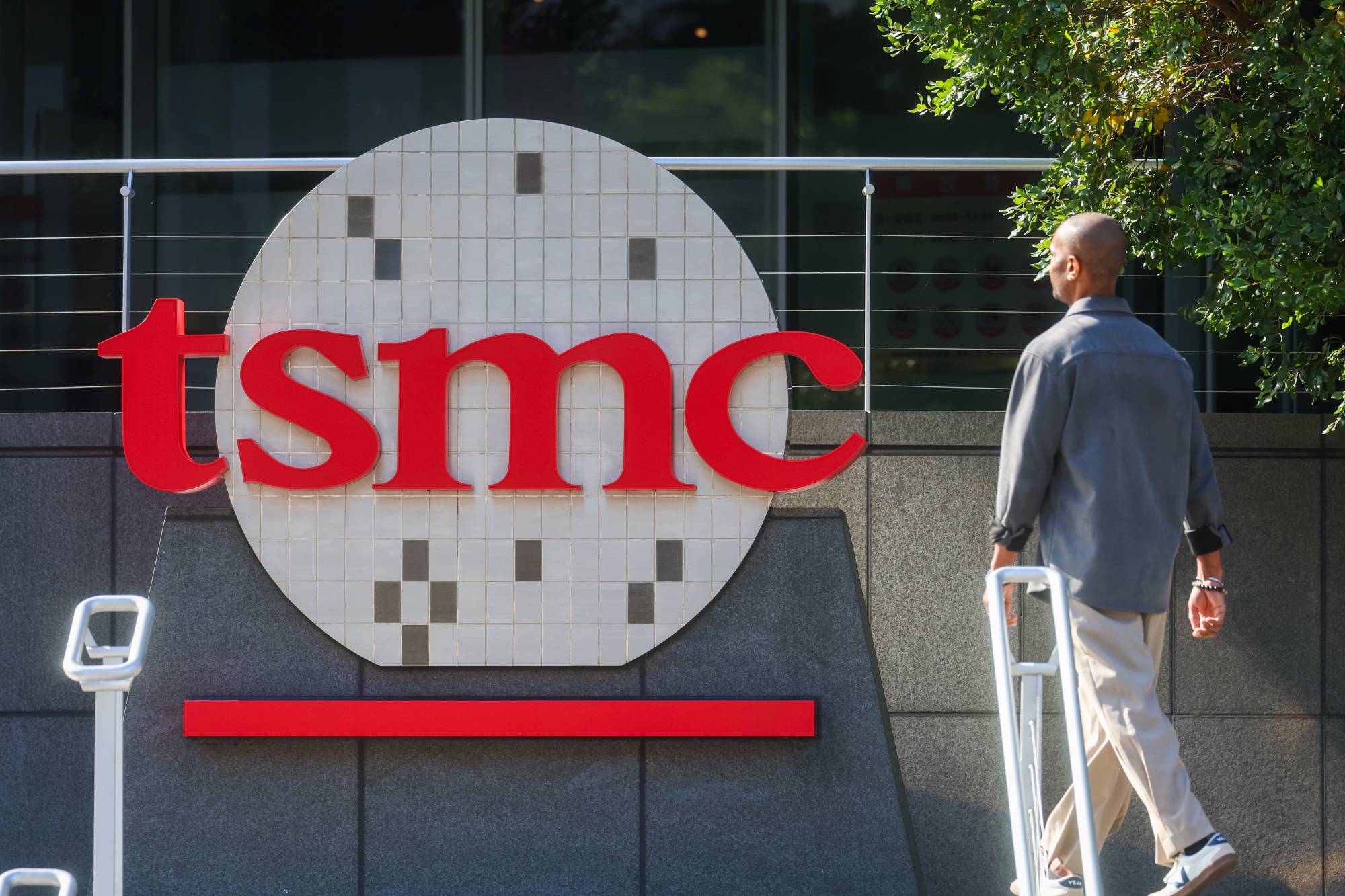
In the semiconductor sector, he noted that major Taiwanese tech firms (such as TSMC) have secured orders stretching over the next five years, exceeding their current manufacturing capacity.
FILE - A worker walks past the logo of TSMC or Taiwan Semiconductor Manufacturing Corp., a Taiwanese multinational semiconductor contract manufacturing and design company, in Hsinchu, Taiwan, on Jan. 29, 2026. (AP Photo/Daniel Ceng, File)
Middle East Crises and Energy Security
Addressing questions regarding regional instability and energy supply routes through the Strait of Hormuz, Lin acknowledged that Middle Eastern conflicts affect Taiwan due to its reliance on imported energy.
However, he emphasized that Taiwan has taken proactive measures to diversify its energy sources by increasing purchases and investments from the United States and Australia, while expanding domestic investments in renewable energy to safeguard national energy security.
Lin reiterated that Taiwan has built significant resilience in risk management amidst geopolitical challenges, expressing the country’s eagerness to share these experiences and forge robust economic bonds with partners around the world.
لم تشترك بعد
انشئ حساباً خاصاً بك لتحصل على أخبار مخصصة لك ولتتمتع بخاصية حفظ المقالات وتتلقى نشراتنا البريدية المتنوعة