
ECB Set for 'Insurance Hike' as Iran War Fans Euro Zone Inflation

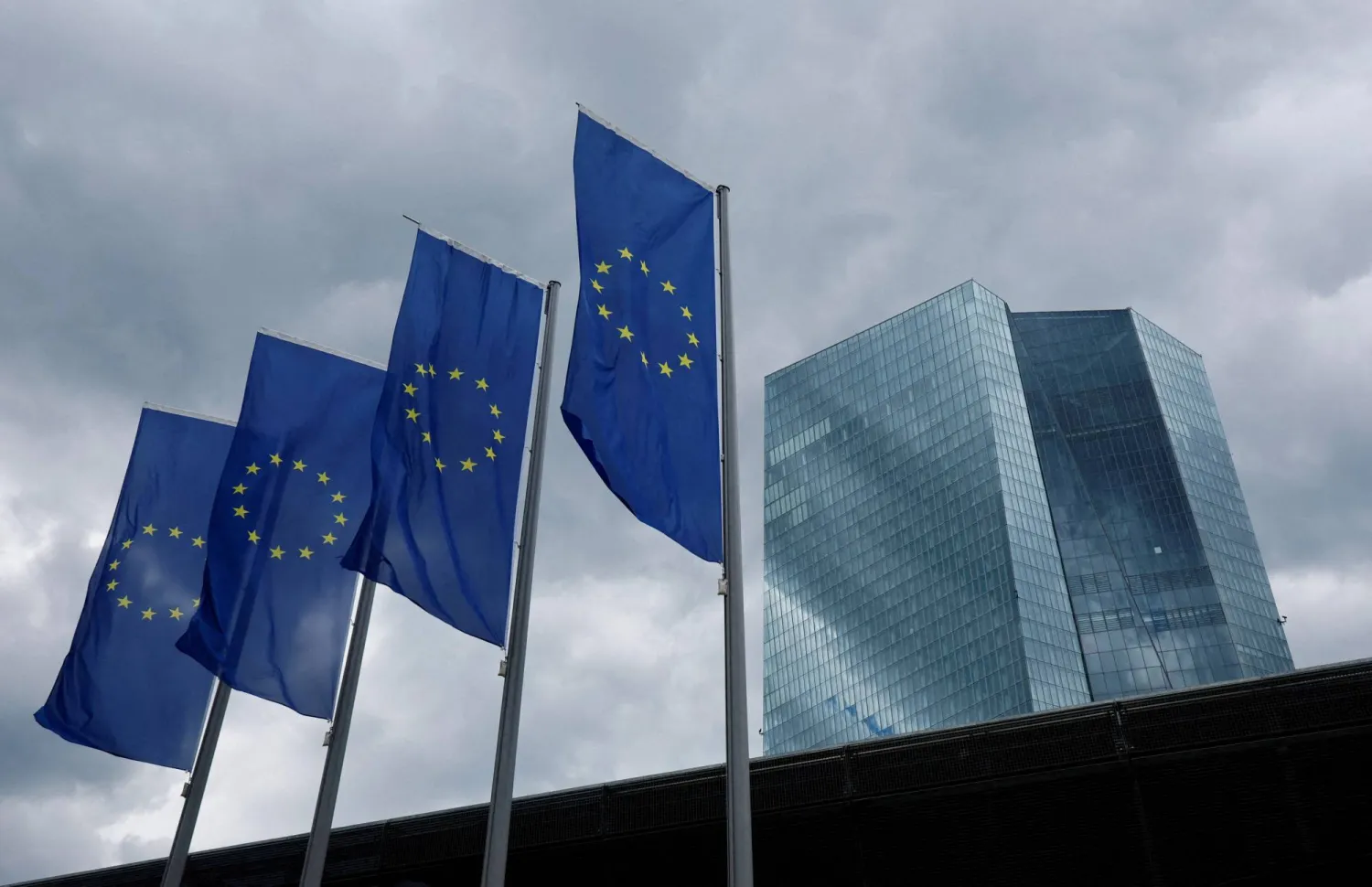
FILE PHOTO: Dark clouds are seen over the building of the European Central Bank (ECB) in Frankfurt, Germany, June 6, 2024. REUTERS/Wolfgang Rattay/File Photo
TT

ECB Set for 'Insurance Hike' as Iran War Fans Euro Zone Inflation

FILE PHOTO: Dark clouds are seen over the building of the European Central Bank (ECB) in Frankfurt, Germany, June 6, 2024. REUTERS/Wolfgang Rattay/File Photo

The European Central Bank is all but certain to raise interest rates on Thursday in the hope of nipping higher inflation in the bud before a surge in energy costs triggered by the Iran war spreads more broadly across the euro zone economy.

The well-telegraphed move would come as inflation in the 21-country currency bloc is already above 3%, well in excess of the ECB's 2% target, and economic growth is very weak - a backdrop that has economists split over the case for tighter policy.

ECB policymakers, some of whom had already pushed for action in April, are nonetheless expected to press ahead, seeking to keep a lid on inflation expectations and to safeguard their credibility after being slow to react to a post-pandemic inflation spike in 2022.

"The ECB needs to hike ‌to protect credibility ‌and prevent inflation expectations from de-anchoring, but it is still operating around neutral rather ‌than ⁠moving decisively into restrictive ⁠territory," Annalisa Piazza at MFS Investment Management said.

Thursday's hike would be the first in nearly three years and take the ECB's benchmark deposit rate to 2.25% from 2.0%. Sources have told Reuters the ECB is unlikely to commit to further rate rises this week but financial markets expect another two over the coming year, with the next move seen as soon as September.

The bank's new economic projections are also likely to hint at further rate hikes.

"New staff projections are likely to be consistent with three hikes and (ECB President) Lagarde is unlikely to dismiss this as unreasonable," JPMorgan's Greg Fuzesi said. "That would give the meeting a ⁠clear hawkish feel, even if the communication is likely to be more consistent with ‌the next move in September."

AN 'INSURANCE HIKE' THAT UNDERPINS EXPECTATIONS

Several ECB watchers have ‌characterized the expected move as an "insurance hike" - a precautionary step that could be reversed if price pressures fade.

Supporting the case for action, ‌the ECB is likely to raise its quarterly inflation projections on Thursday, bringing them closer to its "adverse" scenario published ‌in March, which saw inflation peaking at 4.2% in the final quarter of this year before falling back sharply in 2027. Consumers, companies and financial investors have revised their own views about price hikes, although medium-term expectations remain close to the ECB target and far from their levels in the aftermath of Russia's invasion of Ukraine.

"Two hikes this year thus looks like a minimum," Anatoli Annenkov at Societe ‌Generale said. "Markets are likely to start pricing in the next hike in July... but we still think a majority of governors would prefer to wait for more ⁠data and new forecasts in September."

HEADING ⁠FOR A POLICY MISTAKE?

Not all economists are convinced. Some warn the ECB risks tightening into an economy that is already paying a high price for the Iran war.

Berenberg's Holger Schmieding said the ECB was "heading for a policy mistake" given a stagnant labor market and weak consumer demand.

"Amid the ongoing destruction of demand, the inevitable temporary surge in prices ... seems unlikely to turn into a protracted inflation problem that would need to be addressed by higher rates," he wrote in a note. A Reuters analysis of earnings call transcripts by euro zone companies showed just 40% of those outside the financial sector had raised prices or were planning to do so, roughly half the share seen as the Ukraine war pushed up energy prices in 2022.

Eric Dor, director of economic studies at France's IESEG School of Management, said the ECB was overestimating its ability to influence household and business expectations, particularly in a situation where inflation is driven by fuel costs rather than domestic demand. But the ECB has sharpened its messaging in support of tighter policy. Chief Economist Philip Lane - typically seen as an inflation "dove" - has said the Iran-related shock may be broader in scope than the Ukraine crisis, as it affects global energy markets rather than primarily Europe.

Australia, India Strike Deal on Uranium Exports During Modi Visit

 Australia's Prime Minister Anthony Albanese (R) talks as he stands with Indian Prime Minister Narendra Modi (L) during a press conference at Government House Victoria in Melbourne on July 9, 2026. (AFP)
Australia's Prime Minister Anthony Albanese (R) talks as he stands with Indian Prime Minister Narendra Modi (L) during a press conference at Government House Victoria in Melbourne on July 9, 2026. (AFP)
TT

Australia, India Strike Deal on Uranium Exports During Modi Visit

 Australia's Prime Minister Anthony Albanese (R) talks as he stands with Indian Prime Minister Narendra Modi (L) during a press conference at Government House Victoria in Melbourne on July 9, 2026. (AFP)
Australia's Prime Minister Anthony Albanese (R) talks as he stands with Indian Prime Minister Narendra Modi (L) during a press conference at Government House Victoria in Melbourne on July 9, 2026. (AFP)

Australia and India reached a deal on Thursday to export Australian uranium to India for use in the nuclear energy industry, while agreeing to deepen cooperation in renewables, critical minerals and green hydrogen.

India has long eyed Australia's uranium reserves to help meet a target of 100 gigawatts of nuclear energy capacity by 2047, while Australia is looking to diversify trade beyond its reliance on China, its top partner.

"Australia and India are close partners and even closer friends," Australian Prime Minister Anthony Albanese ‌told reporters in Melbourne ‌on Thursday, after finalizing the deal with visiting Indian Prime ‌Minister ⁠Narendra Modi.

"The arrangement ⁠facilitates Australian uranium exports to India to help increase the share of non-fossil fuel power capacity, providing an additional market for the Australian resources sector."

Though both nations agreed to a nuclear cooperation pact in 2014, uranium exports have been limited over concerns about ensuring nuclear fuel is used solely for peaceful purposes, such as energy generation.

Modi said on Thursday India's relationship with Australia presented "historic opportunities" for both countries to cooperate across several areas.

Australia's technology, capital and resources could ⁠help accelerate India's energy transition, Modi said.

He also signaled possible cooperation ‌in low-carbon aluminium projects.

"We have historic opportunities to ‌cooperate in this field," Modi said, as he urged Australia's business community to invest long-term in ‌India's road, port, rail and urban infrastructure projects.

"India provides a safe, stable and sustainable ‌growth option for your funds," he said.

Australia's largest pension fund, AustralianSuper, said on Thursday it would invest a further A$500 million ($347 million) in India's National Investment and Infrastructure Fund.

'LIVING BRIDGE'

After meeting Modi at the business event, Albanese called the Indian leader a "living bridge" between Australia and India, saying Modi's vision ‌had helped reshape the roadmap for Australia's economic engagement with India.

India is Australia's fifth-largest trading partner after China, Japan, the US ⁠and South Korea, ⁠while around 1 million people in Australia claim Indian ancestry, out of a population of 28 million.

Modi, who previously visited Australia in 2023, is expected to meet thousands of expatriate Indians at an event in one of the biggest stadiums in Melbourne on Thursday evening.

The Indian leader has staged large-scale events during his overseas trips and has addressed packed stadiums in Britain, the United States and other countries that have large expatriate Indian populations.

Thousands of supporters thronged one of Sydney's biggest indoor stadiums during his last visit three years ago.

Modi arrived in Australia after visiting Indonesia, where he signed a raft of deals on agriculture and defense, including for the BrahMos cruise missile system. He will leave for New Zealand on Friday afternoon before returning to India.


Gold Eases as Middle East Hostilities Revive Inflation Fears

A raw gold bar is displayed at Nigeria’s booth at the 8th China International Import Expo (CIIE) venue in Shanghai, China, November 5, 2025. (Reuters)
TT

Gold Eases as Middle East Hostilities Revive Inflation Fears

A raw gold bar is displayed at Nigeria’s booth at the 8th China International Import Expo (CIIE) venue in Shanghai, China, November 5, 2025. (Reuters)

Gold prices fell on Thursday, hovering near a one-week low, as renewed US-Iran hostilities lifted crude and reignited concerns about inflation and higher-for-longer interest rates.

The US military said on Wednesday it launched fresh strikes on Iran to keep the Strait of Hormuz open to shipping, triggering Iranian attacks on Kuwait and Bahrain ‌in the ‌latest escalation to derail efforts to end ‌the ⁠war.

Spot gold fell ⁠0.2% to $4,068.77 per ounce by 0522 GMT, after dropping to its lowest since July 1 on Wednesday. U.S. gold futures for August delivery were down 0.1% at $4,077.60.

"The catalyst that is supporting this trend to the downside for gold is a repricing of a second interest rate hike by ⁠the Federal Reserve to come in as early ‌as Q1 next year," ‌said Kelvin Wong, a senior market analyst at OANDA.

"After yesterday's skirmish, that ‌temporary ceasefire agreement between US and Iran is on ‌shaky ground right now, so things could turn pretty fluid again."

Markets are pricing a 68% chance of an interest rate hike in September, and see an 87% chance of an increase in ‌January 2027, the CME FedWatch tool showed.

Concern about high inflation also mounted at the ⁠US central bank's ⁠meeting last month, as officials followed Fed Chairman Kevin Warsh's lead to a more stripped-down policy statement even amid concerns that price increases were broadening and might require interest rate hikes.

While gold is seen as an inflation hedge, high interest rates tend to weigh on the non-yielding asset.

Bank of America said it is reducing its 2026 average gold forecast by 14% to $4,360 an ounce, citing a more hawkish Fed.

Elsewhere, spot silver fell 0.5% to $57.98 per ounce, while platinum rose 1.1% to $1,595.51 and palladium gained 0.9% to $1,224.12.


Middle East Bears Brunt of Tanker War as Saudi Arabia Weathers Crisis with Alternative Logistics Network

 A vessel at the Strait of Hormuz, as seen from Musandam, Oman, July 8, 2026. (Reuters)
A vessel at the Strait of Hormuz, as seen from Musandam, Oman, July 8, 2026. (Reuters)
TT

Middle East Bears Brunt of Tanker War as Saudi Arabia Weathers Crisis with Alternative Logistics Network

 A vessel at the Strait of Hormuz, as seen from Musandam, Oman, July 8, 2026. (Reuters)
A vessel at the Strait of Hormuz, as seen from Musandam, Oman, July 8, 2026. (Reuters)

At a time when the global economy is struggling to avoid a sharp recession, the International Monetary Fund’s updated World Economic Outlook showed a deeply divided picture.

A surge in artificial intelligence investment, productivity gains and US tax cuts helped keep global growth at 3% this year, slightly below the 3.1% forecast in April, absorbing part of the severe energy shock caused by the Iran war and the closure of the Strait of Hormuz.

But the regional cost was steep and unprecedented. The prolonged closure of the Gulf shipping artery prompted the IMF to sharply downgrade its outlook for the Middle East and North Africa, pushing the region into a 0.5% contraction, one of its worst annual performances since the start of the century.

Major oil producers were caught between lower output and disrupted supply logistics.

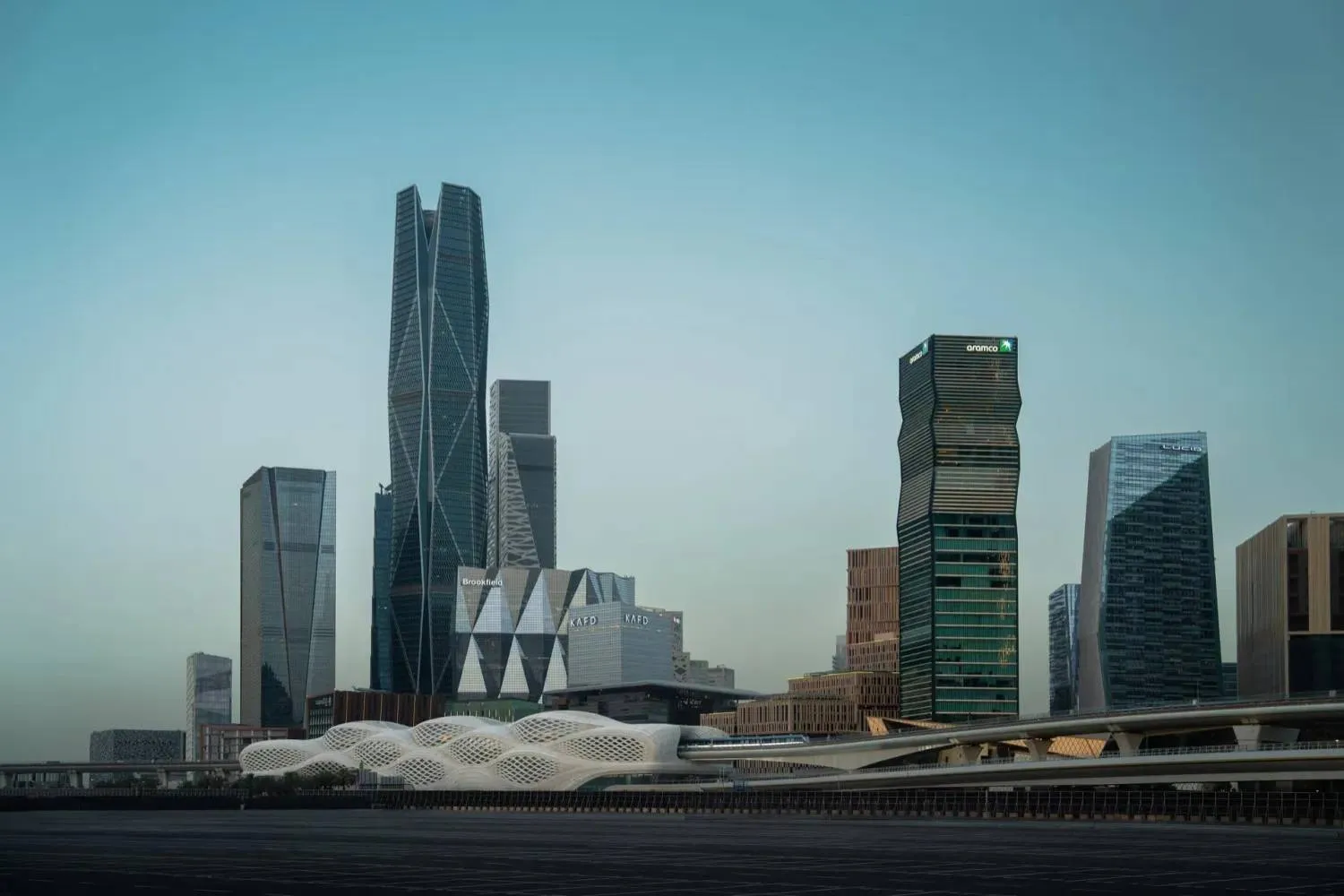
At the center of the turmoil, Saudi Arabia emerged as one of the most resilient economies.

Although the IMF cut its growth forecast for the Kingdom this year to 1.7%, it raised its projection for next year to 5.5%, defying the darker regional scenario.

The Kingdom was supported by alternative routes that protected its momentum, while major producers such as Iraq, Kuwait and Qatar face temporary contractions before a broad regional rebound in 2027.

Recent military developments delivered a severe logistics shock that paralyzed flows equivalent to one-fifth of global oil and gas. Although releases from strategic oil reserves and commercial production eased the crisis, prices remained 25% to 32% above pre-war levels.

The jump in energy costs directly froze two years of global progress against inflation.

The IMF raised its global inflation forecast by 0.3 percentage point to 4.7% in 2026, saying the monetary easing cycle had seen a “temporary pause, not a break in the broader trend.”

Regional growth map

The IMF’s new baseline scenario assumes the Strait of Hormuz will begin reopening gradually in mid-July and return to normal by March 2027. The prolonged closure redrew the region’s growth map as follows:

  • The Middle East and North Africa region is expected to contract. The IMF cut its 2026 estimate for the region for the second time in three months, forecasting a 0.5% contraction, down from 1.1% growth in its April update. That would make it the only region in the world expected to record a decline in gross domestic product, before a strong rebound in 2027 as exports recover and trade through the Strait of Hormuz returns to pre-war levels. Deniz Igan, head of the IMF’s research department, described the expected recovery as “V-shaped”.
  • Iraq, Kuwait and Qatar, among the commodity exporters most affected by transport disruptions and energy production constraints, are expected to face sharp, painful contractions this year, followed by a surge in expansion and double-digit growth in 2027.
  • Türkiye is also under pressure. The IMF cut its 2026 growth forecast for Türkiye for the second time this year to 2.9%, down from 3.4% in April, under pressure from weak domestic demand, higher energy prices and tighter financial conditions.
  • Iran, despite resilient oil exports early in the year and an upward revision to its forecast, remains weighed down by sanctions and war. Its economy is expected to contract sharply by 5.4% in 2026, pending the broader regional rebound in 2027.

Saudi resilience

At the center of the regional disruption, Saudi Arabia’s official indicators appeared more resilient. The IMF said the Saudi economy was “less affected” by the shock than its Gulf neighbors.

The Fund’s revisions to Saudi figures reflected recent geopolitical developments compared with its April report, lowering its 2026 growth forecast for the Kingdom by 1.2 percentage points to 1.7% this year.

By contrast, the outlook carried a more optimistic revision for 2027. The IMF raised its forecast for Saudi Arabia's growth by 1 percentage point from its April estimate, projecting growth of 5.5% as tensions ease and waterways reopen.

US and China hold up, Europe bears the cost

The IMF’s documentation showed a stark divergence among major powers, depending on their exposure to the technology boom and energy sources.

The United States stood apart. The world’s largest economy retained its strength, with its growth forecast steady at 2.3% in 2026. It was supported by a dual boost from massive investment in artificial intelligence, the effects of President Donald Trump’s 2025 tax cuts and strong stock markets.

China, the world’s second-largest economy, received a slight upward revision and is now expected to grow by 4.6%. Despite its property-sector crisis and the energy shock, Beijing was supported by public works spending, booming exports and a surge in high-tech manufacturing.

Asia seized the technology opportunity. The four major exporters of AI equipment and hardware — Taiwan, South Korea, Thailand and Malaysia — recorded strong and resilient growth, reflecting gains from the surge in technology demand.

Europe paid the price. The 21 eurozone countries were directly hit by rising prices, with their collective growth forecast falling to just 0.9%. France’s forecast retreated to only 0.6%, reflecting its direct exposure to the energy shock.

Conflict risks remain

Although the global economy proved more resilient than feared, the IMF ended its report with a sharp warning. Igan said renewed military conflict and the latest strikes between the United States and Iran in recent hours could leave the global economy in a “much worse position.”

The Fund warned that the depletion of countries’ strategic oil reserves would quickly narrow their room for maneuver, opening the door to sharp swings in commodity prices, disruption in global trade flows, or a sudden and painful correction in overblown expectations for technology and artificial intelligence markets.