
Why Is a ‘Very Close’ Iran-US Deal Taking So Long?

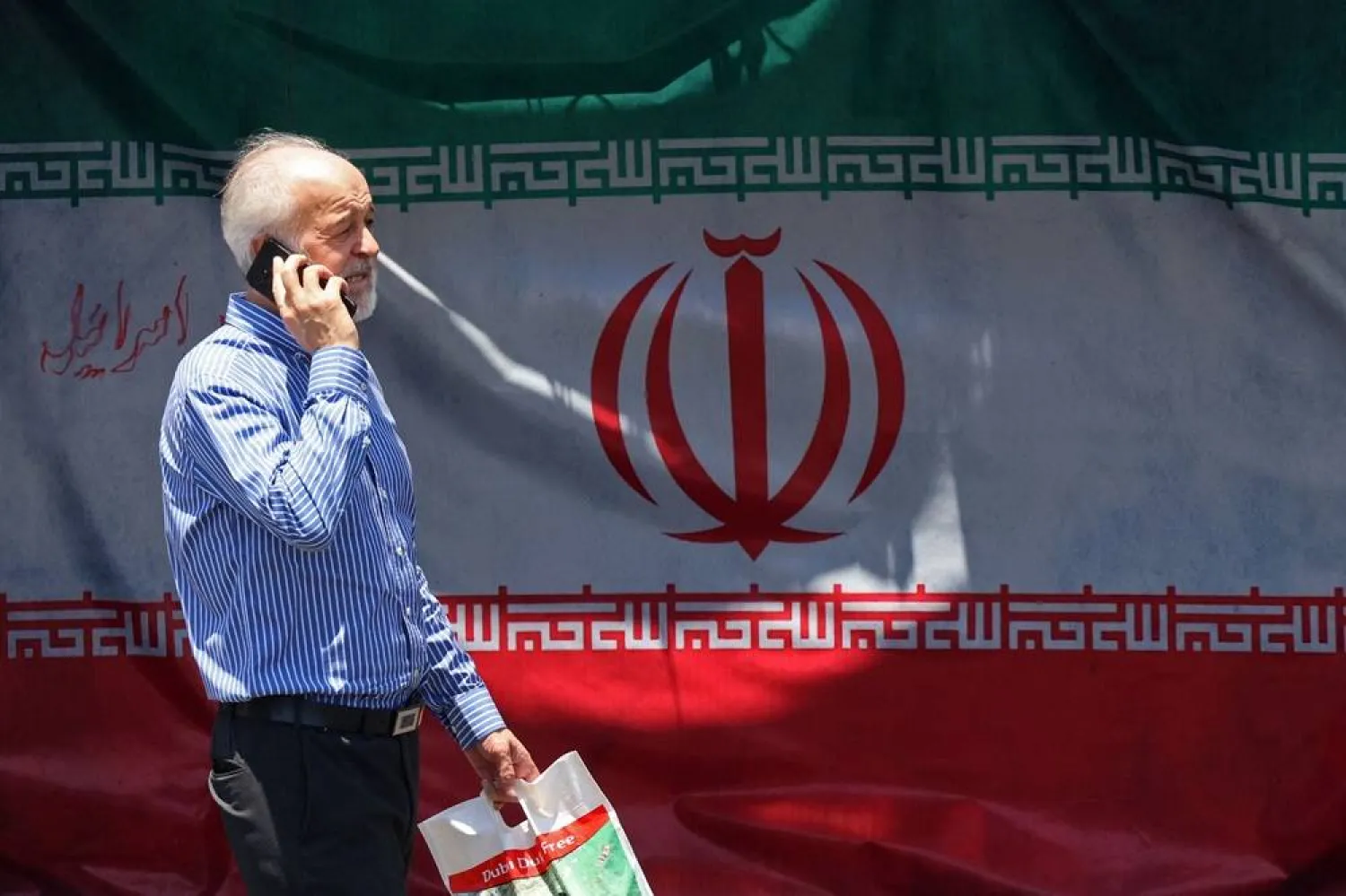
A man walks past Iran's national flag at the Vanak Square in Tehran on June 10, 2026. (AFP)
TT

Why Is a ‘Very Close’ Iran-US Deal Taking So Long?

A man walks past Iran's national flag at the Vanak Square in Tehran on June 10, 2026. (AFP)

President Donald Trump has repeatedly declared Iran and the US are on the verge of agreeing a deal to end the Middle East war, but a litany of sticking points have delayed finalizing an accord and will complicate its implementation, analysts say.

Trump has been widely mocked in US and Iran for frequently insisting an end to the conflict was imminent even as negotiations dragged on for weeks, with US network CNN saying he had used phrases like "very close to a deal" or in the "final throes" of talks on 39 occasions.

In what has become a familiar pattern, Trump on Thursday withdrew a threat of renewed strikes on Iran and said a deal could be signed in the coming days, only for Iran's foreign ministry to respond by saying it "has not reached a final conclusion on the agreement".

Arash Azizi, lecturer at Yale University, told AFP that one reason the deal has taken so long is that the Iranian side believed "they could hold out to get better terms" after not capitulating during the conflict.

Trump, meanwhile, "could hardly stomach" releasing Iran's frozen assets -- a key demand of Tehran -- and also risked facing accusations the accord would be more favorable to Iran than the 2015 nuclear deal he pulled out of during his first term, he added.

Trump "had to accept that his initial gambit of causing an Iranian capitulation by sheer military force didn't work and he had to settle for something much less", said Azizi.

Both Iran and the United States would appear to have vested interests in ending a conflict that saw five weeks of all-out war, paused by an uneasy ceasefire on April 8.

The US-Israeli war has become increasingly unpopular in the US, even among the president's core supporters, with Trump mindful of the looming US midterm elections.

A deal could also see Tehran win the security guarantees and recognition it has long craved from the US and ensure the personal safety of its own leadership, after former supreme leader Ali Khamenei and several top officials were killed in the first phase of the war.

But any negotiation -- in this case mediated by Pakistan as well as Qatar -- between two foes who have been sworn enemies since shortly after the 1979 revolution was never going to be easy.

- 'Frozen war' with 'flare-ups' -

Iran's new leadership structure after the killing of Ali Khamenei has likely proved problematic, with the extent of the power wielded by his successor and son Mojtaba Khamenei still unclear. He is said by Iranian officials to have been wounded and has yet to appear in public.

Trump's own pronouncements have also changed with startling rapidity, most notably on Thursday when he threatened to hit Iran "very hard" before predicting that a "great settlement" was near.

Trump, in a Truth Social post Friday, appeared to again be losing patience, describing the Iranian side as "very dishonorable people to deal with".

"Trump has neither a clear strategic objective nor a credible exit strategy for extricating the United States from the war with Iran," said Ali Alfoneh, a senior fellow at the Arab Gulf States Institute (AGSI).

He said a key obstacle was Israeli Prime Minister Benjamin Netanyahu, who has opposed any Iran-US deal and on Friday again vowed "Iran will not have nuclear weapons".

The Iranian authorities, meanwhile, have "sensed Trump's reluctance to enter the midterm election season burdened by an unpopular war", and seek above all an enduring peace without US aggression, said Alfoneh.

"The conflict has already taken on the characteristics of a frozen war, punctuated by periodic flare-ups," he added.

- 'Tremendous leverage' -

Iran has always insisted that any deal include Lebanon, where Israel has been attacking the Tehran-backed group Hezbollah, which has been further weakened but not eradicated.

A White House official said on Friday that Iran had agreed to dismantle its nuclear program, which the West fears is aimed at making a nuclear weapon -- a commitment that has yet to be confirmed by Tehran.

Critical will be the reopening of the Strait of Hormuz shipping bottleneck, which Iran blockaded at the start of the war in a move that caused global energy prices to surge.

Iran "will not forget the tremendous leverage it gained by closing it," Thomas Juneau, professor at the University of Ottawa, wrote in a study for London-based think tank Chatham House.

"It will not hesitate to consider closing the Strait again if it perceives it to be necessary."


Gaza’s Diabetes Patients Face a War Without Respite

Palestinian child Al-Baraa Abdel Aal, who has diabetes, was forced to use expired medication in Gaza (Asharq Al-Awsat)
TT

Gaza’s Diabetes Patients Face a War Without Respite

Palestinian child Al-Baraa Abdel Aal, who has diabetes, was forced to use expired medication in Gaza (Asharq Al-Awsat)

Diabetes patients in the Gaza Strip are fighting two battles without respite - the fallout from an Israeli offensive that began nearly three years ago despite a ceasefire announced almost a year ago, and a daily struggle to secure medication as Israel tightens restrictions on the entry of drugs and other medical supplies, despite appeals from UN and health organizations.

The war has forced people with chronic illnesses to use expired medication as access to safe treatment has dwindled.

Habib Abu Daqqa, 11, who was diagnosed with diabetes a year before the war, has spent more than three months at Nasser Medical Complex after falling into a coma following an injection of expired diabetes medication.

His mother, Maysaa Abu Daqqa, who also has diabetes, told Asharq Al-Awsat that her son has become severely distressed and needs regular, safe treatment before he can leave the hospital.

She resorted to the expired injection because of his condition, despite warnings from some doctors, while others had told her it could still be used. He subsequently developed diabetic ketoacidosis and was admitted to intensive care.

Before the war, she recalled, both had reliable access to medication and appropriate food and followed regular treatment and dietary plans. She attributed their deteriorating health partly to the period of famine in Gaza.

In 2024, the Palestinian Health Ministry estimated that around 350,000 people with chronic illnesses in Gaza lacked necessary healthcare, including about 71,000 diabetes patients, 225,000 people with hypertension and 45,000 with cardiovascular disease.

Al-Baraa Abdel Aal, 14, who has Type 1 diabetes, also required intensive care after medication shortages forced him to take expired drugs.

“Before the war, I had access to all kinds of medication, especially insulin,” Abdel Aal told Asharq Al-Awsat. Suitable food was also readily available.

“I spent eight days in intensive care. I saw death,” he recalled, adding that expired medication and substitutes left him severely fatigued.

Wafaa Washah, 36, a Jabalia refugee camp resident displaced to Khan Younis who has had diabetes for 13 years, explained that economic hardship and her husband’s unemployment had deprived her of suitable food and even clean drinking water.

She recounted that she nearly slipped into a coma several times after using expired medication because no alternatives were available. During the famine, shortages of food, particularly flour, left her suffering frequent dizziness and fever.

Farah Lafi, 19, noted that the crisis extends beyond insulin to glucose test strips needed for frequent blood-sugar monitoring. She estimated that expired medications retain only about 30% of their effectiveness, undermining patients’ daily activity and ability to function.

Ibrahim Dhair, a diabetes consultant at hospitals in southern Gaza, described diabetes patients as among those hardest hit by severe drug shortages. Much of the available medication is expired and can lead to complications including diabetic ketoacidosis and admission to intensive care.

Even when insulin is available, proper refrigeration poses another problem, he explained. Many residents live in tents without basic services, while extreme heat can spoil medicines that must be stored at specific temperatures.

Dhair added that doctors sometimes issue guidance on how to manage available medicines, but with stocks continuing to run out, he described the current situation as a crisis beyond the healthcare system’s capacity to handle.


From Wells to Budget: Where Does Libya’s Oil Money Go?

Tugboat Al-Hani begins operations at Zueitina port (National Oil Corporation)
TT

From Wells to Budget: Where Does Libya’s Oil Money Go?

Tugboat Al-Hani begins operations at Zueitina port (National Oil Corporation)

Libya depends on oil for nearly 98% of its income. Yet a central question persists: How are those revenues collected and spent in a country divided between rival governments? And why do Libyans complain of poverty when their country holds Africa’s largest oil reserves and produces and exports about 1.4 million barrels a day?

The process starts with the National Oil Corporation, which collects proceeds from crude oil and gas sales in US dollars and deposits them in accounts at the Libyan Foreign Bank. The money is then transferred to the Central Bank of Libya's accounts in Tripoli, recorded as state budget sovereign revenue, and converted into Libyan dinars.

The dollar trades at 6.36 dinars at the official rate, compared with 9.12 on the parallel market.

The Finance Ministry in Tripoli then issues spending authorizations under approved financial arrangements, after which the central bank releases funds to ministries and other state bodies through the main budget chapters.

Libya’s oil export revenues have swung sharply in recent years, ranging between $18 billion and $22 billion. They rose to about $18 billion in the first half of this year, nearly double the level in the same period last year, according to the Economy Ministry in the interim Government of National Unity.

Libyan oil expert Mohamed al-Shahati attributed the increase during that period to the war involving Iran.

Where is the breakdown?

Economists say Libya’s dependence on oil as its near-exclusive source of income lies at the heart of the crisis.

Ayoub al-Farsi, an economics professor at the University of Benghazi, said Libya showed how excessive reliance on natural resources could turn into a complex financial crisis when combined with political fragmentation and a lack of economic diversification.

“The Libyan economy is a clear example of how excessive dependence on natural resources can become a complex financial crisis,” he said, adding that political fragmentation and the absence of diversification had created conditions that directly affected people’s lives.

Al-Farsi, a member of the Central Bank of Libya’s Monetary Policy Committee, said the economy was built around a rentier-state model that depended almost entirely on oil exports to fund the treasury and provide foreign currency.

That dependence, he told Asharq Al-Awsat, had created deep structural distortions.

Agriculture and industry had been marginalized, the state bureaucracy had expanded to absorb workers into unproductive public-sector jobs, and the country had grown heavily dependent on imports for most consumer goods, he said.

Industrial activity remains limited, largely confined to the private sector and small-scale production. Critics also point to a market dominated by a small number of traders and importers, helping imported goods crowd out local production.

At protests across Libyan cities, the question is often the same: Where is the oil money going? Why are people struggling in an energy-producing country?

Al-Shahati said part of the answer lies in the difference between the value of the oil Libya produces and the amount that actually reaches the state treasury.

“Not every barrel produced in Libya is converted directly into a dollar entering the public treasury, because foreign partners have a share,” he told Asharq Al-Awsat.

Foreign companies have become production partners under various contractual arrangements, he said.

He also pointed to a stark contradiction: Libya produces oil, yet depends heavily on imports of gasoline, diesel, and other petroleum products to meet domestic demand.

That means a growing share of the country’s resources is converted into foreign currency to pay for fuel imports.

Al-Shahati said another problem was the lack of a regularly published, unified, and easy-to-read account that answers basic questions, such as: What was the total value of the oil produced? How much went to foreign partners? How much was exported for the state? How much went to the domestic market? And how much net revenue was actually available for public spending?

“The figures in circulation provide parts of the picture,” he said, “but they do not always show the full flow of revenues from the wellhead to the state’s public accounts.”

Libya’s oil fields are concentrated mainly in the eastern Sirte Basin, which holds about 82% of its oil reserves, as well as in the Murzuq Basin in the southwest and offshore areas along the coast.

Fuel and power crises

Those weaknesses in the oil revenue chain are unfolding as Libya grapples with a severe electricity crisis.

The country has suffered several “blackouts” in recent days, with some areas going without electricity for more than 17 hours a day.

Researcher Ezzedine Mokhtar sees the power cuts as one part of a wider pattern of recurring financial failures, including fuel shortages.

He blamed the hardship facing many Libyans on “corruption” and “unlimited spending” by two rival governments competing for power in the country’s east and west.

He also cited “oil smuggling through Arkenu, whose revenues go to specific individuals rather than the state treasury.”

Mokhtar said Libya’s subsidy system was another core problem, with more than 60% of the country’s budget going to fuel subsidies.

He called on the Tripoli government to phase out those subsidies gradually and to draw up a national plan to develop the workforce.

“We have no industrial skills in anything,” he said. “We import everything — yogurt, dairy products, fruit, vegetables, frozen fish, and even underwear. Everything comes from abroad.”

Libya ranks 10th globally in proven oil reserves, with about 48.3 billion barrels, according to Worldometer.

The UN Panel of Experts said in its latest report on Libya, covering October 2024 to February 2026, that Arkenu had moved at least $3 billion in oil revenues to bank accounts outside Libya between January 2024 and November 2025.

According to the report, Arkenu was established in 2023 as a private company and is indirectly controlled by Saddam Haftar, deputy commander-in-chief of the Libyan National Army. It faces accusations of “oil smuggling.”

Reuters previously investigated the company and concluded, based on shipping documents, London Stock Exchange Group data, and information from Kpler, that some oil revenues were being diverted away from the Central Bank of Libya.

How are revenues distributed?

Oil revenues are distributed across the four main chapters of the state budget, according to experts and economists.

Chapter One, salaries and wages, takes the largest share. It covers public-sector employees across eastern, western, and southern Libya through the unified national identification number system.

Chapter Two covers operating expenses for ministries and public institutions.

Chapter Three covers subsidies, including fuel, water, and electricity.

Chapter Four covers development and projects, including infrastructure, as well as allocations to the National Oil Corporation to sustain and increase production.

Al-Shahati said 26% of oil revenues went toward importing fuel products, equivalent to about $7 billion if crude traded at $70 a barrel.

This year, he said, the figure could rise to between $8 billion and $9 billion because oil prices had climbed above $85 a barrel and the gap between crude prices and diesel and gasoline prices had widened amid shortages.

He also pointed to higher domestic consumption driven by economic growth and a rise in smuggling.

A second problem, al-Shahati said, is the absence of an approved national budget, which would make it possible to determine how spending should be allocated among population groups and regions.

“What is clear is that the main cities control most spending,” he said.

He also pointed to “a large and obvious imbalance” in salaries across Libya’s three regions, job grades, and types of employment.

Those gaps, he said, risk widening financial divisions between social groups.

Even an agreement to unify development spending did not appear to be properly implemented because there were no clear standards and no comprehensive budget.

“There are no criteria for distributing oil revenues,” al-Shahati said. “The distribution process is random and unsustainable.”

Libya fell to 177th out of 182 countries in the 2025 Corruption Perceptions Index, from 173rd out of 180 countries in 2024, reflecting worsening corruption and no tangible improvement over the past two years.

Pressure on the local economy

A report by UN Secretary-General Antonio Guterres on Libya highlighted deep structural strains in the economy, driven by high public spending, near-total dependence on oil and gas revenues, and mounting pressure from food, fuel, and electricity prices.

The report, submitted to the UN Security Council on Aug. 17, covers the period from April 1 to July 28.

Citing the International Monetary Fund, it said Libya’s fiscal deficit reached 30% of gross domestic product last year, while public debt climbed to 146% of GDP.

Inflation also rose into double digits, eroding purchasing power.

The UN report noted unjustified increases in fuel consumption by military and security agencies and the energy sector, as well as repeated double purchasing.

The cost of institutional division

Libya’s political and institutional split and the presence of multiple authorities have made the economic crisis worse, al-Farsi said.

The distortions, he said, were no longer merely structural.

They had created parallel public finances and pushed consumer spending higher to meet the demands of rival authorities, sending salaries and subsidies to unprecedented levels.

Repeated shutdowns of oil fields in previous years, combined with lower actual revenues, pushed financial authorities toward deficit financing and higher public debt, al-Farsi said.

That flooded the market with money without a corresponding rise in domestic production.

Oil revenues reached $21.9 billion in 2025, according to the National Oil Corporation, up from $18.6 billion in 2024, an increase of 15%.

Al-Farsi said the deterioration in public finances had left monetary authorities in a difficult position and forced them into emergency measures to protect reserves and contain the deficit.

The result, he said, was a weaker national currency, liquidity shortages and a collapse in confidence.

Development tools had also been paralyzed.

“Monetary policy shifted from an instrument for stimulating growth and investment into a tool for managing daily crises,” he said.

Why has the crisis not been solved?

Economists point to several reasons.

Al-Shahati put “corruption spreading on an unprecedented scale” near the top of the list.

“Corruption is no longer confined to the margins,” he said. “It has come to dominate the core of public finances in key sectors, obstructing any attempt at reform.”

He also blamed the absence of an institutional vision following the breakdown of middle management, which had once linked fiscal and monetary policy to economic realities and provided unified political backing.

Policies, he said, had become detached from the economy and lost their ability to restore balance.

Conventional reforms that had worked elsewhere would not work in Libya, al-Shahati said, because the country lacked a central political authority capable of building an institutional vision and curbing corruption that had spread through both the state and private sector.

Al-Farsi said Libya could not escape its fiscal and monetary crisis without addressing the roots of the problem.

That meant unifying the management of public finances, curbing government spending, and launching genuine structural reforms that would gradually shift Libya from consuming oil rents to building a diversified economy.

Mokhtar also called on the Tripoli government to develop a strategic plan to make better use of human resources and support small and medium-sized industries.

For him, breaking Libya’s dependence on oil revenues is part of the way out.

Masoud Suleiman, chairman of Libya’s National Oil Corporation, said in media remarks last week that the country needed between $30 billion and $40 billion in investment to develop untapped oil and gas resources.

The corporation, he said, aims to raise production to 2 million barrels a day by 2030.


Bandar Abbas, Iran’s Trade Hub on Hormuz Thrust to Frontline of US War

Fishermen check their nets and small boats on the seashore in the port city of Bandar Abbas, in southern Iran on August 10, 2026. (AFP)
TT

Bandar Abbas, Iran’s Trade Hub on Hormuz Thrust to Frontline of US War

Fishermen check their nets and small boats on the seashore in the port city of Bandar Abbas, in southern Iran on August 10, 2026. (AFP)

With a long shoreline on the Strait of Hormuz, Iran's southern trade hub of Bandar Abbas has found itself at the frontlines of the war with the United States, with residents struggling to revive livelihoods battered by months of fighting.

Like elsewhere in Iran, economic strain has squeezed households since US-Israeli strikes triggered the Middle East war on February 28. But unlike much of the country, the port city of around half a million people has remained exposed to fighting even after an April 8 ceasefire brought relief elsewhere.

But despite a lull in hostilities in July, residents still feel squeezed. Saeed Tajik, 42, used to work at a shipyard before losing his job and turning to driving a taxi.

"The prices of housing and food have become extremely high. Almost all the basics -- rice, yoghurt, and oil -- have doubled," said Tajik.

Fuel shortages have long been common in southern Iran, where authorities restrict supplies in an effort to curb widespread fuel smuggling.

But now, "the queues have become longer ... it happens that we wait in the long line for fuel only to get told 'there is none' upon arriving," Tajik said as he drove past a station where motorists waited under the punishing summer heat.

Hormuz has emerged as a central flashpoint after an April ceasefire and June framework deal failed to resolve disagreements between Washington and Tehran over the future management of the strait.

During the war, US strikes hit bridges, highways and railway infrastructure around Bandar Abbas until mid-July, in what analysts saw as attempts to cut off the city and disrupt Iranian military logistics in the south.

- 'Nothing left' -

Inside the city, under a towering concrete statue of two armed men with their arms trained towards Hormuz waters, economic strains play out in long queues snaking outside petrol stations and soaring prices squeezing shoppers in local markets.

The city's repeatedly hit airport remained largely closed until August 15, leaving travelers facing arduous road journeys, sometimes combined with flights and boat crossings.

Outside the city, construction crews still toil under the sweltering summer sun to repair the Gachin bridge, split by a US strike, as cars rumble along a dusty detour below.

Along the waterfront, traditional wooden vessels known as lenjes sit moored alongside fishing and commercial boats, part of a centuries-old trading network linking southern Iran with Arab states across the Gulf.

Arash Tondro, 45, used his lenj to carry Iranian fresh and dried fruit to the United Arab Emirates and return with household goods and other imports.

"My income dropped to zero at the beginning of the war," said Tondro, who later rerouted some trade through Oman's Khasab port as regional seaways were disrupted and "many of the lenjes were hit by drones".

After the UAE suspended trade with Iran on Tuesday following a missile attack on a ship that Tehran denied carrying out, Tondro said he was again unsure how his work would be impacted.

"People in the south mostly rely on trade or fishing. If you take the sea and trade away from them, there is practically nothing left. We don't have agriculture here; whatever there is comes from the sea," he said.

- 'No sales' -

As night falls and August's oppressive heat begins to ease, fish vendors set up along a busy street, laying out shark, tuna and shrimp as the smell of the day's catch hangs in the humid air.

Among them is 22-year-old Anoush Mallah, who recently moved onto the street after soaring rents forced him to close his shop in one of the city's bazaars.

"Business has been terrible since the war started. There are no sales, it's very weak," he told AFP.

"People are short of money. The fishermen aren't going fishing either."

Many fishermen around Bandar Abbas only began returning to sea in recent weeks, after months ashore for fear of being caught in the crossfire of US-Iran fighting.

Diplomatic efforts have so far failed to end the war. For Mallah, the uncertainty only adds to the strain.

"Let it (the war) start and get some result; right now, we're just left in limbo," he said.