


US, Iran Have Agreed to Wording of a Deal to End Their War, Pakistan PM Says

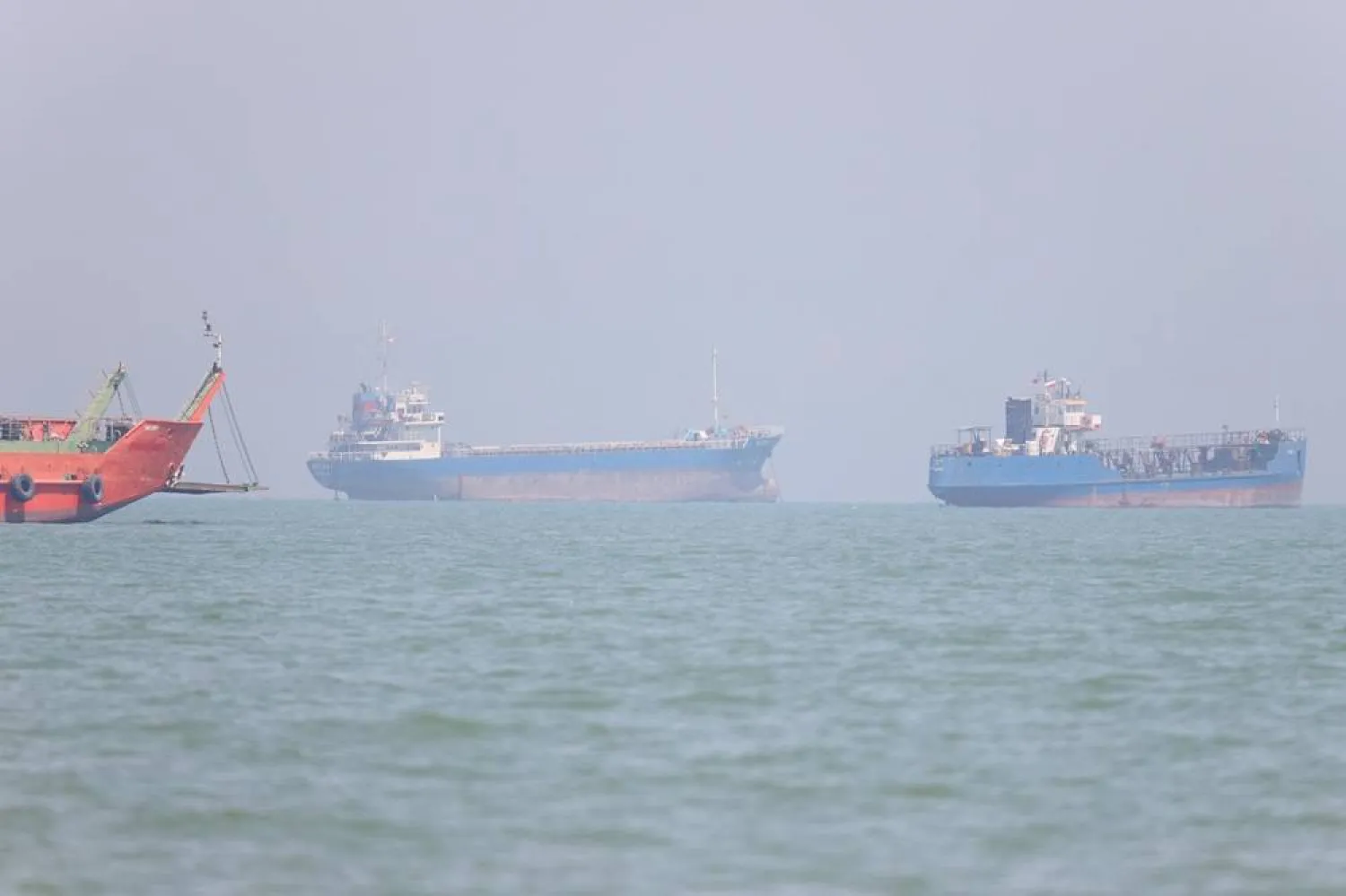
Vessels in the Strait of Hormuz near the beach of Bandar Abbas, Iran, June 11, 2026. Amirhosein Khorgooi/ISNA/WANA (West Asia News Agency) via Reuters
TT

US, Iran Have Agreed to Wording of a Deal to End Their War, Pakistan PM Says

Vessels in the Strait of Hormuz near the beach of Bandar Abbas, Iran, June 11, 2026. Amirhosein Khorgooi/ISNA/WANA (West Asia News Agency) via Reuters

Pakistan’s prime minister said Friday the United States and Iran have agreed to wording of an agreement aimed at ending their war in the Middle East and that mediators were working with both sides to finalize a deal.

Prime Minister Shehbaz Sharif said the US and Iran have reached a “final, agreed upon text.” He said Pakistan, which has taken the lead in mediation efforts, was working with the warring countries on next steps.

“Peace has never been this close as it is now,” Sharif said in a post on X.

The apparent breakthrough in negotiations comes after Iran exchanged fire with the US and Israel over three days this week, threatening to return the Middle East to full-scale war.

Iranian Foreign Minister Abbas Araghchi said Friday an agreement “has never been closer” in post on X. US President Donald Trump, who has said multiple times in recent weeks that the countries were on the cusp of a deal, shared Araghchi's post on his own social media.

The war launched by the US and Israel on Feb. 28 has rattled the Middle East and virtually shut down oil and natural gas shipments from the Persian Gulf. A fragile ceasefire has been in place since April 7.

Iranian official says nuclear details will follow an agreement to end the war Araghchi told Iranian state TV on Friday that both sides were working toward signing an initial agreement declaring an end to the war. He said terms dealing with Iran’s nuclear program would be finalized in the following 60 days as they negotiate a final deal.

He said the initial agreement would end the war “on all fronts, including Lebanon.” Israel has been fighting the Iranian-allied Hezbollah in Lebanon since early March. Israel is not a party to the negotiations between the US and Iran, and its leaders have said they don't plan to withdraw from Lebanon.

A senior US administration official, who briefed reporters on condition of anonymity under ground rules set by the White House, said Friday that the emerging agreement would reopen the Strait of Hormuz and begin the process of destroying or removing Tehran’s highly enriched uranium.

The official said the 60-day period after both sides sign the deal would be used to work out technical details for removing Iran’s enriched uranium. The official did not detail who the US envisions taking charge of removing the uranium, which is believed to entombed under three nuclear sites that were battered by US strikes last year.

The official said a deal was 80% to 85% done and that the US side believes “most of the people who have authority” in the Iranian government want to sign onto the deal “but not everybody.”

Three regional officials said the emerging deal is also expected to include the phased lifting of sanctions on Iran and the release of frozen Iranian assets. The officials spoke on condition of anonymity because of the sensitivity of the negotiations.

Underscoring the fragility of the negotiations, Trump on Friday lashed out at Iranian officials on social media and said: “They better get their act together, and FAST!” That was before he shared Araghchi's post declaring a deal was close.

Officials say a deal could be signed in the coming days

Iran's nuclear program has been a key point of division. The US and Israel fear it could lead to an atomic weapon — a main reason their leaders cited for going to war. Tehran has insisted its nuclear efforts are for peaceful purposes.

Also critical is Iran’s effective closure of the Strait of Hormuz, a vital shipping lane for oil and natural gas. Disruption of transit through the strait has crimped global energy supplies, driven up fuel prices and made food and other basics more expensive well beyond the region.

The US has responded since mid-April with a naval blockade of Iranian ports to choke off Iran’s own oil exports.

The regional officials said they expect a signing ceremony for the agreement in the coming days after officials in Washington and Tehran approve it.

Trump on Thursday claimed significant progress in the negotiations, just hours after he threatened to escalate attacks and seize Iran’s oil industry.

Esmail Baghaei, a spokesperson for Iran’s Foreign Ministry, said on state television that mediators were active and the text of a deal was “mostly finalized.”

There was no immediate comment Friday from Pakistan’s Foreign Ministry, which has been leading efforts to mediate a deal between the US and Iran. Foreign Ministry spokesperson Tahir Andrabi had said Thursday that Pakistan remained involved in negotiations.

Israel expects Trump to advocate for its interests

Israeli Prime Minister Benjamin Netanyahu has said Israel is not a party to the deal being negotiated. He said in a statement Friday that he and Trump were in “full agreement” that Iran must not have nuclear weapons.

Israeli Defense Minister Israel Katz said in a separate statement that Israel also expects Trump to uphold key Israeli interests, including weakening Iran's missile program and proxy network.

Katz warned that Israel could still act independently toward Iran and that the country would not pull out of the zones it is occupying in Lebanon, Syria and Gaza, nor would it withdraw from the northern refugee camps of the Israeli-occupied West Bank.

The deal was largely being brokered by Pakistan, led by its army chief Field Marshal Asim Munir, the regional officials said, with backing from Saudi Arabia, Türkiye, Egypt, and Qatar.



US Deports Iranian Pro-democracy Activist to Central African Republic

A general view shows a part of the capital Bangui, Central African Republic, February 16, 2016. REUTERS/Siegfried Modola Purchase Licensing Rights
TT

US Deports Iranian Pro-democracy Activist to Central African Republic

A general view shows a part of the capital Bangui, Central African Republic, February 16, 2016. REUTERS/Siegfried Modola Purchase Licensing Rights

The United States has deported an Iranian pro-democracy activist to Central African Republic, her lawyer said on Friday, describing it as a "super dangerous" transfer to a country with which the activist has no connection.

The Iranian American Legal Defense Fund (IALDF) said on Thursday that three Iranian women who fled persecution were at risk of deportation, including one who had converted to Christianity.

In the end, only the activist was on the flight which took off from Louisiana on Thursday night, said her lawyer, Emily Trostle, while not ruling out that the others could potentially be deported later.

The plane landed in Bangui, the capital of Central African Republic, shortly before 10 p.m. local time (2100 GMT), after a stop in Ghana's capital Accra, according to the ICE Flight Monitor managed by ‌Human Rights First.

It ‌was not immediately clear where the deportees would be housed or how long ‌they ⁠would be able ⁠to stay in Central African Republic.

"They have absolutely no connection to this place. In all of my filings I submitted tons of information about how this was super dangerous," Trostle told Reuters.

"These individuals are being removed from the United States and abandoned in a country where they have no status, no connection and no support network. We fear they will ultimately be forced to return to the countries they originally fled," Trostle said. 

The US State Department and Central African Republic's presidency did not immediately respond to requests for comment about the deportations to Central African Republic.  

⁠The US Department of Homeland Security said last week that all deportees would receive ‌full due process.  

Ghana and Central African Republic have signed deals ‌with President Donald Trump's administration to take in third-country deportees who in many cases secured legal protections from US courts so that ‌they could not be repatriated.  

The United States has used the deals — including with Central African Republic's ‌neighbor Democratic Republic of Congo, which is facing an Ebola outbreak — to deport people it cannot legally send home. 

The Trump administration has said the deals are lawful. Rights groups and advocates have said that the details of the deals are opaque and many of the deportees are ultimately repatriated. 

RISK OF REPATRIATION 

The IALDF said the Iranians facing deportation had their asylum claims denied ‌because of a rule requiring that asylum seekers first apply in countries they transit through before reaching the US. A federal court in California vacated that rule ⁠in May. 

The group said ⁠deporting Iranians to Central African Republic was "a potentially fatal action," citing security issues in the country and the risk that they would be sent back to Iran. 

President Faustin-Archange Touadera signed peace deals last year with several rebel groups. Others were weakened as Russian mercenaries and troops from Rwanda were deployed to shore up Touadera's government as well as UN peacekeepers. 

Ali Rahnama, interim executive director at the IALDF, said the Russian presence in Central African Republic was concerning because Russia had close intelligence ties with Iran. The US and Israel launched strikes on Iran on February 28, starting a now three-month-old war. 

Trump said in April that he thought that the Iranian people should rise up against the government in Tehran if a ceasefire were declared, but understood that it was too dangerous for them to do so. 

It was unclear how many people would be deported to Central African Republic on the first flight. 

An official briefed on the matter told Reuters on Thursday it was expected to transport about 20 people, including Syrians and Afghans. The official said hundreds of migrants could ultimately be deported there under the deal. 


Ukrainian Strike Kills One, Wounds 3 in Southern Russia

In this handout photograph taken and released by the press service of the 65th Mechanized Brigade of Ukrainian Armed Forces on June 11, 2026, Ukrainian servicemen attend a military training at an undisclosed location in Zaporizhzhia region, amid the Russian invasion of Ukraine. (Andriy Andriyenko / 65th Mechanized Brigade of Ukrainian Armed Forces / AFP)
TT

Ukrainian Strike Kills One, Wounds 3 in Southern Russia

In this handout photograph taken and released by the press service of the 65th Mechanized Brigade of Ukrainian Armed Forces on June 11, 2026, Ukrainian servicemen attend a military training at an undisclosed location in Zaporizhzhia region, amid the Russian invasion of Ukraine. (Andriy Andriyenko / 65th Mechanized Brigade of Ukrainian Armed Forces / AFP)

A Ukrainian drone attack killed one person and wounded at least three others in southern Russia, a regional official said Saturday, with nearly 100 people fighting to extinguish a fire caused by the strike.

The attack damaged port installations in the Temryuk district on the Sea of Azov, near the Kerch Strait separating mainland Russia from the Crimean peninsula, which has been occupied by Moscow since 2014.

"As a result of falling drone debris, a fire broke out at a maritime terminal... one person was killed," Krasnodar Krai Governor Veniamin Kondratyev posted on Telegram.

He added that at least three people were wounded, according to first reports, and that 96 people had been drafted to fight the blaze.

The Russian army said it had shot down a total of 177 Ukrainian drones overnight.

Ukraine has stepped up its campaign of attacks within Russia in recent months, claiming fair retaliation for Moscow's own massive bombardments across the more than four-year-long conflict.

Kyiv insists that the Ukrainian army first and foremost targets military installations and energy infrastructure, in a bid to deprive the Kremlin's war chest of vital fossil fuel revenues.


US Military Helping Move 7 Million Barrels of Oil Per Day Out of the Gulf

Residents swim and play in the waters of the Strait of Hormuz while cargo ships and commercial vessels lie anchored in the distance off Bandar Abbas, Iran, Wednesday, June 10, 2026.(Razieh Poudat/ISNA via AP)
TT

US Military Helping Move 7 Million Barrels of Oil Per Day Out of the Gulf

Residents swim and play in the waters of the Strait of Hormuz while cargo ships and commercial vessels lie anchored in the distance off Bandar Abbas, Iran, Wednesday, June 10, 2026.(Razieh Poudat/ISNA via AP)

Roughly 7 million barrels a day of oil are getting out of the Gulf with US military help, Energy Secretary Chris Wright said on Friday at an event in Houston.

That is about half of the flow of oil that has been stuck in the Strait of Hormuz since the US-Israeli war ‌with Iran ‌began, Wright said.

"We have a military ‌effort ⁠that we've not ⁠talked a lot about, which started more recently to get cargoes out," Wright said.

No Iranian crude is getting out of the Strait, Wright said at a Bloomberg Energy event, adding that he expects to see the free ⁠flow of all products through the ‌Gulf if ‌a deal is reached. And if no deal is ‌reached, he said the US military will work ‌to restore the flow.

The flow of 7 million bpd is a bigger number than the oil industry was expecting, said Dan Pickering, chief ‌investment officer at Pickering Energy Partners.

Oil prices, currently in the $88 range, indicate ⁠that investors had ⁠assumed only about 3 million to 4 million barrels of oil were flowing through the Strait, Rebecca Babin, CIBC Private Wealth senior energy trader, said at the event.

Wright said that some sanctions on Iran could be partially lifted if a deal is made.

A US gasoline tax holiday over the summer was a possibility that could help reduce prices, Wright said.