

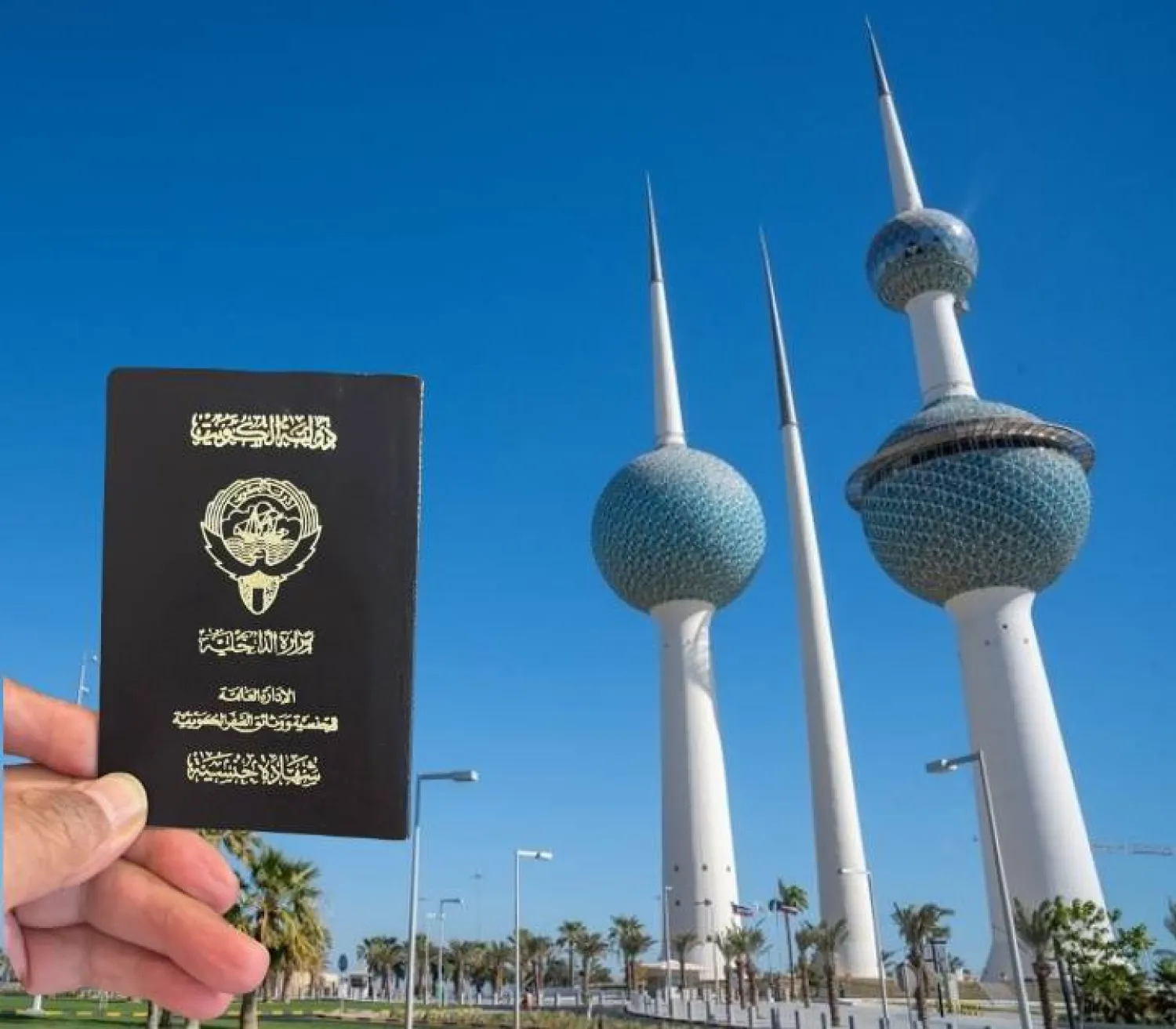

Kuwait Withdraws Citizenship from 2,192 People and Their Dependents

The official gazette Kuwait Alyawm published the names of 2,192 people whose Kuwaiti citizenship was withdrawn, as well as those who may have acquired it through dependency on them (Asharq Al-Awsat).
TT

Kuwait Withdraws Citizenship from 2,192 People and Their Dependents

The official gazette Kuwait Alyawm published the names of 2,192 people whose Kuwaiti citizenship was withdrawn, as well as those who may have acquired it through dependency on them (Asharq Al-Awsat).

Kuwaiti authorities have withdrawn citizenship from 2,192 people, as well as those who acquired it through dependency on them, and revoked the citizenship of one person.

The official gazette Kuwait Alyawm published the names of 2,192 people whose Kuwaiti citizenship was withdrawn, along with those who may have acquired citizenship through dependency on them. It also published a decree revoking the citizenship of one person.

The names were listed in eight decrees.

Decree No. 90 of 2026 provided for the withdrawal of citizenship from 26 people, while Decree No. 91 provided for the withdrawal of citizenship certificates from five people.

Decree No. 92 provided for the withdrawal of citizenship from 1,594 people, while Decree No. 93 provided for the withdrawal of citizenship from 491 people.

Decree No. 94 provided for the revocation of Kuwaiti citizenship from one person.

Decree No. 95 provided for the withdrawal of citizenship certificates from four people, while Decree No. 96 provided for the withdrawal of citizenship from two people.

Decree No. 97 provided for the withdrawal of Kuwaiti citizenship from 70 people.


GCC Secretary-General Holds Meeting with Swedish Ambassador to Saudi Arabia

Secretary-General of the Gulf Cooperation Council (GCC) Jasem Albudaiwi. SPA
TT

GCC Secretary-General Holds Meeting with Swedish Ambassador to Saudi Arabia

Secretary-General of the Gulf Cooperation Council (GCC) Jasem Albudaiwi. SPA

Secretary-General of the Gulf Cooperation Council (GCC) Jasem Albudaiwi met in Riyadh on Sunday with Swedish Ambassador to Saudi Arabia Petra Menander on the occasion of the end of her mission.

Albudaiwi expressed his appreciation to the Swedish diplomat for her efforts in strengthening Gulf-European and Gulf-Swedish relations, SPA reported.

The meeting also deliberated on relations between the GCC and Sweden and ways to develop and enhance them to serve common interests, in addition to discussing the latest regional and international developments.


Saudi Foreign Minister Receives Phone Call from Pakistani Counterpart

Saudi Minister of Foreign Affairs Prince Faisal bin Farhan bin Abdullah
TT

Saudi Foreign Minister Receives Phone Call from Pakistani Counterpart

Saudi Minister of Foreign Affairs Prince Faisal bin Farhan bin Abdullah

Saudi Minister of Foreign Affairs Prince Faisal bin Farhan bin Abdullah received a phone call from Pakistani Deputy Prime Minister and Minister of Foreign Affairs Mohammad Ishaq Dar.

During Saturday’s call, the two sides discussed the latest regional developments and related efforts.


Saudi Arabia Stresses People’s Rights in the Region to Have Peace

The Saudi flag (SPA)
TT

Saudi Arabia Stresses People’s Rights in the Region to Have Peace

The Saudi flag (SPA)

Saudi Arabia has stressed that the peoples of the region deserve a future built on peace, development, and cooperation.

Saudi Arabia participated in the Oslo Forum 2026, held under the patronage of the Norwegian Ministry of Foreign Affairs, and was represented by Minister Plenipotentiary at the Ministry of Foreign Affairs Dr. Manal bint Hassan Radwan, who took part in the main session titled “Mediation in a Turbulent Middle East.”

In her remarks, Radwan highlighted Saudi Arabia’s longstanding role in mediation and sustainable peacebuilding, stressing that the Kingdom’s approach is founded on respect for rights, human dignity, and security for all.

She noted that decades of regional power politics have imposed significant humanitarian, political, and economic costs, emphasizing that lasting stability cannot be achieved through dominance or imposed realities, but through a collective security framework based on cooperation, state sovereignty, strong national institutions, and adherence to international law.

She reaffirmed that creating an independent Palestinian state and the fulfillment of the Palestinian people’s legitimate rights remain essential to achieving lasting regional peace and integration.

In this context, she highlighted Saudi-led efforts through the Global Alliance for the Implementation of the Two-State Solution and the New York Declaration as practical frameworks for advancing peace.

Radwan also reiterated the Kingdom’s support for efforts to end the war in Gaza and implement relevant international initiatives, stressing that security and stability cannot come at the expense of sovereignty or the legitimate rights of peoples.

She underscored Saudi Arabia’s commitment to a regional security vision rooted in inclusivity, cooperation, and respect for international norms, while recognizing the contributions of China, Oman, and Iraq in supporting rapprochement with Iran and promoting regional de-escalation.

She noted that some regional actors have demonstrated a growing willingness to adapt to cooperative regional security approaches and engage in frameworks of dialogue and joint action, while Israel continues to pursue a security doctrine based on military superiority and the use of force.

She added that the continued occupation, along with annexation and settlement policies, undermines efforts to build a sustainable regional security architecture and hinders the achievement of genuine regional integration founded on equality, respect for rights, sovereignty, and international law.

Radwan emphasized that the humanitarian toll of wars, occupation, and external interference is no longer acceptable, and that the peoples of the region deserve a future built on peace, development, and cooperation.

She affirmed that Saudi Arabia will continue to work tirelessly, through its strategic partnerships and regional and international role, to advance sustainable peace and security.
