


What to Know about a Possible Deal to End the Iran War

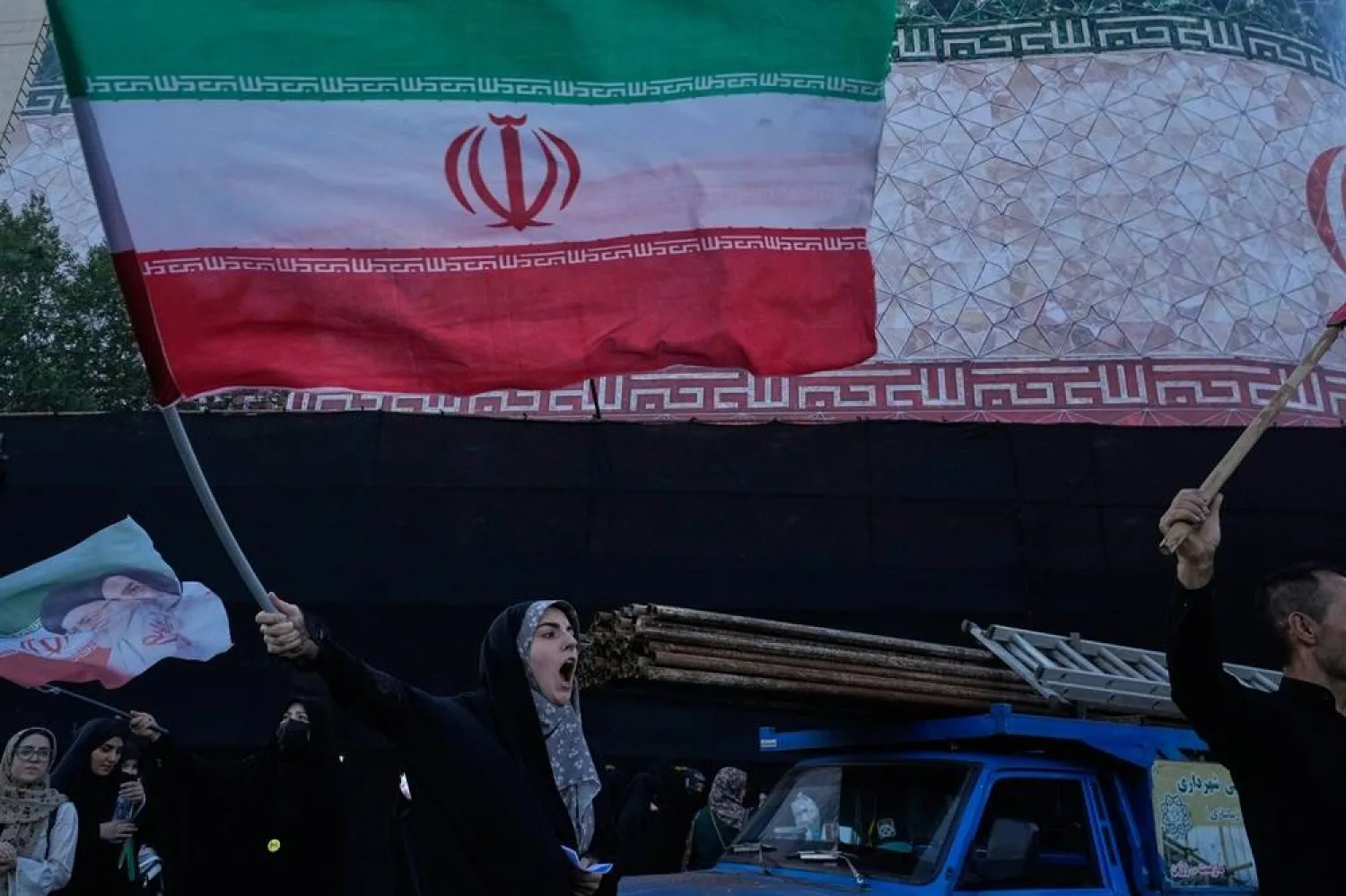
 A woman waves an Iranian flags as she chants slogans against Iran and US talks at the revolution square in Tehran, Iran, Sunday, June 14, 2026. (AP)
A woman waves an Iranian flags as she chants slogans against Iran and US talks at the revolution square in Tehran, Iran, Sunday, June 14, 2026. (AP)
TT

What to Know about a Possible Deal to End the Iran War

 A woman waves an Iranian flags as she chants slogans against Iran and US talks at the revolution square in Tehran, Iran, Sunday, June 14, 2026. (AP)
A woman waves an Iranian flags as she chants slogans against Iran and US talks at the revolution square in Tehran, Iran, Sunday, June 14, 2026. (AP)

The United States and Iran have reached an interim deal aimed at ending the war and reopening the Strait of Hormuz.

There are plans for a signing of the deal on Friday in Switzerland. However, previous announcements fell through, and what the deal contained remained in dispute Monday.

Iran exchanged fire with the US and Israel last week, threatening to push the region back into a full-scale war. The war launched by the US and Israel on Feb. 28 has rattled the region and virtually shut down oil and natural gas shipments from the Gulf. A fragile ceasefire has been in place since April 7.

Here's what to know:

A 60-day period would address Iran's nuclear program

Iranian Foreign Minister Abbas Araghchi said Friday the terms of dealing with Iran’s nuclear program would be finalized in the 60 days after the initial agreement is signed and that the parties could decide to extend that period.

The US and Israel fear Iran’s nuclear program could lead to an atomic weapon — a main reason their leaders cited for going to war. Tehran has insisted its nuclear program is peaceful, though it has enough highly enriched uranium to build several atomic bombs, should it choose to do so.

A senior US administration official, who briefed reporters on condition of anonymity under ground rules set by the White House, said Friday that the emerging agreement would begin the process of destroying or removing Tehran’s highly enriched uranium. That's something disputed by Iran, which has insisted it would hold onto its stockpile.

The official said the 60-day period after both sides sign the deal would be used to work out technical details for removing the uranium. The official did not say who the US envisions taking charge of removing the uranium, which is believed to be entombed under three nuclear sites battered by US strikes last year.

The deal may include addressing reopening the Strait of Hormuz

The US official said the emerging agreement includes provisions for reopening the strait.

Araghchi said Iran wants a deal that allows Tehran to charge ships “for services rendered” when they transit the strait. Iran charged vessels for passage during the war, which the US and other nations have said violates international law. The strait long has been considered an international water though it sits in the territorial waters of Iran and Oman.

Transit through the strait, a vital shipping lane for oil and natural gas, has disrupted global energy supplies, driven up fuel prices and made food and other basics like fertilizer more expensive well beyond the region.

The agreement would include Iranian sanctions relief

Three regional officials said the emerging deal was expected to include the phased lifting of sanctions on Iran and the release of frozen Iranian assets. The officials spoke on condition of anonymity because of the sensitivity of the negotiations.

What will happen to Lebanon remains unclear

Pakistani Prime Minister Shehbaz Sharif said after the deal had been announced that “both sides have declared the immediate and permanent termination of military operations on all fronts, including in Lebanon.” It remains unclear whether Israel, which relies on the US but has launched in wars against its enemies since Hamas’ Oct. 7, 2023, attack on Israel, agreed to that term.

Iran has insisted that any deal must include a ceasefire in Lebanon, where Israel has been fighting the Iranian-backed Hezbollah group.

Israeli Defense Minister Israel Katz warned Friday that Israel could still act independently toward Iran and that the country would not pull out of the zones it is occupying in Lebanon, Syria and Gaza, nor would it withdraw from the northern refugee camps of the Israeli-occupied West Bank.



Israel Concerned about US-Iran Deal but Does Not Want to Anger Trump

Israeli Prime Minister Benjamin Netanyahu seen at the Knesset on June 3. (Reuters)
TT

Israel Concerned about US-Iran Deal but Does Not Want to Anger Trump

Israeli Prime Minister Benjamin Netanyahu seen at the Knesset on June 3. (Reuters)

While Israeli Prime Minister Benjamin Netanyahu has been forced to praise the US-Iran deal and to choose words that appease US President Donald Trump, Israeli military and political officials expressed deep concern over the emerging agreement, likely to be officially signed next Friday.

Israeli officials fear the deal may fail to eliminate the threats posed by Iran's nuclear and ballistic missile programs and could also restrict Israel's freedom of action against Hezbollah in Lebanon.

Officials said Israel cannot return to the reality before the October 7, 2023, attack, when it says its hands were tied while threats built up along its borders.

Current Israeli government officials have said little about the Trump-Iran understanding, apparently for fear of upsetting the US leader. Instead, the Israeli military leaked statements on behalf of a “senior military source” expressing concern about the cessation of operations in Lebanon.

Israeli officials said the text of the agreement remains “an enigma,” not explicitly speaking about the dismantling of the Iranian nuclear program, the obliteration of Iran’s ballistic missile arsenal and production capacity, and Iran’s ability to connect itself to its proxies. They listed Israel’s five main problems with the proposal:

First, there are no clear answers regarding the treatment of Iran’s stockpile of enriched uranium, and not enough curbs on Iran’s nuclear program.

Second, the text of the deal does not clearly mention Iran’s intention to stop the production of ballistic missiles.

Third, the key unresolved question is how much funds Iran will receive. A compromise has been reached: Iran will not receive cash, but will be able to purchase medicine and food using frozen funds. The Americans insist that frozen assets will not be released before the uranium stockpiles are addressed, but that issue will be negotiated later.

Fourth, the deal lays out no clear mechanism for forcing Iran to halt its support for its proxy forces, including Hezbollah, the Houthis and Hamas.

Fifth, Israel had not been a party to the Trump administration’s negotiations with Iran and is being left out of the potential peace.

Yedioth Ahronoth quoted a senior Israeli official saying on Saturday evening that the agreement expected to be signed between the United States and Iran is “not a good deal,” warning that Israel has little ability to influence the process despite the direct impact it could have on its security.

The official said the deal would be followed by negotiations expected to last 60 days. The resources Iran would receive during the roughly two months of negotiations and afterward could, at least in theory, allow the regime to rebuild its nuclear project and its ballistic missile program.

The newspaper said the American president is acting according to his own political and US interests.

“The frequent calls between Netanyahu and Trump appear to have only marginal influence. Israel is not only failing to shape the talks, it also does not really know what is happening inside them,” it wrote.

Trump and Netanyahu spoke by phone about the emerging deal with Iran, according to the Prime Minister’s Office.

In a statement that intended to downplay the significance of the potential agreement, Netanyahu’s office said the two spoke about “the emerging memorandum of understanding with Iran regarding entry into negotiations.”

In the conversation, Netanyahu expressed a rather optimistic take on an agreement, according to his office.

“Although Israel is not a party to the memorandum of understanding,” his office said, “the prime minister expressed his appreciation for President Trump’s commitment that the final agreement reached at the conclusion of the negotiations will include the removal of enriched material, the dismantling of enrichment infrastructure, limitations on missile production, and the cessation of Iran’s support for its terrorist proxies in the region.”


German Top Diplomat Says Strait of Hormuz Must Be Navigable Without Restrictions

German Foreign Minister Johann Wadephul speaks during a press conference with Hungarian Foreign Minister Anita Orban (not pictured) in Berlin, Germany, 10 June 2026. (EPA)
TT

German Top Diplomat Says Strait of Hormuz Must Be Navigable Without Restrictions

German Foreign Minister Johann Wadephul speaks during a press conference with Hungarian Foreign Minister Anita Orban (not pictured) in Berlin, Germany, 10 June 2026. (EPA)

German Foreign Minister Johann Wadephul said on Monday that the Strait of Hormuz must be made navigable again ‌without any ‌restrictions after ‌US ⁠and Iranian officials said ⁠they had reached an agreement to end their war and ⁠reopen the vital ‌shipping ‌route.

"It must ‌be made clear ‌that the Strait of Hormuz is once again open ‌to shipping, without any restrictions ⁠whatsoever ⁠and without any possibility of levying customs duties or similar charges," Wadephul said before meeting with European counterparts in Luxembourg.

US and Iranian officials said they had reached an agreement to end their war and reopen the Strait of Hormuz, a preliminary pact that sent oil prices falling but leaves the fate of Tehran's nuclear program to further negotiations.

While still a framework, the deal marked the biggest breakthrough towards resolving the conflict that has killed thousands and upended energy markets since it began with joint US-Israeli strikes on Iran in February.

"The Deal with the Islamic Republic of Iran is now complete," US President Donald Trump wrote on his Truth Social platform at around 5:30 p.m. in Washington (2130 GMT) on Sunday.

His post came shortly after Pakistani Prime Minister Shehbaz Sharif, whose country has served as a mediator, announced a deal had been struck early on Monday local time.

The memorandum of understanding is scheduled to be officially signed on Friday in Switzerland.

The precise terms were not immediately known. Sharif said in a post on X that the pact called for "the immediate and permanent termination of military operations on all fronts, including in Lebanon."

Lebanon has been a sticking point in negotiations, with Israel and Hezbollah ignoring calls from Trump and others to stop their attacks on each other in recent weeks.


Macron: French-UK Mission 'Ready' to Aid Hormuz Reopening

French President Emmanuel Macron speaks during a press conference after talks with Montenegro's President Jakov Milatovic in Cetinje, Montenegro, Thursday, June 4, 2026. (AP Photo/Risto Bozovic)
TT

Macron: French-UK Mission 'Ready' to Aid Hormuz Reopening

French President Emmanuel Macron speaks during a press conference after talks with Montenegro's President Jakov Milatovic in Cetinje, Montenegro, Thursday, June 4, 2026. (AP Photo/Risto Bozovic)

France's president on Monday said that a military mission set up by Paris and Britain to help with Strait of Hormuz traffic was ready to deploy, following the announcement of a deal to end the Middle East war.

His comments came after Washington and Tehran said they reached an agreement to end the war that the US and Israel launched on Iran in February, with a deal to be signed on Friday in Switzerland, said AFP.

French President Emmanuel Macron, who is due to host US counterpart Donald Trump for a G7 meeting later on Monday, said that the UK-France mission's "assets are in place and ready to be deployed."

"The resumption of maritime traffic, without restrictions or tolls, is an essential condition for regional stability and the global economy," he said in a post on X.

The Strait of Hormuz is a vital waterway for energy supplies that was effectively blockaded by Iran since the start of the war.