Vance Says Funds Won’t Be Transferred to Iran in Exchange for Signing Deal to Halt War

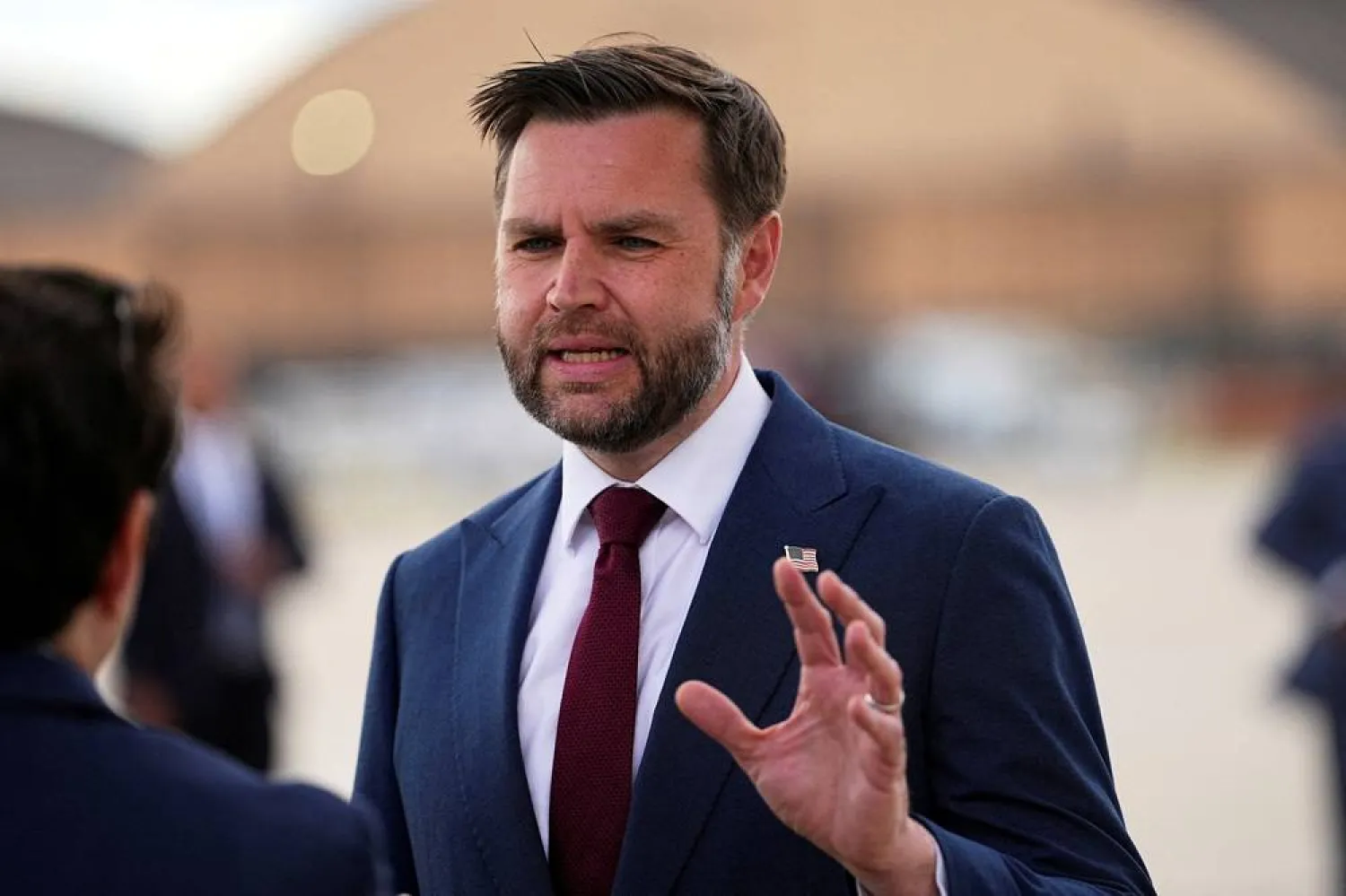
US Vice President JD Vance speaks with the media as he arrives at Joint Base Andrews, Maryland, US, May 28, 2026. (Reuters)
TT

Vance Says Funds Won’t Be Transferred to Iran in Exchange for Signing Deal to Halt War

US Vice President JD Vance speaks with the media as he arrives at Joint Base Andrews, Maryland, US, May 28, 2026. (Reuters)

US Vice President JD Vance said on Monday that no funds would be released to Iran in exchange for signing an agreement to halt the war and open the Strait of Hormuz and that text of the framework deal would be shared this week.

In an interview on ABC's "Good Morning America" program, Vance said signing the memorandum of understanding with Iran, expected to take place in Switzerland on Friday, would not trigger the release of frozen assets.

Vance said the agreement was already signed digitally on Sunday and no funds were released.

"There's been no money released, and that won't change," ‌he said.

Vance said ‌Iran would receive money only if it took verified steps ‌to ⁠eliminate its stockpile ⁠of highly enriched uranium.

"If we see the Iranians making, for example, taking action to eliminate their stockpile of enriched material, then yes, sanctions relief will follow. If we see the Iranians taking action to allow the kind of verification regime that we need to see to know that they're not going to build a nuclear weapon, yes, sanctions relief will follow," he said.

"If they don't ⁠do the right things, if they don't allow the verification ‌regime, they're never going to have ‌the money to rebuild their nuclear program to begin with."

In an interview on CNBC on ‌Monday, Vance also said the United States expects the economically vital waterway ‌would be open without tolls.

"Our expectation is that the Strait is going to be opened in a toll-free way for the long-term," he said.

"That's the sort of thing that we're going to figure out in these technical negotiations. You know that there ‌are a lot of very important details to figure out that we're actually going to sit at the table ⁠and discuss together ⁠and figure out a path forward."

The US and Iran said they had agreed terms to end their war and reopen the strait, news that brought relief to markets, although the pact may hinge on an end to hostilities in Lebanon and defers talks on Tehran's nuclear program.

While still a framework, the deal marked the biggest breakthrough toward resolving the conflict that has killed thousands and upended energy markets since it began with joint US-Israeli strikes on Iran in February.

Vance told CNBC that Iran's foreign minister and House speaker will represent Iran at the signing in Switzerland on Friday and many details of the deal are still to be sorted out. He did not say who would represent the US at the signing.


NATO Chief Pledges to Defend Poland after Russian Missile Incursion

FILE PHOTO: NATO Secretary General Mark Rutte speaks to the media on the day of the Ukraine Defense Contact Group meeting at NATO headquarters in Brussels, Belgium,  November 17, 2026. REUTERS/Stephanie Lecocq/File Photo
FILE PHOTO: NATO Secretary General Mark Rutte speaks to the media on the day of the Ukraine Defense Contact Group meeting at NATO headquarters in Brussels, Belgium, November 17, 2026. REUTERS/Stephanie Lecocq/File Photo
TT

NATO Chief Pledges to Defend Poland after Russian Missile Incursion

FILE PHOTO: NATO Secretary General Mark Rutte speaks to the media on the day of the Ukraine Defense Contact Group meeting at NATO headquarters in Brussels, Belgium,  November 17, 2026. REUTERS/Stephanie Lecocq/File Photo
FILE PHOTO: NATO Secretary General Mark Rutte speaks to the media on the day of the Ukraine Defense Contact Group meeting at NATO headquarters in Brussels, Belgium, November 17, 2026. REUTERS/Stephanie Lecocq/File Photo

NATO Secretary General Mark Rutte on Saturday pledged to defend Poland after Russian missiles landed in the country, with the alliance's top decision-making body set to discuss the incident.

Warsaw said two Russian missiles hit its southeast on Friday, accusing the Kremlin of "intentional provocation" near where thousands of European troops are holding exercises.

Rutte, on a visit to Warsaw, said the alliance would determine what happened in the incident to identify any vulnerabilities, and pledged to defend Polish territory, in remarks to Polish media.

On Friday Rutte condemned what he said were "grave violations", calling the incident "clearly dangerous".

NATO's main political decision-making body will discuss the incident in Brussels on Monday "as part of regular consultations among allies", an alliance official told AFP.

Poland will be represented by its deputy defense minister, Pawel Zalewski, according to Polish public radio.

Polish Prime Minister Donald Tusk said on Friday that Warsaw would ask NATO to strengthen its detection and surveillance systems over Poland, as Russia frequently launches waves of missiles and drones at western Ukraine, near the Polish border.

The Institute for the Study of War (ISW), a US think tank, said it believed Russia "intentionally fired missiles and drones into Polish airspace".

The gesture was timed to coincide with exercises by the "Coalition of the Willing" taking place in Poland, the ISW said.

"Coalition of the Willing" refers to a group of Ukraine's European backers who are prepared to send peacekeeping troops to the country.


French Protesters Rally Again Over Living Costs, Public Services

Protesters carry banners and placards during an anti-government demonstration in Paris, France, 21 November 2026. EPA/MOHAMMED BADRA
TT

French Protesters Rally Again Over Living Costs, Public Services

Protesters carry banners and placards during an anti-government demonstration in Paris, France, 21 November 2026. EPA/MOHAMMED BADRA

France saw nationwide demonstrations for the sixth weekend in a row on Saturday, as protesters took to the streets to demand better public services and express anger over the rising cost of living and inequality.

The protest movement, sparked in mid-September by high school students demanding better learning conditions, fueled a nationwide campaign against soaring prices, inadequate public services and police brutality that spread across Europe, even as turnout in France has dwindled.

Several thousand people gathered in central Paris's Place de la Republique square in a festive atmosphere, with musicians playing, food trucks, costumes and homemade signs.

Flags and vests of trade unions and left-wing parties mingled with those of student organizations and the Yellow Vest movement, which is marking its anniversary eight years after it rattled President Emmanuel Macron's government.

On Friday crowds rallied across multiple countries to vent anger over issues from high living costs to military spending and the climate crisis, ramping up pressure on political leaders they accuse of ignoring the concerns of young people.

"I want to live, not survive," read one placard held by a protester in Paris.

Another read: "No to the license to kill", in reference to a law adopted by France's parliament on Friday increasing protection for law enforcement officers using their weapons -- heavily criticized by the left.

The protests have been largely peaceful but have seen fringe violence and accusations of police brutality.

At least 31 people have been seriously injured by security forces since the protests began, according to a count by AFP based on direct testimonies, victims' lawyers and NGO records. Authorities have not provided an official toll.

Last month, some rallies across France degenerated into clashes between riot police and demonstrators, with shops looted and buildings attacked and torched.

Interior Minister Laurent Nunez had warned regional authorities to be "particularly vigilant regarding the groups most hostile to law enforcement" after the police law was adopted.

Protesters marched on Saturday in cities from Lille in the north to Marseille in the south and Lyon in the southeast.

Clashes broke out on the sidelines of some protests as people set fire to vehicles and bins and police fired tear gas.

The interior ministry had said the demonstrations began in a "generally calm" atmosphere and turnout was "down compared to previous days".


Qatari Delegation Visits Tehran, Pezeshkian Admits that Iran Faces Tough Economic War

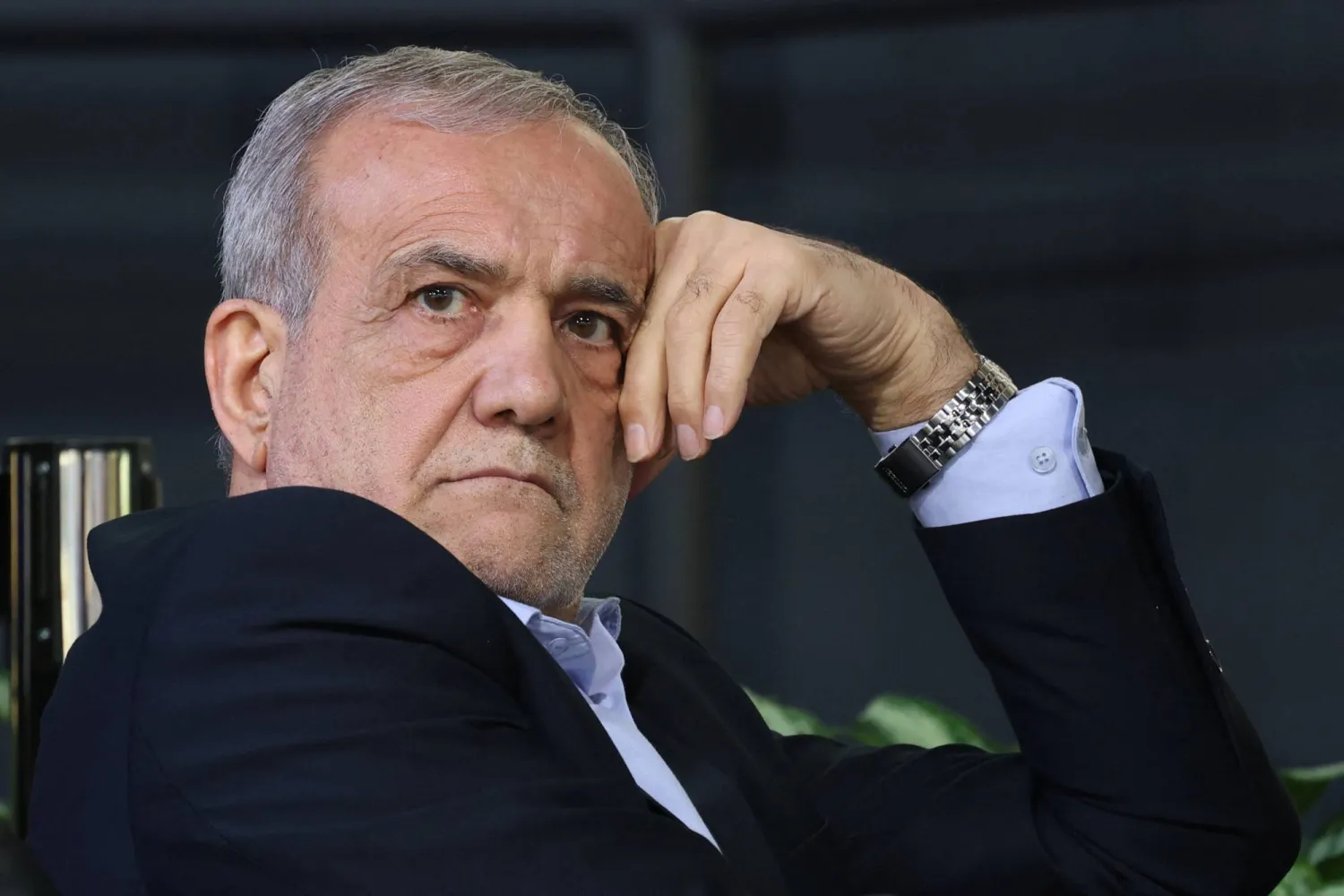
Iranian President Masoud Pezeshkian waits to make a speech during the UN Climate Change Conference (COP31) in Antalya, November 11, 2026. REUTERS/Murad Sezer
TT

Qatari Delegation Visits Tehran, Pezeshkian Admits that Iran Faces Tough Economic War

Iranian President Masoud Pezeshkian waits to make a speech during the UN Climate Change Conference (COP31) in Antalya, November 11, 2026. REUTERS/Murad Sezer

A Qatari delegation held talks in Tehran on Friday night, an Iranian official said, as diplomatic efforts continued to end the war.

Iranian Deputy Foreign Minister Kazem Gharibabadi said Tehran remained in contact with mediators.

"We are in contact with mediators, including the Qataris, both in person and virtually, and are holding ⁠the necessary discussions to see whether another opportunity can be given to diplomacy," Gharibabadi said, according to the semi-official Tasnim news agency.

Gharibabadi echoed remarks by Iranian Foreign Minister Abbas Araghchi in an interview with the state-owned Iran newspaper that Tehran still hoped diplomacy could end its war with the United States.

US President Donald Trump has said Iran wanted a deal, but one that was not acceptable to him.

In an interview published on Saturday by the state-run Iran Daily newspaper, Araghchi reiterated that Tehran would not allow its stockpiles of enriched uranium to leave the country.

"I believe a solution can be found, but we have clear red lines: the material will not be taken out of the country," he said.

Meanwhile, Iranian President Masoud Pezeshkian said on Saturday that Iran is facing a tough economic war.

“We are in a silent war, which is much more difficult than a war in which missiles are launched and destruction is carried out.

“It is an economic war that you, the economic activists, are dealing with, and it is not a simple war,” Pezeshkian told a meeting of investors and producers, according to Iran’s state-run news agency IRNA.