Wildlife Groups: Three Wild Bears Killed in Greece

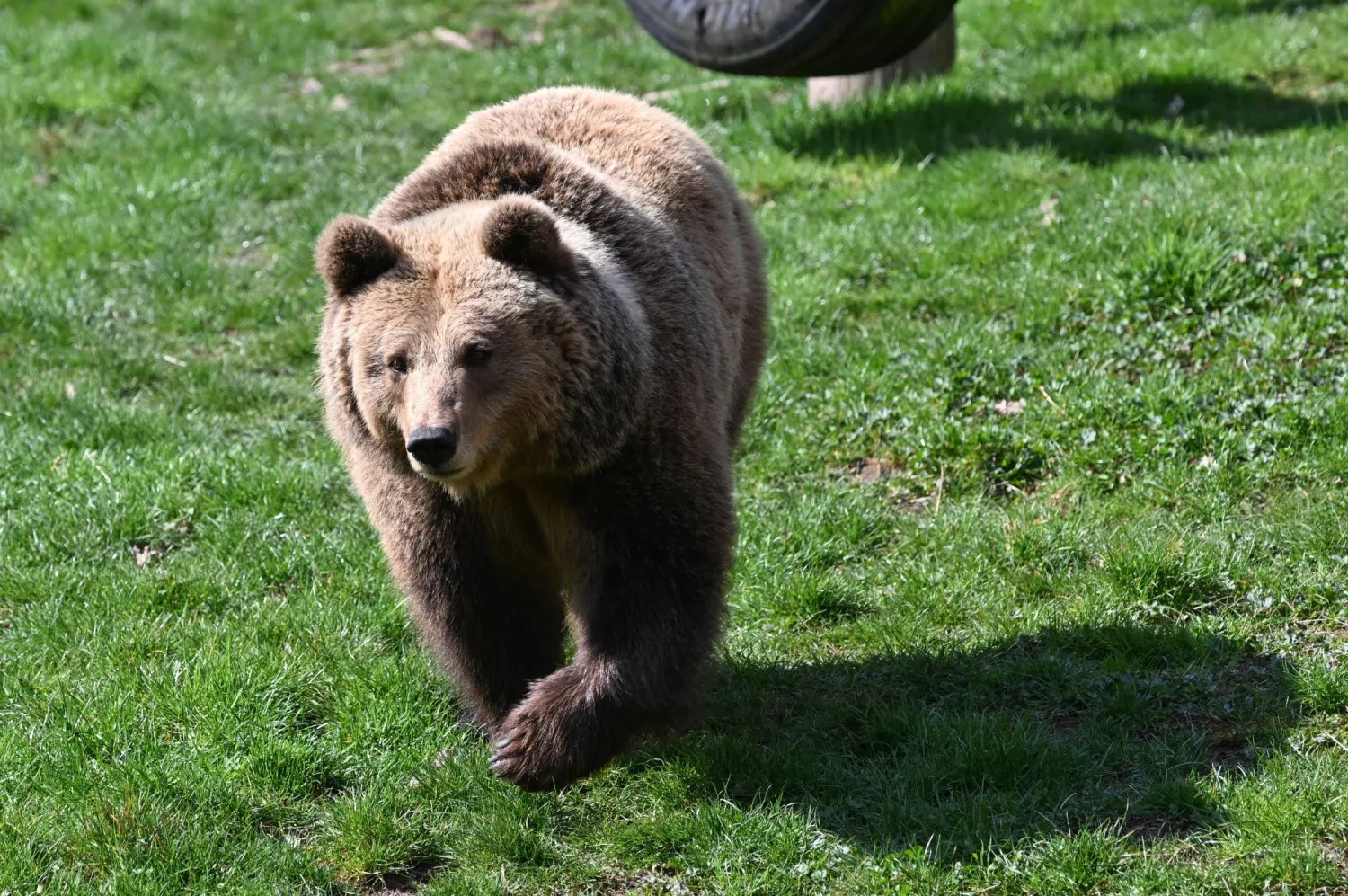
FILED - 27 March 2025, Baden-Württemberg, Cleebronn: FILE PHOTO - A brown bear is photographed in an enclosure at the Tripsdrill Wildlife Paradise. Photo: dpa
TT

Wildlife Groups: Three Wild Bears Killed in Greece

FILED - 27 March 2025, Baden-Württemberg, Cleebronn: FILE PHOTO - A brown bear is photographed in an enclosure at the Tripsdrill Wildlife Paradise. Photo: dpa

Three wild bears were killed in Greece in two days, a couple of the country's leading wildlife groups said Monday, including a young female rewilded just weeks ago.

The Arcturos and Kallisto organizations said two of the bears had been found with gunshot wounds.
The third -- named Circe when she was rescued and nurtured for a year by Arcturos -- apparently ate poisoned bait.

They were found dead on Friday and Saturday.

All three incidents occurred in the Western Macedonia region, an area where local farmers have repeatedly complained of damage to their crops and incursions by the animals into inhabited areas.

Arcturos said Circe -- who was rewilded in late May after being found in a coma last August at the age of seven months -- had been left unburied for three days.

"Three dead bears in two days are not 'unfortunate incidents," AFP quoted the group as saying in a statement.

"They are the most tragic proof that the problem remains without any meaningful response, and that the operational readiness of the competent (state) agencies continues to show serious shortcomings," it said.

"A poisoned animal that remains in the field can be a secondary source of poisoning for other wild or domestic animals," Arcturos said.

Greece is home to over 700 wild brown bears, up from fewer than 500 a decade ago, the organizations said. It remains a protected species.


Stolen Felines Reunited with Owners After Vietnam Cat-Meat Bust

This handout picture taken on June 15, 2026 and released on June 16 by Humane World for Animals Vietnam shows people looking at cats seized by police at a facility in Ho Chi Minh City. (Handout / Humane World for Animals Vietnam / AFP)
TT

Stolen Felines Reunited with Owners After Vietnam Cat-Meat Bust

This handout picture taken on June 15, 2026 and released on June 16 by Humane World for Animals Vietnam shows people looking at cats seized by police at a facility in Ho Chi Minh City. (Handout / Humane World for Animals Vietnam / AFP)

More than 40 abducted cats have been reunited with owners after Vietnam police busted a feline theft ring and rescued 400 pets destined to be slaughtered for food, an animal rights group said Tuesday.

Nine people were arrested last week in connection with the "criminal group specializing in stealing and collecting cats", according to the official newspaper of the Ho Chi Minh City police.

Authorities clawed back more than 400 live cats and 80 dead ones preserved on ice, the newspaper said. They seized another 21 cats from a separate facility.

Consumption of dogs and cats is legal in Vietnam, where many restaurants openly advertise the meat -- however vendors are required to obtain certificates showing the origin of the animals.

Police said they swooped on the gang after responding to rampant pet thefts in Ho Chin Minh City, and the suspects confessed to luring and trapping the cats over three years across southern Vietnam.

At least 40 of the pinched pets have been reunited with their owners, Humane World for Animals said in a Tuesday statement, praising police for "decisive action that has saved the lives of so many animals".

However, it said around 100 of the rescued cats "later perished due to what they have endured".

"While efforts are continuing to reunite stolen cats with their families, our main concern is for the cats who remain at the police station as evidence during the prosecution," Humane World for Animal's Karanvir Kukreja said, according to the statement.

He said the organization had donated food and was arranging the delivery of fans to keep the pets from overheating.

Ho Chi Minh City police did not immediately respond to AFP's request for comment.


Brazilian Amazon Waters Recover after Two Years of Drought

FILE - People maneuver by boat through the low water levels of a tributary that connects with the Amazon River, in Isla de la Fantasia, on the outskirts of Leticia, Colombia, Oct. 20, 2024. (AP Photo/Ivan Valencia, File)
TT

Brazilian Amazon Waters Recover after Two Years of Drought

FILE - People maneuver by boat through the low water levels of a tributary that connects with the Amazon River, in Isla de la Fantasia, on the outskirts of Leticia, Colombia, Oct. 20, 2024. (AP Photo/Ivan Valencia, File)

Water levels in the Brazilian Amazon recovered in 2025 following two consecutive years of severe drought, but long-term prospects remain "concerning," a monitoring network said in a report published Tuesday.

Brazil holds about 12 percent of the planet's freshwater, nearly two-thirds of which is found in the Amazon region.

The Amazon recorded water levels 2.6 percent above its historical average in 2025 due to increased rainfall compared to the previous year, according to MapBiomas, a network of organizations that tracks changes in land cover and use.

Despite the rebound, the network warned the situation "remains concerning" as severe weather events become increasingly common, AFP reported.

"Extreme weather events are becoming increasingly frequent, and there are signs of instability in the hydrological regime, driven by both climate change and changes in land use," said Bruno Ferreira of the MapBiomas Amazon team.

Brazil's vast territory includes several different biomes, including forests, wetlands and grasslands.

The report noted Brazil's Pantanal -- the wetland region south of the Amazon Basin -- ended 2025 with water levels 56 percent below its historical average.

Although conditions improved compared to 2024 -- a year that saw the region's most severe drought in decades -- the wetlands region remained the country's most stressed ecosystem.

The arrival of El Nino, a natural climate occurrence that warms surface temperatures in the central and eastern equatorial Pacific Ocean, typically causes droughts in parts of the Amazon and threatens to worsen the situation.

The climate phenomenon began last week and could become one of the most intense on record by the end of the year, according to the US National Oceanic and Atmospheric Administration.


Scientists Identify 64,000 sq Miles of Coral Reef Capable of Surviving Climate Crisis

FILE PHOTO: Fish swim at a coral reef inside a 'Rahui' or restricted area in Teahupo'o, Tahiti, French Polynesia, August 4, 2024.  REUTERS/Carlos Barria/File Photo
FILE PHOTO: Fish swim at a coral reef inside a 'Rahui' or restricted area in Teahupo'o, Tahiti, French Polynesia, August 4, 2024. REUTERS/Carlos Barria/File Photo
TT

Scientists Identify 64,000 sq Miles of Coral Reef Capable of Surviving Climate Crisis

FILE PHOTO: Fish swim at a coral reef inside a 'Rahui' or restricted area in Teahupo'o, Tahiti, French Polynesia, August 4, 2024.  REUTERS/Carlos Barria/File Photo
FILE PHOTO: Fish swim at a coral reef inside a 'Rahui' or restricted area in Teahupo'o, Tahiti, French Polynesia, August 4, 2024. REUTERS/Carlos Barria/File Photo

Scientists have identified nearly 166,000 sq km (64,000 sq miles) of coral reefs that are capable of surviving and recovering from climate change, three times more than previously estimated, research showed on Tuesday.

The world's coral reefs, which sustain a quarter of all marine life, have come under severe stress as a result of violent tropical storms, pollution and mass "bleaching" events caused by soaring ocean temperatures, with some scientists warning that they are facing irreversible decline.

But an analysis of 45,000 coral surveys together with decades of climate and ocean data has identified climate-resilient ⁠reefs across 71 ⁠countries and 100 territories, including in parts of the Caribbean and the Pacific and Atlantic oceans that have not previously been recognized.

"Coral reefs are often framed as ecosystems beyond saving," said Emily Darling, director of coral conservation at the Wildlife Conservation Society (WCS) and one of the report's ⁠authors.

"This research shows otherwise: we know where the hope is and what we need now is political will."

Countries are currently drawing up action plans aimed at bringing 30% of their land and marine environments under formal protection by the end of the decade, a target known as "30 by 30", and the new research will enable governments to consider the location of coral reefs in their planning.

"Only 28% of the reefs currently fall within protected and conserved ⁠areas, so ⁠the opportunity is clear, and so is the urgency, especially as we face an upcoming super El Nino event," Reuters quoted Darling as saying at a briefing.

Stacy Jupiter, co-author and executive director of the WCS's Global Marine Program, said the data could give governments the information required to decide where limited funds are deployed and give the more resilient reefs the best possible chance of surviving.

"In certain cases, where reefs are below certain benchmarks for ecosystem function, it may be a case of triage, where we may need to leave those places," she said.