
US-Iran Deal Promises End to War but How It Will Work Remains Unclear

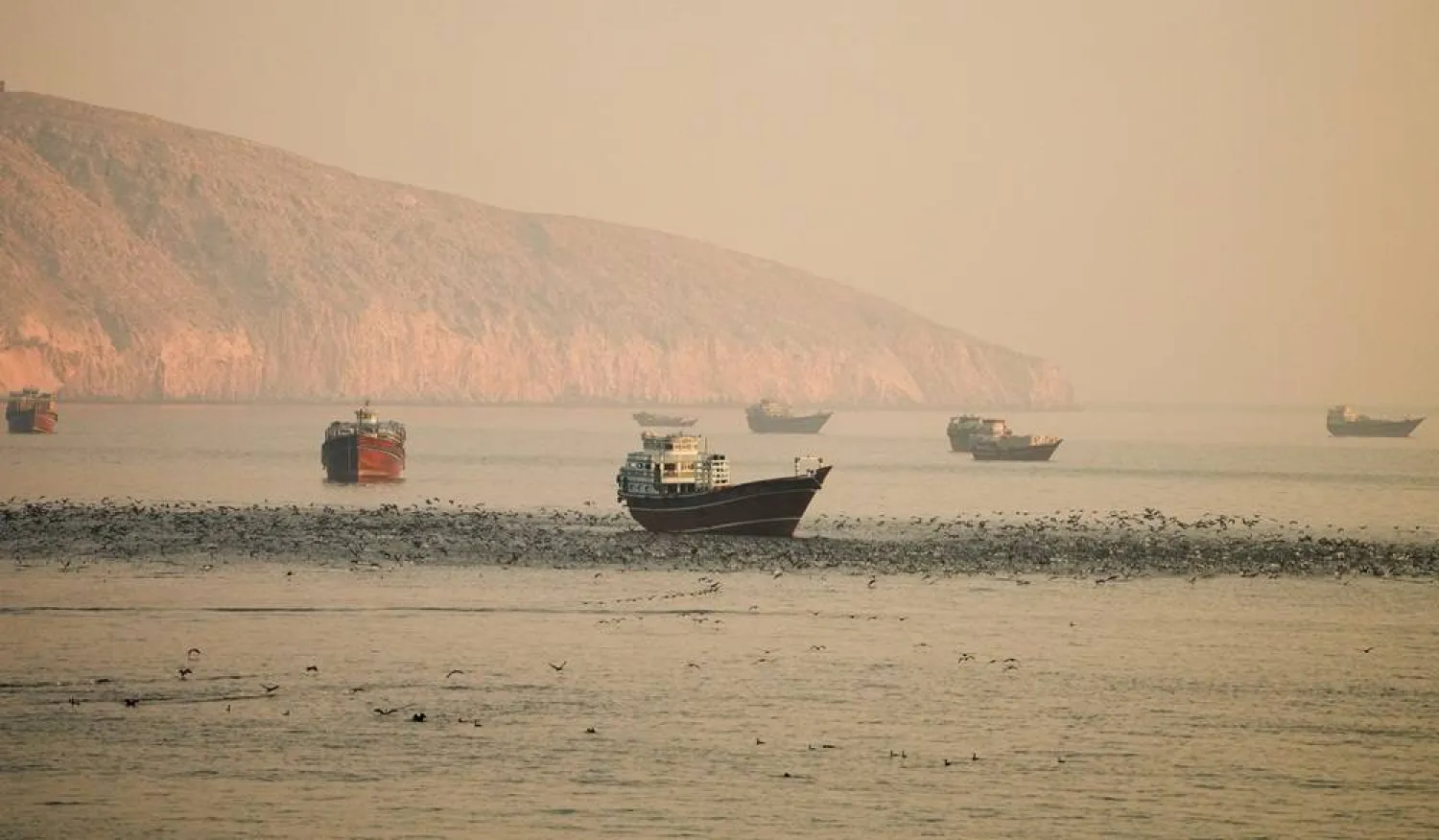
 Vessels at the Strait of Hormuz, as seen from Musandam, Oman, June 16, 2026. (Reuters)
Vessels at the Strait of Hormuz, as seen from Musandam, Oman, June 16, 2026. (Reuters)
TT

US-Iran Deal Promises End to War but How It Will Work Remains Unclear

 Vessels at the Strait of Hormuz, as seen from Musandam, Oman, June 16, 2026. (Reuters)
Vessels at the Strait of Hormuz, as seen from Musandam, Oman, June 16, 2026. (Reuters)

Doubts swirled around the US-Iran interim deal to end the war in the Middle East as shippers said it could take weeks for confidence to return after any reopening of the Strait of Hormuz, and fundamental questions remained unanswered.

US President Donald Trump said on Monday a preliminary agreement to end the conflict had been signed by the US and Iran, although details have yet to be made public and both countries said a permanent truce was yet to be negotiated.

The interim agreement would extend a tenuous ceasefire announced in April by another 60 days and reopen the Strait of Hormuz, which Iran has effectively blocked since the US and Israel attacked Iran in February.

Negotiators would address difficult issues like the future of Iran's nuclear program during the next phase of talks to be held during the 60-day window.

Two other issues that Trump and Israeli Prime Minister Benjamin Netanyahu used to justify the war - ending Iran's support for regional armed proxies and curbing its missile program - are not thought to be on the agenda for those negotiations.

"The deal's all signed," Trump said after he arrived ‌in France for a ‌summit of the G7 group of big economies. He said Vice President JD Vance would attend ‌a formal ⁠signing ceremony in Geneva ⁠on Friday.

Oil prices fell on Monday to their lowest level since March 10, shortly after the blockade of the Strait of Hormuz, a narrow waterway between Iran and Oman, cut off one-fifth of the world's oil trade.

But on Tuesday the price steadied, reflecting a more cautious stance, with Brent crude futures sliding 0.3% to $82.96 a barrel in Asian trading hours.

To be sure, the deal is the most significant step yet to resolve the conflict, which has killed at least 7,000 people, mostly in Iran and Lebanon, and upended global energy markets.

Iranian President Masoud Pezeshkian wrote on social media Monday that the interim agreement was an "important step" toward stopping the fighting but noted a final deal for a lasting truce "has yet to take shape."

Vance told CNN that the signed memorandum ⁠was a "very general document." Details would be released over the next two days, US officials said.

Vance said it ‌included "a very significant sanctions relief package" for Iran. He later told Fox News that Trump ‌may decide to release the agreement before Friday.

US officials, speaking on condition of anonymity, ‌said Iran would have to satisfy US demands never to build a nuclear weapon and cut off support for armed groups like Hezbollah in Lebanon in order to get benefits.

Iranian officials, who have always denied intending to build a nuclear weapon, say they have given up little by agreeing to resume diplomatic discussions over Iran's uranium enrichment program that were interrupted by the war.

REBUILDING CONFIDENCE

While the latest agreement could lift Iran's chokehold on the Strait of Hormuz, that only restores the prewar status ‌quo, and shippers say traffic will only restart once they are satisfied they can transit safely.

The chief executive of Japan's Mitsui O.S.K. Lines, a shipping giant with a fleet of more than 900 vessels ⁠including tankers, told the Financial Times shipowners ⁠would not sail through the Strait of Hormuz until they were confident the US-Iran deal was "material".

"Given the experiences in the last couple of months, I think it’s reasonable to assume that it may take at least a couple of weeks or if not a month," Tamura told the FT before Trump announced the deal.

The agreement between Washington and Tehran being finalized had not changed Tamura's view, the FT report said.

Iran has suggested it will retain control with Oman over the strait. The US said the strait will be open toll-free for 60 days and it would expect that provision to be part of a final agreement.

Trump said in a Truth Social post that ships loaded with oil were starting to move out of the strait, "going along the Southern 'Highway,' which is totally safe, secure, and pristine".

NETANYAHU 'STOOD FIRM'

The fighting between US ally Israel and the Iran-allied Hezbollah group in Lebanon, which has uprooted 1.2 million people, remains another key sticking point.

Iran has said the deal requires a full cessation of hostilities there, but Netanyahu said Israel would keep its forces in southern Lebanon and would retain the right to respond to Hezbollah attacks.

"Iran wanted us to withdraw from it, but I stood firm," he said on Monday at a news conference. Israel has not directly participated in the peace talks with Iran.

A US official said an Israeli withdrawal from Lebanon, which it invaded in March after Hezbollah joined the war, was not a condition of the deal.

Iranian Foreign Minister Abbas Araghchi said Israeli attacks must stop immediately.


Trump Says He Does Not Know if Iran Is Going to ‘Give Up Yet’

 Cargo ships are anchored in the Strait of Hormuz off Bandar Abbas, Iran, before sunrise Monday, Sept. 28, 2026. (Amirhosein Khorgooi/ISNA via AP)
Cargo ships are anchored in the Strait of Hormuz off Bandar Abbas, Iran, before sunrise Monday, Sept. 28, 2026. (Amirhosein Khorgooi/ISNA via AP)
TT

Trump Says He Does Not Know if Iran Is Going to ‘Give Up Yet’

 Cargo ships are anchored in the Strait of Hormuz off Bandar Abbas, Iran, before sunrise Monday, Sept. 28, 2026. (Amirhosein Khorgooi/ISNA via AP)
Cargo ships are anchored in the Strait of Hormuz off Bandar Abbas, Iran, before sunrise Monday, Sept. 28, 2026. (Amirhosein Khorgooi/ISNA via AP)

President Donald Trump said on Tuesday he does not know if Iran is going to "give up yet" but cast the country as doing "very poorly" in its war with the US.

"I don't know if they are going to give up ‌yet but ‌they'll give up," Trump told reporters.

"They ‌are ⁠doing very poorly," ⁠he added.

A US blockade has cut Iran's financial lifeline - oil exports, and economic costs of the war have made life tougher for Iranians.

Iran's president told the UN General Assembly last ⁠week that Tehran would never surrender to ‌US pressure.

The rise in oil prices due to the ‌war has also become a major issue ‌for Trump's Republican Party heading into the November US midterm elections.

The war has led to the blockade of the Strait of ‌Hormuz, which carried a fifth of global supplies of crude oil ⁠and ⁠LNG before the conflict.

Trump has offered shifting goals and timelines for the Iran war that began on February 28 when the US and Israel attacked Iran and Tehran responded with its own strikes on Israel and Gulf states.

US-Israeli strikes on Iran and Israeli attacks on Lebanon have killed thousands and displaced millions.


Ceuta Mass Migrant Crossing Handling ‘Responsibility of All EU,’ Spanish King Says

Migrants wait for food distribution to begin on El Trampolin Beach in the Spanish enclave of Ceuta, Monday, Sept. 28, 2026. (AP)
TT

Ceuta Mass Migrant Crossing Handling ‘Responsibility of All EU,’ Spanish King Says

Migrants wait for food distribution to begin on El Trampolin Beach in the Spanish enclave of Ceuta, Monday, Sept. 28, 2026. (AP)

European countries should have shown ‌more solidarity and offered more support to Spain after the mass arrival in Ceuta of tens of thousands of migrants, Spanish King Felipe VI said on Tuesday during a gala dinner to mark a visit by French President Emmanuel Macron.

In an unusually outspoken address reflecting the depth of the crisis facing Spain following the Ceuta border rush that took place two months ago on Wednesday, the king said what happened in the enclave on the North African coast was "unacceptable" and ‌generated an enormous ‌security, public order and humanitarian challenge.

"It's a ‌situation ⁠that ought to ⁠have as a consequence a reinforcement of collaboration between member states in resources and cooperation," he said. "The European countries that suffer the most pressure from being on the external borders of the European Union cannot alone bear a responsibility that also belongs to everyone."

The king spoke during a dinner at the Royal ⁠Palace in Madrid also attended by Spain's Socialist ‌prime minister, Pedro Sanchez, a rare ‌European proponent of the benefits of migration who launched a mass ‌regularization of irregular migrants that concluded in the summer.

Sanchez, however, ‌has proposed possible changes to asylum rules to return arrivals more quickly, which NGOs and lawyers say would violate human rights conventions.

Asked in a news conference about the plans, territorial policy minister Angel Victor Torres ‌said the government was "analyzing the possibility" of a legislative amendment but that it was "not easy" ⁠due to ⁠questions of international law.

Following the mass crossing of 72,000 migrants into Ceuta on July 30, European Commission President Ursula von der Leyen commended Spain's swift action in returning most arrivals to Morocco. Other leaders were less understanding, however, with Italy suspending the European Union's border-free Schengen arrangements with Spain for one month.

European Migration Commissioner Magnus Brunner unveiled a plan on Tuesday to strengthen EU border controls in the wake of Ceuta.

The plan, which requires the approval of member states, would strengthen the mandate of Frontex, the EU border protection agency, and give it a standing corps ready for immediate deployment.


Trump Says He Is Embarking on 32 Days of Campaign Travel Before November Elections

 President Donald Trump speaks with reporters outside the West Wing of the White House, Tuesday, Sept. 29, 2026, in Washington. (AP)
President Donald Trump speaks with reporters outside the West Wing of the White House, Tuesday, Sept. 29, 2026, in Washington. (AP)
TT

Trump Says He Is Embarking on 32 Days of Campaign Travel Before November Elections

 President Donald Trump speaks with reporters outside the West Wing of the White House, Tuesday, Sept. 29, 2026, in Washington. (AP)
President Donald Trump speaks with reporters outside the West Wing of the White House, Tuesday, Sept. 29, 2026, in Washington. (AP)

US ‌President Donald Trump said on Tuesday that he plans 32 days of campaign travel ahead of the November midterm elections, putting himself and his record at the center of Republicans' fight to hold on to Congress as polls show Democrats poised for gains.

The November 3 elections will decide whether Republicans retain control of the US House of Representatives and the Senate or whether Democrats ‌gain the ‌power to shape Trump's final ‌two years ⁠in office, including ⁠through investigations into his administration.

Many polls show Democrats leading in key House races and challenging for control of the Senate as well, as Americans fret about high gasoline prices and Trump's ongoing war with Iran.

But Trump, speaking to reporters outside ⁠the White House, projected confidence about ‌his party's prospects and ‌dismissed signs that some Republicans are distancing themselves from ‌him in the final weeks of the campaign.

"You ‌love me, and I love them," he said, with Republican House Speaker Mike Johnson standing alongside him.

Trump said he will soon embark on what he ‌described as "literally a 32-day tour" of various states, including stops in Texas and ⁠Ohio ⁠this week.

"Just so you understand, they all want me to go. I'm one person. They all want me to go campaign," he said.

The flurry of campaigning comes later than the president's advisers initially had envisioned, after a White House calendar dominated for much of the year by foreign policy and the Iran conflict.

Some Republican candidates have welcomed Trump's involvement, while others have emphasized local issues and their own records as they navigate difficult political terrain.