
Iran Says Talks on Final US Deal to Begin This Week

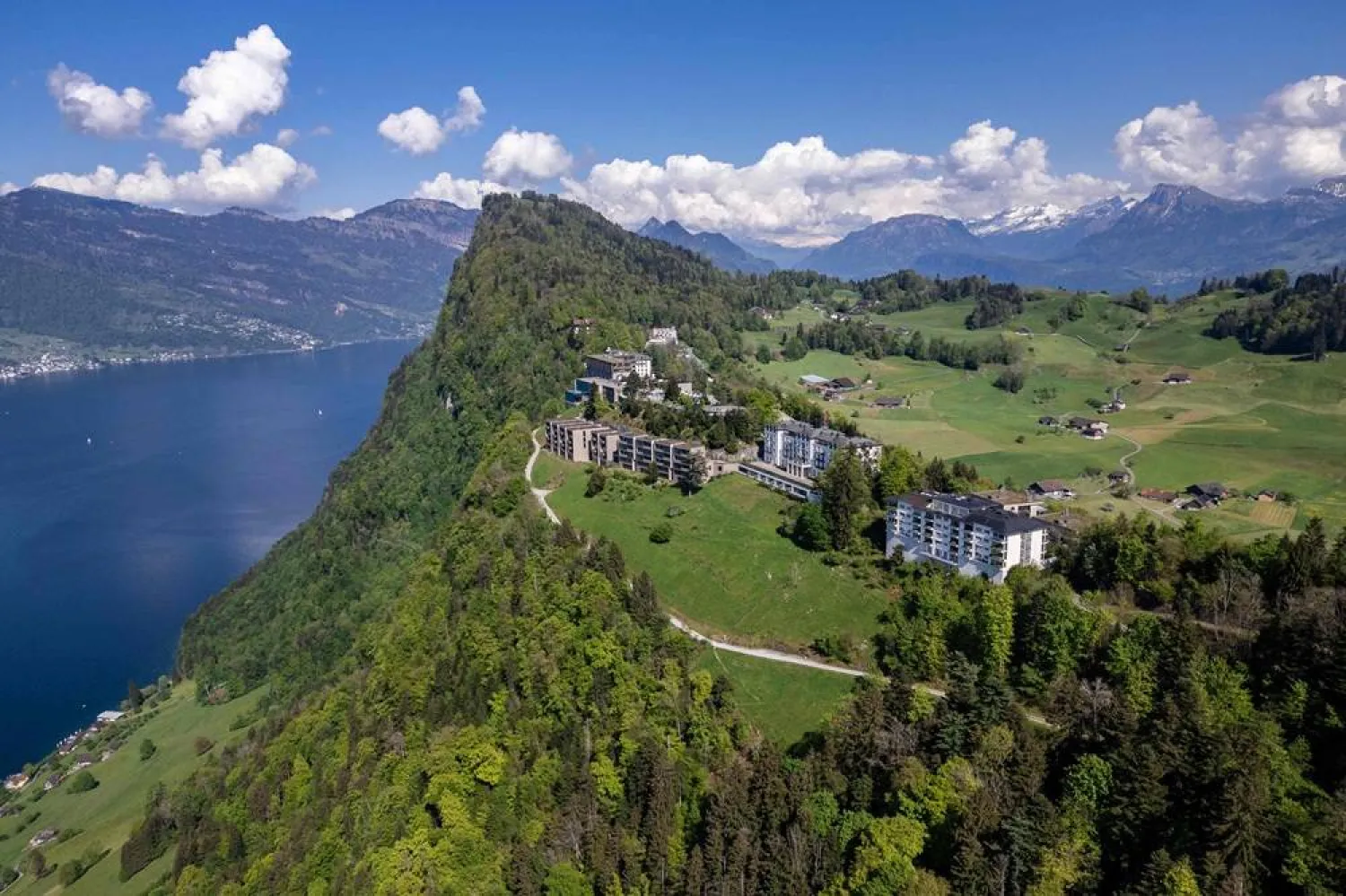
An aerial picture taken on May 10, 2024 shows the Burgenstock resort above Lake Lucerne. (AFP)
TT

Iran Says Talks on Final US Deal to Begin This Week

An aerial picture taken on May 10, 2024 shows the Burgenstock resort above Lake Lucerne. (AFP)

Iran on Tuesday said talks with the United States on its nuclear program and sanctions relief would likely begin later this week, as President Donald Trump's announcement that the Strait of Hormuz would reopen sent oil prices tumbling. 

Officials say negotiations over a final deal will take place within a 60-day window after the memorandum of understanding to end nearly four months of war triggered by US-Israeli strikes on Iran is physically signed. 

"Likely on Friday, at a location to be determined... a new round of negotiations between Iran and the United States to reach a final agreement will begin," Iranian Foreign Minister Abbas Araghchi said. 

"In the final agreement, decisions will be made on the nuclear issues and the lifting of sanctions." 

According to Iran's deputy foreign minister Majid Takht-Ravanchi, Iran's top negotiator Mohammad Bagher Ghalibaf will attend the signing in Switzerland, which Bern said would take place at the luxury Burgenstock resort overlooking Lake Lucerne. 

The mountainside venue "was proposed by Pakistani and Qatari mediators, as well as by the US and Iran," the Swiss foreign ministry told AFP. 

The US side will be represented by Vice President JD Vance, who said Trump might also attend. 

The developments came after Trump said an Iranian blockade on the crucial Hormuz strait oil and gas route would be fully lifted by Friday, which would be a major boost to the global economy. 

"Ships are starting to move, many loaded up with Oil, out of the Strait of Hormuz," Trump said Monday. 

Optimism over the reopening of Hormuz has sent the price of the international benchmark Brent North Sea crude tumbling below $80 a barrel, a three-month low. 

The US had, in retaliation, imposed its own blockade on Iranian ports. 

Iranian state television said Iranian oil tankers and other vessels had resumed shipping following the deal, with Takht-Ravanchi saying the US blockade "has been lifted prior to the formal signing". 

Sporadic episodes of violence since an April ceasefire had threatened a deal, but weeks of indirect negotiations mediated by Pakistan and Qatar built momentum for an interim agreement. 

- 'Powerful document' - 

Yet a comprehensive agreement on Iran's nuclear ambitions and Western sanctions remains elusive. 

Washington and close ally Israel are pressing to strip Iran of its stockpile of highly enriched uranium, said to have been buried by US strikes last year, while Iran has insisted on its right to enrichment. 

The agreed framework has however paved the way for talks on those key disputes. 

Asked at the G7 in France when the text would be released, Trump said: "It's a very powerful document, and I want it to be released. So probably pretty soon." 

Iran's ultraconservative newspaper Vatan-e Emrooz praised the agreement as a "Trump surrender document". 

But Araghchi struck a more cautious note. 

"We have a history of broken commitments... we have a history of agreements being torn up. All of this is present in our minds," he said. 

A senior US administration official, however, said Trump, Vance and negotiator Ghalibaf had already signed the text electronically. 

In a flurry of interviews to talk up the deal, Vance said no US taxpayer money would go to Iran under the deal, as Iranian media reported $12 billion of frozen assets would be released. 

Vance told NBC that nuclear inspectors would also be allowed to enter Iran. 

- Lebanon crucial to deal - 

Analysts have warned that the parallel conflict in Lebanon between Israel and Iran-backed Hezbollah presents the biggest threat to the diplomatic thaw. 

Lebanon was pulled into the war in March when Hezbollah launched rockets at Israel after the killing of Iran's supreme leader, prompting Israeli strikes and a ground invasion. 

That theater of the conflict could be "the biggest ultimate spoiler" of the coming negotiations, said Ross Harrison, a senior fellow at the Middle East Institute. 

Lebanon's president and prime minister on Tuesday discussed preparations for a new round of direct talks with Israel scheduled to begin next week, seeking a permanent truce and withdrawal of Israeli troops from the country's south, according to a presidency statement. 

But Israeli figures quickly condemned the US-Iran deal that included Lebanon, and Prime Minister Benjamin Netanyahu pledged that the country's forces would remain in Gaza, Lebanon and Syria "for as long as necessary". 

Araghchi however said ending the war on all fronts including Lebanon was "the most important" issue in the peace deal. 

"Ending the war in Lebanon is an inseparable part of the complete end of the war". 


Netanyahu Threatens Retaliation if Israel’s Enemies Attack

 Israeli Prime Minister Benjamin Netanyahu delivers a statement to members of the press, in Jerusalem, September 8, 2026. (Reuters)
Israeli Prime Minister Benjamin Netanyahu delivers a statement to members of the press, in Jerusalem, September 8, 2026. (Reuters)
TT

Netanyahu Threatens Retaliation if Israel’s Enemies Attack

 Israeli Prime Minister Benjamin Netanyahu delivers a statement to members of the press, in Jerusalem, September 8, 2026. (Reuters)
Israeli Prime Minister Benjamin Netanyahu delivers a statement to members of the press, in Jerusalem, September 8, 2026. (Reuters)

Prime Minister Benjamin Netanyahu warned on Monday of heavy reprisals on Israel's enemies if they attacked, as he lauded the recent demolition of a Hezbollah tunnel network in southern Lebanon.

Netanyahu said Israel's destruction of Hezbollah positions at the Beaufort castle and Ali al-Taher ridge was a "massive victory" and vowed to "continue to destroy terrorist infrastructure".

"I say to our enemies: If you haven't learned the lesson by now, and you choose to attack us again, you will suffer even heavier blows. There is still work to complete," Netanyahu added, according to a video published by his office.

On Thursday, Israel blew up what it described as a vast network of tunnels under the Ali al-Taher ridge where Hezbollah kept a command center, living quarters and stocks of weapons with which to strike northern Israel and invading Israeli troops.

A huge fireball was seen in the area, with the US Geological Survey recording a tremor equivalent to a 4.1 magnitude earthquake.

The blast came a week after Israeli troops said they had seized the strategic highlands as they solidified control of an occupied "security zone" in southern Lebanon.

Israel said the tunnel network was built over two decades with the help of Hezbollah's patron Iran, whose clerical government has also backed Hamas in the Gaza Strip.

Israel and the United States attacked Iran in late February, sparking the Middle East war.

Hezbollah dragged Lebanon into the wider conflict when it fired rockets at Israel in solidarity with Iran.

Israel has struck south Lebanon during the war and its forces continue to occupy what it calls a "security zone" there.

The Ali al-Taher ridge lies on the edge of Israel's security zone just a few kilometers from the UNESCO-listed Beaufort castle, another strategic site that Israel captured in recent months.

Lebanon and Israel signed a US-sponsored framework agreement in late June that involves the disarmament of Hezbollah, a gradual withdrawal of Israeli forces from Lebanon's south and the deployment of the Lebanese army to the region, starting in test areas known as "pilot zones".


Trump Says Iran Wants a Deal

US President Donald Trump speaks during a meeting with travel executives in the Oval Office at the White House in Washington, DC, US, September 2, 2026. (Reuters)
TT

Trump Says Iran Wants a Deal

US President Donald Trump speaks during a meeting with travel executives in the Oval Office at the White House in Washington, DC, US, September 2, 2026. (Reuters)

US President Donald Trump said on Monday that Iran wanted to reach a deal with Washington, signaling a possible diplomatic opening as fighting across the Middle East widened and threatened global oil supplies.

"The failing Nation of Iran wants to make a deal, quickly and badly. I will determine whether or not the USA will choose to engage - The concept of which we are open to," Trump wrote on Truth Social.

He made his comments came after Gulf Arab states postponed a planned meeting with Iran and as the Houthis have made rapid advances in Yemen, including the capture of Mayyun Island at the mouth of the Red Sea on Friday.

Crude oil prices rose more than 4% on Monday when the market reopened after the weekend's developments, before paring some gains during US morning trade.

The politically sensitive average retail price of diesel in the United States hit a new all-time high above $6.23 a gallon.

Oman had been due to host a meeting on Monday with Iran and Gulf states to discuss ⁠negotiations aimed at reopening Hormuz, the world's most important oil shipping lane, largely closed since the US and ‌Israel attacked Iran at the end of February.

But Oman's Foreign Minister Badr Albusaidi ‌announced overnight that the meeting had been postponed.

Iran meanwhile published a list of 77 ships ‌it said had violated its operating protocols in Hormuz and warned they could face fines, detention or confiscation on future transits.

US Energy Secretary ‌Chris Wright said on Monday the average number of ships crossing the strait covertly with US support was increasing. But independent monitors have suggested oil flows could have dropped off this month since fighting intensified again after a quiet August.

Trump, who attended a golf tournament at one of his resorts in Ireland, said over the weekend he expected the Iran war to end shortly after November's US midterm elections, after which oil prices would "drop like a rock".


Trump Says US Has Tools to Keep AI Safe, Concerns Part of ‘Sick Conspiracy’

 President Donald Trump speaks with reporters while in flight on Air Force One from Shannon, Ireland to Joint Base Andrews, Md., Sunday, Sept. 13, 2026. (AP)
President Donald Trump speaks with reporters while in flight on Air Force One from Shannon, Ireland to Joint Base Andrews, Md., Sunday, Sept. 13, 2026. (AP)
TT

Trump Says US Has Tools to Keep AI Safe, Concerns Part of ‘Sick Conspiracy’

 President Donald Trump speaks with reporters while in flight on Air Force One from Shannon, Ireland to Joint Base Andrews, Md., Sunday, Sept. 13, 2026. (AP)
President Donald Trump speaks with reporters while in flight on Air Force One from Shannon, Ireland to Joint Base Andrews, Md., Sunday, Sept. 13, 2026. (AP)

President Donald Trump said on Monday that the US already has guardrails in place to regulate and prosecute AI companies, appearing to play down concerns expressed by industry leaders over the weekend about misuse of artificial intelligence.

"The only control or 'guardrails' that AI needs is a STRONG AND SMART (High IQ!) PRESIDENT, and the USA has that, in spades!" Trump wrote on Truth Social, adding that China would benefit from the doubt being cast on artificial intelligence development.

"We already ‌have tremendous CRIMINAL ‌and REGULATORY power over these companies! There is ‌a ⁠SICK conspiracy going ⁠on against AI and Data Centers, and the only one that is happy about it is China."

Alarm about the potential harm from AI grew last week when Anthropic researcher Jacob Coxon said he had resigned, and that the "people building AI earnestly believe that it could kill us all by the end of the decade."

AI-related stocks ⁠fell sharply worldwide on Monday after leaders of some ‌of the industry's largest companies called ‌for slowing the pace of the technology's development.

US Senator Mark Warner, a Virginia ‌Democrat and a leader on technology legislation, spoke with Anthropic ‌CEO Dario Amodei and OpenAI CEO Sam Altman about the AI safety concerns over the weekend, his spokesperson told Reuters.

On Saturday, Amodei outlined a three-step framework intended to pace development and create more time to manage its ‌risks. The proposal was immediately endorsed by several other executives at major AI companies, including Elon Musk, ⁠who runs xAI, ⁠and OpenAI CEO Sam Altman.

Trump said the tools intended to keep AI safe had already been used on Amodei.

"The Trump Administration has stopped AI 'people' from doing bad, or potentially bad, 'things,' like Dario (Anthropic!), who is now pretending to be a 'perfect little angel' — and we will continue to do so," Trump said.

The Republican president has resisted stirring concerns about artificial intelligence and has largely embraced AI companies in his second term.

Trump is scheduled to meet with Chinese President Xi Jinping next week in Washington. Reuters previously reported that the two countries were planning a separate meeting in mid-September to discuss the risks of AI, led by lower-level government officials.