


Saudi Arabia Stresses Importance of Restoring Freedom of Navigation in Hormuz Strait

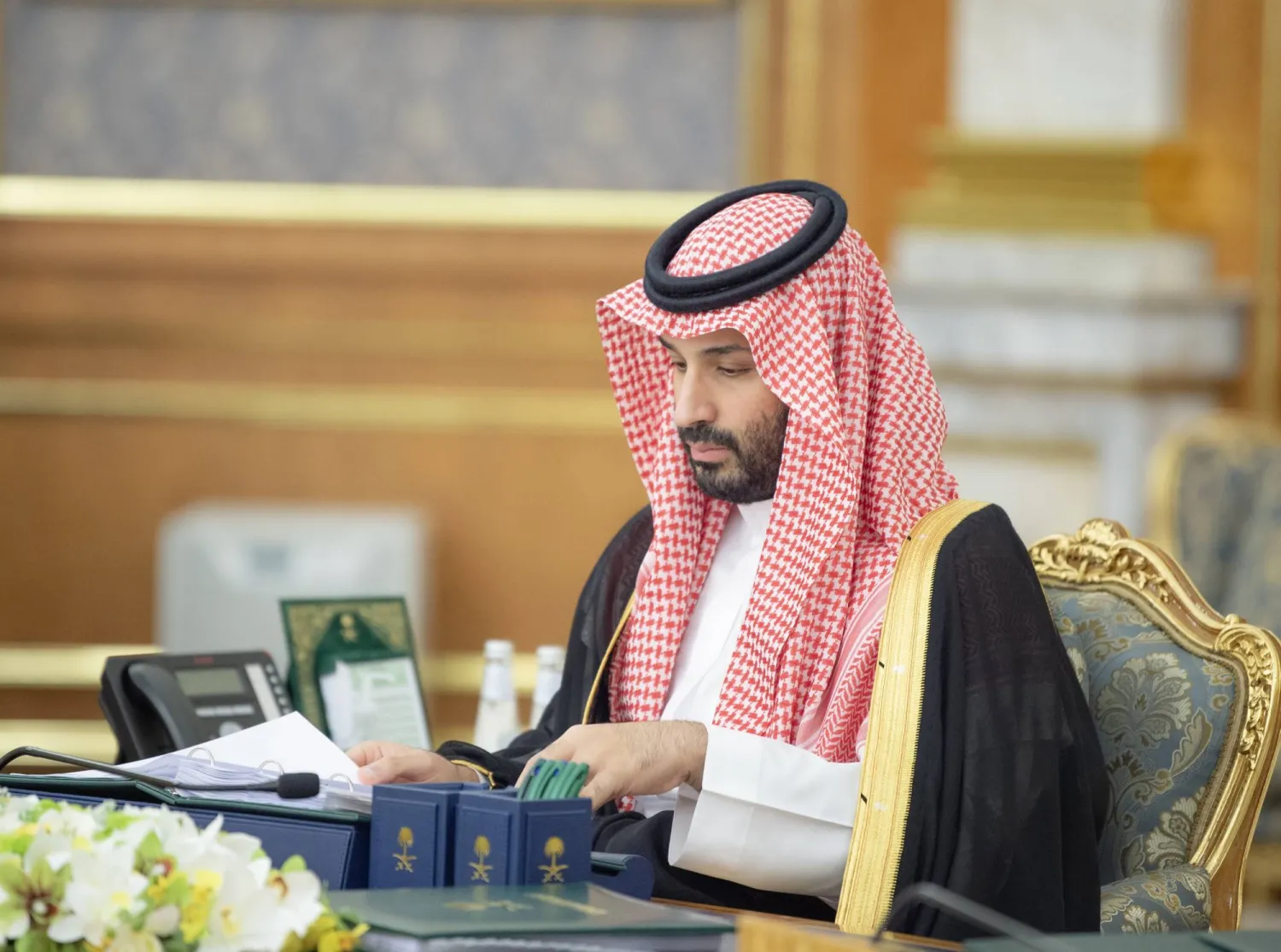
Prince Mohammed bin Salman bin Abdulaziz Al Saud, Crown Prince and Prime Minister, chairs the Cabinet session in Jeddah. (SPA)
TT

Saudi Arabia Stresses Importance of Restoring Freedom of Navigation in Hormuz Strait

Prince Mohammed bin Salman bin Abdulaziz Al Saud, Crown Prince and Prime Minister, chairs the Cabinet session in Jeddah. (SPA)

The Saudi government stressed on Tuesday the importance of restoring freedom of navigation in the Strait of Hormuz to the way it was before the eruption of the US-Israel war on Iran on February 28.

It hoped that peace would be restored to bolster regional and global security and that it would take into account the security interests of countries in the region, including non-interference in their internal affairs.

Prince Mohammed bin Salman bin Abdulaziz Al Saud, Crown Prince and Prime Minister, chaired the Cabinet session that was held in Jeddah.

The Cabinet welcomed the agreement reached between the US and Iran to end military operations and begin negotiations aimed at securing a permanent agreement. It also expressed appreciation for Pakistan and Qatar's mediation efforts in this regard.

Turning to the recent Hajj, the Cabinet expressed praise and thanks to Almighty Allah for bestowing upon Saudi Arabia the honor of serving the Two Holy Mosques and their visitors, and for the remarkable success and meticulous organization achieved during this year’s pilgrimage.

Through integrated efforts, the Kingdom enabled more than 1.7 million pilgrims to perform their rituals in comfort and tranquility, further reinforcing its position as a leading global model in crowd management and the delivery of the highest-quality services to the pilgrims, in accordance with a comprehensive institutional approach founded on planning, data, and advanced technologies.

The Cabinet expressed its appreciation to the Supreme Hajj Committee and all entities involved in the pilgrim service ecosystem for their efforts and dedication in carrying out this great responsibility. Their high levels of coordination, integration, and readiness contributed to achieving the objectives of the security, preventive, organizational, and service plans, while mobilizing all available resources and capabilities to care for pilgrims from their arrival in the Kingdom until their safe return to their home countries.
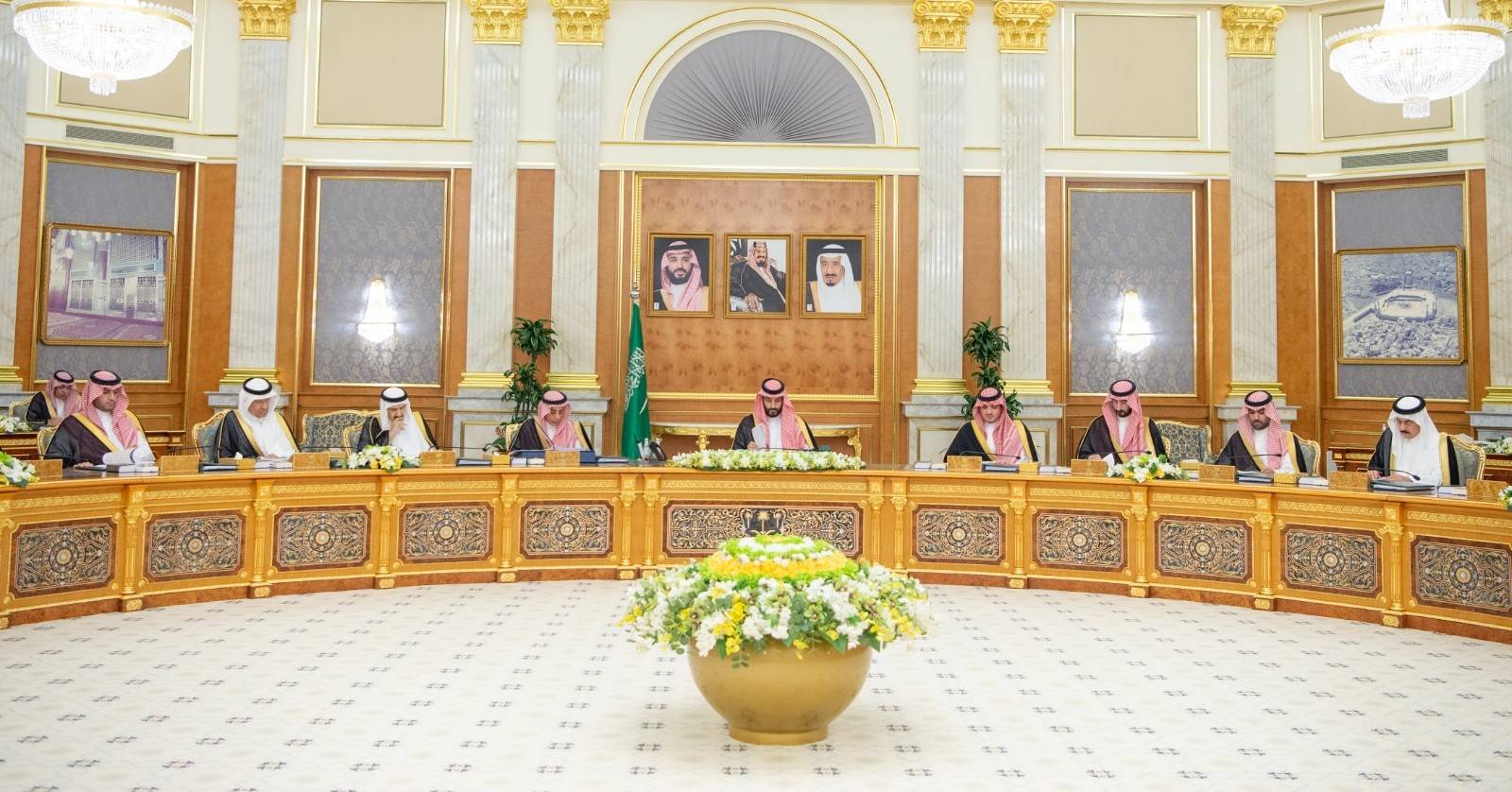
Prince Mohammed bin Salman bin Abdulaziz Al Saud, Crown Prince and Prime Minister, presides over the Cabinet session in Jeddah. (SPA)

The Cabinet reviewed discussions and consultations held over the past week between Saudi Arabia and a number of brotherly and friendly countries. The engagements aimed to strengthen relations and advance bilateral and multilateral cooperation and coordination across various fields in a manner that serves common interests, while supporting international efforts to reinforce regional and international security and stability.

The Cabinet said that the selection of Riyadh as the headquarters of the first cybersecurity office established by the United Nations Institute for Training and Research (UNITAR) reflects Saudi Arabia’s leadership in cybersecurity. It underscores the Kingdom’s efforts and initiatives to promote stability in cyberspace and support societal prosperity and economic growth.

These efforts have helped position the Kingdom as a leading destination for regional and international organizations operating in this vital sector, said the Cabinet.

It also welcomed the statement by International Monetary Fund (IMF) experts following the conclusion of the 2026 Article IV consultation discussions, which reaffirmed the strength and resilience of the Saudi economy in the face of regional developments.

The statement cited the Kingdom’s strong economic fundamentals, ample reserves, diversified oil and logistics infrastructure, and continued reforms under Saudi Vision 2030.

The Cabinet praised the achievements of the National Transformation Program in 2025, coinciding with the completion of 71% of its implementation initiatives. The initiatives aim to protect the environment, ensure sustainable food and water security, support community development, strengthen the non-profit sector, expand workforce participation among various segments of society, and enhance labor market attractiveness. They also help boost private-sector participation, deepen economic partnerships, and promote excellence in government performance.

The Cabinet highlighted the gains achieved by the Human Capability Development Program in advancing the education and training ecosystem, boosting the competitiveness of Saudi talent locally and globally, fostering a culture of creativity and innovation, expanding the use of modern technologies, and strengthening the Kingdom’s national identity and cultural presence.



France Welcomes Saudi Crown Prince at the Elysee, Les Invalides

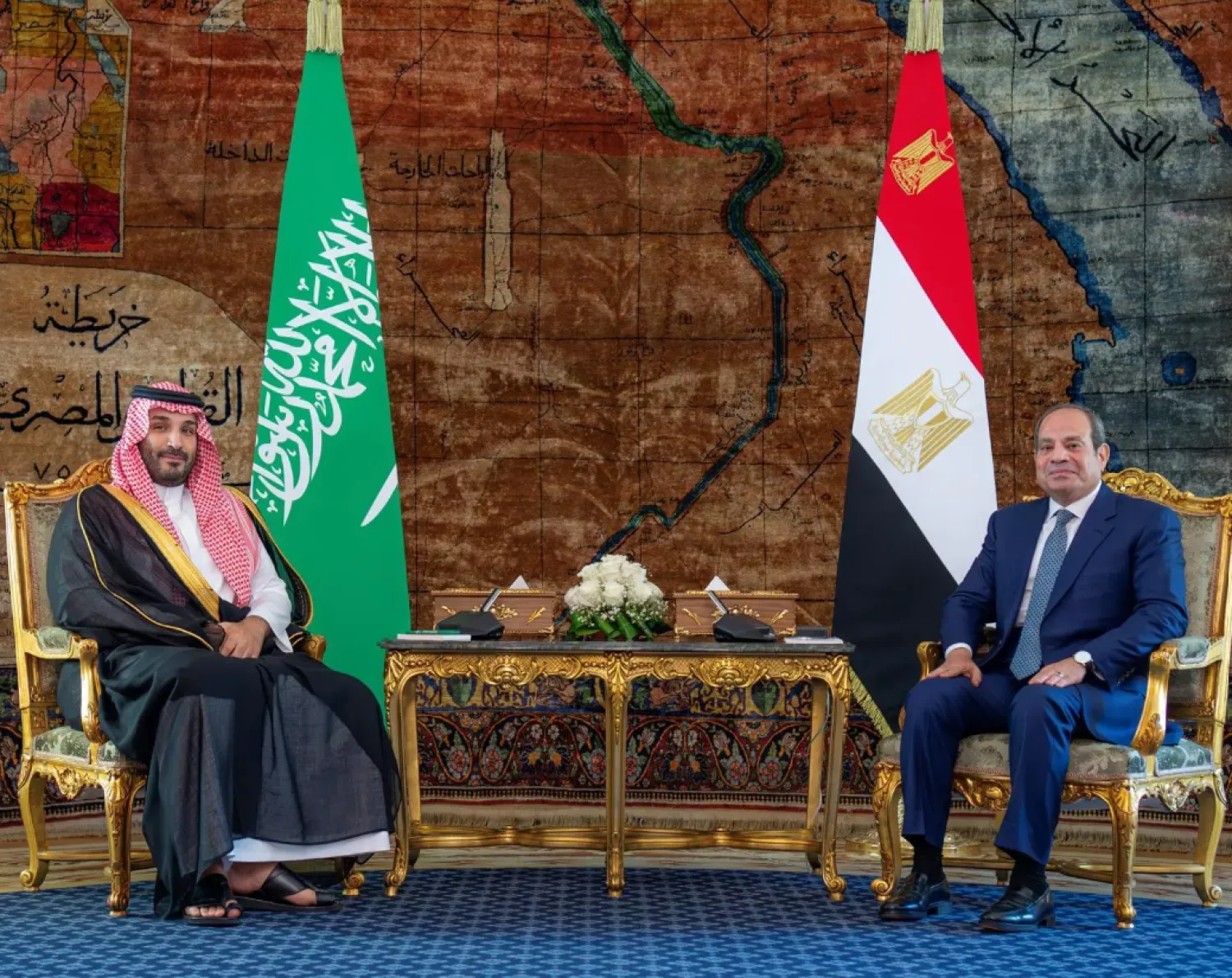
France's President Emmanuel Macron, right, greets Saudi Crown Prince Mohammed bin Salman before a meeting at the Elysee Palace in Paris, France, Monday Aug. 24, 2026. (AP Photo/Aurelien Morissard)
TT

France Welcomes Saudi Crown Prince at the Elysee, Les Invalides

France's President Emmanuel Macron, right, greets Saudi Crown Prince Mohammed bin Salman before a meeting at the Elysee Palace in Paris, France, Monday Aug. 24, 2026. (AP Photo/Aurelien Morissard)

Prince Mohammed bin Salman bin Abdulaziz Al Saud, Saudi Crown Prince and Prime Minister, met on Monday with French President Emmanuel Macron at the Elysee Palace in Paris.

Earlier, the Crown Prince arrived at Les Invalides where he was received by French Prime Minister Sebastien Lecornu in an official welcoming ceremony.

Escorted by cavalry from the French Republican Guard and a motorcycle motorcade, the Crown Prince was greeted with the playing of the Saudi Royal Anthem and the French National Anthem, before inspecting the guard of honor as the unit commander presented the participating military formations.

Following the ceremony, the Crown Prince shook hands with French ministers and senior dignitaries, while the French PM welcomed members of the official Saudi delegation, including princes and senior ministers.

(L-R) France's Prime Minister Sebastien Lecornu, Saudi Arabia's Crown Prince Mohammed bin Salman, and French Military Governor of Paris Loic Mizon walk alongside each other during a welcome ceremony as part of the Crown Prince's two-day official visit to France, at the Hotel des Invalides in Paris, France, 24 August 2026. EPA/JULIE SEBADELHA

On Sunday, Crown Prince Mohammed attended the closing ceremony of the Esports World Cup 2026 in Paris, alongside Macron.


How Can the Riyadh-Paris Partnership Help Strengthen Regional Security?

France's President Emmanuel Macron, right, greets Saudi Crown Prince Mohammed bin Salman before a meeting at the Elysee Palace in Paris, France, Monday Aug. 24, 2026. (AP Photo/Aurelien Morissard)
TT

How Can the Riyadh-Paris Partnership Help Strengthen Regional Security?

France's President Emmanuel Macron, right, greets Saudi Crown Prince Mohammed bin Salman before a meeting at the Elysee Palace in Paris, France, Monday Aug. 24, 2026. (AP Photo/Aurelien Morissard)

Regional security and ongoing developments in the Middle East, including the Strait of Hormuz crisis, Houthi threats to navigation in the Bab al-Mandab Strait and the Red Sea, the two-state solution and recognition of a Palestinian state, the ongoing humanitarian crisis in Gaza amid Israel’s rejection of the US plan for the territory, as well as the situations in Syria and Lebanon, constitute shared concerns for Saudi Arabia and France.

According to observers and experts interviewed by Asharq Al-Awsat, the two countries maintain almost similar views on these issues.

Although major economic, investment, and cultural initiatives continue to strengthen the “strategic partnership” between the two countries, a partnership expected to gain further momentum with the convening on Monday of the first meeting of the Saudi-French Strategic Partnership Council, which was agreed upon during President Emmanuel Macron’s state visit to Saudi Arabia at the end of 2024, political and security cooperation also occupies a central place in bilateral relations. Indeed, it has become intertwined with virtually every major regional issue, reflecting a model of strategic partnership that many regard as exemplary.

Mohammed bin Salman and Macron: Continuous Consultation

Political and military analyst Abdul Latif Al-Mulhim believes that both countries are actively working to promote regional and international security, stability, and peace, while pursuing diplomatic efforts aimed at safeguarding maritime security and freedom of navigation.

According to Al-Mulhim, there are clear indications of the importance France attaches to its partnership with Saudi Arabia. He argues that Paris increasingly regards the Kingdom, given its regional role, as a “close ally that plays a key role in maintaining regional peace, security, and stability.”

As evidence, he points to what he describes as Macron’s commitment to maintaining continuous consultations with Crown Prince Mohammed bin Salman on current crises and possible solutions.

Joint Projects

Speaking to Asharq Al-Awsat, Al-Mulhim noted that Saudi Arabia and France consistently emphasize the importance of strengthening cooperation and coordination in defense-related fields to serve their mutual interests.

He added that both countries’ efforts to develop their defense industries and technologies could pave the way for joint defense projects or military cooperation that would contribute to regional and global security and stability.

He further highlighted ongoing efforts to enhance security coordination in areas such as combating crime in all its forms, counterterrorism and counter-extremism efforts, disrupting terrorist financing, and strengthening cybersecurity.

Political analyst Nidal Al-Sabaa believes there are significant opportunities for political and security cooperation between the two countries, particularly at this critical moment for the Middle East, where numerous crises remain unresolved.

He pointed to the US-Israeli confrontation with Iran, Iranian threats to the economic interests of Gulf and Arab states, the closure of the Strait of Hormuz, the security challenges in the Bab al-Mandab Strait, the ongoing Gaza crisis resulting from the policies of Israel’s current government, uncertainty surrounding Lebanon amid continued Israeli threats, and the wider instability affecting the region.

Cooperation on Syria: A Model of Strategic Partnership

Al-Sabaa views recent developments in Syria as a positive example of Saudi-French cooperation in support of the Syrian government. He cited the international conference on implementing the two-state solution, co-chaired by the Saudi Crown Prince and Macron, as another illustration of effective bilateral coordination.

He also identified a new potential avenue for cooperation involving coordination between the European Union’s maritime mission Aspides and the multinational defense coalition launched by Saudi Arabia with the participation of several regional and international partners.

Opportunities to Secure Maritime Navigation

Aspides is a naval operation established by the European Union in February 2024 as a defensive response to the Red Sea crisis following repeated Houthi attacks on international shipping that began in October 2023.

The mission was launched with a mandate to protect commercial vessels and ensure freedom of navigation. It operates along major shipping lanes around the Bab al-Mandab Strait while monitoring maritime security in the Strait of Hormuz, as well as international waters in the Red Sea, the Gulf of Aden, the Arabian Sea, the Gulf of Oman, and the Arabian Gulf.

French Interest in Saudi Defense Initiatives

French sources told Asharq Al-Awsat on Sunday that Paris attaches great importance to the visit of the Saudi Crown, given the Kingdom’s influential position at the Gulf, Arab, regional, and Islamic levels.

The sources also highlighted France’s interest in Saudi-led initiatives, including the Makkah Agreement, which resulted in the formation of a defense alliance bringing together Saudi Arabia, Pakistan, and Türkiye. According to the sources, the agreement has been designed to remain open to additional members in the future.

They also pointed to another Saudi initiative: the creation of a multinational maritime defense coalition aimed at ensuring safe navigation through the Bab al-Mandab Strait and the Red Sea.


Macron Hails Saudi Crown Prince’s Visit as ‘Important Milestone’

French President Emmanuel Macron and Saudi Crown Prince Mohammed bin Salman attend the closing ceremony of the Esports World Cup at the Grand Palais in Paris, France, August 23, 2026. Bandar Algaloud/Courtesy of Saudi Royal Court/Handout via REUTERS
TT

Macron Hails Saudi Crown Prince’s Visit as ‘Important Milestone’

French President Emmanuel Macron and Saudi Crown Prince Mohammed bin Salman attend the closing ceremony of the Esports World Cup at the Grand Palais in Paris, France, August 23, 2026. Bandar Algaloud/Courtesy of Saudi Royal Court/Handout via REUTERS

French President Emmanuel Macron said that the visit of Saudi Crown Prince and Prime Minister Mohammed bin Salman to France carries significant strategic importance, describing it as an important step in strengthening bilateral relations and promoting peace and stability.

In a post on X, Macron described the visit as an “important milestone.”

“At a time when the region faces major challenges, France and Saudi Arabia have always worked together to promote peace and stability, and they will continue their consultations in this regard,” he wrote.

Macron noted that the Paris-Riyadh partnership is built through concrete cooperation in major projects, advanced technologies, mutual investments, and joint international events, such as the Esports World Cup (EWC) in Paris.

He added: “We have already achieved a great deal together, and we can move forward toward even greater horizons.”

The state visit by Prince Mohammed bin Salman to France, at the invitation of President Macron, reflects the commitment of both countries’ leaderships to advancing bilateral relations, strengthening their comprehensive strategic partnership, and leveraging their political and economic capabilities in support of shared interests amid the rapid development of ties between the two nations.

Saudi Arabia remains committed to deepening its strategic partnerships with major and influential global powers while maintaining balanced relations that serve the Kingdom’s national interests and reinforce its leading role in the Middle East and beyond.

Both countries hope the visit will help maximize the opportunities offered by Saudi Vision 2030 and France 2030, further strengthening economic cooperation in areas including joint investment, industry, energy, culture and heritage, tourism, education, technology, space, defense and security, and other sectors.

The Saudi-French relationship is regarded as one of the most important bilateral partnerships globally. It is founded on a long history of trust and cooperation and is characterized by continuous development, effective collaboration across multiple strategic sectors, and a convergence of views on many issues of mutual concern.

The ambitious partnership between the two countries is being reinforced by expanding opportunities for trade and investment cooperation in sectors such as energy, industry and mining, agriculture, health and healthcare, biotechnology, telecommunications and information technology, artificial intelligence, quantum technologies, space, smart and sustainable cities, tourism, and culture.