Netanyahu, Israel’s Arch-Survivor, Set to Face Voter Fury Over Iran Deal

Israeli Prime Minister Benjamin Netanyahu holds a news conference in Jerusalem, 15 June 2026, following the announcement of a US-Iran mediated preliminary framework to end regional military hostilities. (EPA)
TT

Netanyahu, Israel’s Arch-Survivor, Set to Face Voter Fury Over Iran Deal

Israeli Prime Minister Benjamin Netanyahu holds a news conference in Jerusalem, 15 June 2026, following the announcement of a US-Iran mediated preliminary framework to end regional military hostilities. (EPA)

Israeli Prime Minister Benjamin Netanyahu's hopes of clinging to power in an election this autumn have long been shaky, but the interim US deal with Iran has added yet another complication.

US President Donald Trump has opted to end the wars in Iran and Lebanon long before Israel's goals were accomplished, and Netanyahu's boast in March that "we are changing the face of the Middle East" looks increasingly empty.

Already facing corruption allegations, domestic political controversies and criticism over security failings in the October 7, 2023 Hamas attack on Israel, he will now face voters' judgement of his handling of the wars and Israel's relationship with the United States, its most important ally.

Netanyahu, 76, confirmed this week he intends to stand again in an election that must be called by October.

Opinion polls put his right-wing coalition on course to lose but, in a parliamentary system he has dominated for long stretches since the 1990s, few Israelis would entirely discount him weaving together a new government.

NO LASTING VICTORIES

However the election unfolds, Israel's longest-serving prime minister, whom supporters once called "King Bibi", is already the most consequential leader of recent Israeli history and the object ‌of boundless fury to ‌critics.

Netanyahu's Likud party portrays him as the security hawk who staved off demands for a Palestinian state ‌while ⁠urging attacks on Israel's ⁠enemy, Iran, and its regional proxies.

"There will be no Palestinian state to the west of the Jordan River," Netanyahu said in 2025, adding "for years I have prevented the creation of that terror state, against tremendous pressure".

His hawkish image was dented by security failings before the Hamas attack, for which he has not taken responsibility, and by wars that brought military successes but no lasting victories.

Tens of thousands of people have been killed in Israeli strikes in Gaza and Lebanon, and Israel's military death toll is at its highest in decades.

Domestic critics say Netanyahu focused security away from the Gaza border and disregarded Hamas as a real threat.

Although Israelis mostly backed the war in Gaza, many turned against Netanyahu's handling of it. Some prominent generals and families of hostages were among critics who said he lacked ⁠a clear strategic plan.

The killings of Hezbollah leader Hassan Nasrallah and Iran's supreme leader, Ali Khamenei, were ‌celebrated in Israel. But Hamas still controls much of Gaza, revolutionary theocrats still rule Iran and Hezbollah ‌has survived in Lebanon.

"Netanyahu lost the war. Netanyahu did not deliver - at the moment of truth he collapsed," opposition leader Yair Lapid said after Trump imposed a new ‌Israel-Hezbollah truce as part of his deal with Iran.

Netanyahu decries such criticism as part of a campaign to diminish Israel's accomplishments.

Warning of a ‌potential nuclear threat from Iran, he said: "If we had not acted in time and with overwhelming force – we would not be here today."

DENYING ACCUSATIONS OF WAR CRIMES

The devastation in Gaza drew accusations abroad of genocide that Israel rejects and an International Criminal Court arrest warrant for Netanyahu on war crimes charges, which he called absurd.

While he has assiduously courted Western support for Israel, he has also antagonized US presidents and other world leaders. A biographer quoted former US President Joe Biden as in private calling him ‌a "son of a bitch" and "a bad [expletive] guy."

The expansion of Israeli settlements in the occupied West Bank and attacks on Palestinians there have meanwhile fueled international calls to revive the peace process.

Anger has gone both ⁠ways - many Israelis think Western criticism of ⁠their Gaza campaign after the Hamas attack was unfair.

Rival politicians accuse Netanyahu of caving to US pressure. But in the US, his close ties to the Republican party and attacks on Democrats have helped upset decades of bipartisan support among politicians. Backing for Israel is falling among voters of both parties.

Trump, the US president he has been closest to, called him "[expletive] crazy" during a June phone call.

LONGEST-SERVING PRIME MINISTER

Born to a prominent historian, Netanyahu went to school in the US before joining the same elite commando unit as his elder brother, Yoni, who was killed leading the rescue of hijacked air passengers at Entebbe, Uganda, in 1976. Netanyahu said that event "changed my life".

He proved at ease in the tough world of Israeli politics, appealing to the gut instincts of his core voter base in gritty towns and settlements.

He became Israel's youngest prime minister in 1996, forging a coalition of settlers, security hawks, the ultra-Orthodox and pro-business voters, and has seen off many opponents, building a string of coalitions and ruthlessly abandoning former allies.

Dogged by a corruption trial, Netanyahu won an unprecedented sixth term in 2022, bringing into government nationalist parties with an openly expansionist agenda.

Their efforts to curb the Supreme Court prompted the biggest protests in Israel's history in 2023.

Netanyahu had sought a legacy through the Abraham Accords - 2020 agreements meant to normalize or expand ties with four Arab countries. He hoped to achieve peace with the Arab world without having to accept Palestinian self-determination.

But the 2023 Hamas attack and Gaza war made that impossible and with Israel's standing in the West badly dented, his legacy will now be much more bitterly contested.


Four Ways US Foreign Policy Could Change if Democrats Win in November

 24 October 2026, US, New York: Lower Manhattan residents cast their ballots at the Borough of Manhattan Community College polling site in Tribeca. (dpa)
24 October 2026, US, New York: Lower Manhattan residents cast their ballots at the Borough of Manhattan Community College polling site in Tribeca. (dpa)
TT

Four Ways US Foreign Policy Could Change if Democrats Win in November

 24 October 2026, US, New York: Lower Manhattan residents cast their ballots at the Borough of Manhattan Community College polling site in Tribeca. (dpa)
24 October 2026, US, New York: Lower Manhattan residents cast their ballots at the Borough of Manhattan Community College polling site in Tribeca. (dpa)

Nonpartisan analysts say Democrats stand a good ‌chance of winning the US House of Representatives and possibly the Senate in the November 3 midterm elections, which would give them a slice of power in Washington after two years of Republican control.

Democrats argue that Republicans have allowed President Donald Trump's administration to declare war and control spending, even though the US Constitution reserves those powers for lawmakers.

Here are some ways a Democratic Congress could hem in Trump's foreign policy.

CURB THE IRAN WAR

Trump did not secure approval from Congress before he launched the war with Iran on February 28, and Democrats have voted repeatedly to end the fighting unless he does so. One of these resolutions passed with support from a handful of Republicans, but Trump's administration ignored it.

With control of the House or ‌the Senate, Democrats ‌could cut defense spending to pressure Trump to obtain permission from Congress ‌to ⁠continue the war. ⁠They could also require administration officials to testify publicly about their plans.

FRESH SUPPORT FOR UKRAINE

Trump has largely halted direct US financial and military aid to Ukraine, despite broad support from Democratic and Republican lawmakers as it fights a Russian invasion.

Most recently, he has angered members of Congress, including many Republicans, by lifting sanctions on Russian diesel and waiving sanctions on Russian energy only weeks after signing them into law.

With a victory in both chambers in November, Democrats would be ⁠able to decide what gets voted on and when.

That could allow ‌them to approve new aid to Ukraine, which likely ‌would pass with the two-thirds majorities needed to overcome a Trump veto.

They could also target other ‌Trump activities. For example, Representative Gregory Meeks of New York, who could head the House ‌Foreign Affairs Committee if Democrats win control, has introduced bipartisan legislation to block Trump's plan to bring Russian diesel back into the global market.

END MILITARY AID TO ISRAEL

Support for Israel has plummeted among Democrats over its conduct in the Gaza war, which has killed tens of thousands of Palestinian civilians. The ‌ongoing violence in the Israeli-occupied West Bank and Israeli Prime Minister Benjamin Netanyahu's close alliance with Republicans have also been factors.

Democrats could limit ⁠or end military ⁠aid to Israel, which amounted to $3.8 billion in the most recent fiscal year. That is more than was provided to any other country.

Nearly half of House Democrats voted this summer to cut off aid to Israel. Some of those who voted against that effort, such as Meeks, have backed limits on providing weapons like heavy bombs to Israel.

LIMIT MILITARY SPENDING AND RESTORE FOREIGN AID

Democrats are far more likely than Trump's Republicans to limit military spending. Trump asked for an unprecedented 67% increase in the military budget this year, to $1.5 trillion, but Democrats blocked it in the Senate, citing his refusal to consult Congress about the Iran war and his steep cuts to social programs.

Trump has also withheld or canceled billions of dollars in foreign aid approved by Congress. Many Democrats have been angered by the cuts and say they will try to restore funding.


Beirut’s $13 Chicken Sandwich Becomes Symbol of Lebanon Divide

A chef prepares a chicken taouk sandwich at Glow Paradise restaurant in Beirut, Lebanon, October 16, 2026. (Reuters)
TT

Beirut’s $13 Chicken Sandwich Becomes Symbol of Lebanon Divide

A chef prepares a chicken taouk sandwich at Glow Paradise restaurant in Beirut, Lebanon, October 16, 2026. (Reuters)

Seven years after Lebanon’s devastating financial meltdown, a debate over a chicken sandwich has exposed an increasingly stark divide between those who can still spend freely and those struggling to get by.

A trendy health restaurant wanted to offer its calorie-conscious customers a healthier take on the beloved Levantine wrap known as the shish taouk. So, The Glow Paradise launched the “Chic Taouk,” pricing it at around $13 -- nearly double what an un-chic chicken sandwich typically goes for in Beirut.

The pricey pun proved hard to swallow, with outraged critics accusing the restaurant of overcharging in a country where many households struggle to afford basic necessities.

Yet while the debate raged on social media, customers kept buying. The Glow Paradise sold more than ‌20,000 Chic ‌Taouk sandwiches in just 11 days, according to managing partner Hrag Jeghalian, who described ‌the ⁠online exchanges as "natural marketing".

The ⁠contrasting reactions touched a nerve in Lebanon, where years of financial turmoil, political dysfunction and conflict have reshaped the country's social landscape, hollowing out much of the middle class while leaving a smaller group of consumers able to sustain an affluent lifestyle.

DEBATE PULLS FOCUS AWAY FROM URGENT CRISES

Sami Nader, an economist at the Saint Joseph University of Beirut, said the throngs at The Glow Paradise belied another reality.

“So you see people in the restaurant, but what you don't see is that 22 restaurants closed last month,” Nader told Reuters.

Lebanon’s ⁠Instagram-active community was split between those accusing the restaurant of theft and others ‌saying the sandwich was intended for those who could afford ‌it.

Some questioned whether the dispute itself reflected misplaced priorities in a country grappling with urgent crises, from Israel’s occupation of ‌large swaths of the country’s south to the endemic electricity and water crises.

Lebanon’s 2019 financial collapse ‌was prompted by decades of corruption and profligate spending by the ruling elite, and several rounds of conflict since then have worsened the country’s economic outlook.

GDP has declined by nearly 40% since 2019 and inflation is expected to rise to 17.5% due to rising global energy and shipping prices eating away at people’s purchasing power, according to the ‌World Bank. The figure is more than quadruple the global headline inflation rate flagged by the International Monetary Fund in July.

Four in five households in ⁠Lebanon struggle to afford ⁠basic necessities, the UN children’s agency said in September.

'PEOPLE CAN'T KEEP UP'

The country’s middle class has “disappeared,” Nader said, dismantled by a series of crises including the collapse of the financial system in 2019, the 2020 Beirut Port explosion and two wars in under two years.

Monthly bills from private generator operators, which provide electricity to many homes and businesses during outages on Lebanon's failing national grid, jumped by nearly 20% in August 2026 alone, bringing rates nearly 60% higher than they were in February of this year, according to the kilowatt-hour prices set by Lebanon’s energy ministry.

For many, that means paying for 24/7 electricity now costs several hundred dollars a month, in a country where the minimum wage is set at $400.

“Everything has become expensive, and people can’t keep up,” said Fouad Fakhreddine, a 53-year-old restaurant worker from nearby Hamra. “We are now getting paid, then getting in debt over that just to get by.”

The years of economic instability, he said, have produced “a class that is living, and a class that is not dead and waiting to die from the unbearable situation it is in.”


Netanyahu’s Main Opponents in Israel’s Election

24 October 2026, Israel, Tel Aviv: Israel's Yashar party leader and former military chief Gadi Eisenkot arrives to attend a rally demanding the establishment of an independent state commission of inquiry into the October 7, 2023, Hamas-led attacks and the events leading up to them, ahead of Israel's parliamentary election on October 27. (dpa)
TT

Netanyahu’s Main Opponents in Israel’s Election

24 October 2026, Israel, Tel Aviv: Israel's Yashar party leader and former military chief Gadi Eisenkot arrives to attend a rally demanding the establishment of an independent state commission of inquiry into the October 7, 2023, Hamas-led attacks and the events leading up to them, ahead of Israel's parliamentary election on October 27. (dpa)

Israel will hold a general election on October 27, with veteran Prime Minister Benjamin Netanyahu locked in a tight race to stay in power.

Here are his main rivals:

- Gadi Eisenkot: The general -

The son of Moroccan immigrants, ex-army chief Gadi Eisenkot, 66, has emerged as Netanyahu's main rival, with polls putting the two neck and neck in the final days before the vote.

While he lacks his opponent's political experience, he enjoys public sympathy following the death in combat of his son Gal and two of his nephews during the Gaza war.

Seen as belonging to the center-right, Eisenkot has expressed some public positions on the Israeli-Palestinian conflict that maintain the current government's tough line -- for instance, vowing to prevent the creation of a Palestinian state and to end Hamas's rule in Gaza within 18 months if elected.

He has also expressed support for Israeli settlements in the occupied West Bank, but has promised to crack down on settlers who have attacked Palestinians with impunity under Netanyahu's staunchly pro-settlement government.

Eisenkot resigned from Netanyahu's war cabinet in 2024 and has become a scathing critic of the premier's leadership.

He founded his own party Yashar, meaning "Straight", in 2025. He would be the first prime minister of Middle Eastern or North African descent.

Former Israeli Prime Minister Naftali Bennett attends an event for the Beyahad party, ahead of Israel’s national election, in Haifa, Israel, October 21, 2026. (Reuters)

- Naftali Bennett: The right-wing alternative -

Former prime minister Naftali Bennett, 54, leads the center-right Beyahad party, which is polling in third place.

The former tech entrepreneur and son of American immigrants established himself as a leading figure in the nationalist right and settler movement, but has since presented himself as a secular centrist.

Bennett caused a stir in 2021 by forming a diverse coalition government spanning the Israeli political spectrum, with the unprecedented support of an Arab party.

It brought an end to Netanyahu's 12 uninterrupted years in power, but Bennett's government only lasted a year.

Israeli commentators believe he can attract right-wing voters who are disappointed with Netanyahu but do not want to move leftward.

Despite his fierce criticism of him, Bennett has voiced openness to including Netanyahu in an opposition-led coalition government.

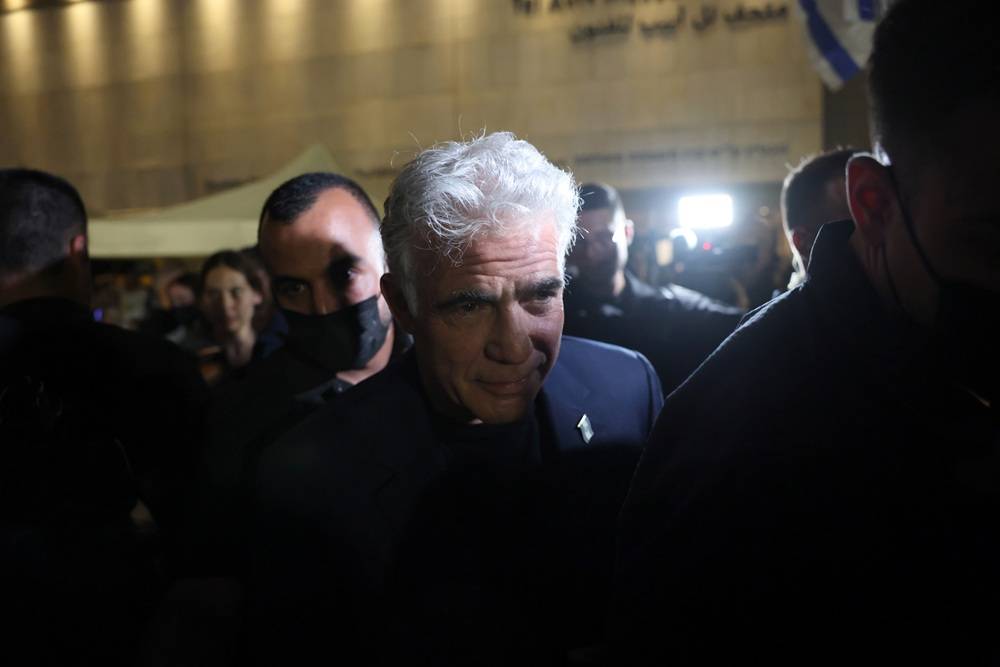
Member of the Beyachad political alliance, leader of the opposition Yair Lapid (C) reacts during an anti-government rally in Tel Aviv, Israel, 24 October 2026. Israel will hold its national legislative election to choose the 120 members of the 26th Knesset on 27 October 2026. (EPA)

- Yair Lapid: The former TV journalist -

Once a star television journalist, Yair Lapid, 62, swiftly established himself as one of Netanyahu's main opponents when he founded the centrist Yesh Atid party in 2012.

Lapid has served as finance and foreign minister and briefly took over as prime minister in 2022 as part of a power-sharing deal with Bennett, with whom he is again allied.

An avowed secularist, Lapid has the polish of a TV star and is ever-present on social media, routinely taking Netanyahu to task with biting commentary.

But few observers see him winning on his own as he struggles to win voters beyond his core base of urban and secular Israelis.

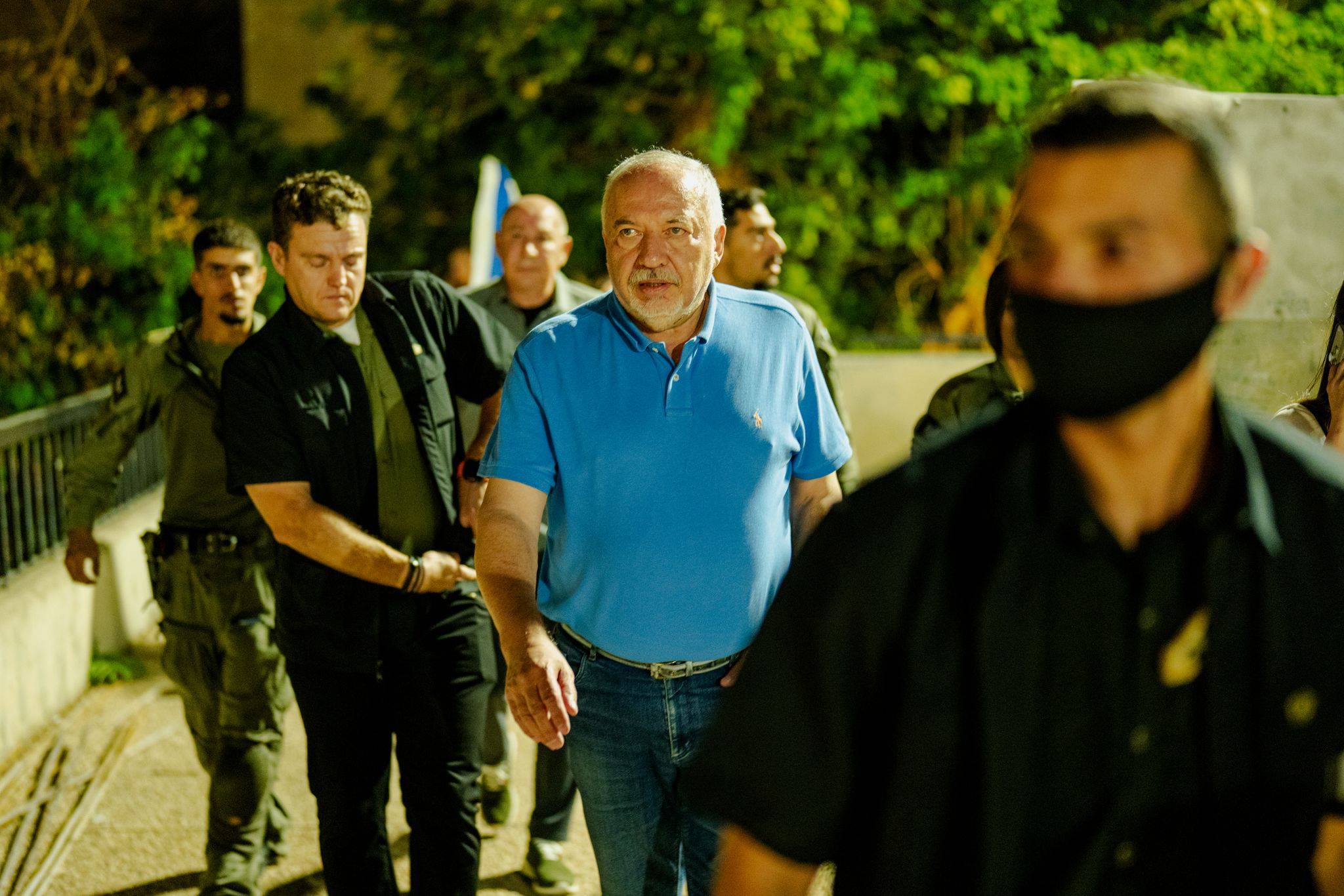
24 October 2026, Israel, Tel Aviv: Yisrael Beytenu party leader Avigdor Lieberman arrives surrounded by security personnel during a rally at Hostages Square to demand the establishment of an independent state commission of inquiry into the October 7, 2023, Hamas-led attacks and the events leading up to them, ahead of Israel's parliamentary election on October 27. (dpa)

- Avigdor Lieberman: The secular nationalist -

Born in Soviet Moldova in 1958, Avigdor Lieberman moved to Israel in the late 1970s and is a veteran of the political scene, taking a hardline nationalist stance on national security while staying staunchly secular.

The founder of the Yisrael Beiteinu party, Lieberman initially relied on the Russian-speaking electorate before gradually broadening his base.

He was once a close Netanyahu associate, with some crediting Lieberman with helping engineer the premier's razor-thin upset victory in 1996 that first brought him to power.

Lieberman now regularly criticizes Netanyahu in heated terms, calling him a failure on security.

Lieberman is one of the few politicians to have headed three of Israel's key ministries -- foreign, defense and finance.

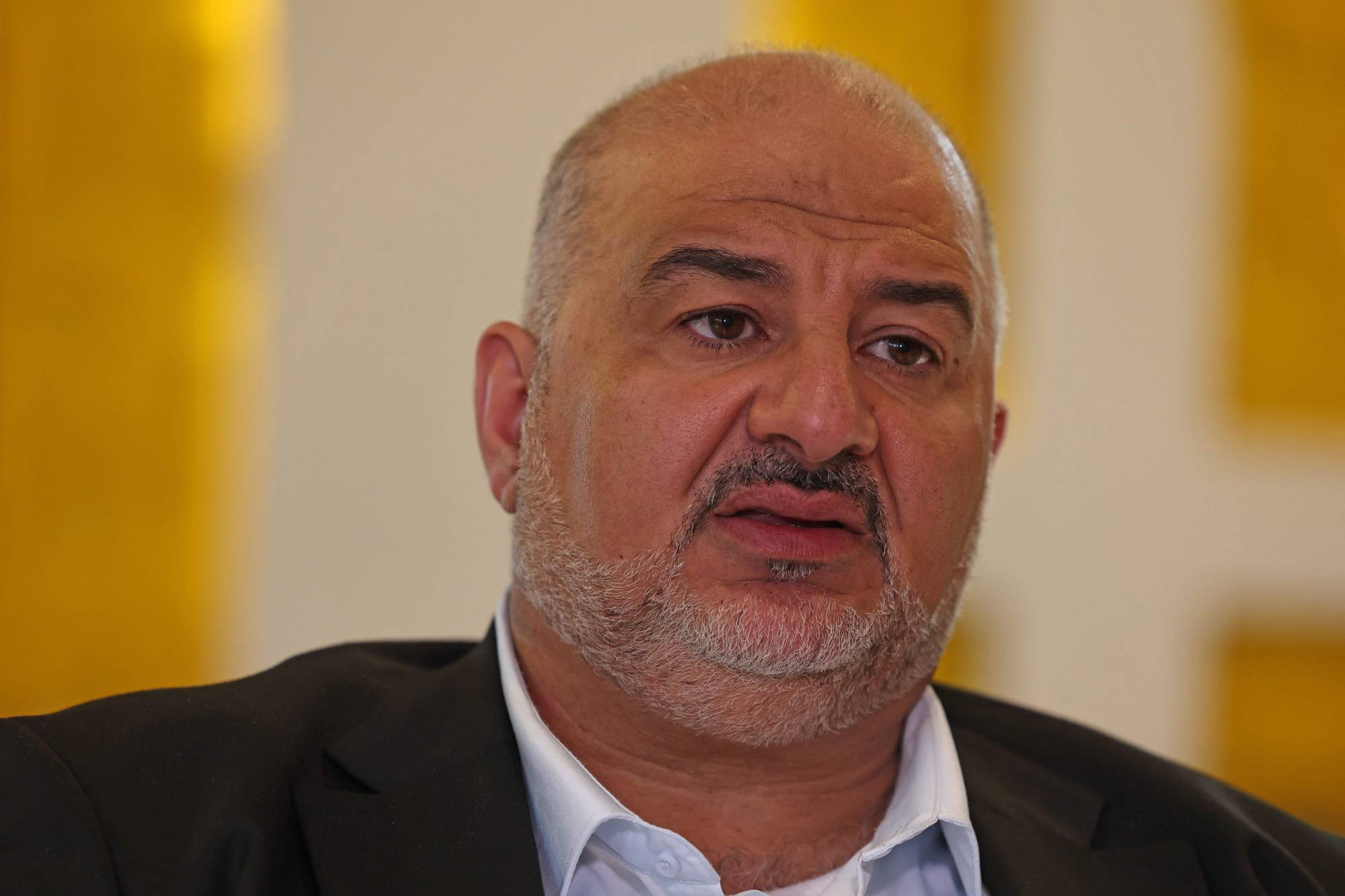
Mansour Abbas, head of Israel's conservative Islamic Raam party, speaks during an interview with AFP in Nazareth, in northern Israel, on October 21, 2026. (AFP)

- Mansour Abbas: The potential kingmaker -

Arab-Israeli party leader Mansour Abbas is seeking to mobilize his community, which makes up 20 percent of the population, to prevent Netanyahu's return to power.

Abbas's Raam became the first Arab party to join an Israeli government in Bennett's 2021 coalition and he could again be a kingmaker if the opposition agrees to rely on his lawmakers to oust Netanyahu.

In a recent interview with AFP, the former dentist vowed to bring out voters to replace Netanyahu's "racist, fascist right-wing government".

Netanyahu has tried to tarnish Jewish opposition leaders by constantly raising the specter that they would team up with Abbas, whose roots are in political Islam.

Seeking to broaden support, Abbas has taken the unprecedented step of tapping an Israeli Jew, former police official Yoav Segalovitz, as a candidate on his party's slate.

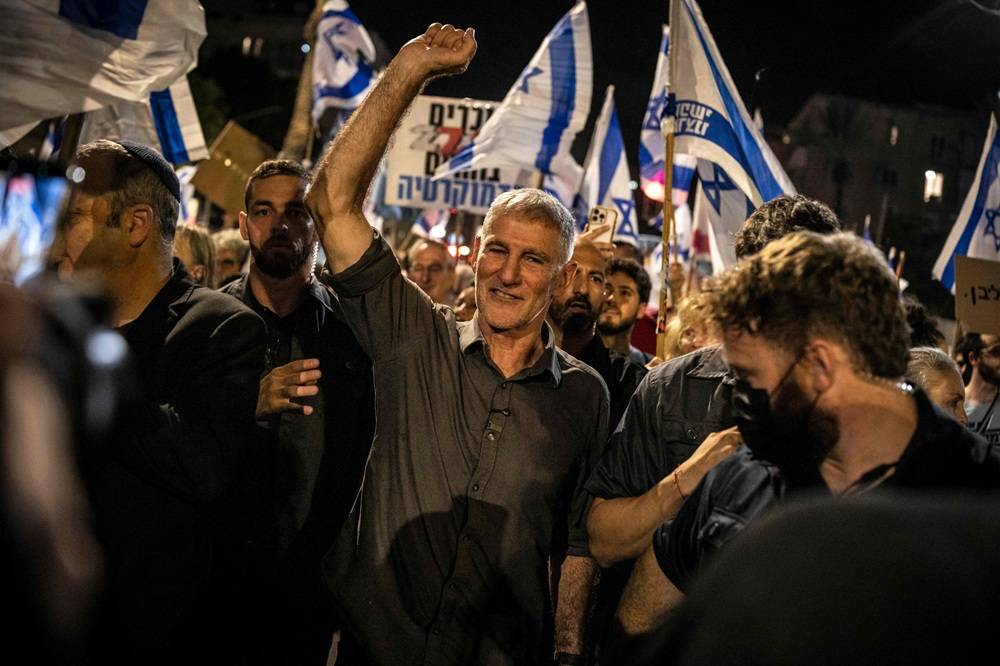
Yair Golan (C), leader of The Democrats party, marches with protesters from Rabin Square to the Hostages Square, during an anti-government demonstration demanding the formation of a state commission of inquiry into Hamas' 2023 October attacks, in Tel Aviv on October 24, 2026, ahead of Israel's legislative election. (AFP)

- Yair Golan: The remaining liberal -

After years of Israel shifting to the right, Yair Golan's party The Democrats represents what remains of the mainstream left, including remnants of the Labour Party that led Israel without interruption for the country's first three decades.

Golan is the only major Israeli political leader who still explicitly backs a two-state solution with the Palestinians.

He is also liberal on social issues, calling for public transportation to run on the Jewish Sabbath.

A former senior military officer, Golan volunteered to return to duty immediately when Hamas attacked on October 7, 2023, picking up a gun and within hours personally rescuing people in his car.