


Trump's Pledge to Intervene: Can It Break the Deadlock in the Ethiopian Renaissance Dam Crisis?

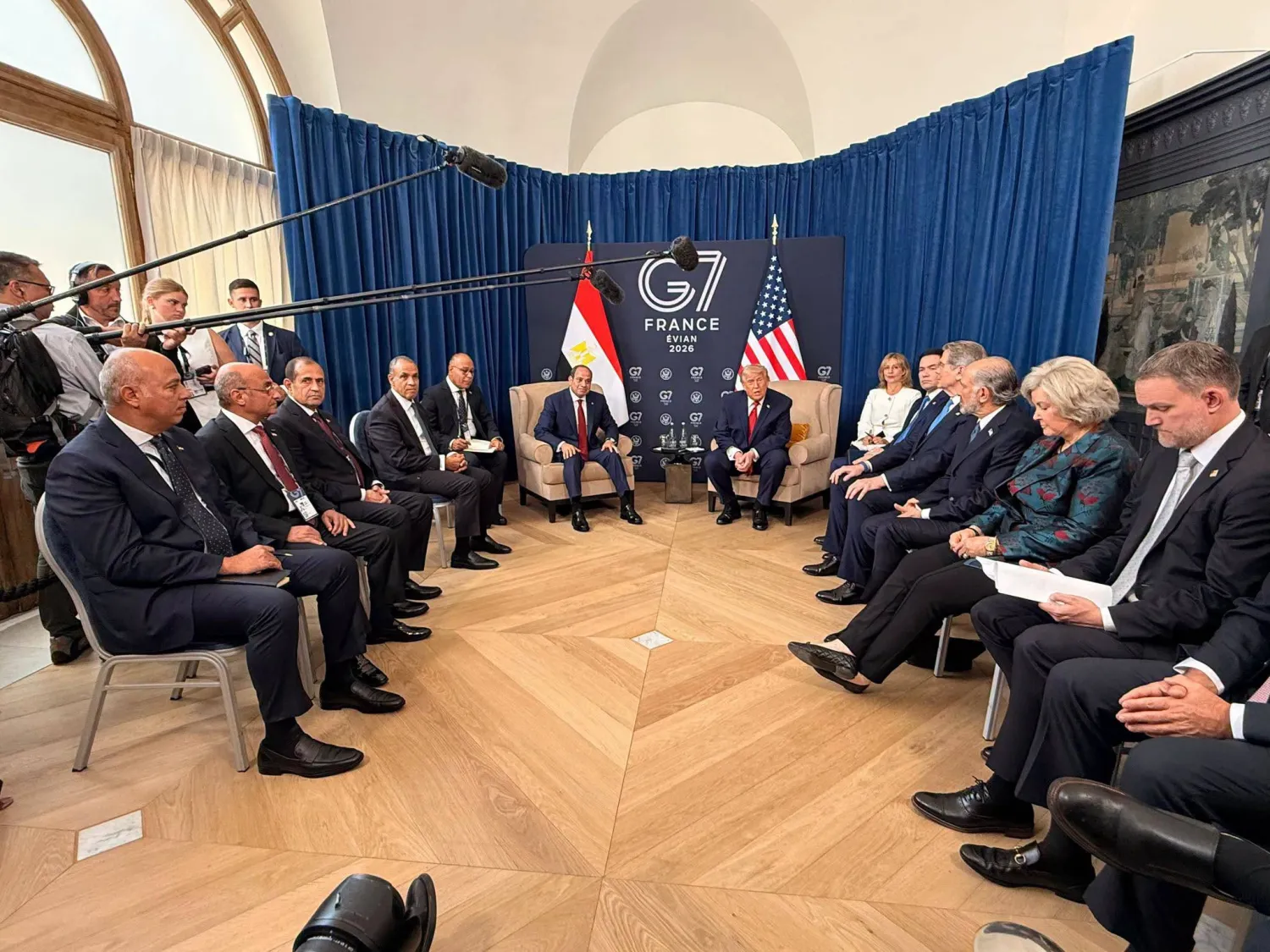
Egyptian President Abdel Fattah El Sisi meets US President Donald Trump on the sidelines of the G7 Summit (Egyptian Presidency)
TT

Trump's Pledge to Intervene: Can It Break the Deadlock in the Ethiopian Renaissance Dam Crisis?

Egyptian President Abdel Fattah El Sisi meets US President Donald Trump on the sidelines of the G7 Summit (Egyptian Presidency)

During a meeting between Egyptian President Abdel Fattah El Sisi and US President Donald Trump on the sidelines of the G7 Summit in France, Trump affirmed that he would give the Grand Ethiopian Renaissance Dam (GERD) issue the highest priority in order to reach a fair settlement. The remarks prompted diplomats and analysts to predict a possible breakthrough in a dispute that has remained stalled for years.

With this commitment, and amid a calmer regional environment following the easing of tensions surrounding the Iran war, experts believe the dam issue could regain international attention after years of stagnation.

Egypt announced in 2024 that negotiations with Ethiopia over the dam had come to a halt after years of talks, attributing the breakdown to "the lack of political will on the Ethiopian side," according to previous statements by the Ministry of Water Resources and Irrigation.

During his meeting with Trump on Wednesday, El Sisi reiterated the critical importance of the Nile River issue, describing it as a matter of Egyptian national security, and expressed appreciation for the US president's interest in the matter.

For his part, Trump said he understood all of Egypt's concerns and stressed that he would give the issue "the highest priority in order to reach a fair settlement," according to a statement issued by the Egyptian presidency.

Speaking to El Sisi in remarks carried by the media, Trump said: "I think Ethiopia has treated you unfairly." He added: "A dam was built in Ethiopia that is causing major problems for Egypt, and I am fully aware of that. We will see whether we can reach a settlement on it."

US Diplomatic Activity

Recent months have seen renewed US engagement after nearly two years of suspended negotiations between Egypt and Ethiopia over the Renaissance Dam.
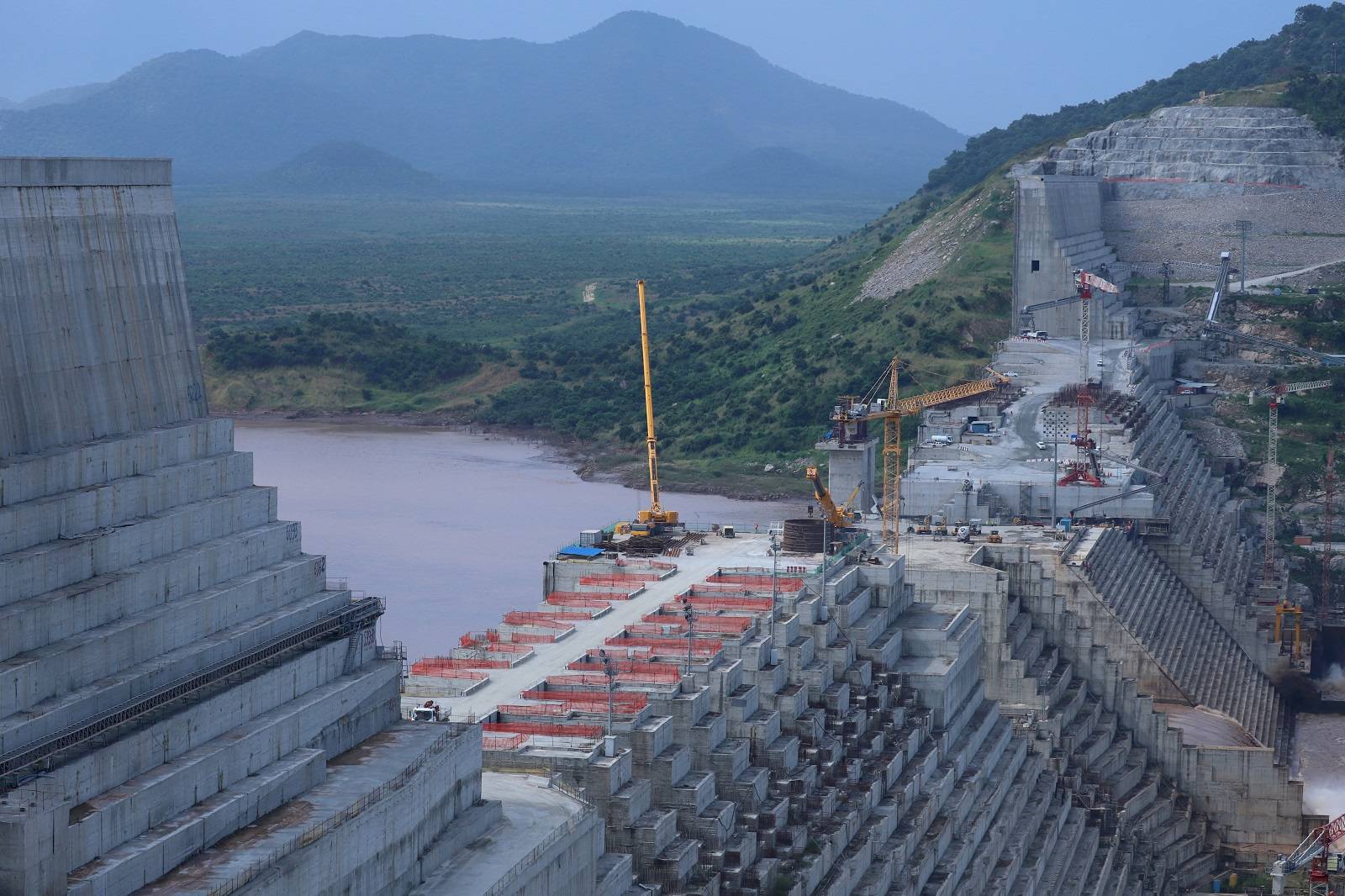
US action to resolve the Ethiopian Grand Renaissance Dam issue (Reuters)

US Diplomatic Activity

On May 18, a phone call between Egyptian Foreign Minister Badr Abdelatty and Massad Boulos, Senior Adviser to the US President for Arab and African Affairs, addressed the Ethiopian dam dispute and Egypt's water security.

Abdelatty emphasized Egypt's "complete rejection of any unilateral measures" and stated that water is an existential issue for the country. Meanwhile, according to the Egyptian statement, Boulos affirmed the US administration's commitment to strengthening its strategic partnership with Egypt and maintaining close coordination between the two countries in addressing shared challenges.

Earlier, on May 12, Boulos wrote on X that he had held "productive and comprehensive meetings" with an Ethiopian delegation led by Foreign Minister Gedion Timothewos and including National Intelligence and Security Service Director General Redwan Hussein. He added: "We held constructive discussions on the Nile River and the Grand Ethiopian Renaissance Dam."

A well informed Egyptian source previously told Asharq Al Awsat that efforts were underway to revive the "Washington Document," which Cairo signed in February 2020 but Addis Ababa rejected, albeit in a revised form designed to secure broader consensus.

The document included a phased timetable for filling the reservoir, mechanisms for coordination during drought and prolonged drought conditions, arrangements for annual and long term dam operations under such circumstances, as well as provisions for dispute resolution and information sharing.

The Egyptian source's comments came days after Boulos told Asharq Al Awsat that the US president had expressed his country's readiness to resume mediation between Egypt and Ethiopia "to reach a responsible and final settlement of the Renaissance Dam issue."

In January, Trump sent an official letter to El Sisi expressing Washington's willingness to restart negotiations over the dam and reach a final and fair solution. The move followed three statements he made in June and July 2025, in which he said that "Washington funded the dam, and there must be a quick solution to this crisis."

Back on the International Agenda

Mohamed Hegazy, a member of the Egyptian Council for Foreign Affairs and former assistant foreign minister, believes Trump's commitment represents an important political development that returns the issue to the international spotlight after years of deadlock.

Speaking to Asharq Al Awsat, he said: "The significance of these statements lies in the fact that they reflect renewed US recognition of the link between water issues and regional security and stability, as well as an acknowledgment that Egypt's water security is a fundamental component of security in the Middle East and the Horn of Africa."

Hegazy added that raising the issue on the sidelines of the G7 Summit is particularly significant because it comes amid a reordering of international priorities following the easing of tensions between the United States and Iran and growing concern over Red Sea security and international maritime routes. In this context, he said, the Nile issue becomes part of a broader equation involving regional security, sustainable development, and the prevention of conflicts linked to natural resources.

According to Hegazy, the real challenge lies in translating US political support for Egypt into practical measures, whether by relaunching a serious and time bound negotiation process or by providing international guarantees that help the parties reach a legally binding agreement governing dam operations and management during periods of drought and prolonged drought. Such an agreement, he said, would balance Ethiopia's right to development with Egypt's right to life and water security.

Hegazy concluded that the Egyptian US presidential meeting could open a "diplomatic window" and provide fresh momentum toward resolving the crisis if followed by serious political and diplomatic efforts.

However, Ethiopian political analyst and African affairs specialist Anwar Ibrahim holds a different view. He believes strong US intervention in the Renaissance Dam issue could lead to "undesirable developments" and argues that the greatest challenge is the transfer of the file to Washington.

Speaking to Asharq Al Awsat, Ibrahim said that US involvement and what he described as "bias toward Egypt" were the main reasons negotiations over the Renaissance Dam failed during Trump's first term.

He added: "The United States will not succeed in creating any real rapprochement because it relies on a carrot and stick approach without understanding the importance of the Nile for all countries in the region."

Nevertheless, Ibrahim did not rule out the possibility of a solution, but only "on the basis of understanding everyone's needs and reaching mutual understandings without pressure being exerted on Addis Ababa. Otherwise, the process will fail again and the dispute will return as a major source of tension," he said.



Lebanese Villagers Return to Find Homes in Ruins

Khadija Amara, whom local residents said had not left her home, fills a jerrycan with water as she sits among the rubble of a house, which was damaged by an Israeli strike, in Qlaileh in the Tyre district, southern Lebanon, June 19, 2026. REUTERS/Zohra Bensemra
TT

Lebanese Villagers Return to Find Homes in Ruins

Khadija Amara, whom local residents said had not left her home, fills a jerrycan with water as she sits among the rubble of a house, which was damaged by an Israeli strike, in Qlaileh in the Tyre district, southern Lebanon, June 19, 2026. REUTERS/Zohra Bensemra

Abed Hachem rebuilt his home when it was damaged in a conflict between Israel and Lebanon's Hezbollah militants in 2024, but is at a loss now that most of his village has been destroyed in Israel's latest round of strikes.

Where his house once stood in Qlaileh is now rubble; where his garden bloomed, dust, with more dust covering the toys and furniture strewn around the remains of his living room.

"Oh dear... Oh God. There was a building here... here... there was a building here," the 46-year-old father of three said as he pointed to the husks of buildings that once housed his neighbors, Reuters reported.

The spire of the local mosque is one of few structures still standing.

The latest round of fighting between Hezbollah and Israel erupted on March 2, when Hezbollah fired at Israel in support of its ally Iran, drawing Lebanon into the regional war. Israel responded with air strikes and a ground invasion that occupied parts of southern Lebanon.

More than 3,900 people have been killed, and 1.2 million people have been displaced, with Israel's forced evacuation orders emptying entire villages in southern Lebanon.

Israel says its campaign was aimed at Hezbollah's forces and military infrastructure.

Now, as people like Hachem return to their homes and try to stitch their lives back together, they are reckoning with the heartbreak of seeing their communities wiped out.

"The whole village is destroyed. My house is destroyed. The village is destroyed. Where are we supposed to go now?" he said. "There is nothing left. A lifetime's work is all gone."

His neighbor, a man Hachem saw as a brother, and with whom he shared a cup of tea every morning, has been killed, along with his son.

"They have nothing to do with political parties, nothing to do with weapons, nothing to do with wars," he added, his frustration mounting. "The man was just trying to support his family, and he and his son died for nothing."

The interim deal announced between the United States and Iran brought a lull to the fighting in Lebanon earlier this week, allowing displaced people like Hachem to return home. Fighting flared again before a new ceasefire came into effect on Friday afternoon.

Hachem just wishes peace had come sooner.

"This agreement they reached, they should have made it from the very beginning," he said. "Not after people were destroyed."


Gaza Factions Consult on Response to Mladenov's Amendment

Mourners react during the funeral of Palestinians killed in an Israeli strike on a vehicle, according to medics, in Gaza City, June 18, 2026. REUTERS/Dawoud Abu Alkas
TT

Gaza Factions Consult on Response to Mladenov's Amendment

Mourners react during the funeral of Palestinians killed in an Israeli strike on a vehicle, according to medics, in Gaza City, June 18, 2026. REUTERS/Dawoud Abu Alkas

Palestinian factions are reviewing amendments presented by Nickolay Mladenov, the High Representative for Gaza at the Board of Peace, to Hamas during a meeting with mediators in Cairo on Wednesday.

Asharq Al Awsat has learned from sources within Hamas and other Palestinian factions that consultations are underway both within individual factions and among the factions collectively.

A Hamas source and two Palestinian faction sources said that faction representatives will hold an extended meeting in Cairo to discuss Mladenov's response to the latest amendments that the factions submitted to mediators several days ago.

According to the Hamas source, Mladenov's amendments covered all provisions, not only the eighth clause concerning the restriction and storage of weapons. The source added that the term "infrastructure," which has been a point of disagreement both among the factions and in discussions with mediators, was also included.

The source said Hamas leaders are holding internal consultations, as well as discussions with relevant bodies, including the leadership of the movement's military wing, the Izz ad Din al Qassam Brigades, inside Gaza, regarding the proposed amendments. He added that specific wording will be agreed upon before being presented to the factions for review and comment, with the aim of reaching a unified national position to submit to the mediators.

The source also noted that a representative of the US administration, one of the aides to US envoy Jared Kushner, participated in the meeting between Mladenov and Hamas leaders held in Cairo on Wednesday in the presence of the mediators.

Two Palestinian faction sources said that internal consultations are taking place within each faction and that a comprehensive national meeting will be convened to formulate observations on Mladenov's amendments. They said the latest proposals will be examined and compared with the revisions made by the factions in their most recent response, with efforts focused on narrowing differences in wording to facilitate further progress following recent advances.

One of the remaining points of contention is the term "infrastructure" and how it should be defined. Some factions had advised Hamas to include the term within the eighth clause dealing with the restriction and storage of weapons. However, the movement's leadership considered the definition too broad and argued that consensus on its meaning must be reached before Mladenov incorporates it into his amendments in coordination with the mediators. As a result, the issue has become a central focus of consultations both within and among the factions.

Some faction leaders had advised Hamas that the definition of infrastructure should be limited to tunnels, weapons manufacturing workshops, and weapons storage facilities, without extending to additional elements such as personnel, military sites, vehicles, or other assets.

Palestinians sit overlooking a tent camp sheltering displaced people, in Khan Younis in the southern Gaza Strip, June 18, 2026. REUTERS/Ramadan Abed TPX IMAGES OF THE DAY

These developments come amid continued Israeli military escalation on the ground. Early Friday, three Palestinians were wounded when an artillery shell landed near their tent in Khan Younis in southern Gaza. Two others were injured by gunfire from military vehicles and drones in areas near the Yellow Line.

On Friday morning, members of armed gangs in northern Gaza advanced the Yellow Line by approximately 200 meters westward from the Al Alami area of Jabalia camp, causing a new wave of displacement among families living nearby. The move aimed to expand the areas of Gaza under Israeli control, following similar steps taken by Israeli forces in several locations across the Strip in recent days.

Meanwhile, a number of Israeli military and engineering vehicles advanced east of Deir al Balah toward the south, west of the Yellow Line, carrying out demolition operations against homes in the area.

On Thursday, Israeli forces killed five Palestinians in two airstrikes and through gunfire from military vehicles and drones in several areas of the Gaza Strip.

The number of Palestinian casualties since the ceasefire entered into force on October 10, 2025, has risen to more than 1,000 dead and over 3,000 wounded.


Israel, Hezbollah Agree Ceasefire as US-Iran Deal Under Strain

An Israeli flag tagged on a building in the southern Lebanese village of Taybeh, as seen from the Israeli side of the border in the Upper Galilee, northern Israel, 17 June 2026. EPA/ATEF SAFADI
TT

Israel, Hezbollah Agree Ceasefire as US-Iran Deal Under Strain

An Israeli flag tagged on a building in the southern Lebanese village of Taybeh, as seen from the Israeli side of the border in the Upper Galilee, northern Israel, 17 June 2026. EPA/ATEF SAFADI

Israel and the Hezbollah group agreed Friday to stop attacking each other, officials said, after talks between the US and Iran were called off because of intense fighting in southern Lebanon that deepened doubts about the initial agreement to end the war in Iran. 

The apparent truce emerged after a heavy exchange of fire killed at least 47 people in southern Lebanon and four Israeli soldiers. 

Word of the attempt to halt the fighting came from two regional officials and a US official. It was mediated by Qatar, the US and Iran, the regional officials said. The three officials were not authorized to comment publicly and spoke to The Associated Press on the condition of anonymity. 

A Hezbollah official said an agreement to stop fighting could be announced soon, but he stopped short of confirming it was in place. The official spoke on condition of anonymity because he was not authorized to comment publicly on the matter. 

Israeli Prime Minister Benjamin Netanyahu's office did not immediately comment. However, late Friday afternoon Netanyahu posted on X that, on his orders, the army had “struck powerfully” 150 Hezbollah targets, killing dozens of fighters. 

Military spokesman Brig. Gen. Effie Defrin said the military has not received different instructions from the government. He said Israeli forces were operating in a “forward defense zone” and will continue doing so. 

Hours after officials told journalists about the truce, Israeli artillery fire could still be heard from northern Israel along the Lebanese border, and a large explosion was seen erupting inside Lebanon, according to an AP photographer in northern Israel. 

Iranian and US officials cancel travel to Switzerland 

Iranian officials did not travel as planned to Switzerland, insisting that the fighting in Lebanon must stop before the talks can take place, according to the two regional officials, an Iranian official and a fourth person familiar with the matter who spoke on condition of anonymity to discuss sensitive conversations behind the scenes. US Vice President JD Vance also postponed his trip. 

Hezbollah and Israel had decreased their attacks after Iran and the US reached a deal to stop the war on “all fronts,” including Lebanon. 

The conflict between Israel and the Iran-backed group is the most precarious part of the Iran deal. Neither Israel nor the group signed the agreement, but it is supposed to end their fighting. And Iran has signaled its willingness to risk renewed war in the region for the sake of its interests in Lebanon and its most important regional ally. 

The interim deal has halted hostilities in Iran and the Gulf and reopened the Strait of Hormuz, after Iranian attacks and threats all but stopped the flow of oil and natural gas through the waterway, creating a global energy crisis. 

But future talks are supposed to bring about a permanent end to the conflict, including addressing how to restrict Iran’s nuclear program — the core issue over which Israel and the US went to war on Feb. 28. 

On Friday, Iranian Foreign Ministry spokesperson Esmaeil Baghaei said consultations through mediators were ongoing regarding the next phase of negotiations to draft a final agreement. 

Because the initial deal was signed digitally earlier this week, the talks in Switzerland were not urgent, and plans were underway to hold a meeting in the coming days, he said. 

The fighting in Lebanon could unravel the deal  

The Israeli military said four soldiers, including a lieutenant colonel, were killed in an attack on a tank in a village near the southern Lebanese city of Nabatieh. An explosive drone attack wounded another five, it added. 

Israel then launched multiple strikes against “Hezbollah infrastructure sites” in Nabatieh and other areas, according to a military statement, which accused the group of “blatant ceasefire violations.” 

Later, the military said it also struck targets in the Bekaa Valley in eastern Lebanon, with Lebanese media saying the village of Douris was hit. 

“Israel will not tolerate attacks on our soldiers or on our territory, and it will exact a very heavy price from Hezbollah for these attacks,” Netanyahu said in a statement. 

Hezbollah acknowledged targeting Israeli tanks and said its attacks were in response to what it called Israel’s own violation of the ceasefire. It said the attacks came after Israeli forces attempted to reach the northern side of Ali al-Taher hilltop, a strategic point that overlooks Nabatieh and that Israeli troops have been trying to capture. 

In southern Lebanon, many were forced to flee their villages. 

“The situation is lawless, we couldn't stay,” said Mustafa Zain, who was with his six daughters in a pickup truck. 

Beyond the fighting, Israel's occupation of large swaths of southern Lebanon is also a sticking point. Iran insists Israel must withdraw, but Netanyahu has said that forces would remain in a “security zone” of southern Lebanon as long as “Israel’s security needs require it.” 

Israel’s actions have created a rift between Israel and the US, with Trump becoming increasingly critical of his close ally Netanyahu, who is also facing increasing criticism at home. 

The strait is open but with new guidance 

Oil tankers began freely moving through the Strait of Hormuz this week after months of being largely unable to use the critical channel. More than 12.5 million barrels of oil were shipped through the waterway on Wednesday night, the US said. 

Still, it is expected to take weeks or months for the normal flow of oil and gas to resume, even if traffic fully resumes. 

The interim deal lays out that passage through the strait should be free for 60 days — as it was before the war. But the new Iranian authority charged with overseeing the waterway issued guidance Friday calling on ships to register with it — signaling Tehran likely intends to start charging. 

The Gulf Strait Authority said Friday that “during the 60-day period, tariffs for security, safety and environmental services, as well as related Iranian insurance, will not be collected from shipowners and will be borne by the government of Iran.” 

Much still needs to be resolved 

The discussions in Switzerland are expected to focus on Iran’s nuclear program. Tehran maintains it is peaceful, though it has highly enriched uranium that could be used to build multiple atomic bombs, should it choose to do so, according to the International Atomic Energy Agency. 

Those talks are expected to be extremely difficult. The 2015 nuclear deal, which Trump scrapped during his first term, took more than 18 months to negotiate. 

The interim deal gives negotiators 60 days to come up with a nuclear agreement, but that can be extended. It outlines lucrative incentives if Iran does reach a new agreement, including the eventual lifting of all international sanctions and a $300 billion fund for postwar reconstruction. 

Already Iran has won some concessions. Following the signing of the interim deal, the US lifted its blockade of Iran’s ports and is allowing it to sell its oil freely. The deal also calls for Iran’s assets to be unfrozen — though it’s not clear how quickly.