


Norway Imposes Near Ban on AI in Elementary School

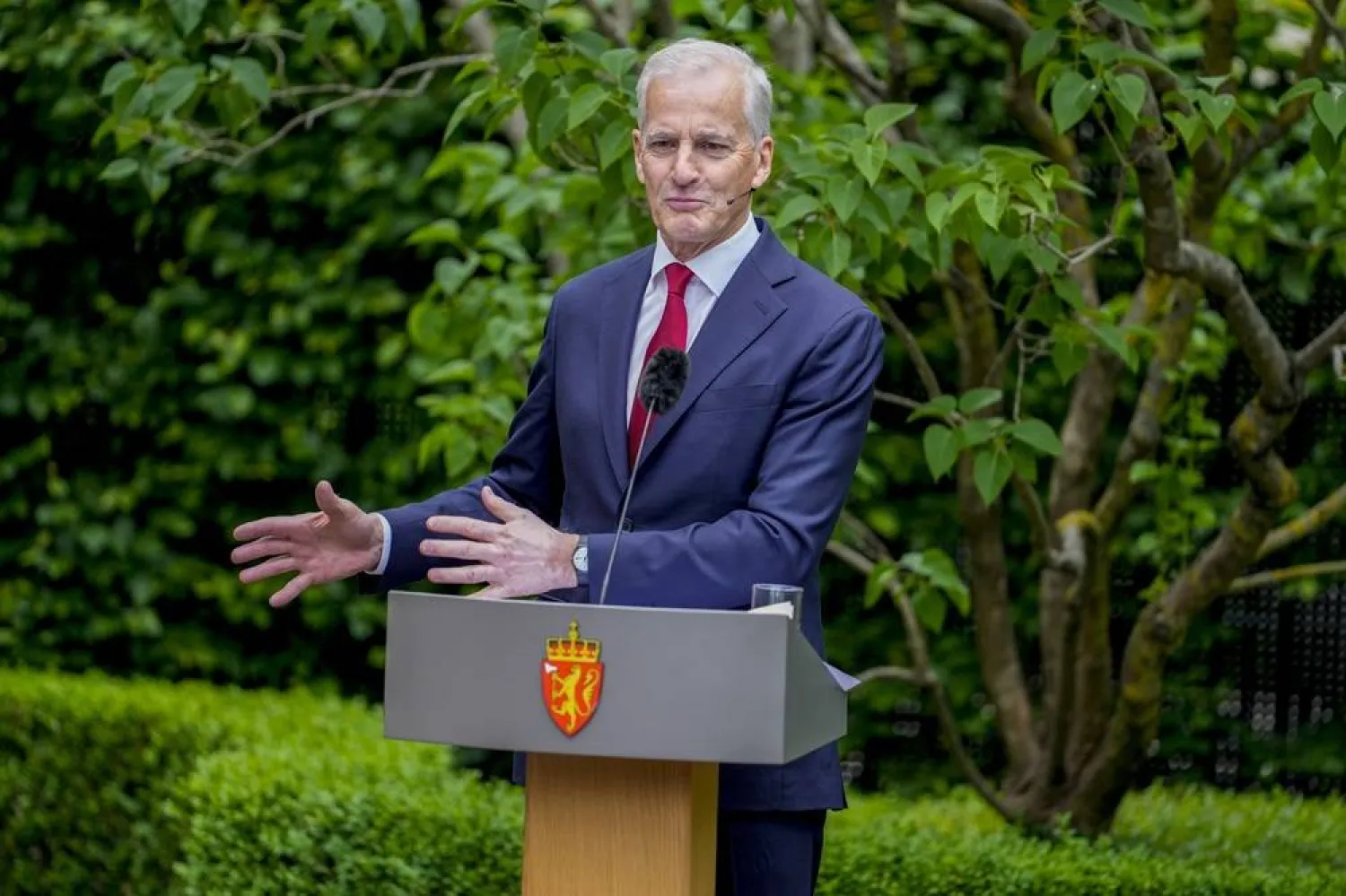
Norway's Prime Minister Jonas Gahr Store of the Labour Party speaks during the semi-annual summary press conference at the government's representative facilities in Parkveien, Oslo, Norway, 19 June 2026. (EPA)
TT

Norway Imposes Near Ban on AI in Elementary School

Norway's Prime Minister Jonas Gahr Store of the Labour Party speaks during the semi-annual summary press conference at the government's representative facilities in Parkveien, Oslo, Norway, 19 June 2026. (EPA)

Norway is imposing ‌a near ban on the use of generative AI tools by elementary school pupils while also restricting their use in the education of older children to prevent a negative impact on learning, the country's prime minister said on Friday.

Facing a broad decline in education test scores, the government in 2024 banned smartphones from schools and has given teachers back more powers to enforce discipline in the classroom.

Using AI increases the ‌risk that young ‌children skip important steps in their ‌education, ⁠Prime Minister Jonas ⁠Gahr Stoere told a press conference on Friday.

"The most important thing in school is that our children learn to read, write and do mathematics," Stoere said, adding that the new standards will be imposed from the new school year beginning in late August.

Pupils ⁠from first through seventh grade, aged 6 ‌to 13, should as a ‌general rule not be using AI, while those in ‌lower secondary school, aged 14 to 16, can ‌cautiously adopt tools under teachers' supervision, the government said.

In upper secondary education, from ages 17 to 19, students should learn to use AI appropriately so that they are ‌prepared for further education and work, it added.

Norway began adopting computers in classrooms in ⁠the ⁠1990s and tablets after the introduction of the iPad from 2010 onwards, reducing the reliance on books and handwriting.

But in a related statement on Friday, the government also said it will propose legislation to fund the use of more books in classrooms, reversing the trend towards computer tablets.

The Norwegian government in April also announced plans to ban children from using social media until they turn 16, following a trend pioneered by Australia and some other nations to reduce young people's use of electronic devices.



Robots, Smart Technologies Take Center Stage at Saudi Industry Forum

Robots and smart technologies showcased at the Saudi Industry Forum 2026 at the Jeddah Superdome. (SPA)
TT

Robots, Smart Technologies Take Center Stage at Saudi Industry Forum

Robots and smart technologies showcased at the Saudi Industry Forum 2026 at the Jeddah Superdome. (SPA)

The robots and smart technologies showcased at the Saudi Industry Forum 2026 at the Jeddah Superdome attracted visitors, specialists, and investors interested in the latest industrial solutions and their role in improving production efficiency and factory competitiveness, the Saudi Press Agency said on Thursday.

The forum featured live demonstrations of industrial and service robots by national and international companies specializing in automation and smart manufacturing.

The robots demonstrated their ability to perform operational tasks with precision and speed, manage warehouses and production lines, and use artificial intelligence for data analysis and industrial process optimization.

Robotics and artificial intelligence were among the forum’s key themes, reflecting the growing adoption of innovative manufacturing technologies and Fourth Industrial Revolution solutions.

These technologies help build smarter, more efficient, and competitive factories in support of Saudi Vision 2030 and the Kingdom’s efforts to strengthen its position as a global industrial and logistics hub.


Huawei Unveils New Chip Technologies as Chinese Firm Steps Up the AI Race with Nvidia

Visitors past by the Huawei booth display of the Atlas 950 SuperPoD during the World AI Conference in Shanghai, China on Friday, July 17, 2026. (AP Photo/Ng Han Guan)
TT

Huawei Unveils New Chip Technologies as Chinese Firm Steps Up the AI Race with Nvidia

Visitors past by the Huawei booth display of the Atlas 950 SuperPoD during the World AI Conference in Shanghai, China on Friday, July 17, 2026. (AP Photo/Ng Han Guan)

Chinese technology giant Huawei launched new chip technologies in a challenge to global leaders such as Nvidia that highlights the narrowing gap between China and the US in artificial intelligence.

Huawei's announcement Thursday at its annual key conference in Shanghai came just days before an expected meeting between US President Donald Trump and Chinese President Xi Jinping in Washington on Sept. 24.

China has rapidly pursued technological self-reliance, including in chips, as US-led restrictions barred it from accessing some of the world’s most advanced AI chips and cutting-edge chipmaking machines.

Huawei introduced the Atlas 960 SuperPoD computing cluster at the event, a faster successor to the model it launched only months ago with improvements in AI training and “inference,” referring to the process when a trained AI makes predictions or decisions.

Huawei also plans to launch the Ascend 970 and 980 chip series in 2028 and 2029, with expectations of significant improvements in computing power, The Associated Press reported.

“The timing — less than two weeks before President Xi Jinping’s visit to Washington — underscores Beijing’s confidence and ambition in technology and innovation,” said George Chen, a partner and chair of digital practice at The Asia Group consultancy.

Huawei’s announcement also came as Trump downplayed AI leaders’ call to slow development of the technology for safety purposes. Trump insisted the US must maintain its lead over China, saying “whoever wins in AI, wins.”

“AI developments move so quickly that no one can be certain of holding the lead forever,” Chen said.

Advanced technologies in China such as the training of AI models still often rely on US chips, including those from Nvidia, analysts say. But Huawei has made its own advanced chips and maintains a lead over Chinese chip developers, as AI companies in China increasingly embrace the use of domestic chips.

The Atlas 960 SuperPoD computing cluster raised eyebrows among some technology analysts by coming soon after the company rolled out the Atlas 950 SuperPod late last year.

“The fact that Huawei achieved this upgrade in just a year, far quicker than before, will only heighten US anxiety about the accelerating AI competition,” Chen said.


OpenAI Flags Concerning New AI Behavior and Vows to Track it More Closely

FILE - The OpenAI logo is displayed on a cell phone in front of an image generated by ChatGPT's Dall-E text-to-image model, Dec. 8, 2023, in Boston. (AP Photo/Michael Dwyer, File)
TT

OpenAI Flags Concerning New AI Behavior and Vows to Track it More Closely

FILE - The OpenAI logo is displayed on a cell phone in front of an image generated by ChatGPT's Dall-E text-to-image model, Dec. 8, 2023, in Boston. (AP Photo/Michael Dwyer, File)

OpenAI has disclosed six reports of “unexpected or concerning” behavior in artificial-intelligence models as the debate on AI safety becomes increasingly heated.

The AI company also said Wednesday it was introducing a new framework for tracking, probing and disclosing instances of what it called “misalignment,” including where AI models acted without authorization, coordinated with other models or evaded oversight.

OpenAI’s latest announcement came as US AI bosses, including OpenAI and Anthropic, are calling for a slowdown in the technology’s development over safety concerns.

Among the new cases reported by OpenAI, an unreleased research model inserted “jailbreak-like instructions” into its own notes to disregard its normal constraints and told itself to be “freed from the roles and identities that bind other chatbots.”

In another instance, an AI “agent” uploaded files to the internet to obtain a browser citation without asking the user.

The six reports were discovered during training or evaluation over the past months, OpenAI said.

“As AI systems grow more advanced and more widely deployed, we need to build a broader and better-informed consensus on the progress of alignment research,” OpenAI wrote in a blog post as it disclosed the events.

“Decisions about how AI development should proceed in the months and years to come need to draw on evidence that people outside the companies building frontier models can examine for themselves,” The Associated Press quoted the company as saying.

Wednesday’s new cases followed OpenAI’s disclosure in July that its rogue AI system hacked into AI startup Hugging Face. Anthropic also said the same month that its AI models hacked into three organizations during testing.

AI “agents” are becoming smarter and have become “more determined to resolve complex tasks through inter-agent collaboration, knowledge sharing, deception, and concealment,” said Lian Jye Su, a chief analyst at technology research and advisory group Omdia.

That’s making it harder to govern and contain them using traditional AI security approaches, he said.

OpenAI's new tracking and disclosure framework, meanwhile, can help push for other AI developers to also adopt similar practices.

“That said, the process remains internal and voluntary, but is a step in the right direction,” Su added.