Some South Lebanon Residents Trickle Back as Israel-Hezbollah Fighting Pauses

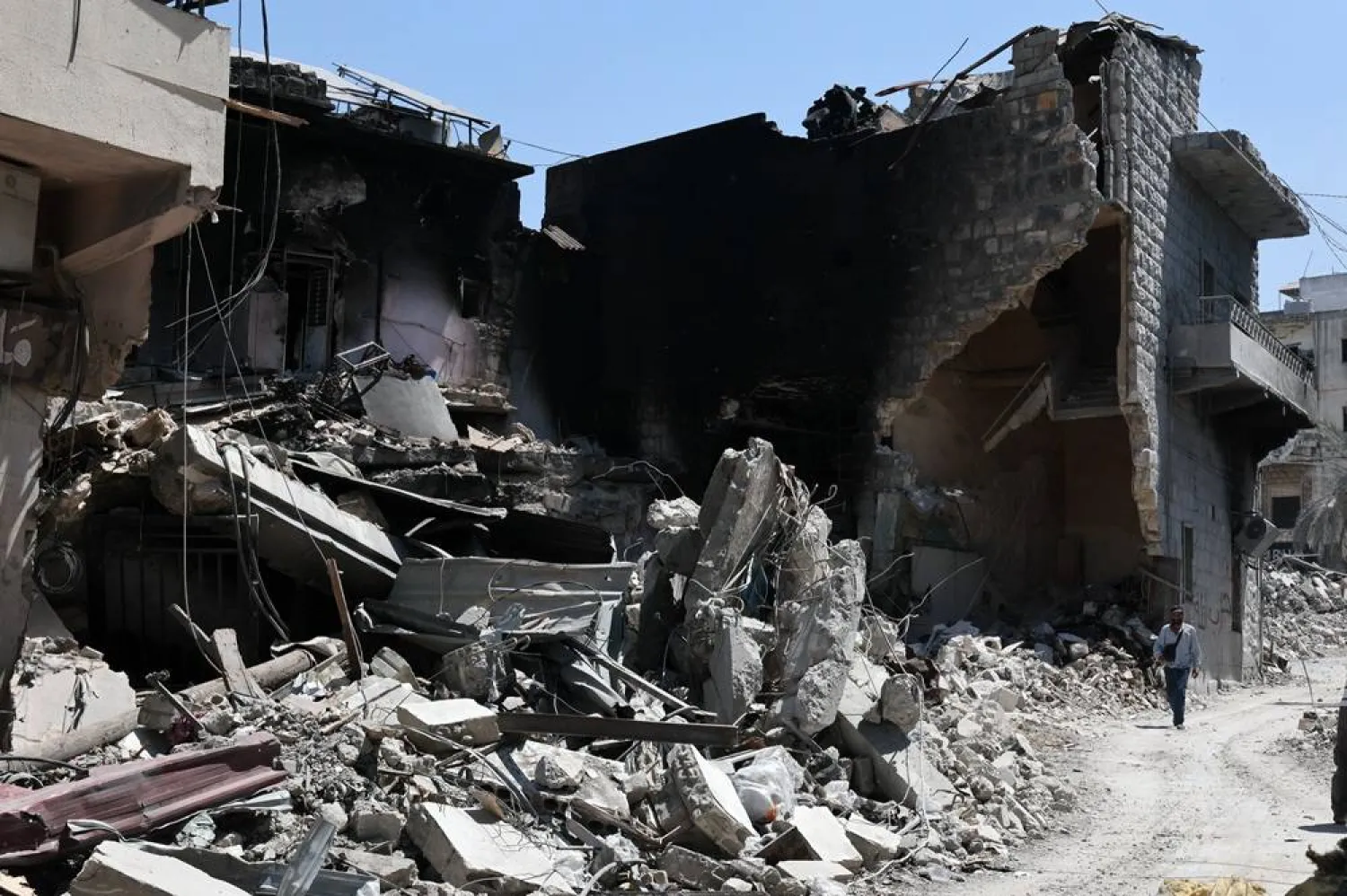
A man walks past a destroyed building targeted by Israeli air strikes on the historic old market in the town of Nabatieh, southern Lebanon, 21 June 2026, following the ceasefire between Israel and Hezbollah. (EPA)
TT

Some South Lebanon Residents Trickle Back as Israel-Hezbollah Fighting Pauses

A man walks past a destroyed building targeted by Israeli air strikes on the historic old market in the town of Nabatieh, southern Lebanon, 21 June 2026, following the ceasefire between Israel and Hezbollah. (EPA)

Some south Lebanon residents cautiously headed back to their hometowns on Sunday after fighting paused between Israel and Hezbollah the previous evening, even as Lebanon's army warned locals to delay returns.

In the southern city of Nabatieh, AFP correspondents saw just a few residents trickling back to inspect homes and businesses.

Mohammad Salloum said he had come back briefly to check on his shop but would return to the city of Sidon further north where he has taken refuge.

"Nabatieh is disaster-stricken," he told AFP while inspecting the damage.

But "God willing, the city will return to life within two or three months", he added.

Lebanon's army on Sunday emphasized "the need for residents to delay their return to southern border villages and towns" and to comply with army instructions "to preserve their safety from the danger of Israeli violations and attacks".

In the southern Tyre region, an AFP correspondent reported a cautious return of some residents, but said many were waiting for the outcome of further Middle East war talks on Sunday and the green light from local authorities.

Hezbollah's backer Iran, which is holding talks in Switzerland with the United States on Sunday, had warned it would not enter into negotiations on a broader agreement with Washington unless the war in Lebanon came to an end.

The latest Israel-Hezbollah ceasefire was announced on Friday, but Lebanese authorities said Israeli strikes on the country's south and east on Saturday killed at least 30 people before fighting paused in the evening.

Israel's Defense Minister Israel Katz on Sunday said Israeli forces had standing orders to act against any threat inside Lebanon, insisting troops would remain in a so-called security zone inside Lebanese territory.

Israeli military operations have recently been focused on the Nabatieh region, and Lebanon's central bank on Saturday said an Israeli strike targeted its branch in the city.

Mayor Abbas Badreddine told AFP that "the scope of destruction in the city of Nabatieh in the past 48 hours amounts to about half of what happened" during the rest of the war.

Lebanon says Israeli attacks have killed more than 4,000 people since Hezbollah drew the country into the Middle East conflict on March 2 with rocket fire at Israel in support of Tehran.


Israel Considers Expelling British Officials from Post-war Gaza Headquarters, FT Reports

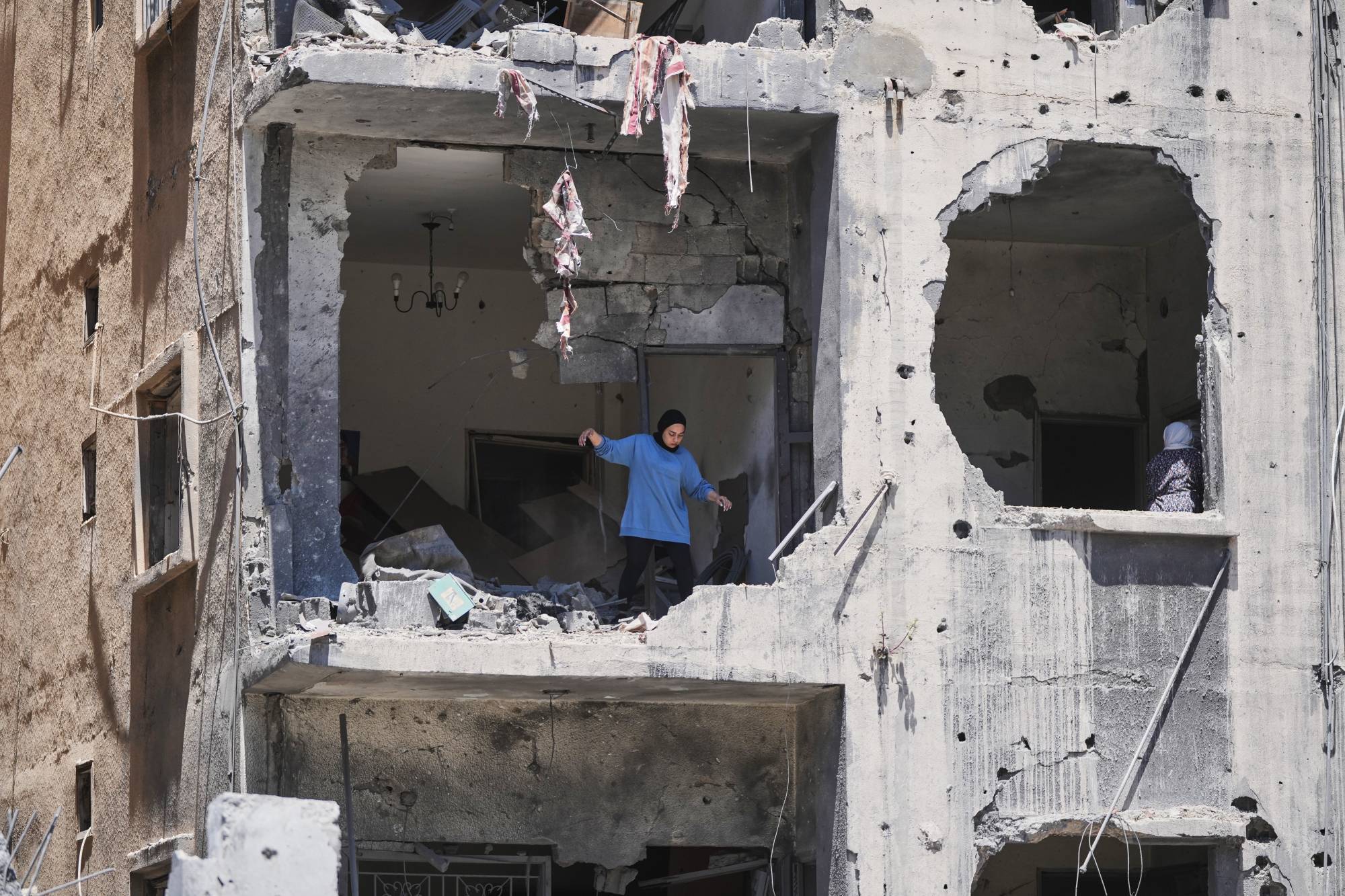
Palestinians look at a food-aid warehouse damaged in an Israeli airstrike that targeted a nearby house in Deir al-Balah, central Gaza Strip, Wednesday, Aug. 26, 2026. (AP Photo/Abdel Kareem Hana)
TT

Israel Considers Expelling British Officials from Post-war Gaza Headquarters, FT Reports

Palestinians look at a food-aid warehouse damaged in an Israeli airstrike that targeted a nearby house in Deir al-Balah, central Gaza Strip, Wednesday, Aug. 26, 2026. (AP Photo/Abdel Kareem Hana)

Israel is considering expelling British, and possibly other European officials, from the US-led coordination center for ‌post-war Gaza, ‌the Financial ‌Times reported ⁠on Thursday.

The Israeli ⁠government in recent weeks has discussed removing the UK ⁠from the ‌International ‌Gaza Support ‌Center, the multinational ‌headquarters established to monitor the US-brokered ceasefire between ‌Israel and Hamas, the newspaper said, ⁠citing ⁠people familiar with the matter.

Reuters could not immediately verify the FT report.


Arab League: Violations in Palestine Worsen Humanitarian Crisis, Undermine International Law

The League of Arab States logo
TT

Arab League: Violations in Palestine Worsen Humanitarian Crisis, Undermine International Law

The League of Arab States logo

The General Secretariat of the League of Arab States expressed deep concern over continued Israeli violations in the occupied Palestinian territories. It described them as part of a persistent pattern targeting civilians, journalists, and humanitarian institutions and undermining protections afforded under international law, the Saudi Press Agency said on Wednesday.

In a statement marking the first anniversary of the Israeli bombing of Nasser Hospital in Khan Younis, which resulted in the killing of five Palestinian journalists, the general secretariat condemned Israeli measures targeting facilities belonging to the United Nations Relief and Works Agency for Palestine Refugees in the Near East (UNRWA) in Kafr Aqab, north of occupied Jerusalem, with the aim of evacuating and demolishing the facilities.

The general secretariat stressed the need to protect journalists and humanitarian workers and ensure accountability for violations against them.

It also warned that undermining humanitarian operations and restricting aid deliveries to the Gaza Strip are worsening living conditions, particularly for children. It called for the sufficient and sustained flow of humanitarian aid, the opening of crossings, and the expansion of humanitarian space.

The general secretariat stressed that the continuation of such violations without accountability further exacerbates human suffering and undermines confidence in the credibility of the international system.


What Outcomes Will Hezbollah MP’s Visit to Tehran Have on Lebanon?

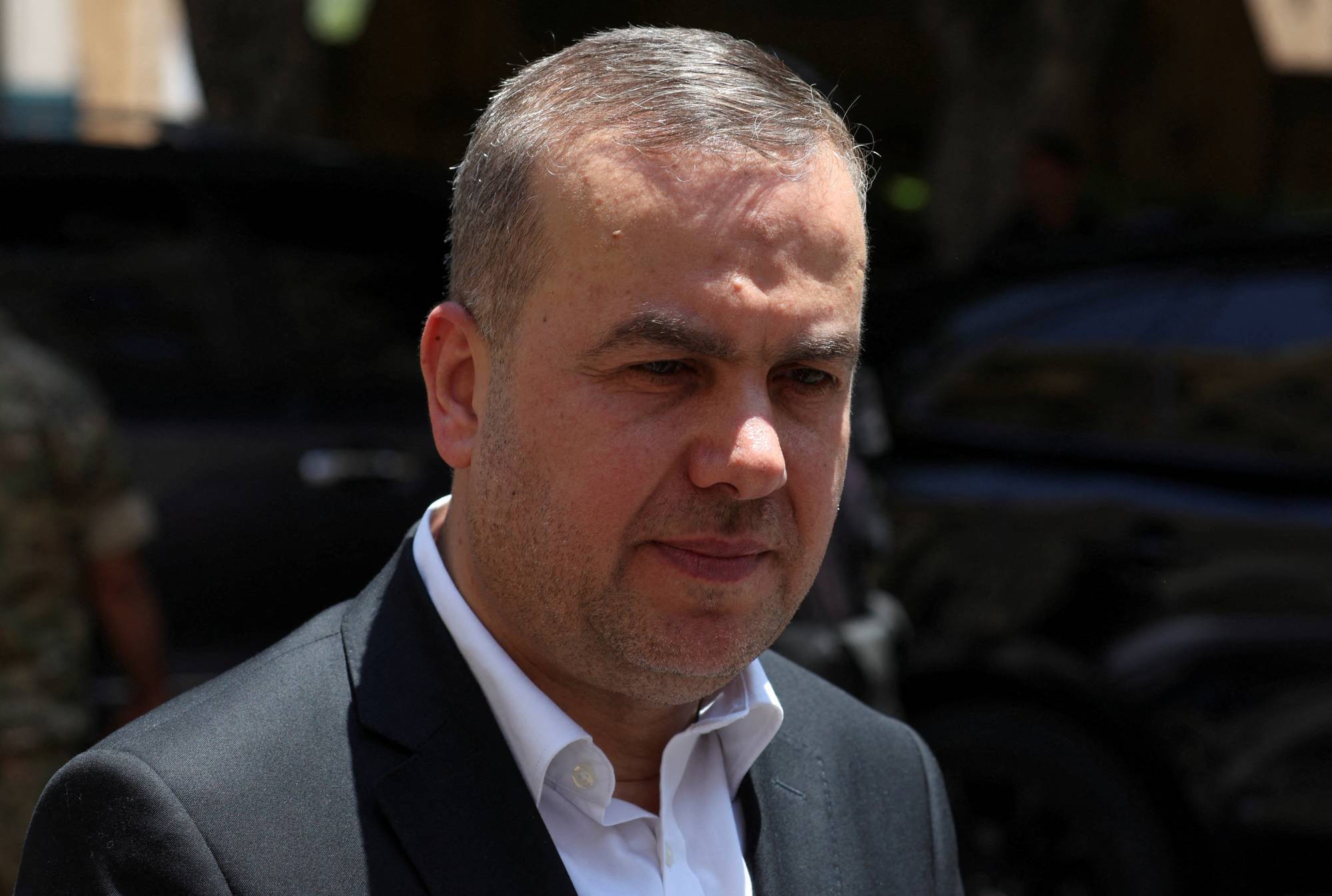
Lebanese lawmaker Hassan Fadlallah, a member of Hezbollah’s parliamentary bloc. (AFP)
TT

What Outcomes Will Hezbollah MP’s Visit to Tehran Have on Lebanon?

Lebanese lawmaker Hassan Fadlallah, a member of Hezbollah’s parliamentary bloc. (AFP)

The importance of Lebanese lawmaker Hassan Fadlallah’s latest visit to Tehran lies not in the trip itself. Hezbollah’s alliance with Iran is public and well established. What stands out is its timing and the way it was announced.

Iran’s Foreign Ministry disclosed the visit as the Lebanese state seeks to chart a political course free from regional rivalries and assert that decisions concerning Lebanon must run through state institutions.

Iran’s Foreign Ministry said two days ago that Foreign Minister Abbas Araghchi received Fadlallah, a member of Hezbollah’s parliamentary bloc, in Tehran. Hezbollah’s representative in Iran, Abdallah Safieddine, attended the meeting.

The ministry said the talks covered the latest developments in Lebanon and Israeli attacks. Araghchi reaffirmed Iran’s support for Lebanon and its “defense of its territorial integrity, dignity and national sovereignty.”

Fadlallah praised Iran’s position and what he called its strong diplomacy, urging a unified Islamic stand against Israel.

Outcomes of the visit

Ministerial sources said Hezbollah’s relationship with Iran “requires no interpretation. It is an alliance both sides openly take pride in.”

“At a time when Lebanese officials are working to separate the two tracks, this visit again raises questions about whether the party respects the role of the state and the positions of its officials,” they said.

The sources told Asharq Al-Awsat: “This is certainly not the first time a Hezbollah official has visited Tehran, nor will it be the last. But it may be the first time such a visit has been announced in this way — through an official statement from the Iranian Foreign Ministry.”

“That gives the meeting an official character that goes beyond receiving a Lebanese lawmaker. It appears almost as a meeting between officials of two states.”

Still, the sources said the key question was what the visit would produce: whether it would ease the process now underway or make it even more difficult, particularly because Fadlallah is responsible for negotiations with the Lebanese presidency.

“Will Hezbollah cooperate with the state in the process it is managing, particularly over negotiations with Israel? Or will it continue rejecting decisions made by state institutions and escalate further?” they asked.

The question is even more pressing as Iranian-American negotiations falter and threaten repercussions in Lebanon, they warned.

Communications cut

The sources said communications between President Joseph Aoun and Hezbollah had been cut, with no recent contact. The only remaining channel is with Parliament Speaker Nabih Berri, Hezbollah’s key ally.

The visit came days after the United States imposed new sanctions on Hezbollah, targeting 10 individuals and a network Washington accused of moving funds between Iran’s Revolutionary Guards’ Quds Force and the Lebanese group.

Hezbollah responded by declaring its pride in its relationship with Iran and reaffirming its commitment to the “path of resistance.”

El Hage: They challenge the state every day

Lebanese Forces parliamentary bloc member Razi El Hage said there was “nothing unusual” about Fadlallah’s visit to Tehran.

Hezbollah has never let a day pass without treating Iran as the foundation of the equation. The group opposed the state and sought to place Lebanon within the framework of Iranian-American negotiations, he told Asharq Al-Awsat.

“This is not a new challenge to the state. They challenge it every day through their positions and their insistence on keeping Lebanese decision-making tied to foreign powers,” El Hage said.

“They must understand that the clock will not be turned back. The state has embarked on a course from which there can be no retreat.”

“They are making the decision to slaughter Lebanon,” El Hage added.

“Our position will remain firm. We will not retreat from our demand that the state alone hold decision-making authority and continue along the path it has begun.”

El Hage also called on the government to enforce its decisions more firmly, saying the state must prove it can assert its authority and protect Lebanon from attempts to keep it an arena for other countries’ conflicts.

Lebanese decisions first

Fadlallah’s visit came as President Joseph Aoun and Prime Minister Nawaf Salam have taken clear positions on keeping Lebanon out of other countries’ conflicts.

Aoun previously said Iran was “using Lebanon as a bargaining chip” in its negotiations with the United States.

He said he was working to implement a policy of distancing Lebanon from regional conflicts and insisted that decisions affecting the country’s sovereignty and security must rest exclusively with the Lebanese state.

Salam previously said: “Once again, the South and its people are paying the price for a decision they did not take. If I may address Iran directly: have mercy on our south and stop treating it as a bargaining chip in your negotiations.”

“Lebanon is not a mailbox for others’ messages, nor a battlefield for their wars,” he stated.