Crude Prices Drop, Most Stocks Rise on 'Positive' US-Iran Talks

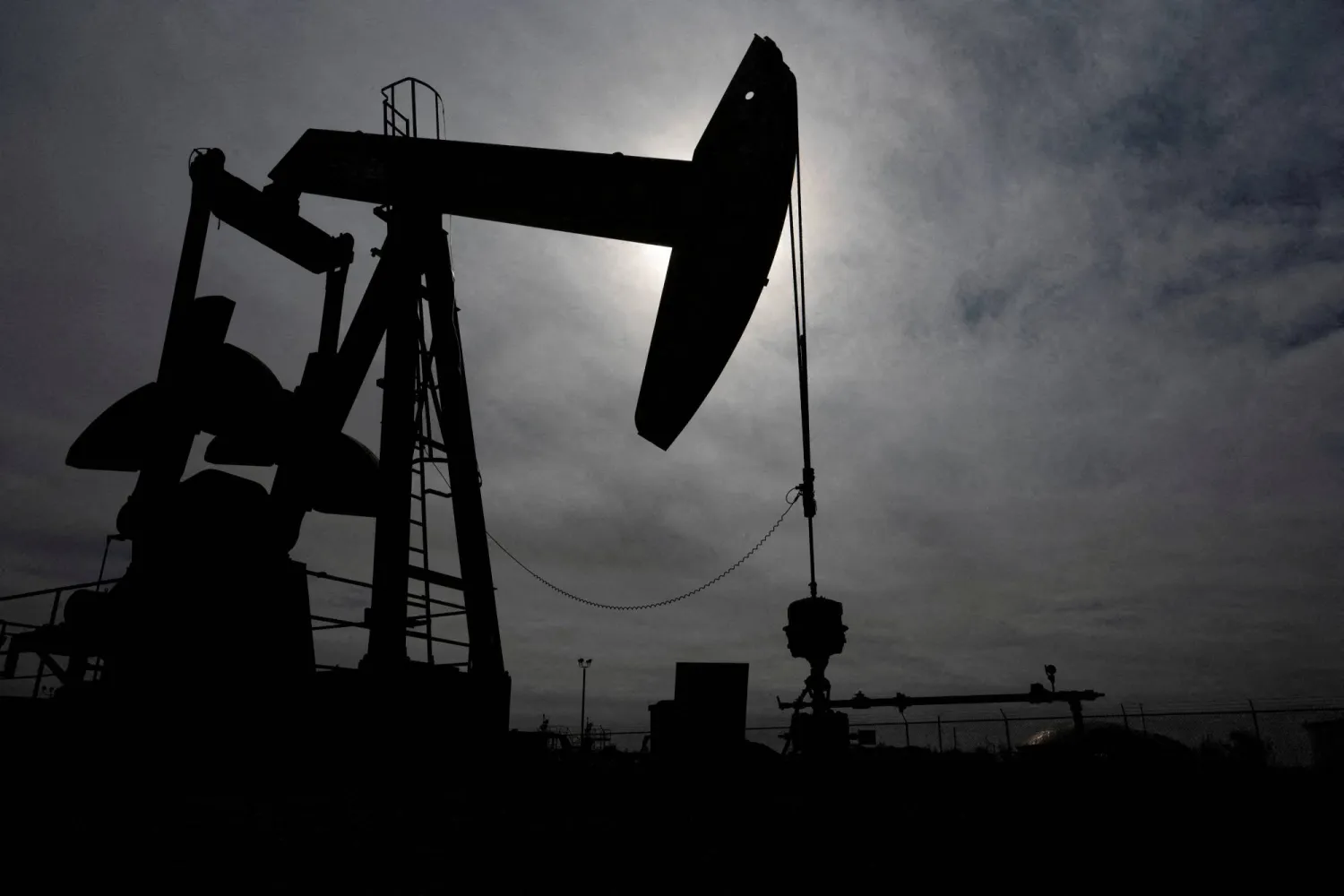
A pump jack operates near a crude oil reserve in the Permian Basin oil field near Midland, Texas, US February 18, 2025. REUTERS/Eli Hartman/File Photo
TT

Crude Prices Drop, Most Stocks Rise on 'Positive' US-Iran Talks

A pump jack operates near a crude oil reserve in the Permian Basin oil field near Midland, Texas, US February 18, 2025. REUTERS/Eli Hartman/File Photo

Oil prices fell Monday on optimism over US-Iran peace talks, with mediators flagging a "roadmap" to a final agreement, while most equities rose thanks to another healthy start for tech firms.

After a meeting planned for Friday was cancelled owing to fighting between Israel and Hezbollah, the negotiations finally got underway on Sunday in Switzerland with teams led by US Vice President JD Vance and Iran's Mohammad Bagher Ghalibaf.

Traders remain in buoyant mood after news that the two foes had ended their conflict, which had sent energy costs soaring and stoking inflation, sending shivers through the global economy.

There were initial jitters following reports that Iran had called off the talks over US President Donald Trump's threat to carry out more strikes if Hezbollah kept attacking Israel, but mediators Pakistan and Qatar said the talks took place in "a positive and constructive atmosphere".

The mood improved as Qatar and Pakistan announced progress, which aim to address Tehran's nuclear program and reopen the Strait of Hormuz, through which a fifth of oil and gas pass.

The two said the United States and Iran agreed to set up a "communication line" to avoid incidents in the crucial waterway, and "the High Level Committee has agreed upon a roadmap towards reaching a final deal within 60 days, laying the foundation for the immediate commencement of further technical talks".

Iranian Foreign Minister Abbas Araghchi added on X that "mediation has delivered major progress to end Lebanon War".

Both main oil contracts fell in early trade, while most stock markets advanced.

Tokyo climbed two percent, Seoul was up more than one percent and Taipei jumped 2.7 percent.

The gains came on the back of another rally in tech firms, particularly chipmakers including South Korea's SK hynix, Taiwan's TSMC and Japan's Advantest.

Sydney, Wellington and Jakarta also advanced, though there were losses in Hong Kong, Shanghai and Singapore.

"Following the positive response last week to reports of a US-Iran ceasefire, markets are likely to open with a cautious tone to start the new week as it remains clear that the situation in the Middle East remains fragile," said National Australia Bank's Skye Masters.

"The dollar is likely to remain supported, the oil price could swing either way but at current levels the risk is for a lift higher."

Sterling remained under pressure after suffering selling following Thursday's election of UK Labor politician Andy Burnham that ramped up expectations he will oust beleaguered Prime Minister Keir Starmer.

The embattled premier "is expected to announce on Monday that he will step down as prime minister after overwhelming pressure from Labor MPs to make way for Andy Burnham", Britain's Guardian newspaper said.

Investors were nervous that Burnham could introduce fresh spending plans that would add to the country's already huge debt pile.


China, US Discuss Tariffs, Farm Trade at First Trade Council Meeting

US and Chinese flags are seen in this illustration taken March 20, 2025. (Reuters)
TT

China, US Discuss Tariffs, Farm Trade at First Trade Council Meeting

US and Chinese flags are seen in this illustration taken March 20, 2025. (Reuters)

China and the United States held their first trade council meeting under a bilateral economic and trade consultation mechanism via ‌video link ‌on Friday, China's ‌commerce ⁠ministry said on ⁠Saturday.

The two sides held "candid, in-depth and constructive discussions" on implementing outcomes ⁠from previous trade consultations, ‌including ‌tariffs, a reciprocal ‌tariff-reduction arrangement involving $30 ‌billion on each side, agricultural trade and other issues of ‌note, the ministry said.

Both sides will ⁠continue ⁠to use the council to address trade concerns, expand cooperation and reduce outstanding issues, it added.


IMF Says More Work Needed on Lebanon Reforms

A man walks past Lebanon's Central Bank headquarters in Beirut on November 10, 2026. (AFP)
TT

IMF Says More Work Needed on Lebanon Reforms

A man walks past Lebanon's Central Bank headquarters in Beirut on November 10, 2026. (AFP)

The International Monetary Fund said on Friday that more work was needed to reach an agreement on restructuring Lebanon's banking sector, one of the steps towards unlocking billions of dollars in financial assistance.

An IMF staff-level agreement reached in April 2022 laid out conditions to unlock assistance, including a law on the distribution of losses in the banking sector, known as the financial gap law, which parliament has still not voted on.

In a statement at the end of meetings that began on Tuesday, the IMF said "there was progress in further clarifying the approaches under consideration by the Banque du Liban (BdL) and the Government regarding banking sector reform, the draft financial regulation law and the recovery of deposits, and aligning them with international standards".

It however noted that "further work is needed to reach an agreement on a strategy for an effective and durable restructuring of Lebanon's banking sector, leading to a sound and resilient system".

The cabinet submitted a draft of the law to parliament in 2025, but the text is contested by the banking sector and political parties, preventing a vote.

Differences over estimates of losses and their distribution have stalled negotiations with the IMF.

In 2022, the government estimated losses resulting from the 2019 financial crisis at around $70 billion, a figure believed to have increased over the last seven years during which the crisis has remained unresolved.

Lebanese Finance Minister Yassin Jaber said during a news conference that he hoped to "achieve progress that would allow us to reach an agreement on a program with the IMF and sign it during the first quarter of next year, and by its end at the latest".

Lebanon's economic crisis, which the World Bank has ranked among the worst since 1850, has deprived depositors of access to all of their funds, destroyed confidence in the banking sector and led to greater reliance on cash liquidity in various economic and commercial activities.


Silver Demand Seen Down 5% This Year Due to Weaker Jewellery Purchases

Silver bars are stacked in the safe deposit boxes room of the Pro Aurum gold house in Munich, Germany, January 10, 2025. (Reuters)
TT

Silver Demand Seen Down 5% This Year Due to Weaker Jewellery Purchases

Silver bars are stacked in the safe deposit boxes room of the Pro Aurum gold house in Munich, Germany, January 10, 2025. (Reuters)

Silver demand is expected to fall by 5% in 2026 due to weaker jewellery demand and lower consumption in solar cells, where high prices have accelerated substitution, research showed on Friday.

Research done by consultancy Metals Focus for the Silver Institute puts demand at 1.08 billion troy ounces this year.

Silver, used in jewellery, electronics, electric vehicles and solar panels as well as for investment, is ‌down 59% ‌to $50 an ounce since retail buying drove prices ‌to ⁠a record high ⁠of $121.6 in January.

The base for that rally was created in 2025, when silver surged 147%, as massive inflows of the metal to US inventories due to tariff uncertainty and into silver-backed exchange-traded products (ETPs) tightened liquidity in the London market.

This year, expectations for higher interest rates, a stronger dollar and higher bond yields have weighed on investment ⁠sentiment.

Silver released through ETP selling, outflows from stocks ‌in the US and a smaller ‌market deficit improved liquidity in the physical market, the Silver Institute and ‌consultancy Metals Focus said on Friday.

Metals Focus sees net ETP ‌outflows of 45 million ounces this year after 278 million ounces of inflows in 2025.

As of early November, ETP holdings stood at 1.25 billion ounces.

Industrial demand is expected to fall by 3% in 2026 as installations ‌in photovoltaics have fallen short of expectations, particularly in China, while January's record silver prices accelerated ⁠substitution.

Meanwhile, demand ⁠for jewellery and silverware is forecast to decline by 22% and 17%, respectively, as higher prices and weaker rural spending in India encouraged purchases of smaller, lighter products.

Demand in China and the US is also subdued. Strong retail investment in late 2025 and early 2026 gave way to far more subdued buying from March as silver prices fell, Metals Focus said.

It expects global bar and coin demand to fall 2% this year, with US retail investment hitting its lowest level since 2010.