


A Red Alert Over France, and Heat That May Rewrite the Record Books

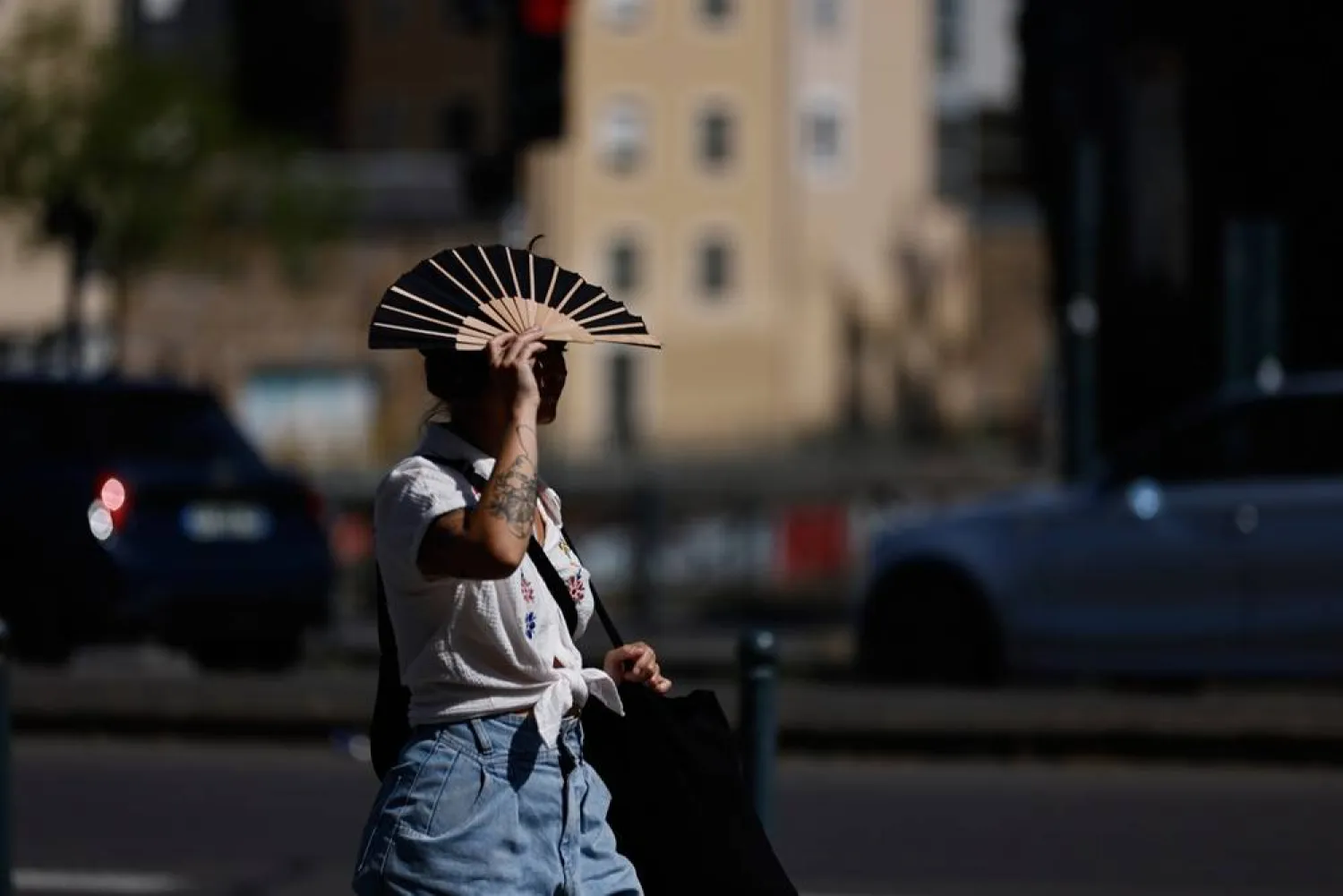
 A woman shields herself from the sun with a fan in Rennes, western France, Monday, June 22, 2026. (AP)
A woman shields herself from the sun with a fan in Rennes, western France, Monday, June 22, 2026. (AP)
TT

A Red Alert Over France, and Heat That May Rewrite the Record Books

 A woman shields herself from the sun with a fan in Rennes, western France, Monday, June 22, 2026. (AP)
A woman shields herself from the sun with a fan in Rennes, western France, Monday, June 22, 2026. (AP)

Millions of people across France woke up drenched in sweat on Tuesday after another night of scorching heat, with most of the population exposed to extreme and exceptional temperatures.

Temperatures will remain exceptionally high around the clock as the national weather service, Meteo France, placed 54 departments under a red heat wave alert.

In a country without widespread air-conditioning, schools, trains and sporting events remain impacted, while some 20 drowning deaths have been reported since the weekend.

Human-caused climate change is tied to increasing extreme weather, and UN climate agency projections say the next five years should shatter more heat records.

“Sunshine continues to dominate across France, maintaining oppressive and exhausting heat throughout the country,” Meteo France said. Extreme conditions are expected to last at least until the end of the week, with daytime highs above 40 degrees Celsius (104 degrees Fahrenheit) in many towns.

“Further record-breaking temperatures are expected, including some that could surpass all previous records, regardless of the time of year,” Meteo France said.

The heat wave is exceptionally intense, coming very early in the summer, “but with a still uncertain duration,” the weather service said. It has already been compared to the August 2003 heat wave, when the highest temperatures in over half a century caused an estimated 15,000 deaths, many of them older people in apartments and retirement homes without air conditioning.

France introduced a heat watch warning system after that heat wave.

Europe is the world’s fastest-warming continent, with temperatures increasing twice as fast as the global average since the 1980s, according to the European Union’s Copernicus Climate Change Service.

Over the last four years, more than 200,000 people across Europe died from heat-related causes, and most of those deaths were preventable, the World Health Organization’s Europe office said this month. The above-average temperatures can cause heat exhaustion and life-threatening heat stroke.

The EU monitoring agency found that in Europe and globally, 2024 was the hottest year on record and the continent experienced its second-highest number of “heat stress” days.

Scientists warn that climate change is exacerbating the frequency and intensity of heat and dryness, especially in southeastern Europe, making the region more vulnerable to health impacts and wildfires.


Sri Lanka Troops to Battle Deadly Dengue Mosquitoes as Cases Rise

A worker from the Medical Officer of Health (MOH) department fumigates a residential area during a mosquito control program in Colombo, Sri Lanka, June 19, 2026. (Reuters)
TT

Sri Lanka Troops to Battle Deadly Dengue Mosquitoes as Cases Rise

A worker from the Medical Officer of Health (MOH) department fumigates a residential area during a mosquito control program in Colombo, Sri Lanka, June 19, 2026. (Reuters)

Sri Lanka is deploying the military to contain the spread of mosquito-borne dengue fever, as health authorities warned on Tuesday that hospitals are being overwhelmed with more than 1,000 admissions daily.

President Anura Kumara Dissanayake's office said army, navy and air force officers would join a special unit to identify and destroy mosquito breeding sites.

Dengue causes high fevers, headaches, nausea, vomiting, muscle pain and, in the most serious cases, bleeding that can lead to death.

Nearly 50,000 cases have been reported this year, with 29 deaths, although that is still far below the 2017 peak, when 186,000 patients and 440 deaths were reported.

The Aedes mosquito that spreads dengue -- identifiable by its black and white striped legs -- breeds in stagnant pools.

"Laws will also be strictly enforced against those allowing mosquito breeding on their premises, in addition to setting up the special military unit," the statement said.

A nationwide campaign to clean up breeding sites will be launched on Wednesday.

The World Health Organization (WHO) has warned that dengue and other mosquito-borne viruses are spreading faster and further due to climate change.

Sri Lanka has seen a surge in dengue cases since the start of June, with more than 1,000 reported in a single day this week, according to official data.

The government's dengue unit said it feared state and private hospitals may not be able to handle a further increase.

"Hospitals are already under pressure," the head of the unit, Kapila Kannangara, told reporters in Colombo. "We don't want to have a situation like the one we faced in 2017."

Monsoon rains, stagnant water from recent flooding, and haphazardly dumped waste have created ideal conditions for the rapid spread of mosquitoes.


Why Do Some Tropical Butterflies Live 25 Times Longer Than Their Relatives?

A Heliconius melpomene butterfly feeds on pollen. (Nature Communications)
TT

Why Do Some Tropical Butterflies Live 25 Times Longer Than Their Relatives?

A Heliconius melpomene butterfly feeds on pollen. (Nature Communications)

Most butterflies have short lifespans, fluttering between colorful flowers for a few weeks before dying, but a few rare exceptions have stumped scientists. Now, some long-lived tropical butterfly species are shedding light on the secrets of longevity.

Butterflies belonging to the Heliconius genus, which inhabit the tropical rainforests of South and Central America, have lifespans that vary wildly. The Dione juno butterfly lives for 14 days after reaching adulthood, while Heliconius hewitsoni lives for 348 days — nearly 25 times longer.

Other Heliconius species also have impressively lengthy lives, enduring between 106 to 277 days, according to a study on the phenomenon published Tuesday in the journal Nature Communications.

Some scientists have speculated that Heliconius’ extended adulthood is due to the insects consuming an enhanced diet, rather than relying purely on carbohydrates like other butterflies.

But the exact reasons behind this unexpected longevity have been unclear, which is what inspired Dr. Jessica Foley, the study’s lead author and a postdoctoral scholar at Tufts University’s Jean Mayer USDA Human Nutrition Research Center on Aging in Boston, to take an in-depth look at the intriguing butterfly genus.

“We see vast differences in lifespan across the animal kingdom — adult mayflies famously live only for a day, whereas some whales and sharks can live for hundreds of years,” Foley wrote in an email.

“I’m interested in the evolutionary basis of these kinds of lifespan differences because they might hold insights relevant for healthy ageing in humans,” she added.

Foley and her colleagues discovered that while nutrition has its part to play, some Heliconius have also evolved an anti-aging mechanism the researchers are still unraveling — and how it could be a model for understanding human longevity.

The new research shows that Heliconius can be a potential model insect group for studying increased longevity, including adaptations that could slow aging and have potential applicability to humans, said Dr. Jaret C Daniels, curator and interim associate director for the McGuire Center for Lepidoptera and Biodiversity at the Florida Museum of Natural History. Daniels was not involved in the study.

“This study reinforces the utility of many insect groups and important model organisms for various fields of research,” Daniels said in an email.

“Since many insects are often overlooked or underappreciated by humans, studies like this can help change that perspective,” Daniels added.


22 Saudi Universities Recognized in QS World University Rankings 2027

File photo of the Saudi flag/AAWSAT
TT

22 Saudi Universities Recognized in QS World University Rankings 2027

File photo of the Saudi flag/AAWSAT

Twenty-two Saudi universities have been recognized among the world's leading higher education institutions in the QS World University Rankings 2027, the Saudi Press Agency reported on Tuesday.

King Fahd University of Petroleum and Minerals topped the list of Saudi universities, ranking 63rd globally and securing a place among the world's top 100 universities. King Saud University ranked 107th globally, followed by King Abdulaziz University in 200th place, Prince Mohammad Bin Fahd University in 421st place, and Imam Abdulrahman Bin Faisal University in 474th place.

The rankings also included several other Saudi universities with a global presence, including Prince Sultan University, King Khalid University, King Faisal University, Umm Al-Qura University, Qassim University, Imam Mohammad Ibn Saud Islamic University, Alfaisal University, Princess Nourah bint Abdulrahman University, Taif University, Effat University, Majmaah University, the Islamic University of Madinah, Northern Borders University, University of Hail, University of Tabuk, and Taibah University.

The continued progress reflects advancements made by Saudi universities in education, scientific research, and innovation. It also highlights the Kingdom's growing presence in global higher education and supports Saudi Vision 2030's goal of building a competitive, knowledge-based economy driven by innovation and academic excellence.
