


Rubio Says US Will Not Accept Iranian Tolls on Hormuz

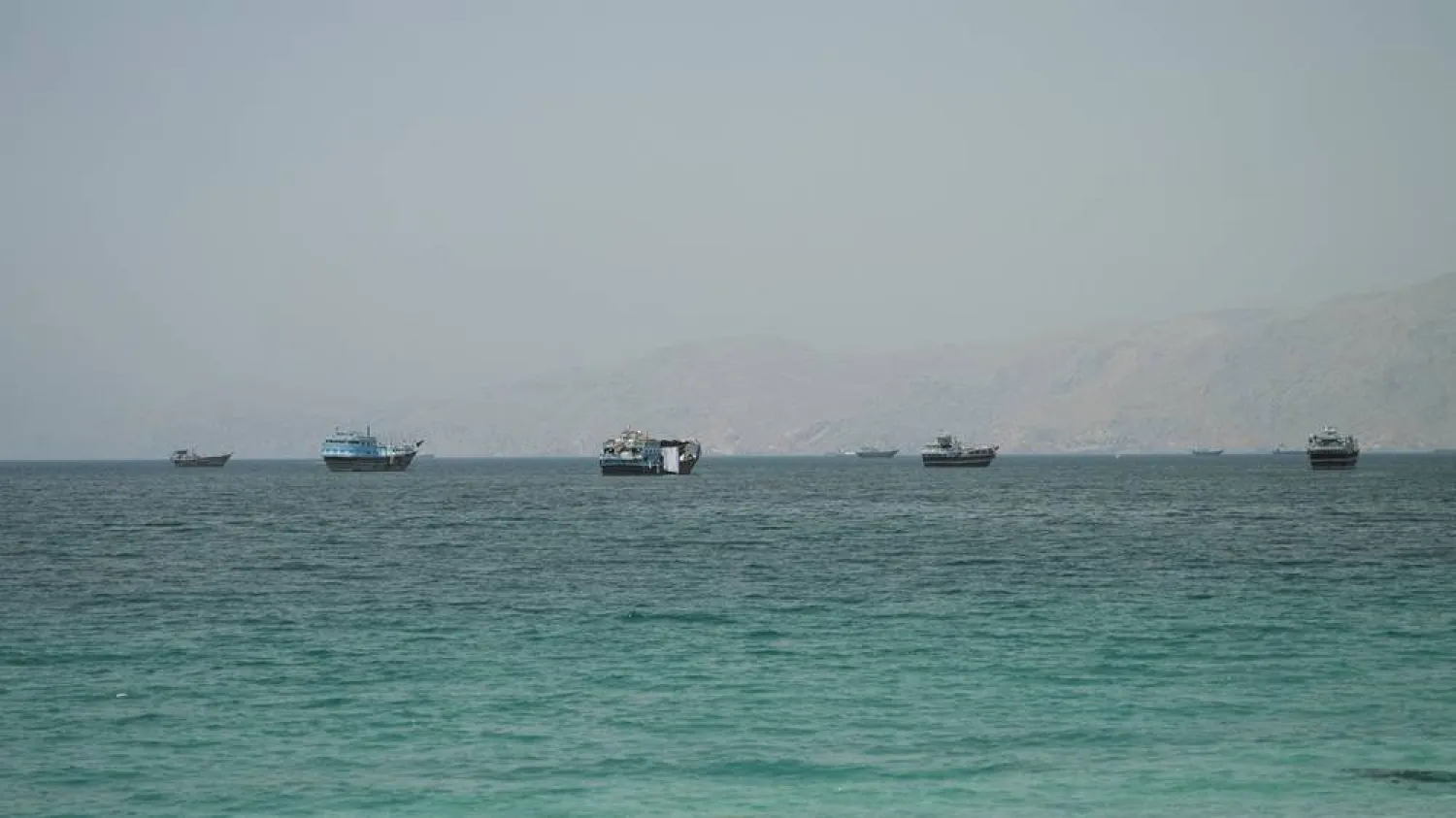
 Vessels at the Strait of Hormuz, as seen from Musandam, Oman, June 22, 2026. (Reuters)
Vessels at the Strait of Hormuz, as seen from Musandam, Oman, June 22, 2026. (Reuters)
TT

Rubio Says US Will Not Accept Iranian Tolls on Hormuz

 Vessels at the Strait of Hormuz, as seen from Musandam, Oman, June 22, 2026. (Reuters)
Vessels at the Strait of Hormuz, as seen from Musandam, Oman, June 22, 2026. (Reuters)

Washington's top diplomat insisted Tuesday that the US would not accept any attempt to impose tolls or fees on Strait of Hormuz, the key waterway where the UN said it would begin evacuating thousands of sailors stranded by the Middle East war 

The US and Iran have signed a preliminary deal to halt the war, and concluded a first round of talks in Switzerland as part of a 60-day negotiation period to settle outstanding issues like sanctions relief and the fate of Tehran's nuclear program. 

An Iranian blockade that began early in the conflict choked off maritime traffic through the Hormuz strait -- sending global oil prices surging -- but crossings have begun to rise again since the US-Iran deal was inked. 

Iran has repeatedly maintained it will retain control over the waterway, including on Tuesday, when it and Oman said in a joint statement that they would study the administration of the trade route and the costs to be charged for services provided, insisting on their sovereignty over the strait. 

But US Secretary of State Marco Rubio, kicking off a regional tour, reiterated Washington's position that such an arrangement would be unacceptable. 

"It's an international waterway. No country is allowed to charge tolls or fees on an international waterway," he said from Abu Dhabi, adding that he believed "all the countries in this region would agree". 

Tehran's top negotiator, Mohammad Bagher Ghalibaf, had earlier insisted the Strait of Hormuz "will never return" to the pre-war status quo, despite the foes agreeing to set up communication lines to keep it open. 

- Muscat meeting - 

Oman and Iran agreed on Tuesday to press on with discussions about the future administration of navigation in the Strait of Hormuz. 

In a joint statement issued after talks in Muscat, they said a joint working group involving their foreign ministries ‌would be ‌formed to continue the discussions and ‌that they ⁠would consult other ⁠littoral states and relevant parties.  

The move appears to implement a provision of the memorandum of understanding signed last week that calls for Iran to hold talks with Oman and other states on the future management of ⁠navigation and maritime services in the strait, ‌a vital waterway ‌for global oil supplies.  

The agreement was announced following a ‌visit by Speaker Ghalibaf and Foreign Minister Abbas Araqchi, who met Oman's Sultan Haitham bin Tariq and held talks with Omani Foreign Minister Badr Albusaidi.  

In the statement, Oman and ‌Iran, the two states bordering the strait, reaffirmed their commitment to ensuring ⁠safe ⁠passage through the waterway in accordance with international law while underlining sovereignty over their territorial waters.  

Since the start of the US-Israeli war against Iran in February, the strait has been largely closed to commercial shipping. The United States blockaded Iranian ports after Iran started effectively blocking the strait.  

Oman and Iran reaffirmed their commitment to the strait being a secure and open route for international navigation and to promoting maritime safety, freedom of navigation and regional stability. 

The head of the UN's International Maritime Organization, meanwhile, said it would begin evacuating more than 11,000 sailors stranded by the Hormuz blockade in cooperation with Iran, Oman and the United States, adding it had "secured the necessary safety guarantees". 

Traffic through the strait on Monday reached the highest level since the start of the war, according to two maritime tracking platforms, representing just over 40 percent of the normal peacetime level of about 120 vessels per day. 


Typhoon Dujuan Leaves 4 Dead in Japan, 45,000 Houses Without Power

Residents cycle through a flooded street after Typhoon Dujuan brought torrential rain to Sakura, Chiba prefecture, Japan, September 22, 2026. REUTERS/Kim Kyung-Hoon
TT

Typhoon Dujuan Leaves 4 Dead in Japan, 45,000 Houses Without Power

Residents cycle through a flooded street after Typhoon Dujuan brought torrential rain to Sakura, Chiba prefecture, Japan, September 22, 2026. REUTERS/Kim Kyung-Hoon

Typhoon Dujuan left at least four people dead and 22 injured in Japan, while thousands of houses near Tokyo were without power after the storm swept through the region, authorities said Tuesday.

The typhoon moved away from Japan's coast and out into the Pacific by morning, allowing authorities to lift or downgrade most heavy rain and landslide warnings.

Dujuan had already led to the early closure in the capital of the one of the world's biggest video game trade fairs.

Japan often sees strong typhoons in the late summer and early autumn, with other storms this season disrupting some events at the Asian Games being held in the country.

The Fire and Disaster Management Agency said three people died in Chiba prefecture and one in Kanagawa region, both near Tokyo.

Search operations were continuing for six people missing after landslides triggered by torrential rain, the agency said, according to AFP.

More than 45,000 households in Chiba near Tokyo were still without electricity on Tuesday afternoon, while over 460 houses were damaged.

Although Dujuan weakened as it moved northeast, it dumped record rainfall in parts of the Tokyo area.

Oshima, an island about 120 kilometers (75 miles) south of central Tokyo, recorded 832 millimeters of rain over 48 hours, more than double its average rainfall for the whole of September, public broadcaster NHK reported.

Rainfall in Tokyo's Edogawa Ward reached a record 282.5 millimeters over 24 hours.

Scientists say human-driven climate change is intensifying the risk posed by heavy rains because a warmer atmosphere holds more water.


G7 Foreign Ministers Call on Iran to Stop Arming Houthis

FILE PHOTO: Flags are pictured during the first working session of G7 foreign ministers in Muenster, Germany, November 3, 2022. REUTERS/Wolfgang Rattay/Pool/File Photo/File Photo
TT

G7 Foreign Ministers Call on Iran to Stop Arming Houthis

FILE PHOTO: Flags are pictured during the first working session of G7 foreign ministers in Muenster, Germany, November 3, 2022. REUTERS/Wolfgang Rattay/Pool/File Photo/File Photo

G7 foreign ministers on Monday called on Iran to end its arming and support of Houthis in Yemen, which they said constituted a dangerous pattern of escalation that risked undermining international trade ⁠and creating global instability.

“We condemn in the strongest terms the unacceptable continued strikes carried out by the Houthis in Yemen and against the Kingdom of Saudi Arabia,” the ministers of Britain, Canada, France, ⁠Germany, Italy, Japan and the United States said in a statement after a meeting on the sidelines of ⁠the UN General Assembly.

“We call on the Houthis to immediately cease all ⁠military actions, all threats and attacks against civilian shipping, and ⁠to return to the political process in good faith,” they added.
The G7 statement comes ahead of the annual General Assembly in New York, where senior Iranian officials are due to speak.

On Monday, the United Nations condemned the continued cross-border attacks by the Houthis against the Kingdom, including an attempted attack on Riyadh and attacks on civilians and energy infrastructure, calling on all parties to exercise restraint and prevent any further escalation.

During a press briefing, spokesperson for the Secretary-General Stephane Dujarric expressed deep concern over the ongoing military escalation in and around Yemen, including Houthi offensives in Taiz, Lahj, and Marib, and their grave consequences for civilians in Yemen and across the region.

Dujarric stressed the need to uphold obligations under international humanitarian law, including the prohibition of direct attacks on civilians and civilian infrastructure.


Argentina Accuses 7 Iranians and a Lebanese Man in 1994 Jewish Center Bombing Case

The aftermath of the bombing that targeted a Jewish community center in Buenos Aires (AFP file photo)
TT

Argentina Accuses 7 Iranians and a Lebanese Man in 1994 Jewish Center Bombing Case

The aftermath of the bombing that targeted a Jewish community center in Buenos Aires (AFP file photo)

An Argentine judge on Monday formally charged seven Iranians and a Lebanese citizen for their alleged involvement in the 1994 bombing of a Jewish community center in Buenos Aires.

The decision marks another step toward a possible trial in absentia over the attack on July 18 that year, which killed 85 people and injured 300 more.

No one has ever been arrested over the bombing of the Argentine Israelite Mutual Association (AMIA), which is considered one of the worst tragedies in the South American country's history.

"The decision to carry out the attack was made in August 1993 by the highest echelons of the Iranian regime and entrusted to Hezbollah," Judge Daniel Rafecas wrote in a statement.

Seven of the defendants held high-ranking positions in the Iranian state when the attack occurred.

The Lebanese national was a Hezbollah member.

Two other defendants were removed from the case due to lack of evidence.

A trial is now a real possibility, but the charged individuals may appeal the indictment.

"There's still a whole process to go through," Rafecas told AFP, noting other necessary procedural steps before a trial could happen.

Argentine President Javier Milei, a staunch ally of Israel, celebrated the decision on social media.

"Morality as State Policy," he wrote on X.

Argentina and Israel have long pointed the finger at Iran as the perpetrator of the attack, which Tehran has always denied.

In a move backed by Milei's right-wing administration, Argentine courts authorized the possibility of a trial in absentia last year.

The attack on AMIA occurred just two years after a bomb at the Israeli embassy in Buenos Aires claimed 29 lives.

Monday's ruling suggested that the two incidents could be related. It sought the Argentine Supreme Court's opinion on potentially linking the two cases given Hezbollah's alleged involvement in both.

Argentina is home to Latin America's largest Jewish community.
