



In Search of Happiness: Young People in South Korea Resort to Dopamine Sites

Instead of spending money, the sites offer a form of digital role-play, capturing the experience of consumption while protecting your bank account (File/Reuters)
TT

In Search of Happiness: Young People in South Korea Resort to Dopamine Sites

Instead of spending money, the sites offer a form of digital role-play, capturing the experience of consumption while protecting your bank account (File/Reuters)

Online “dopamine sites” are now trending among young people in South Korea by offering fake consumption experiences such as a fake food delivery service and a virtual cigarette, all for a quick escape from financial and social pressure.

According to Psychology Today website, these sites capture the pleasure associated with buying without the financial cost, splitting the emotional experience of anticipation from any real-world consequences.

People using these sites have experienced a surge of desire, happiness, or excitement generated by mentally simulating the future purchase. The anticipation often generates a psychological reward equal to, or sometimes greater than, the actual purchase.

We often hear dopamine described as the brain’s “pleasure chemical,” but that description overlooks the role of anticipation. Dopamine plays a major role in motivation, learning, and anticipating rewards. Much of the activity in dopaminergic reward systems occurs before a reward is received.

The sites are hyper-realistic, mocking major Korean e-commerce giants and food delivery apps.

One popular site, FoodNeverComes, mimics a food delivery app where you can compare menu items, read reviews, pick your favorites, fill your cart, and even watch a virtual courier make progress toward your house on a live map.

Other platforms simulate cigarette breaks, allowing users to sit in virtual break rooms with strangers that recreate the ritual of stepping away from work without lighting a cigarette.

The trend has gone viral among young South Koreans facing rising living costs and growing pressure to consume.

Instead of spending money, these sites offer a form of digital role-play, capturing the experience of consumption while protecting your bank account.

According to the Korean Times, one user found the fake delivery site helpful for managing late-night cravings, and a college student reported less loneliness after visiting a smoke-break site while studying for exams.

The Comfort of Rituals

Ordering food, shopping, and taking cigarette breaks are social rituals. They tap into familiar and enjoyable behaviors that provide structure, anticipation, a sense of control, and temporary relief from stress.

Virtual breaks replicate the social and restorative aspects of stepping away from work. Sitting in a simulated break room with anonymous others creates a sense of presence and social connection that, for some users, takes the edge off loneliness.

In digital environments, neural systems involved in empathy and social cognition can bridge the physical gap; by processing virtual people as real, the brain creates the sense of shared experiences that can support empathy and connection.

Coping Skill or Digital Detour?

Reactions to the popularity of dopamine sites have been mixed. The benefits depend on how the platform is used. A virtual experience can be beneficial as entertainment, stress relief, or imaginative play.

However, if virtual experiences replace meaningful real-world activities, if simulated purchases increase a sense of deprivation, or if they reinforce rather than address compulsive behaviors, then the benefits may come with psychological costs.

Whether fake takeout sites catch on in the West remains to be seen. But by splitting the emotional experience of anticipation from the financial transaction, the “dopamine site” trend highlights how much of our enjoyment of consumption rests in the emotions associated with imagined futures rather than ownership itself.

“Better understanding that distinction in our own lives can help us make more intentional choices about how we spend both our time and our money,” the website noted.


Six-year-old Chinese Girl Sets World Record with Rubik's Cube

Erno Rubik, the creator of the puzzle, solves a Rubik's cube as he poses during the world's largest Rubik's Cube championship in Aubervilliers, near Paris, France, July 15, 2017. REUTERS/Stephane Mahe/File Photo
TT

Six-year-old Chinese Girl Sets World Record with Rubik's Cube

Erno Rubik, the creator of the puzzle, solves a Rubik's cube as he poses during the world's largest Rubik's Cube championship in Aubervilliers, near Paris, France, July 15, 2017. REUTERS/Stephane Mahe/File Photo

A six-year-old Chinese girl has set a new women's world record for solving a 3x3 Rubik's Cube in just over four seconds, state media reported.

Young speedcuber Lian Yunzhi broke the women's 3x3 average world record twice this month at two World Cube Association certified competitions in Wuhan and Guangzhou, according to state broadcaster CCTV on Monday.

She posted averages of 4.52 and 4.27 seconds, after solving the Rubik's Cube five times.

Lian, who is from Chengdu, is "the first female speedcuber to average under 4.5 seconds", CCTV added.

A video CCTV posted showed the small girl wearing a red gingham bow on her head as she deftly turned and twisted a Rubik's Cube.

After solving the puzzle she places the cube on the table, claps her hands and pumps a fist into the air.

Nicknamed "Zhizhi", Lian was first introduced to the Rubik's Cube after being enrolled into a class as a child -- one of various extracurriculars alongside dance and music lessons, her mother Lin Yangxi, told local media outlets.

Lin "gradually realized" that cubing was an "excellent activity for fostering a child's comprehensive abilities" and shifted her focus towards it, she told Chengdu's Red Star News, according to AFP.

Her daughter has now mastered over 1,300 Rubik's Cube solving algorithms, practicing daily for two to three hours, Lin said.

Photos from Red Star News showed Lian's trophies displayed on a shelf in her home.

"Solving a Rubik's Cube improves focus, memory, logical thinking, spatial awareness, and helps develop a healthy mindset toward winning and losing," Lin said.

"It's not just about blindly memorizing formulas, but using logical reasoning to find optimal solutions," she added.


800,000 Bees stolen Across Australia in ‘Sophisticated’ Operation

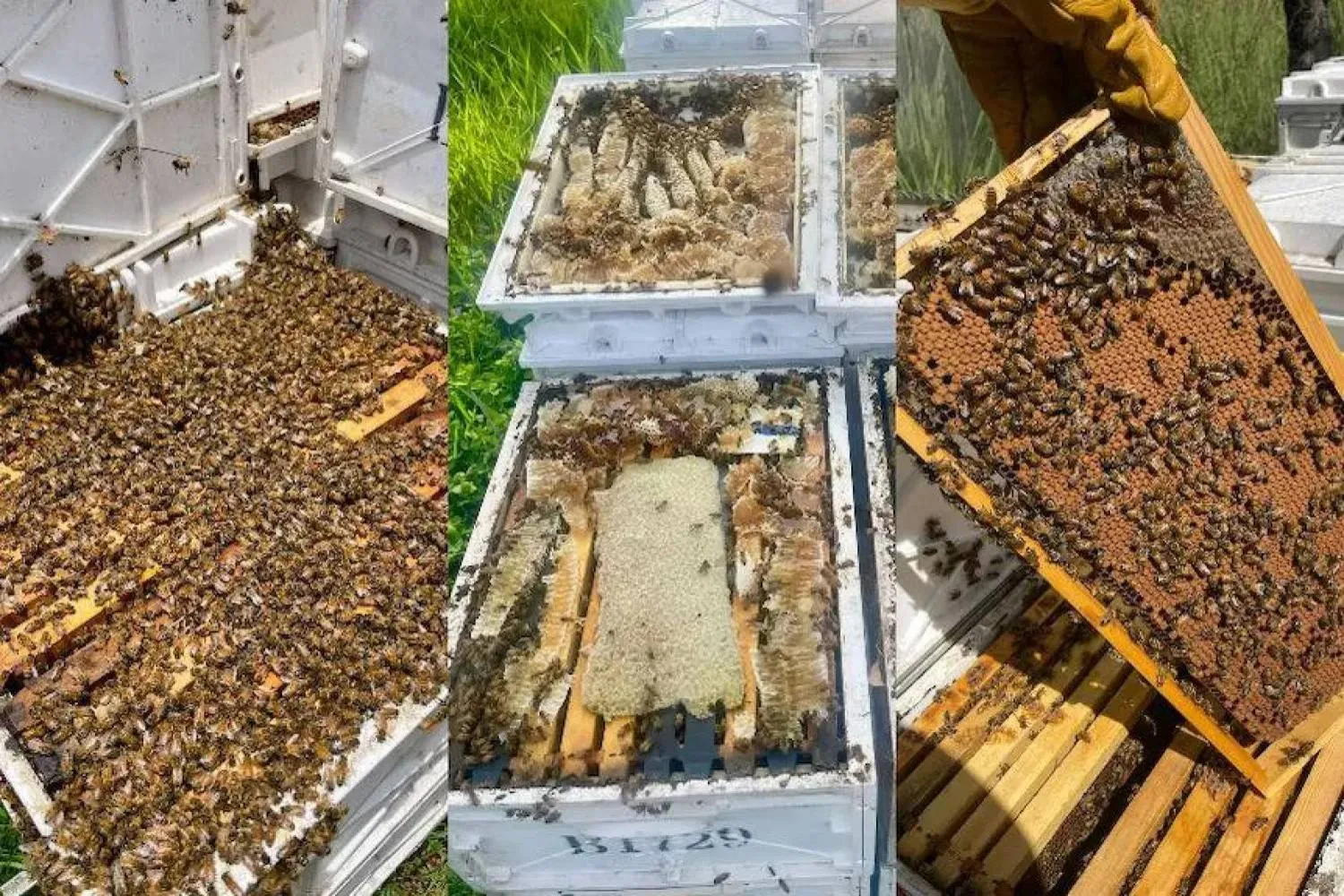
The frames, brood and bees stolen from 41 hives. (Tom Bidner for ABC Network)
TT

800,000 Bees stolen Across Australia in ‘Sophisticated’ Operation

The frames, brood and bees stolen from 41 hives. (Tom Bidner for ABC Network)

An estimated 800,000 bees, worth tens of thousands of dollars, have been stolen from properties in far north Queensland.

The industry is already reeling from this month’s arrival of the varroa mite parasite, according to The Guardian.

Tom Bidner, an apiarist from the Atherton Tablelands, west of Cairns, said 44 colonies had been stolen from three different beekeepers.

“This isn’t over yet,” he said. “We’ve got so many colonies to get through. We’re still getting around and checking all our different sites.”

He estimated that each hive contained at least 20,000 bees, making it a total of more than 800,000.

The alleged thefts happened on multiple different properties in different areas and required a sophisticated operation and specialist equipment.

Rather than risking early detection by stealing an entire box, they took out what’s known as the brood box. That means the hive appears unchanged from afar.

“They’re rocking up with a truckload of gear, basically, and they’re transferring our frames into their boxes ... and putting our hives back together, so it doesn’t sort of alert any of the growers that it looks like someone’s been in and done such a thing,” Bidner said.

The thieves also didn’t take any honey, which was left on the hive.

He suspects that the culprits are probably people from within the industry.

The apiarists will lose not just the stolen insects but the value of the pollination contracts, which can run into the thousands of dollars, he said.

The grower will also lose out due to lower quality flowering.

Bidner said it was the biggest theft in memory, though far from the first.

It’s now the peak of the avocado season in far north Queensland, so hives are deployed at properties across the area on contracted pollination work for local growers. Others are just left on the side of the highway.

“Security wise, in the past, we’ve let the bees do the majority of the job ... from time to time, it definitely happens you’ll have someone try and come and tamper with a hive,” he said. “They usually get about 30 seconds into the job and they’re gone.”


A Cuban Zoo, and its Animals, in Epic Battle for Survival

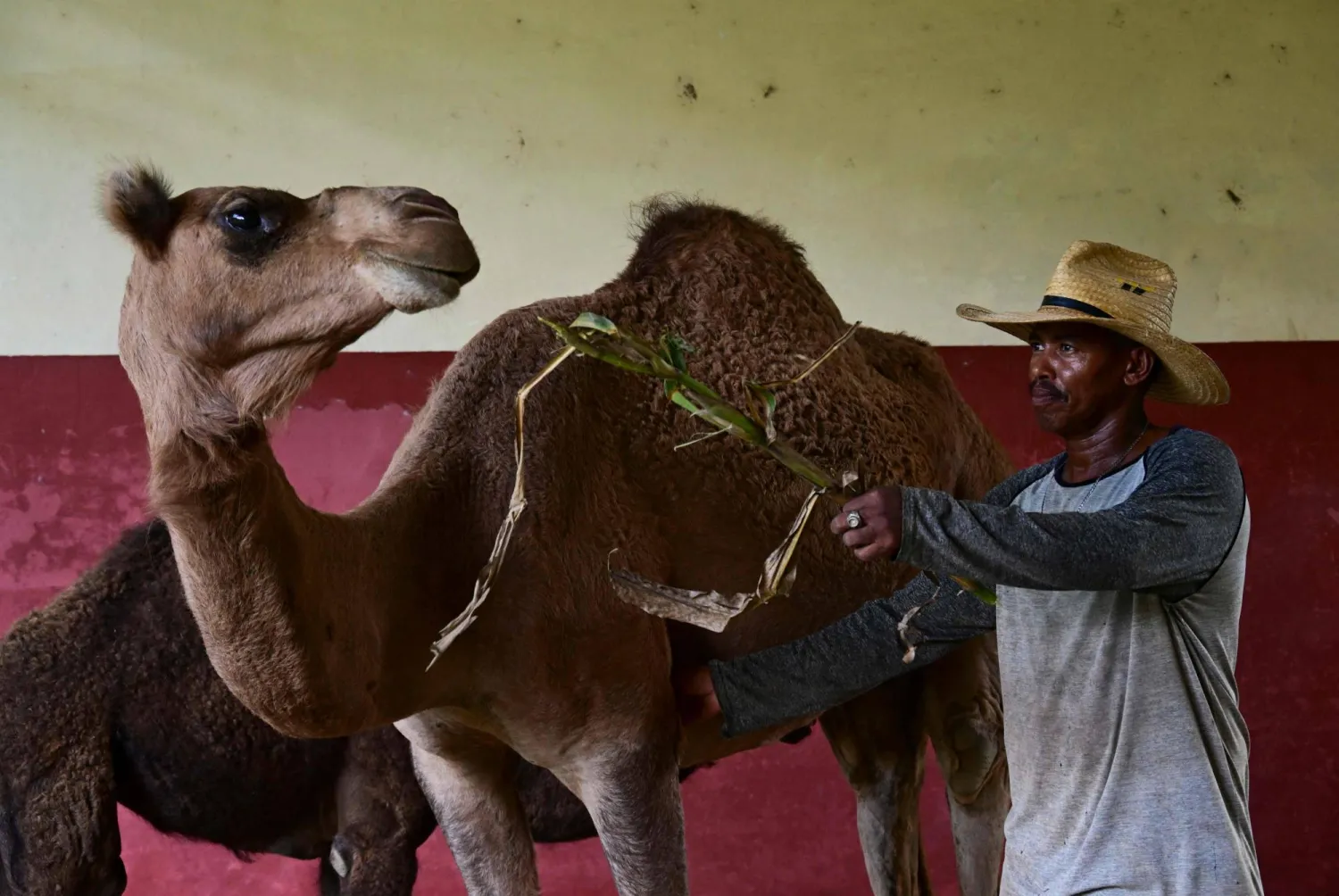
A worker feeds a dromedary (Camelus dromedarius) at the National Zoo of Havana on September 15, 2026. (Photo by YAMIL LAGE / AFP)
TT

A Cuban Zoo, and its Animals, in Epic Battle for Survival

A worker feeds a dromedary (Camelus dromedarius) at the National Zoo of Havana on September 15, 2026. (Photo by YAMIL LAGE / AFP)

Every day, veterinarians and zookeepers make their way to Cuba's National Zoo by whatever means they can, determined to not abandon the nearly 1,000 animals in their care and help save species at risk of extinction.

Their dedication and food donations are vital to keeping alive an array of rhinos, jaguars and tigers -- including an extremely rare white tiger -- in the midst of a severe crisis that has left many Cubans struggling to feed themselves.

Just getting to the reserve situated 20 kilometers (12 miles) from central Havana is a headache for staff, as public transportation has come to a near standstill nine months into a US fuel blockade.

"The workers come by bicycle, pedal scooter or electric motorbike to ensure the animals have food and water every day," said Yoel Machado, the zoo's animal welfare manager.

Their efforts are about more than keeping the animals fed.

The 345-hectare (850-acre) park serves as a genetic reserve of international conservation importance, housing breeding populations of vulnerable or endangered species, including black and white rhinos, hippos and jaguars.

Yet the same crisis that has left workers scrambling to source meat, medicine and water has forced the zoo to curb reproduction programs and increasingly rely on handouts to sustain its animals.

During a recent visit by AFP, two Bengal tiger cubs, one an extremely rare white specimen, frolicked in their enclosure beneath the watchful gaze of their mother, oblivious to the strenuous efforts made to keep them alive.

AFP did not see any animals that appeared malnourished or ill, but Angel Cordero, the veterinarian in charge of big cats, said the tiger cubs "could be in better shape."

He revealed he needed to ration their food to prevent it from running out.

"It's no use giving them plenty if it only lasts three days," he said.

Big cats need about seven kilograms (15 pounds) of meat per day per adult, but such quantities are hard to come by.

Even when it is available, recurring blackouts of up to 30 hours at a stretch make it difficult to preserve.

With fuel extremely scarce, there's also the issue of how to distribute food in a nature reserve the size of New York's Central Park.

For now, private donors have come to the rescue for the zoo's various needs.

Every Monday, Ana Fernandez, a Cuban-American woman born in Tennessee who has been living in Cuba for nine years, donates meat.

"The animals shouldn't have to suffer," the 50-year-old said, though she added that "some days it's not enough for all of them."

Recently, the reserve went 23 days without electricity, which meant it also lacked running water.

The staff "didn't just sit around waiting for things to fall from the sky," the zoo's director Juan Carlos Corella said.

"We looked for solutions, water trucks were brought in, and we found food for the animals almost daily," he said, while admitting that keeping the park open has become "very difficult."

An exodus of vets has added to the zoo's woes.

More than a third have left for better-paying jobs elsewhere, mostly in Cuba's burgeoning private sector.

Some wait tables in cafes while others work for private veterinary clinics.

The zoo is home to the only breeding group of black rhinos outside of Africa, as well as a large population of white rhinos, the largest herd of Grant's zebras in the Americas and hippos that regularly bear calves.

"Here we have a high genetic value, and one of immense international importance," Machado, the animal welfare manager, explained.

However, the crisis has forced the park to slow down its breeding programs.

The reason is simple: each new offspring requires more food, medicine, and staff.

"We can't keep increasing the number of animals," Machado said, adding that he preferred to ensure the current population was "as well cared for as possible."

And yet life keeps renewing itself, regardless.

In recent months the zoo has welcomed baby tigers, hyenas, jackals, and a black dromedary named Esperanza (Spanish for "Hope"), the first of its kind born in Cuba in three decades.