


‘Inhumane’: Gaza Flotilla Activists Recount Israeli Detention Ordeal

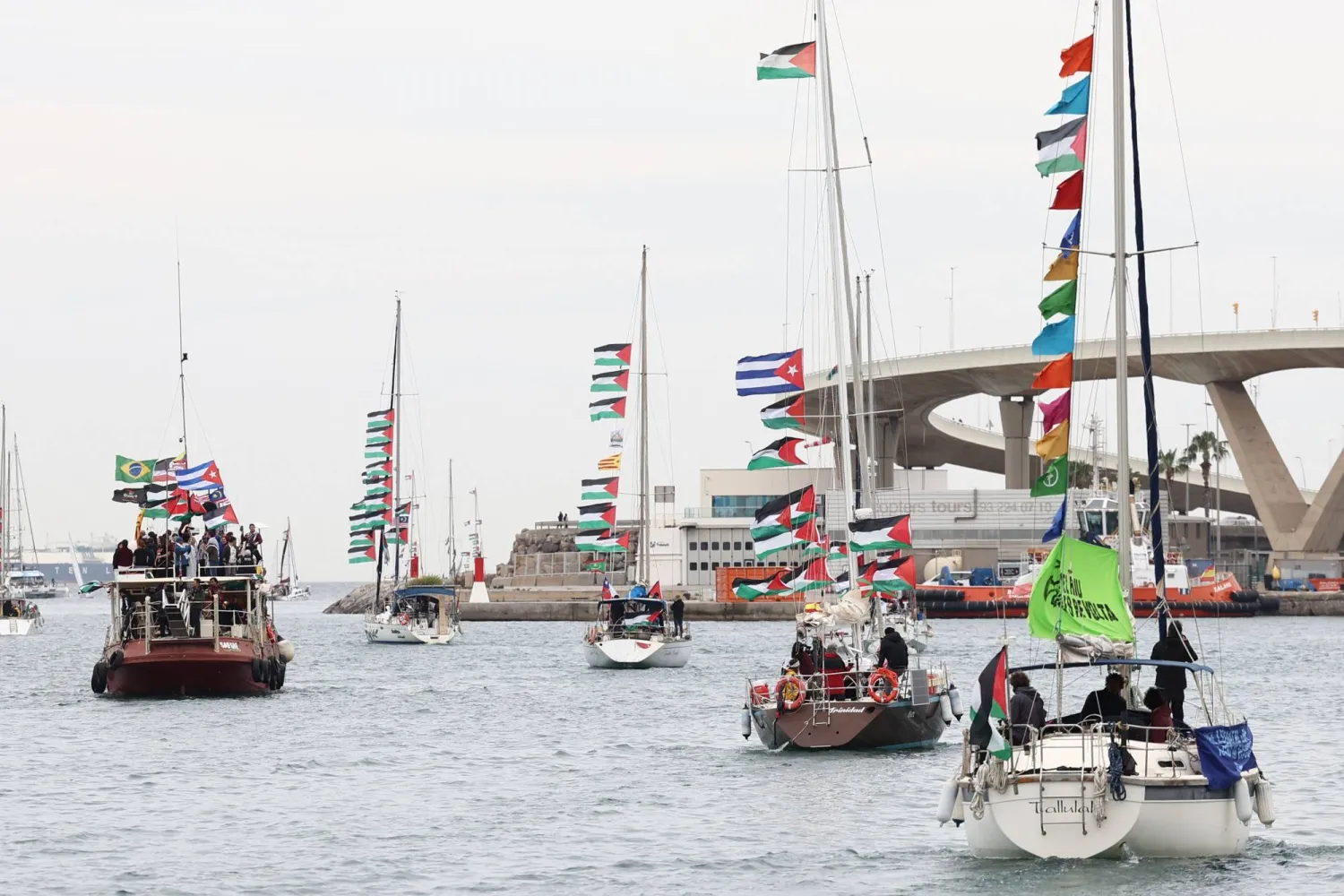
Boats of a new humanitarian flotilla bound for the Gaza Strip make a symbolic leave from Barcelona's Port Vell on April 12, 2026 as the departure of the flotilla has been postponed due to bad weather. (AFP)
TT

‘Inhumane’: Gaza Flotilla Activists Recount Israeli Detention Ordeal

Boats of a new humanitarian flotilla bound for the Gaza Strip make a symbolic leave from Barcelona's Port Vell on April 12, 2026 as the departure of the flotilla has been postponed due to bad weather. (AFP)

Cracked bones, humiliation, sexual assault: Pro-Palestinian activists recounted the abuse they say they suffered from Israeli authorities for taking part in a Gaza-bound aid flotilla last month, which has sparked multiple investigations and international outcry.

France, Italy and Australia have launched probes into the allegations of abuse, which Israeli authorities deny, after more than 430 activists from around the world were detained during the latest attempt by an aid flotilla to break the blockade of the war-battered Gaza Strip.

French nationals Meriem Hadjal, Noe Tissot and Malika Baouya were on the boat Peluxo carrying school supplies, infant formula and medicines when Israeli speedboats intercepted them in international waters.

The activists said they were taken from the boat and violently herded together at sea onto what some called the "torture prison ship".

"I was dragged by the arm and lifted up with my hands tied behind my back. I screamed in pain, I thought my arm had been torn off," said nurse Baouya.

"We walked with our heads down, hands behind our necks. We were made to lie on the floor, in stagnant seawater. Men were tased," she added.

Stripped to little clothing and fitted with numbered wristbands, the activists -- backs bent and limbs shackled -- say they were led one by one towards a dark container.

- 'Afraid they would kill me' -

"When the door opened, I saw a fellow prisoner lying on the floor with his trousers down," said Hadjal, 38.

"A soldier started groping my breasts... I was slapped hard. Then again. Some soldiers tried to push me towards the back of the container. I was afraid they would kill me."

Baouya said she saw an activist on the ground being beaten before three men grabbed her.

One soldier "lifted me up by my hair", while another "tried to rip off my underwear", she said.

The Israeli army told AFP it "rejects allegations of abuse by Israeli soldiers during the operations to protect the legal naval security blockade", saying it requires "respectful and appropriate treatment of flotilla participants on the intercepted vessels".

Speaking to AFP in Melbourne, Australia, activist Violet Coco said soldiers had laughed as they "bashed" her, hitting her in the head and kicking her repeatedly.

Her hand was injured as she tried to protect herself from their blows, she said.

"They were groping into my private parts, I ended up with bruises on my breasts and other places."

The activists were confined for several days to a part of the ship's deck surrounded by containers topped with barbed wire, visible in a highly criticized video released by Israel's far-right National Security Minister Itamar Ben Gvir.

There, Baouya -- who says she suffered a cervical spine fracture after the ordeal -- was with "around a hundred others with disheveled hair and bloodied faces".

Hadjal, who says her foot was injured, said she saw another detainee "come out of the torture container with a swollen face, in a state of shock".

The activists said they slept on the freezing metal and wood floors of the containers, lacking water, hygiene and food, as seawater seeped everywhere.

They accused soldiers of aiming stun grenades and rubber bullets at them.

- 'Speaking out' -

The activists were taken ashore in Israel and detained in Ktziot prison, where they said they met further abuse -- allegations the Israeli prison service has denied.

Security personnel "were insulting us, making animal noises and hitting us with their rifle butts" as we arrived near the port, 32-year-old Tissot told officers of France's crimes against humanity unit.

Inside a tent, "a soldier landed a massive punch on my head and ribs", cracking one, he said in his official statement.

Back in Germany after his release, 29-year-old social worker Johannes Happel told AFP his head had been "slammed against a tent pole" and he "saw a friend being punched and repeatedly thrown to the ground".

"Cruel, sadistic and inhumane are the adjectives that spring to mind for everything I saw," he added.

Another Australian activist, Neve O'Connor, described being forcefully taken off the boat and thrown onto a concrete floor.

"All you can hear is the Israeli national anthem as they're playing it on repeat," she said. "It's so loud and you can hear your friends screaming."

"What we experienced, protected by our passports, is just a taste of what Palestinian prisoners go through," said Hadjal, who sees her testimony as "a weapon".

Baouya, who will give evidence in the French investigation, said she and others were "speaking out not for ourselves, but for the Palestinians".


Trump Renames AI ‘Super Intelligence’ as Leaders Jostle Over Dangers

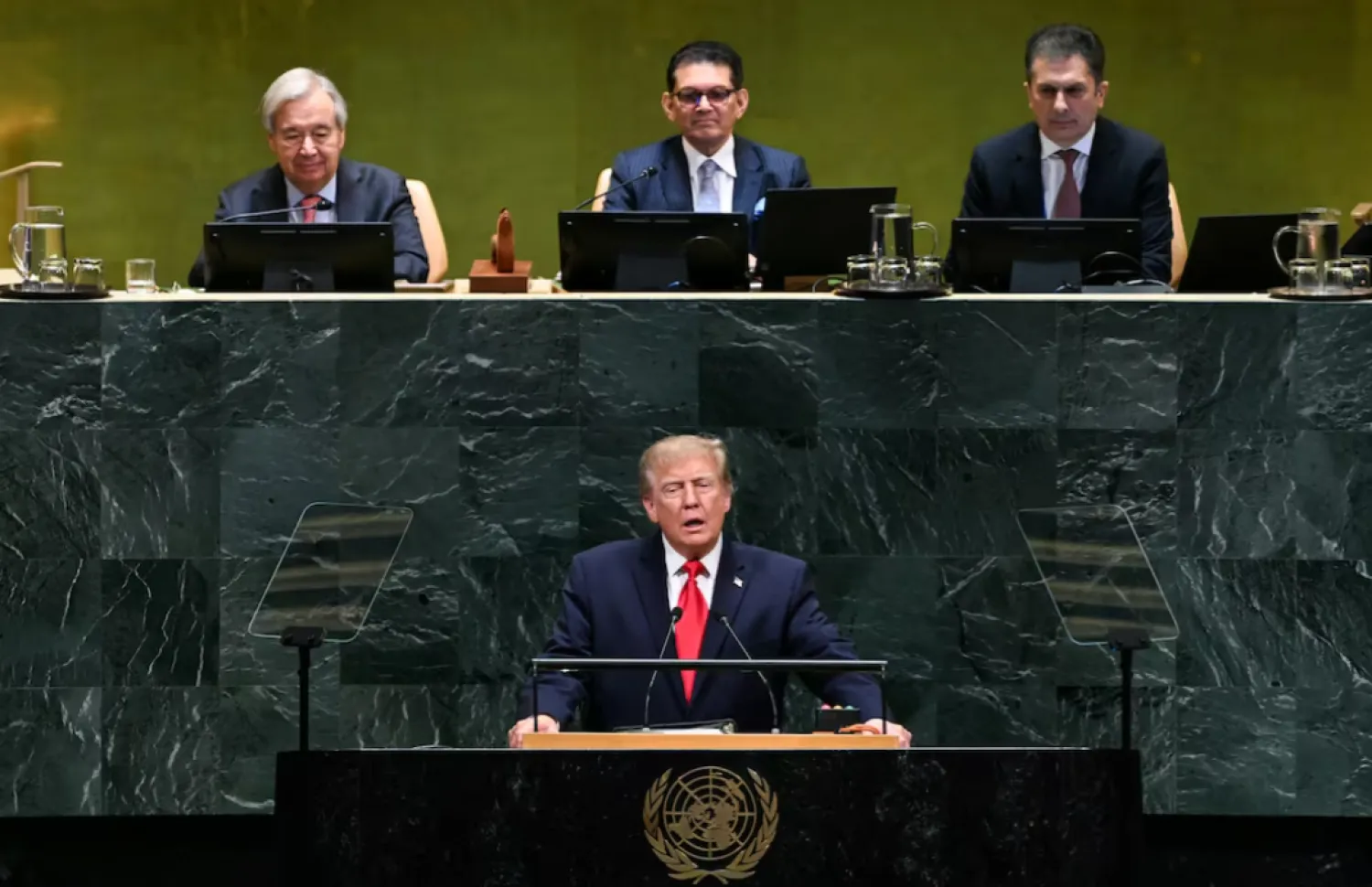
US President Donald Trump speaks during the 81st session of the UN General Assembly at the UN Headquarters on September 22, 2026 in New York City. (Getty Images/AFP)
TT

Trump Renames AI ‘Super Intelligence’ as Leaders Jostle Over Dangers

US President Donald Trump speaks during the 81st session of the UN General Assembly at the UN Headquarters on September 22, 2026 in New York City. (Getty Images/AFP)

President Donald Trump on Tuesday announced that the US government would rename artificial intelligence "super intelligence" in official communications, as world leaders jostled over how to address the dangers of the fast-advancing technology.

AI has become a major topic at the UN General Assembly after incidents of the technology falling out of the control of humans and warnings by company insiders drew global alarm and calls for better government supervision of the industry.

Speaking to the assembly, Trump stood by his firm opposition to regulating AI, while arguing the word "artificial" undersold the technology and voicing hope the rest of the world would adopt the new term.

Super Intelligence "sounds much better" and "it's much more accurate," he said.

The rebrand is the latest in a series of renamings pursued by the Trump administration, which changed the Gulf of Mexico to the "Gulf of America" via executive order last year and, in August, renamed Lake Ontario "Lake America" amid a trade dispute with Canada.

The US leader also compared the warnings of AI safety advocates to warnings about climate change, whose human causes are affirmed by the overwhelming consensus of the scientific community.

"The United States totally rejects any attempt to construct a globalist scheme to control... artificial intelligence," he said.

"Every major new technology brings challenges, and superintelligence is no exception," he added.

"The very same people who said we'll all be dead in 12 years because of global warming... are now saying that AI is going to kill us all, that robots are going to attack us, and that everything is going to be a total disaster."

Ahead of the UN assembly, leaders of more than 20 mostly European countries urged binding safety measures for advanced AI, warning that the technology's development could outpace the ability to control it.

AI superpowers China and the United States did not endorse the idea.

- 'Vassals' -

Speaking on the sidelines of the UN meeting, Prime Minister Andy Burnham said he planned to use Britain's role as host of the Group of 20 next year to push for a "single set of global principles and standards" around AI, according to Bloomberg.

French President Emmanuel Macron proposed building AI technology independent from the great powers.

"I don't want anyone to become the vassal of one of the great powers," Macron told the UN General Assembly, apparently in reference to China and the US.

"Our investment capabilities must be pooled to build a cutting-edge open-source AI model, which we will share. We should not depend on somebody else."

The US-based AI giants themselves are increasingly asking for global coordination on AI safety, with OpenAI's Sam Altman set to address the UN Security Council on Wednesday.

Anthropic chief Dario Amodei and Hugging Face co-founder Clement Delangue will also participate remotely, a French official said Tuesday.

France, which holds the Security Council presidency this month, initiated the meeting and believes AI's threat to international peace and security has not been sufficiently discussed at the UN.

UN chief Antonio Guterres, meanwhile, called for the US and China to start a dialogue on the technology's future akin to US-Soviet engagement at the height of the Cold War.

"Governments with the greatest AI capabilities have the greatest responsibilities to humanity, to establish channels for dialogue," Guterres said in his address to the assembly.

"At a pivotal moment during the Cold War, strategic rivals came to recognize the need to manage shared existential risks."

China and the US are currently discussing creating a communication channel for AI concerns in anticipation of a Washington summit meeting between Trump and Chinese President Xi Jinping on Thursday.


Zelenskiy Says He Discussed Energy Truce, Efforts to End Russia War with Trump

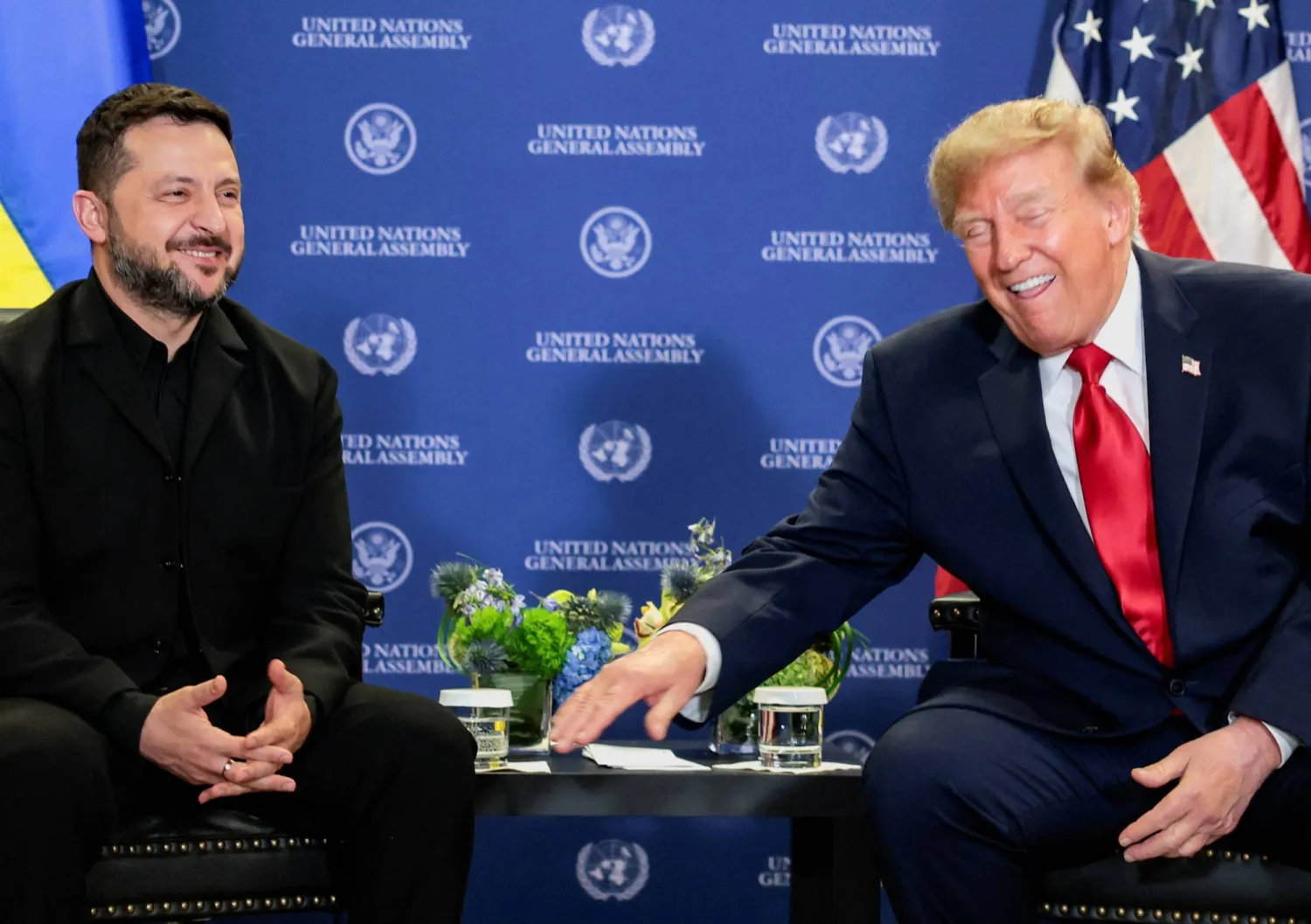
US President Donald Trump and Ukraine's President Volodymyr Zelenskiy react as they meet during the 81st United Nations General Assembly (UNGA) in New York City, US, September 22, 2026. (Reuters)
TT

Zelenskiy Says He Discussed Energy Truce, Efforts to End Russia War with Trump

US President Donald Trump and Ukraine's President Volodymyr Zelenskiy react as they meet during the 81st United Nations General Assembly (UNGA) in New York City, US, September 22, 2026. (Reuters)

Ukrainian leader Volodymyr Zelenskiy said on Tuesday he discussed with US President Donald Trump efforts to end the 4-year-old war with Russia, including a potential bilateral ceasefire on energy-related targets.

Speaking to the media after a 40-minute meeting with Trump at UN headquarters in New York, Zelenskiy said Kyiv was ready for any format of an energy ceasefire with Moscow, but there had been no discussion of Ukraine unilaterally halting its attacks on Russian oil refineries.

Trump, whose approval ratings have slumped to a record low amid high gas prices ahead of the US midterm elections in November, had expressed concern in recent days over ‌the extensive damage done ‌to Russia's fuel-processing capacity, which he said was stoking diesel prices globally.

Zelenskiy reiterated ‌that ⁠he was ready ⁠to meet Russian President Vladimir Putin at a trilateral meeting with Trump, adding that he hoped the US would find a way to bring Moscow back to the negotiating table after talks unraveled earlier this year.

Zelenskiy, however, said he had seen no indication that Putin was ready to talk.

"I'm ready for a trilateral meeting. It means that I'm agreed to end the war," Zelenskiy said.

Before their meeting, Trump told reporters that he and Zelenskiy would discuss Ukrainian attacks on oil refineries.

"It is a serious hit on the Russians. It's ⁠also a serious hit on the price of diesel," said Trump.

He said he ‌and Zelenskiy would also talk about solutions for ending the ‌war, which began with Russia's full-scale invasion of Ukraine in 2022.

"I think it's going to happen," Trump said.

The ‌US leader announced last week that Ukraine and Russia had agreed not to strike energy targets, ‌but any semblance of a truce disappeared when Russia hit petrol stations in Kyiv the following day and Ukraine bombed a Russian oil refinery.

Zelenskiy also met with UK Prime Minister Andy Burnham, who said he lobbied Trump to press for a Ukraine-Russia energy ceasefire in his meeting with his Ukrainian counterpart. Burnham also promised further financial support ‌to Kyiv for infrastructure.

AERIAL ATTACKS

Intensifying aerial attacks by both sides in the Ukraine war in recent weeks have battered ports, warehouses, ships and energy infrastructure, as ⁠well as crippling ⁠Black Sea grain exports.

Amid fears in Ukraine that Russia will once again pound its heating and power facilities as winter approaches, Zelenskiy said he had discussed preparations with Trump and asked the US for a package of Patriot air defense missiles — the only weapon in Ukraine's arsenal capable of downing Russia's ballistic missiles.

The US war in Iran and the Ukraine war have depleted global supplies of Patriots, including US inventories.

Zelenskiy said that, in return for Patriots from US stockpiles this winter, Ukraine would swap future supplies of interceptors from its deal with Germany, which has agreed to provide Ukraine with 600 Patriots in 2027 and 2028.

He told reporters it was a "good step" that the idea was not rejected but acknowledged that Trump had not yet agreed to the proposal.

Zelenskiy said that discussions for Ukraine to begin licensed production of Patriots itself were still ongoing, and a member of his team had held a positive meeting with Raytheon, a US producer of Patriots.


Trump Says US and Iranian Officials Met Tuesday, Shortly After Warning He May ‘Annihilate’ Iran

US President Donald Trump speaks during the 81st United Nations General Assembly at the United Nations Headquarters in New York City, US, September 22, 2026. BRENDAN SMIALOWSKI/Pool via REUTERS
TT

Trump Says US and Iranian Officials Met Tuesday, Shortly After Warning He May ‘Annihilate’ Iran

US President Donald Trump speaks during the 81st United Nations General Assembly at the United Nations Headquarters in New York City, US, September 22, 2026. BRENDAN SMIALOWSKI/Pool via REUTERS

President Donald Trump said US and Iranian officials met Tuesday, an unexpected engagement that came even as he threatened in his address to the UN General Assembly that he may “annihilate” the country if a deal isn’t reached soon to end the nearly seven-month war. 

Trump told reporters that his chief envoys, Steve Witkoff and Jared Kushner, met with the Iranian officials on the sidelines of the annual gathering of world leaders but he offered few details about how the discussions transpired or the substance of the exchange. 

“It was a very good meeting,” Trump said. The president later added that the Iranian officials were “not the highest level, but it’s something.” 

The engagement comes after months of US-Iran communications languishing following the collapse of a short-lived ceasefire that was brokered in June. US and Iranian negotiators met separately with Qatari and Pakistani mediators in Doha in early July for indirect talks. 

Earlier Tuesday, Secretary of State Marco Rubio said that Trump is open to meeting with Iran’s president, Masoud Pezeshkian, while he’s in New York for the General Assembly. 

“This is a president that will meet with anybody for the most part, because he believes that engaging with people is important if you’re going to solve problems,” Rubio said on NBC’s “Today” show. “It doesn’t mean you’re going to end up agreeing with them, but it’s important.” 

Trump also met on Tuesday with leaders and senior officials from Gulf Cooperation Council nations — Saudi Arabia, Bahrain, Kuwait, Oman, Qatar, and United Arab Emirates — as well as Jordan to discuss the way ahead with the war in Iran. 

In his address to the General Assembly, Trump made the case that he's shown fortitude while other leaders have equivocated as he defended his decision to start a war with Iran. 

But Trump also suggested that he could be at a crossroads in the conflict even as he called on Iran to fully reopen the Strait of Hormuz and return to the negotiating table to find a settlement to end the conflict. 

“I have a big decision to make,” Trump said. “Will a deal be made with Iran that lets them rebuild and create a far greater country than it ever was before, maybe one of the greatest in the Middle East or even the world. Or do I annihilate Iran and do it quickly, never giving them a chance to kill and destroy people and countries again?” 

The president's comments came in his wide-ranging address to the international body in which he also celebrated this year's US military operation to oust Venezuelan President Nicolás Maduro from power, a new agreement to expand the US military presence in Greenland, and pushed back against calls for greater regulation of the artificial intelligence industry. 

But at the heart of the address was a fulsome defense of the war and pushback on the notion that Iran has shown a measure of resilience. 

“The terrorist regime is behaving badly, not because they are strong and confident, but because they are weak and desperate," Trump said. 

Most of Iran's delegation walked out of the chamber as Trump railed against Tehran. 

Trump's speech began a busy day of diplomacy 

After his speech, Trump gathered with Danish Prime Minister Mette Frederiksen and Greenlandic Prime Minister Jens-Frederik Nielsen on the sidelines of the General Assembly to sign a new security agreement. 

The deal, announced last week, came together after Trump repeatedly threatened to “take over” Greenland, a territory of NATO-ally Denmark, by military force if necessary. Trump said Tuesday the US will immediately begin the process of developing a larger military presence in Greenland including “building two very major military bases.” 

Under the deal, Greenland remains Denmark’s territory. 

Trump also held talks with new British Prime Minister Andy Burnham, Japanese Prime Minister Sanae Takaichi and Ukrainian President Volodymyr Zelenskyy. He's expected to hold a more informal meeting on Tuesday evening with Venezuela's acting President Delcy Rodríguez, according to the White House. 

Trump also took part in an event on the Shield of Americas, an initiative Trump launched with Latin American countries earlier this year focused on combatting violent cartels. 

Iran war looms large at General Assembly  

The visit to the UN comes as Trump's foreign policy approach — particularly his decision to start a war with Iran — has become a drag on his fellow Republicans' hopes of retaining control of both chambers of Congress during the coming midterm elections. Nevertheless, Trump made the case in his speech that the world is better off for his leadership. 

“I have no interest in leaving dangers to grow for another day,” Trump said. 

In last year's address at the UN, Trump claimed the US had “demolished” Iran's nuclear capabilities after he ordered the June 2025 bombardment of three key facilities. 

He returned to the General Assembly nearing the seven-month mark of a new war against Iran that he insists is necessary to address a nuclear threat posed by Iran. 

The war has grown more complicated even though strikes by the United States and Israel have killed much of Iran's top leadership and destroyed its air force and navy, while a US blockade of Iranian oil has left Tehran in economic shambles. 

The energy market continues to be spooked by the war and oil prices remain elevated. At the same time, territorial grabs by the Yemen-based Houthi militants, another Iranian-backed group, near the Bab al-Mandeb Strait has now made it treacherous for oil carriers to use that Red Sea shipping lane. 

Trump's frustration with Russia-Ukraine war mounts  

In his address, the president also touched on Russia's continuing war against Ukraine — a conflict that during his 2024 campaign he predicted would be resolved on Day One of his second term. He once again expressed hope that the conflict will soon be resolved. 

Trump hasn't obscured that his patience is being tested by Ukraine's targeting of Russia's diesel refineries — an issue that's added to the global oil markets' volatility — and Russia's targeting of Ukraine's energy grid. 

Trump last week asserted that he got the two sides to agree to not target each other's energy infrastructure. 

Zelenskyy had said he was willing to go along with Trump's plan if Russia abided by it. Russia said it could only go along with Trump's energy truce proposal if Western energy sanctions on Moscow were lifted first. 

The two sides have continued carrying out strikes on refineries and other energy infrastructure. 

Trump noted that last week he signed a new sanctions bill targeting Moscow. It empowers him to impose up to 100% tariffs on the top five importers of Russian oil or natural gas. 

The legislation includes an exception for countries that import less than 15% of Russia’s natural gas exports and have taken significant steps to reduce those imports. Trump, however, has yet to enact the stiff penalties. 

“If necessary, I will have to use them,” Trump said. “It’s time to stop the killing.”