



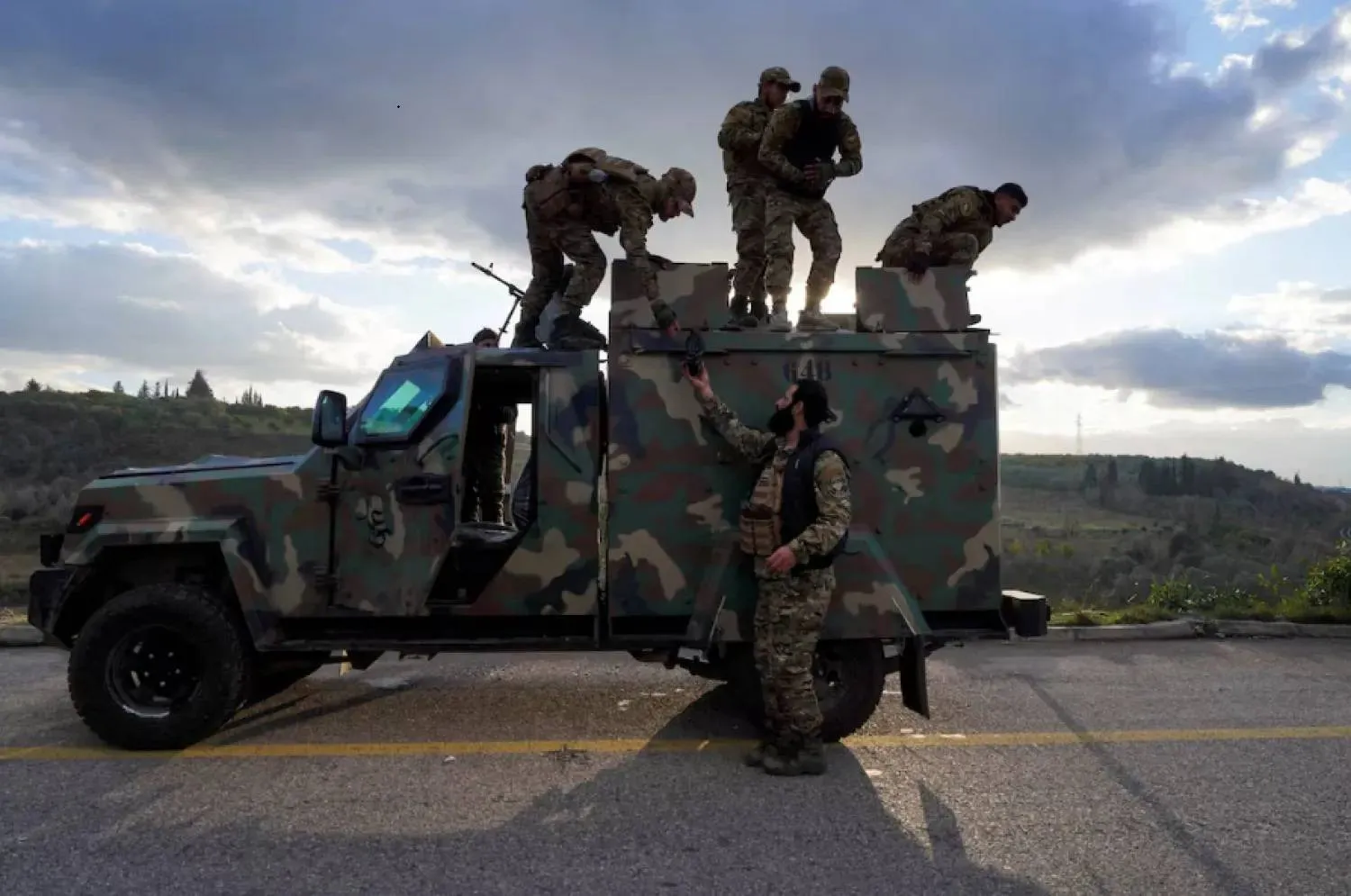

The recent killing of two Syrian army members near Manbij, east of Aleppo, was not an isolated attack. It was part of a recurring pattern of strikes on government forces, exposing serious administrative and security gaps that groups opposed to Syria’s new administration are using to target its personnel.
Syria’s Ministry of Defense media and communications department said on June 20 that two soldiers from the 76th Division were killed after unknown gunmen attacked them near Manbij.
The soldiers were riding a motorcycle on a road near the city when they came under direct fire.
Since the fall of the Assad regime, Asharq Al-Awsat has tracked many similar attacks on Syrian security and army personnel. Most have occurred as members were heading to or leaving their posts, often on motorcycles or via irregular transport.
Many see the pattern as evidence of weak protection measures and poor organization of personnel rotations.
Rural Aleppo has witnessed several assassinations this year. Among the most prominent were the killing of two Syrian army members in March and another member of the Interior Ministry in April near the town of al-Rai.
Similar incidents have also been reported across most Syrian provinces, including Daraa, Latakia, rural Hama and Homs.
Embarrassing the Syrian state
Demands have grown for personnel to avoid moving alone, wearing military uniforms or using motorcycles in remote areas where the risk is high and support is hard to reach.
Major Khaled al-Abdullah, director of the Syrian interior minister’s office, said the defense and interior ministries had repeatedly issued circulars banning personnel from wearing official uniforms outside working hours and requiring them to follow safety measures suited to Syria’s current conditions.
He said the immediate aim of attacks by groups opposed to the new administration, including Islamic State and remnants of the ousted regime, was to “try to embarrass the Syrian state.”
Abdullah stressed that authorities were working hard to impose security, eliminate armed groups and organizations, and had made significant progress on what he called a difficult path.
But in remarks to Asharq Al-Awsat, he also pointed to “continued internal and external challenges that the Syrian state is working to overcome and whose danger it seeks to end.”
Manbij, the most dangerous route
Abu Mohammed al-Hussein, who oversees a cluster of checkpoints in eastern rural Aleppo, said the movement of personnel had become a problem. He said he had repeatedly asked for buses to transport rotating shift members, especially in rural areas far from the city center.
Hussein said one member of his checkpoint group survived an assassination attempt on the Manbij-al-Bab road in eastern rural Aleppo at the end of March. The incident pushed him to issue special orders regulating how his personnel move.
“A civilian car offered to take one of my men to Aleppo city,” he said. “After they had driven several miles, they claimed there was an emergency and said they had to return. As soon as he got out, the driver’s companion fired several shots at him with a pistol. Two hit his magazine pouch and one pierced his foot. He survived by a miracle.”
He said shift rotations are “decided centrally by sector commanders” and are often carried out at night because service areas are far from where personnel live. He said a ban on carrying weapons and moving through residential areas had also made personnel easier targets.
“With repeated assassination attempts, I issued a decision banning nighttime shift rotations, prohibiting movement in civilian cars or on motorcycles, which have also become easy targets, and limiting transport to road security vehicles,” he added.
Hussein said they were still waiting for approval of a request to allocate a bus to transport security and military checkpoint personnel deployed along the Aleppo-Manbij road.
He described it as “one of the most dangerous land routes,” linking Aleppo to outlying areas and Raqqa province, and passing through an area that remained for years under the control of the ousted regime and the Syrian Democratic Forces.
Ban on keeping weapons
Haider al-Mohammed, a special tasks member, disagreed. He said “transport buses are, in practice, the easy target” and are often attacked, meaning the problem of securing personnel goes beyond transport.
He said decisions that stripped personnel of the means to protect their safety and identity were the direct reason behind the rise in assassinations, alongside the exceptional conditions in the country and the process of “clearing out groups that believe they can create chaos and fear.”
He said among the most important of these decisions were “the ban on wearing face coverings, the ban on keeping registered weapons, and the strict instruction not to carry personal weapons, along with leniency over wearing official uniforms.”
As a result, he said, personnel are exposed, easy targets for these groups, and left without weapons to defend themselves.
On this point, Major Khaled al-Abdullah said Syria’s security and military institutions were working to “implement solutions to facilitate and reduce regular movement in a way that helps end the threat and strengthen the safety of their personnel.”
He said the pattern of attacks “confirms their randomness.” The failure to select specific targets or have prior knowledge of the personnel being targeted, he said, was “an attempt to create chaos and confuse the Syrian state.”


