


Supreme Court Allows Trump Administration to End Legal Protections for Haitians, Syrians

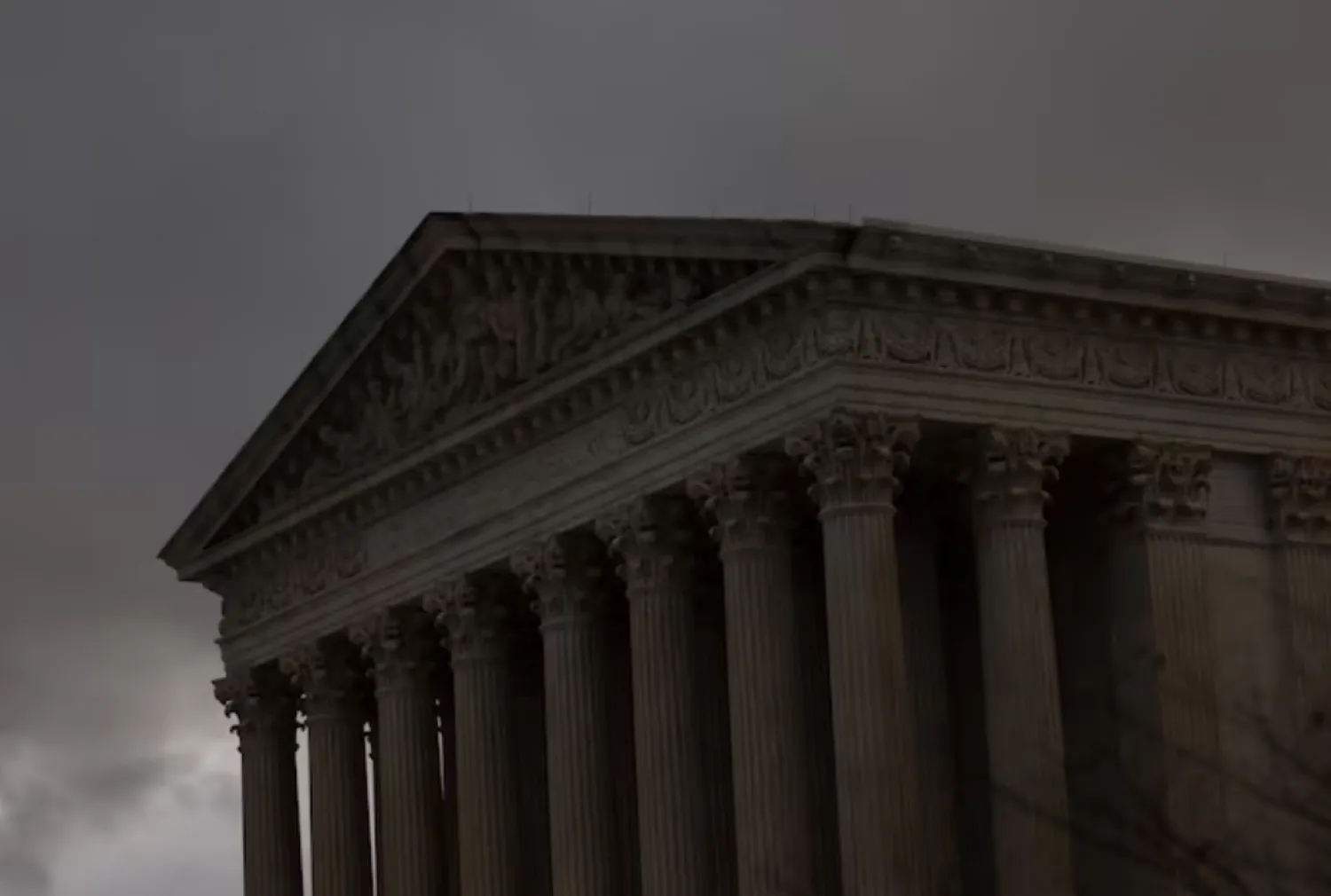
The sun sets on the US Supreme Court building after a stormy day in Washington, US, November 11, 2022. REUTERS/Leah Millis
TT

Supreme Court Allows Trump Administration to End Legal Protections for Haitians, Syrians

The sun sets on the US Supreme Court building after a stormy day in Washington, US, November 11, 2022. REUTERS/Leah Millis

The Supreme Court on Thursday allowed the Trump administration to end legal protections for migrants fleeing violence and natural disaster in Haiti and Syria, exposing hundreds of thousands more people to potential deportation.

The 6-3 decision overturns lower court orders and allows the Department of Homeland Security to swiftly end temporary protected status, a program that protects a total of 1.3 million people from 17 countries.

The Trump administration argued judges that can't second-guess immigrations officials' decisions about the protections, which were intended to be temporary.

Immigration attorneys said the countries remain unsafe to return, and the administration ended them in an unlawfully hasty process tinged by racial animus. During his 2024 presidential campaign, Trump amplified false rumors that Haitian immigrants were abducting and eating dogs and cats.

The Justice Department appealed to the Supreme Court after judges postponed the end of the program for about 350,000 Haitians and 6,000 Syrians. The high court sided with the administration before and allowed the end of the program for people from Venezuela.

Federal authorities deny that racial animus played a role. They also cited a Supreme Court decision from Trump’s first term that rejected bias claims based on his social media posts and upheld a travel ban on several Muslim-majority countries.

DHS has ended the protections people from 13 countries since Trump returned to the White House in January 2025, including some that had been in place for more than a decade, The AP news reported.

The terminations were made even though countries like Haiti and Syria remain dangerous, immigration attorneys said. Four Haitian women who were deported from the United States in February were found beheaded and dumped in a river several months later, lawyers said in court documents.

The House passed legislation with a rare bipartisan vote in April that would extend protections for Haitians, though the bill has languished in the Senate.

The US first granted protections to Haitians in 2010 after a catastrophic earthquake, and extended them multiple times amid ongoing gang violence that has displaced more than a million people, according to court documents.

Syrians, meanwhile, were first granted protected status in 2012, during a civil war that lasted for more than a decade before the fall of President Bashar Assad’s government in late 2024.

TPS was created by Congress in 1990 to prevent deportations to countries suffering from natural disasters, civil strife and other instability. It allows people already in the country to stay with work permits in increments of up to 18 months, but it doesn’t provide a path to citizenship.



US Invites Putin to December G20 Meeting, Possible Trump Summit

Russian President Vladimir Putin holds a meeting with members of the Russian government via videoconference at the Novo-Ogaryovo state residence, outside Moscow, Russia, 23 September 2026. (EPA/Vyacheslav Prokofyev / Sputnik / Kremlin Pool)
TT

US Invites Putin to December G20 Meeting, Possible Trump Summit

Russian President Vladimir Putin holds a meeting with members of the Russian government via videoconference at the Novo-Ogaryovo state residence, outside Moscow, Russia, 23 September 2026. (EPA/Vyacheslav Prokofyev / Sputnik / Kremlin Pool)

The United States has invited Russian President Vladimir Putin to a December G20 meeting in Miami, Florida where he could hold a summit with President Donald Trump, US Secretary of State Marco Rubio said on Wednesday.

The Kremlin said Russia would consider the invitation.

Rubio, speaking after meeting ‌Russian Foreign ‌Minister Sergei Lavrov on the sidelines ‌of ⁠the UN General ⁠Assembly, said the US remained open to engaging with Russia on the war in Ukraine, despite stalled efforts to bring an end to the conflict.

"We’ve invited President Putin to the G20. We think ⁠it’s an opportunity for him to ‌engage not just ‌with the president but with other world leaders. ‌We hope that’s an invitation he’ll accept," ‌Rubio said.

Putin and Trump met in Anchorage, Alaska in August last year, but Putin has not visited the lower 48 states since ‌before Russia's full-scale invasion of Ukraine.

Russian news agencies quoted Kremlin spokesman ⁠Dmitry ⁠Peskov as saying that Russia was "grateful and appreciative for this invitation."

"We will make a decision and work through it via diplomatic channels," he added.

Rubio also said Trump could potentially meet again with China's President Xi Jinping, who arrived in Washington for a state visit on Wednesday, at the G20 summit as well as at the Asia-Pacific Economic Cooperation meeting in Shenzhen.


Heads of AI Firms Tell UN Security Council That It Could Be a Risk to All Humanity

CEO of OpenAI Sam Altman speaks during a UN Security Council meeting on AI and international security under “Maintenance of International Peace and Security” during the 81st session of the UN General Assembly at the UN Headquarters on September 23, 2026 in New York City. (Getty Images/AFP)
TT

Heads of AI Firms Tell UN Security Council That It Could Be a Risk to All Humanity

CEO of OpenAI Sam Altman speaks during a UN Security Council meeting on AI and international security under “Maintenance of International Peace and Security” during the 81st session of the UN General Assembly at the UN Headquarters on September 23, 2026 in New York City. (Getty Images/AFP)

The heads of major artificial intelligence firms pleaded with the United Nations on Wednesday to save the world or at least its people — in the form of somehow regulating the burgeoning technology that they have been designing.

“If managed poorly, I even believe AI could be a risk to humanity as a whole,” said Dario Amodei, chief executive officer of Anthropic. And from his competitor Sam Altman, CEO of OpenAI, came this assessment: “We could lose control of the future to AI.”

Both said the countries of the world, through the UN Security Council, where they testified Wednesday, have to set safeguards of some kind, which would be actual controls to prevent the technology from getting too powerful to rein in.

They also called for the world to make sure that the power of AI isn’t concentrated in one company or country. They said that as they also touted the benefits of the technology for bettering humanity and what Altman called “giving people more power over their own lives.”

Those tech leaders “are telling us in stark terms that it cannot be left to them to prevent disaster from befalling the world,” said United Kingdom Foreign Secretary Ed Miliband said at the Security Council. “We cannot ignore them because they are right.”

AI will be at the heart of G20 discussions

Miliband said when the UK takes control of the G20 next year it will put controlling AI at the heart of discussions, looking for a single set of global standards “to insure that AI development is safe.”

But the United States said don’t do it.

Worries about control of AI are “not a reason to pause its further development or to constrain it with new global governance structure,” said White House Science Adviser Michael Kratsios. “We want you, our allies and partners, to share in the benefits of this technology.”

For most of the world leaders, along with California Governor Gavin Newsom in New York for climate discussions, one of the key questions about AI is this: Who should control life-and-death decisions — human or machine?

Amodei, Altman and Hugging Face CEO Clément Delangue, who spoke via a glitchy remote connection, spoke with the UN’s most powerful council because they and world leaders are trying to figure out not just whether to control AI, but by who, how it could possibly be done and when it might be just too late.

The day before, UN Secretary-General Antonio Guterres warned of “killer robots.” Experts and European leaders said that’s not hyperbole but something that’s either already a grim reality or perilously close.

Amodei called on the nations of the world to agree on not letting AI build biological weapons, figure out how to verify what models have the capability to do and “establish common standards” for testing and for loss of control and misuse.

French Foreign Minister Jean-Noel Barrot, whose country convened Wednesday’s meeting and has fostered various other coalitions and discussions about AI, compared the current state of it to both the runaway computer HAL9000 in the movie “2001: A Space Odyssey” and the dawn of the atomic age.

“Just as with the atom back then, the international community must now regulate AI in order to make the most of its potential and avoid the worst,” Barrot said.

Other leaders and nations are paying close attention to AI

His wasn't the only concern expressed during this high-profile UN meeting week.

Ukrainian President Volodymyr Zelenskyy, speaking at the General Assembly, said some kind of human control over machines must achieved soon. Otherwise, he said, for his country it may be just too late.

“There is already a real possibility that AI, not only people, will begin to decide what happens on the battlefield. And we need peace before we reach that point,” Zelenskyy said.

Last month, a Russian drone seemingly using AI “autonomously made a targeting decision that killed three Ukrainians. Killer robots are technically easy to build, and they are real. We should not be under any illusions otherwise,” said Kentaro Toyama, an information technology professor at the University of Michigan.

The UN meeting unfolded as Chinese President Xi Jinping headed to Washington for a much-anticipated state visit. The US and China are jostling for AI dominance, and AI interests are looking to what comes out of Xi’s discussions with US President Donald Trump.

Ahead of the meeting, US Treasury Secretary Scott Bessent said the two countries had discussed a potential new “notification mechanism” for AI incidents that could impact national security.

But on Tuesday, Trump, lauding AI as “superintelligence,” said the United States would reject efforts to control the technology as it tries to win the development race with China. Kratsios was the one of the few who used that term in the Security Council.

Meanwhile, regional groups in Europe, Asia and elsewhere also are trying to coordinate AI policies, and various nations — and even subcomponents, such as US states — are crafting their own.

Still, UN watchers and risk experts say the world body hasn’t been relegated to the sidelines on AI regulation.

“The UN is not in the driver’s seat of global discussions on AI, but it hasn’t been kicked out of the car yet,” said Daniel Forti, who oversees UN affairs at the International Crisis Group, a think tank.


North Korea Conducted Test of Upgraded Rocket Launcher System, KCNA Says

North Korean leader Kim Jong Un, accompanied by his daughter Kim Ju Ae, attends a test of a new type of weapon in Pyongyang, North Korea, in this picture released by North Korea's official Korean Central News Agency on September 22, 2026. (KCNA via Reuters)
TT

North Korea Conducted Test of Upgraded Rocket Launcher System, KCNA Says

North Korean leader Kim Jong Un, accompanied by his daughter Kim Ju Ae, attends a test of a new type of weapon in Pyongyang, North Korea, in this picture released by North Korea's official Korean Central News Agency on September 22, 2026. (KCNA via Reuters)

North Korea conducted a test firing of an upgraded 240mm guided multiple rocket launcher system on Tuesday, state news agency KCNA reported on Thursday.

The test proved the accuracy and superiority of the range-extended rockets, which use an autonomous precision guidance system, KCNA said.

The rockets are able to ‌strike targets ‌100 km (62 miles) away in ‌a ⁠trajectory flight mode ⁠and 115 km away in a combined glide mode, it added.

The development of such rockets assures North Korea of a significant change in the firepower readiness along the southern border, the ⁠news agency said, effectively ‌referring to the ‌one it shares with South Korea.

Pak Jong-chon, ‌vice-chairman of the Central Military Commission who ‌oversaw the test, stressed the need to concentrate the deadliest and most destructive attack forces on the southern border, KCNA said.

South ‌Korea's defense ministry did not immediately respond to an emailed ⁠Reuters ⁠request for comment

Pyongyang has been steadily upgrading its tactical and conventional arsenal that it intends to deploy near the border with South Korea.

In June, North Korean leader Kim Jong Un oversaw tests of key weapons, including an upgraded rocket launcher and tactical missiles, that the country said would also be used to defend its southern border.