Trump Threatens 100% Tax on European Imports if Countries Impose Tax on Digital Services

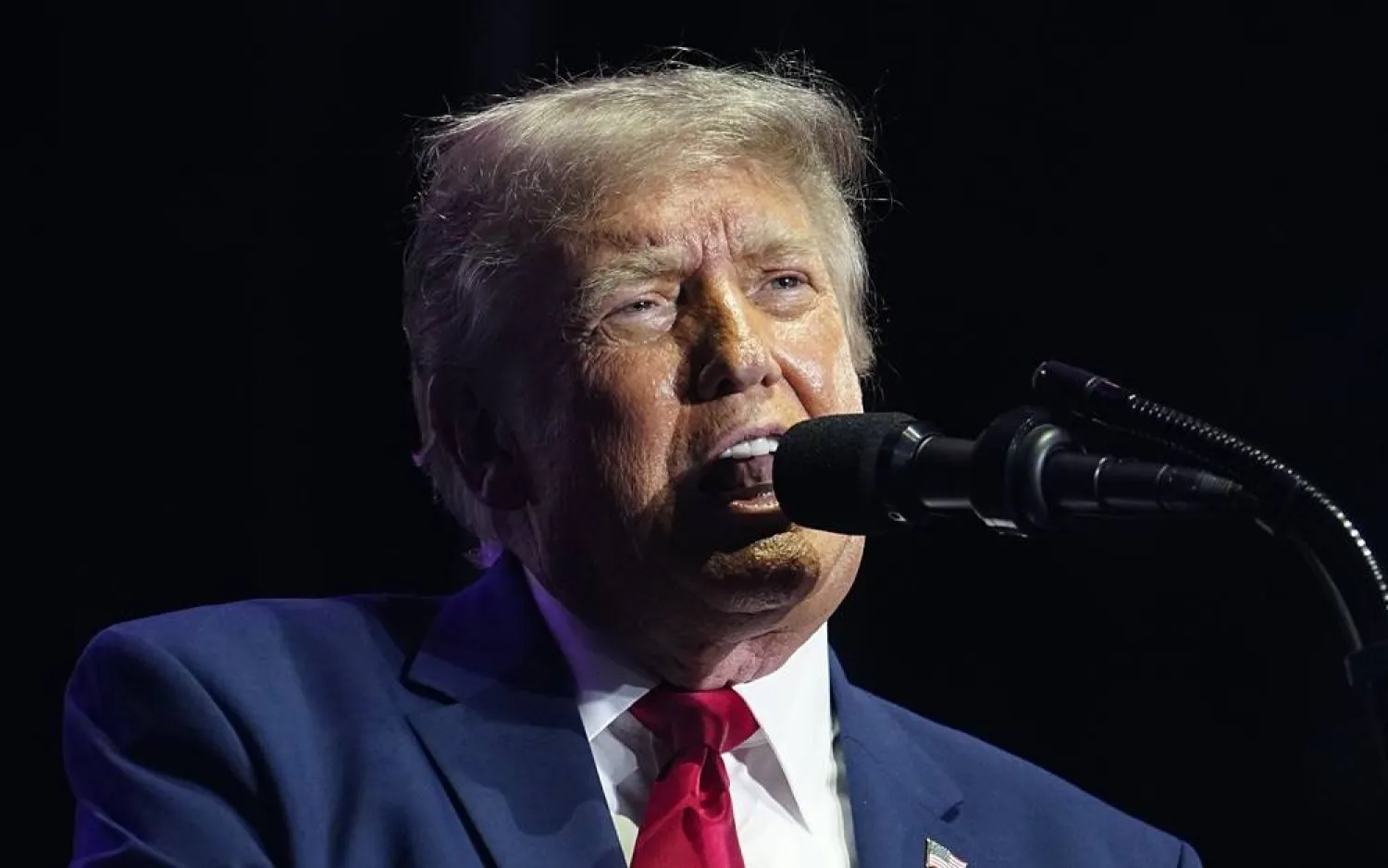
US President Donald Trump speaks at a rally to kick off the 16-day Great American State Fair as part of Washington, DC's celebration of the nation's 250th birthday, on the National Mall in Washington, DC, USA, 24 June 2026. (EPA)
TT

Trump Threatens 100% Tax on European Imports if Countries Impose Tax on Digital Services

US President Donald Trump speaks at a rally to kick off the 16-day Great American State Fair as part of Washington, DC's celebration of the nation's 250th birthday, on the National Mall in Washington, DC, USA, 24 June 2026. (EPA)

President Donald Trump on Friday threatened a 100% tax on imports from any country that imposes a tax on digital services from United States companies.

In a post on social media, Trump took aim at European countries that he said are discussing “imminent” implementation of taxes on American companies.

“Please let this statement serve to represent that any Country that imposes such a Tax will immediately be met with a 100% TARIFF on any and all Goods sent to the United States of America,” Trump wrote.

He added that the new tax would supersede any previously negotiated trade deals. Trump said the penalty would apply to any country that moves forward with such a tax, but he singled out European nations in his post.

Trump has repeatedly pushed against foreign efforts to tax or regulate American tech giants. Last year he threatened new tariffs on any country that moved to do so. A post from last August said that digital taxes and regulation “are all designed to harm, or discriminate against, American Technology.”


Iraq Raises September Basrah Medium Crude OSP to Asia

Workers walk across pipelines at the Rumaila oil field in Basra, Iraq (Reuters)
TT

Iraq Raises September Basrah Medium Crude OSP to Asia

Workers walk across pipelines at the Rumaila oil field in Basra, Iraq (Reuters)

Iraq has raised the September official selling price (OSP) for Basra Medium crude oil to Asia to minus $4 a barrel against the average of Oman/Dubai quotes from the August OSP of minus $6.50 a barrel, state-owned Iraqi oil marketer SOMO said on Monday, Reuters reported.

Basrah Heavy to Asia was priced at minus $7.30 a barrel to Oman/Dubai quotes, from minus $8.80 a barrel set for August.

Type of North and South European Far East Crude American Market Market Market ($/bbl) Oil ($/bbl) ($/bbl) Basrah ASCI +5.10 Brent Average (Oman Medium (dated)-4.35 & Dubai)-4.00 Basrah ASCI +1.40 Brent Average


Turkish Central Bank Bought $5 billion in Foreign Exchange Last Week, Bankers Say

Central Bank of Türkiye - File Photo/Reuters
TT

Turkish Central Bank Bought $5 billion in Foreign Exchange Last Week, Bankers Say

Central Bank of Türkiye - File Photo/Reuters

The Turkish central bank bought $5 billion in foreign exchange last week, with its net reserves increasing $9 billion to $63 billion, bankers said on Monday, Reuters reported.

According to the calculations of four bankers, the central bank's total reserves increased $14 billion last week to $178 billion, while net reserves excluding swaps increased $9.5 billion to $50 billion. The central bank did not comment on the figures.


July US Container Imports Hit Fourth-highest on Record, Descartes Says

FILE PHOTO: Workers move shipping containers at the Port Authority of New York and New Jersey in, Newark, New Jersey, US, September 30, 2024. REUTERS/Caitlin Ochs/File Photo
TT

July US Container Imports Hit Fourth-highest on Record, Descartes Says

FILE PHOTO: Workers move shipping containers at the Port Authority of New York and New Jersey in, Newark, New Jersey, US, September 30, 2024. REUTERS/Caitlin Ochs/File Photo

US imports of containerized goods in July hit the fourth-highest level for the month, as shippers rushed in goods ahead of unknown US tariff changes, supply chain technology provider Descartes Systems Group said on Monday.

US seaports handled 2.5 million 20-foot equivalent units (TEUs) in July, down 4.3% from the near-record result in July 2025. Through the first seven months of 2026, imports were down 0.9% year over year while remaining ⁠well above pre-COVID pandemic ⁠levels, Descartes said.

In late July, 10% global Section 122 tariffs expired and were replaced by new tariffs of up to 12.5% on imports from 60 countries tied to allegations of forced labor.

Chinese-origin imports rose to 873,129 TEUs ⁠in July, the highest monthly volume in a year.

China sends more goods via container to the US than any other country, even after President Donald Trump has targeted such products with tariffs.

Retailers like Walmart, Amazon.com and Home Depot account for roughly half of all US container imports, Reuters reported.

The traditional peak shipping season tied to their imports of goods for autumn and winter holiday promotions ⁠has ⁠been arriving earlier and over a longer period of time as shippers have responded to a string of supply-chain upheavals ranging from the COVID-19 pandemic and the ongoing US and Israeli war on Iran to rapidly changing US tariff policies.

"The broader trade environment remains unsettled. Elevated Strait of Hormuz risk, changing US tariff measures, tighter Panama Canal draft restrictions, and continued Red Sea disruption are influencing freight costs, routing decisions, and sourcing strategies," Descartes said.