
Lebanon President Says Israel Deal First Step to Restoring Sovereignty

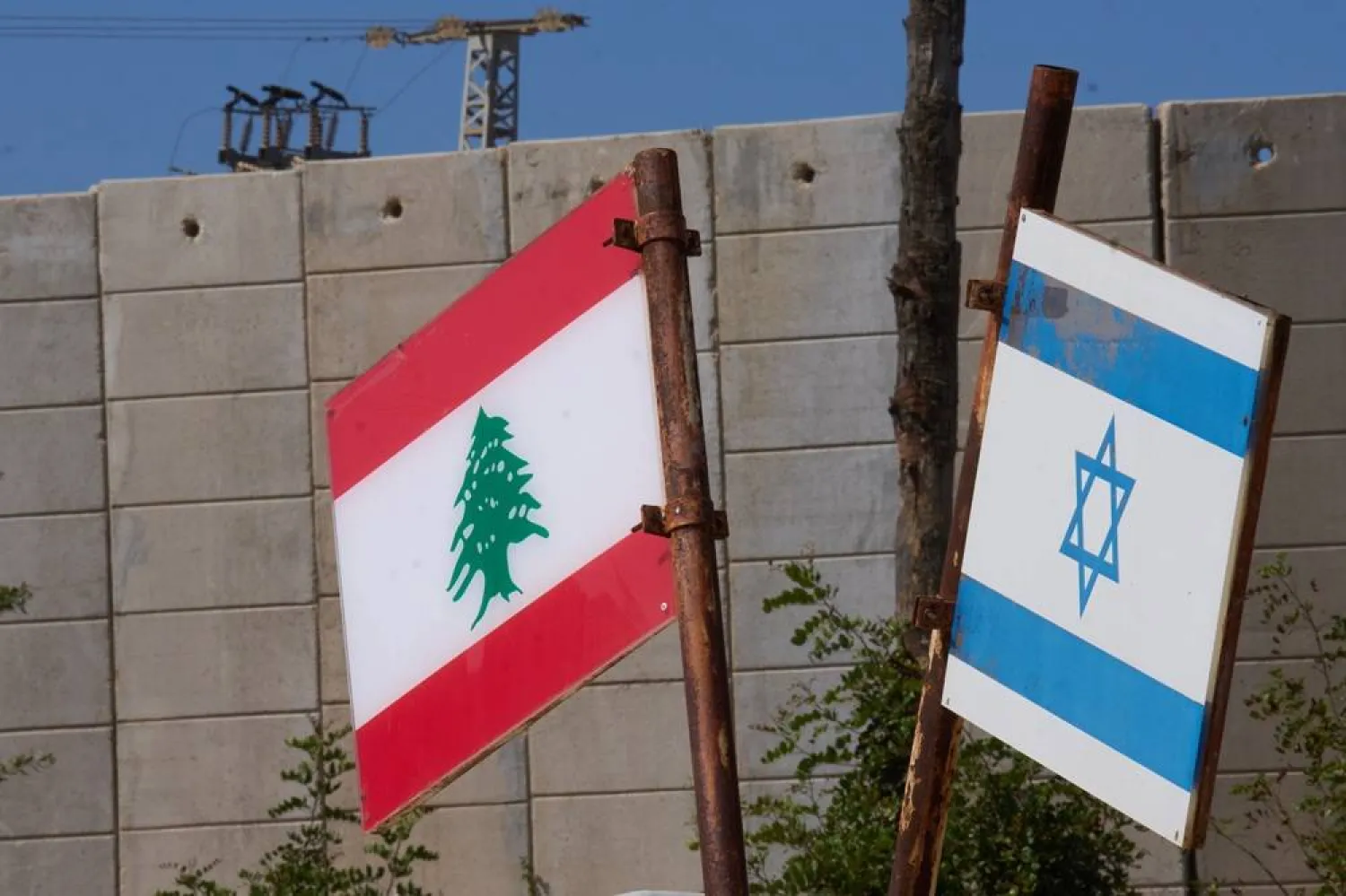
 Israeli and Lebanese flags hang in a memorial site on the border with Lebanon in northern Israel, Saturday, June 27, 2026 after Israel and Lebanon sign a framework agreement, described as a first step toward peace following months of conflict between Israel and the Lebanese group Hezbollah. (AP)
Israeli and Lebanese flags hang in a memorial site on the border with Lebanon in northern Israel, Saturday, June 27, 2026 after Israel and Lebanon sign a framework agreement, described as a first step toward peace following months of conflict between Israel and the Lebanese group Hezbollah. (AP)
TT

Lebanon President Says Israel Deal First Step to Restoring Sovereignty

 Israeli and Lebanese flags hang in a memorial site on the border with Lebanon in northern Israel, Saturday, June 27, 2026 after Israel and Lebanon sign a framework agreement, described as a first step toward peace following months of conflict between Israel and the Lebanese group Hezbollah. (AP)
Israeli and Lebanese flags hang in a memorial site on the border with Lebanon in northern Israel, Saturday, June 27, 2026 after Israel and Lebanon sign a framework agreement, described as a first step toward peace following months of conflict between Israel and the Lebanese group Hezbollah. (AP)

Lebanese President Joseph Aoun said a deal signed with Israel on Friday was a first step towards fully restoring his country's sovereignty after the latest war between Israel and the Iran-backed Hezbollah.

"The framework agreement signed today is a first step" that will enable Lebanese "to return to their fully liberated lands, and to their certainly rebuilt homes... under the sovereignty of the Lebanese state that has no partner in its sovereignty over its land and people," Aoun said according to a statement released by his office.

"We swear to continue to work until this is fully achieved. There will be no more occupation, prisoners, subordination or tutelage," he added.

Lebanese Prime Minister Nawaf Salam said the agreement "aims to achieve Israel's withdrawal from all Lebanese territory, restore state sovereignty over it" and see the return of displaced Lebanese.

"I look forward to the blessed moment when Israel begins to withdraw -- so that our dear people can return to their homes with safety and dignity -- and to the launch" of reconstruction efforts, Salam added, according to a statement.

Israel and Lebanon signed a framework agreement in Washington on Friday following several days of talks to secure an end to fighting between Israel and Iran-backed Hezbollah, though both sides framed the deal as an initial step.

"Today we've taken the first step in what will be a difficult journey, without a doubt, but an important and an essential and a necessary one," US Secretary of State Marco Rubio said before the agreement was inked.

Rubio added that the agreement ‌establishes ⁠a clear process ⁠to restore Lebanon's sovereignty, disarm Hezbollah and dismantle ⁠its infrastructure.

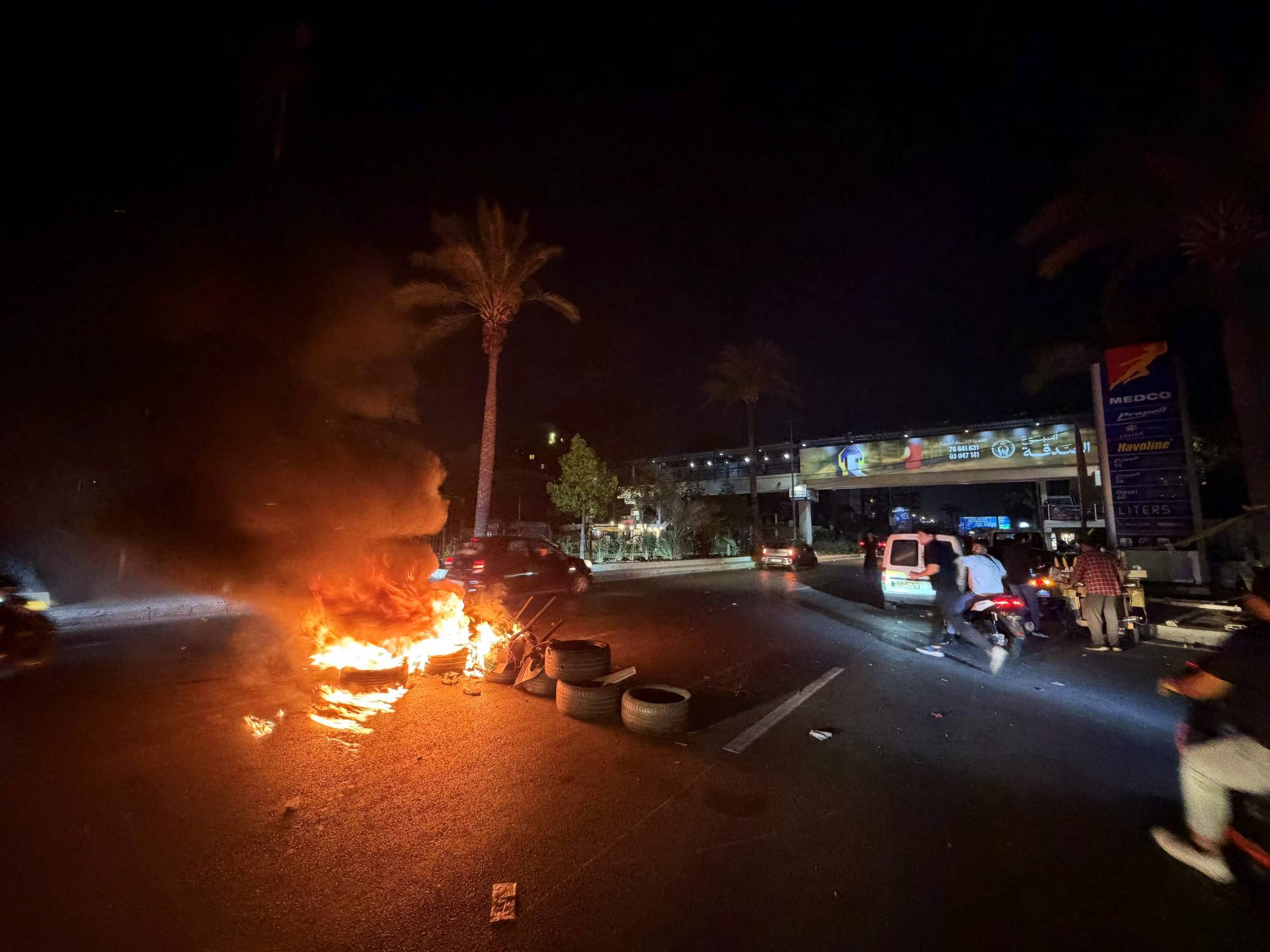
Hezbollah supporters block the old airport road in the southern suburbs of Beirut, with burning tires to protest against the trilateral agreement that was signed between the US, Israel and Lebanon on June 27, 2026. (AFP)

In a later statement he said that the US would facilitate the implementation of the deal through a trilateral "Military Coordination ‌Group for Lebanon" ‌and that Washington would commit significant resources, including an immediate $100 million in humanitarian assistance in coordination with ‌the ⁠UN.

Rubio added that ⁠the US reaffirmed its intent to improve the capabilities of the Lebanese Armed Forces "to more effectively establish sovereignty throughout Lebanese territory" with more than $30 million in funds under existing US authorities and appropriations.

Hezbollah warning

Hezbollah lawmaker Hassan Fadlallah warned that Lebanese officials who signed the agreement with Israel could not enforce the deal without sparking a civil war.

Lebanese "authorities will be unable to impose the implementation of the agreement signed in Washington unless they go, with American support, to civil war," said Fadlallah, whose party has long rejected the direct Israel-Lebanon talks.

He added that "what happened in Washington is an attempt to disrupt the Islamabad path, and without the resistance (Hezbollah) nothing will pass," referring to the initial agreement between the US and Iran on halting the Middle East war, which includes Lebanon.

After the announcement of the agreement, Hezbollah supporters took to the streets of Beirut late Friday in protest.

The state-run National News Agency (NNA) reported that "Hezbollah supporters rode motorbikes through the streets of Beirut" including central areas and along a road leading to the airport "in protest at the framework agreement announced between Lebanon and Israel".

Footage circulating on local outlets and social media showed hundreds of Hezbollah supporters on motorbikes and mopeds roaming Beirut's southern suburbs, the group's stronghold, before they headed to the heart of the capital.



3 Killed in Houthi Attack on Cargo Ship in Bab el-Mandeb Strait

The navigation bridge of a sunken vessel is all that is seen at the surface of the water in the Port of Mokha the day after an attack by the Houthis on the city Mokha, held by Yemen's legitimate government on August 10, 2026. (AFP)
TT

3 Killed in Houthi Attack on Cargo Ship in Bab el-Mandeb Strait

The navigation bridge of a sunken vessel is all that is seen at the surface of the water in the Port of Mokha the day after an attack by the Houthis on the city Mokha, held by Yemen's legitimate government on August 10, 2026. (AFP)

A small cargo ship was attacked on Tuesday by Yemen's Iran-aligned Houthis in the Bab el-Mandeb Strait, killing three crew members, said two Yemeni coast guard sources and two military officials in the government.

Maritime security sources told Reuters a small cargo ship was believed to have been targeted in the Red Sea, but ‌the fate of ‌the crew was unclear.

If confirmed, ‌the ⁠fatalities on the ⁠Tanzania-flagged Tihamah would be the first deaths in a Houthi strike on a ship since Middle East conflict was triggered by US-Israeli attacks on Iran at the end of February.

The Houthis have not yet claimed the attack, which Yemeni sources said killed two Pakistanis and one Indonesian person on the boat sailing ‌from Salalah in Oman via Djibouti.

Attacks on ships in the Bab ⁠el-Mandeb ⁠Strait have increased uncertainty for shipping companies already hobbled by the closure of the Strait of Hormuz.

An average of 32 ships per day passed through the Bab el-Mandeb strait last week, Kpler data showed. Prior to the blockade an average of 50 ships per day transited the strait.

The Houthis also attacked the government-held port city of Mokha on the Red Sea coast and other areas of the country, deepening fears over threats to strategic shipping routes and a potential return to civil war.

Yemen's military said the militants targeted both Mokha and the central province of Marib with missiles and drones.

The Houthis struck Marib and the eastern province of Hadramawt last week, killing dozens of government troops and civilians. They hit Mokha with missiles and drones over the weekend and killed at least seven people, including three troops, according to the Yemeni military.


Lebanon Abolishes Death Penalty in Landmark Parliament Vote

Lebanese lawmakers attend a parliamentary session to discuss a proposed general amnesty law, the abolition of the death penalty and the salaries of retired members of Lebanon’s security forces in Beirut, Lebanon, 11 August 2026. (EPA)
TT

Lebanon Abolishes Death Penalty in Landmark Parliament Vote

Lebanese lawmakers attend a parliamentary session to discuss a proposed general amnesty law, the abolition of the death penalty and the salaries of retired members of Lebanon’s security forces in Beirut, Lebanon, 11 August 2026. (EPA)

Lebanon's parliament Tuesday abolished the death penalty, making it the first country in the Arab world to replace the sentencing with life imprisonment with aggravated hard labor.

The country has committed to an unofficial moratorium on executions since January 2004. However, dozens of death sentences since then have been issued, but later suspended or commuted.

A majority of Lebanon's 128-member parliament voted in favor of ending the death penalty, with the exception of the parliamentary bloc of Hezbollah.

Justice Minister Adel Nassar, who was in Parliament, called it a “historic step” for the country.

Rights groups that have called for formalizing the moratorium or ending the death penalty altogether have also celebrated the vote.

Ramzi Kaiss, Lebanon Researcher at Human Rights Watch, says Lebanon is “marking a final break from a cruel sentence that should never be imposed.”

“Capital punishment is unique in its cruelty and finality and is plagued with arbitrariness, prejudice, and error,” he said.

It's unclear how aggravated hard labor would be enforced, as some legislators said the terms of the new punishment are not yet clear. Lebanon does have the punishment of hard labor written into law and court decisions, but even those have been rarely enforced in recent years due to cash-strapped Lebanon's lack of resources and capacity within its overcrowded prisons.

Lebanon's abolition of the death penalty comes as parliament is debating a controversial general amnesty law, the largest since the end of its 15-year civil war in 1990, that could reduce sentences or even release convicted militants and drug dealers, with some exceptions.

Family members of Lebanese soldiers and servicemen killed or attacked by extremist militant groups have repeatedly protested against the law, some saying they had hoped to see the perpetrators who killed their family members executed rather than be issued reduced prison sentences.

Hezbollah did not immediately issue a comment about the landmark vote. Neither did Lebanon's diverse religious institutions, where the death penalty is considered legal in some their respective court systems.


Lebanon Says Israeli Strike on South Wounds Two, Damages Ambulance

Smoke rises following an Israeli airstrike in the town of Deir Seryan as seen from the 'pilot zone' village of Zawtar al-Gharbiyah, Nabatieh Governorate, southern Lebanon, 31 July 2026, following a US-brokered security agreement between Lebanon and Israel. EPA/STRINGER
TT

Lebanon Says Israeli Strike on South Wounds Two, Damages Ambulance

Smoke rises following an Israeli airstrike in the town of Deir Seryan as seen from the 'pilot zone' village of Zawtar al-Gharbiyah, Nabatieh Governorate, southern Lebanon, 31 July 2026, following a US-brokered security agreement between Lebanon and Israel. EPA/STRINGER

An Israeli double-tap strike on southern Lebanon wounded two people on Tuesday and damaged an ambulance, the Lebanese health ministry said, condemning the "continued targeting" of rescuers. 

The incident is the latest Israeli strike despite an ongoing truce in the war between Israel and Iran-backed Hezbollah. 

Lebanon's state-run National News Agency said the strike targeted a vehicle in the southern city of Nabatieh, with the health ministry reported two wounded. 

The ministry said the Israeli military struck again when rescuers from the Risala Scouts Association, linked to the Hezbollah-allied Amal movement, came to the scene, damaging the ambulance. 

"The ministry reiterates its condemnation of the enemy's continued targeting of rescue teams, which constitutes an unacceptable violation of international humanitarian law and all international norms," it said. 

Lebanon's civil defense meanwhile said that its personnel were targeted by an Israeli drone strike while they were trying to extinguish a bushfire, also in the Nabatieh area. 

No one was wounded, but the incident forced them to leave. 

Hezbollah drew Lebanon into the Middle East war in March with rocket fire at Israel in support of its backer Iran. 

Israel responded with heavy air strikes and a ground invasion that Lebanon says have killed more than 4,300 people. 

While violence has significantly decreased since the signing of a US-Iran memorandum of understanding in June and a framework agreement between Lebanon and Israel days later, Beirut still reports intermittent Israeli strikes and demolitions. 

The Israel-Lebanon deal involves the disarmament of Hezbollah, a gradual withdrawal of Israeli forces from south Lebanon and the deployment of the Lebanese army to the region, starting in two "pilot zones". 

Hezbollah rejects the deal and refuses to disarm.