Political Stalemate Opens Door to Re-elections in Iraqi Kurdistan

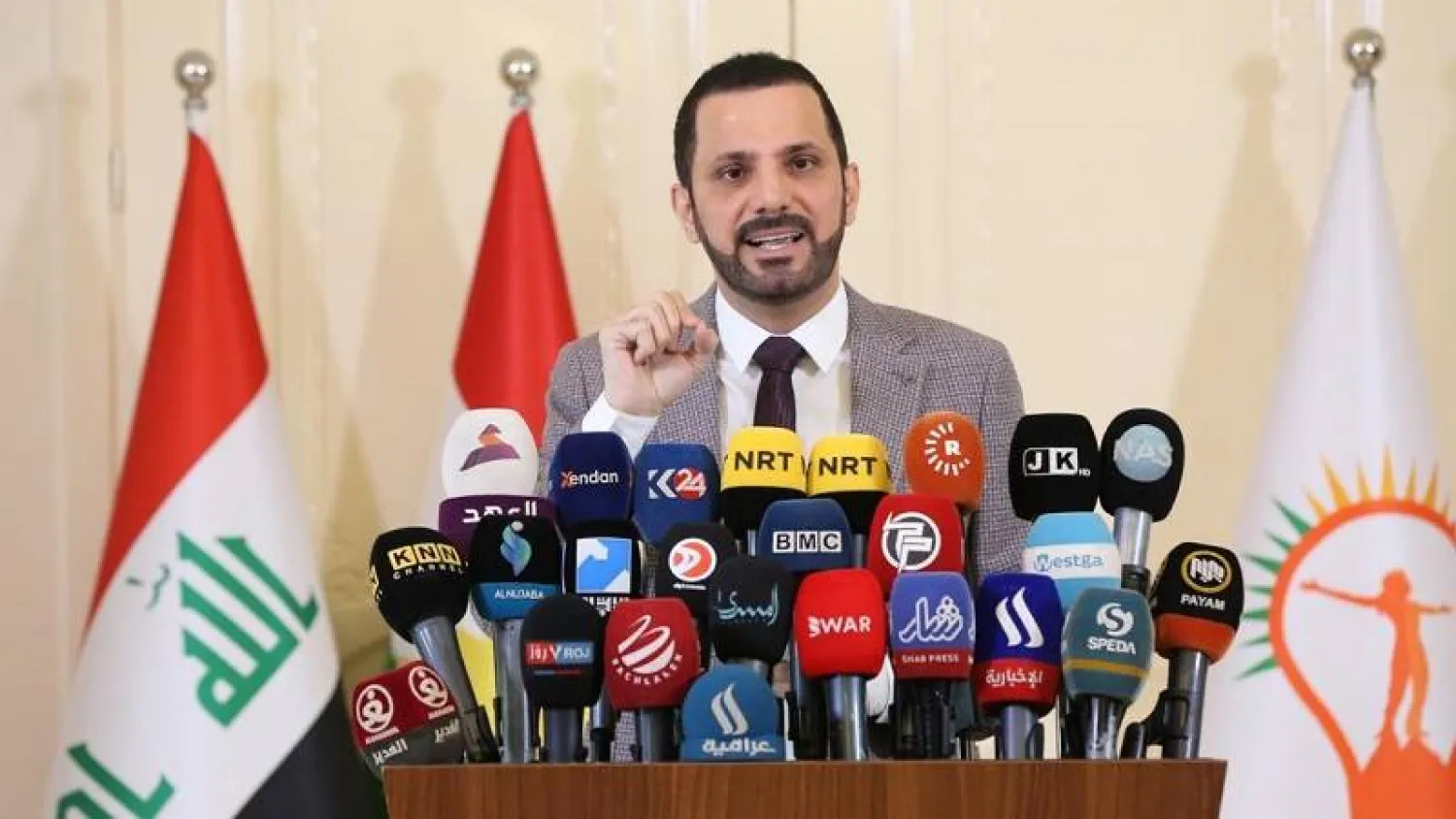
New Generation party leader Shaswar Abdulwahid (NRT Channel)
TT

Political Stalemate Opens Door to Re-elections in Iraqi Kurdistan

New Generation party leader Shaswar Abdulwahid (NRT Channel)

The stagnant situation in the Kurdistan Region is stirring towards the formation of a new government, a process delayed for nearly two years since the elections in October 2024; however, the task may prove difficult due to skirmishes between two camps of rival parties vying for greater influence within the anticipated ministerial lineup.

Despite the presence of emerging parties like the New Generation in the alliance map, the Kurdistan Democratic Party (KDP), led by Masoud Barzani, and the Patriotic Union of Kurdistan (PUK), led by Bafel Talabani, still control the political tempo in the Kurdish region of Iraq.

A KDP leader stated that "the continued failure to form a government brings the factions closer to the option of re-elections", while the rival front demands the position of Prime Minister in the region and an equal share of government positions, according to politicians and activists.

Both the PUK and the New Generation are betting on an alliance that, so far, secures about 38 seats, bringing them close to the KDP's 39 seats, out of the one hundred seats that make up the Kurdistan Region Parliament.

Given this numerical equation, the numerically smaller parties in parliament play the role of a "kingmaker" that can tip the scales for one of the two fronts over the other, leading to an absolute majority (51 seats), which fuels the political squabbles and maneuvers active in the public sphere these days.


Rubio Hails Lebanon for Peace Efforts After Meeting Aoun

Lebanese President Joseph Aoun attends a press conference, at the presidential palace, in Baabda, Lebanon January 17, 2025. (Reuters)
TT

Rubio Hails Lebanon for Peace Efforts After Meeting Aoun

Lebanese President Joseph Aoun attends a press conference, at the presidential palace, in Baabda, Lebanon January 17, 2025. (Reuters)

US Secretary of State Marco Rubio met with Lebanese President Joseph Aoun in Washington on Sunday, praising the country for its "move towards peace" after the latest round of Lebanon-Israel talks. 

It was the first trip to the US capital by a Lebanese head of state since Michel Suleiman was received by Barack Obama in 2009. 

Aoun and Rubio held talks at the State Department, and Lebanese officials said Aoun is due to meet with President Donald Trump on Tuesday. 

Rubio commended the Lebanese government for its "determined effort to reclaim Lebanon's sovereignty, disarm Hezbollah and dismantle its terrorist infrastructure, and move towards peace," the State Department said following the talks. 

Lebanon and Israel, which do not have formal diplomatic relations, began US-sponsored negotiations in April aimed at reaching a peace deal and permanently ending the Israel-Hezbollah war. 

On June 26, they reached a framework agreement in Washington under which the Israeli military is to withdraw from southern Lebanon and the Lebanese army is to deploy, starting with two "pilot zones." 

But the agreement is contingent on the disarmament of Iran-backed group Hezbollah, which has flatly rejected both the deal and the Israel-Lebanon negotiations that underpin it. 

Following the latest round of talks last week in Rome, Israel and Lebanon agreed on the structure and guidelines for implementing the pilot zones, according to the United States. 

Rubio said Washington was committed "to supporting the successful implementation of the Trilateral Framework and to backing the Government of Lebanon's efforts to deliver peace, economic recovery, and a better future for the Lebanese people." 

Hezbollah pulled Lebanon into the Middle East war on March 2, when it began striking Israel in support of its backer Iran. 

Israel responded with airstrikes and a ground invasion, and despite a ceasefire it continues sporadic attacks and holds territory in the south in what it describes as a "security zone." 

While in Washington, Aoun planned talks "on the situation in Lebanon and ways to strengthen the ceasefire" as well as on "the withdrawal of Israel from the Lebanese regions it occupies," his office said earlier. 

The United States carried out airstrikes on Sunday to "punish" Iran after the first US military deaths since open hostilities rekindled the Middle East war. 


Aqaba Port Operations Normal, Says Director General

The Jordanian capital, Amman. Petra file photo
TT

Aqaba Port Operations Normal, Says Director General

The Jordanian capital, Amman. Petra file photo

Director-General of Aqaba Company for Ports Operation and Management Mahmoud Khleifat refuted reports on Sunday that Jordan’s Aqaba seaport has been evacuated due to unspecified threats.

“Aqaba seaport is working normally; it has not been evacuated”, he said.

Earlier, the US embassy in Amman said that Jordanian authorities evacuated the airport and the seaport in the coastal city of Aqaba, citing a threat that was not immediately specified.

"Due to a specific and credible threat, Jordanian authorities evacuated the international airport and seaport in Aqaba. We strongly advise all Americans to refrain traveling to either the airport or seaport," the embassy said in a statement.


Palestinians Say Israeli Settlers Torch Mosque, Factory

A Palestinian man checks the torched entrance at the damaged Al-Taqwa mosque, whose walls were also daubed with Hebrew graffiti in an attack allegedly carried out by Israeli settlers in the Palestinian village of Al-Tuwani, south of Yatta, near Hebron in the occupied West Bank on July 19, 2026. (AFP)
TT

Palestinians Say Israeli Settlers Torch Mosque, Factory

A Palestinian man checks the torched entrance at the damaged Al-Taqwa mosque, whose walls were also daubed with Hebrew graffiti in an attack allegedly carried out by Israeli settlers in the Palestinian village of Al-Tuwani, south of Yatta, near Hebron in the occupied West Bank on July 19, 2026. (AFP)

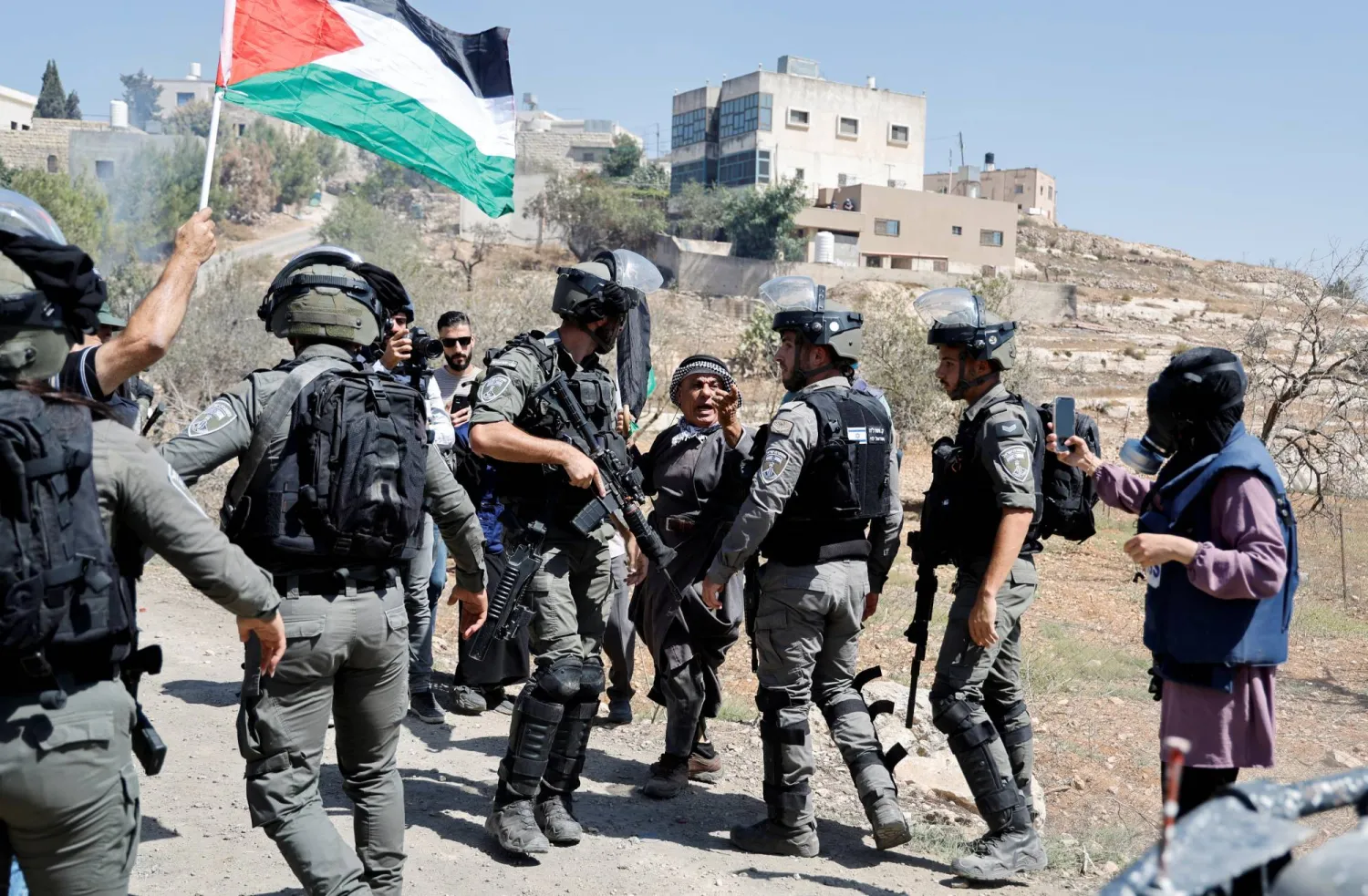
Israeli settlers set fire overnight to a mosque in a village in the occupied West Bank, a Palestinian official said Sunday, as an AFP journalist saw the structure's entrance scorched and Hebrew graffiti sprayed on its walls.

The incident came during a period of increased attacks against Palestinian communities by settlers in the Israeli-occupied West Bank since the start of the Gaza war in 2023.

More than two dozen settlers, some masked, attacked the Al-Taqwa mosque in the village of Al-Tuwani during the night and set it on fire, Mohammed Rabie, head of the village council, told AFP.

The settlers also set fire to two houses and a dairy factory, he said, adding the attackers spray-painted Hebrew graffiti on the walls of the mosque.

Rabie said the settlers fled after villagers emerged from their homes, adding that local volunteers managed to extinguish the flames before they spread further.

AFP photographs showed a child and an elderly man inspecting the charred entrance and windows of the mosque, where part of a prayer carpet had also been burned.

Rabie said the dairy factory, run by women from the Masafer Yatta community, suffered extensive damage.

"We thank God that this attack did not turn into a tragedy with loss of life," he said.

The Israeli police said it deployed officers to the village last night "after a report of suspects who caused damage at the site, including a vehicle that was set on fire, damage to the door of a prayer structure, and graffiti sprayed on walls."

"The investigation into the circumstances of the incident... is still ongoing."

"The settlers' attack took place in full view of the Israeli army," Palestinian activist Osama Makhamra told AFP, noting that an Israeli military watchtower stands close to the mosque that was set ablaze.

Rabie, however, said Israeli army, police and fire service personnel arrived in the village about half an hour after the attack and inspected the damage to the mosque and other property.

The Palestinian religious affairs ministry condemned the attack.

In a statement, the ministry described the arson as "a full-fledged terrorist act", accusing Israel's "extremist occupation government" of encouraging settler violence in an effort to displace Palestinians from Masafer Yatta and turn the conflict into "a religious war".

In a recent report, the United Nations Office for the Coordination of Humanitarian Affairs (OCHA) said Israeli settler violence in the occupied West Bank had reached "unprecedented" levels, averaging six attacks per day that resulted in casualties or property damage.

Excluding East Jerusalem, around three million Palestinians live in the occupied West Bank alongside more than 500,000 Israelis residing in settlements that are considered illegal under international law.

Israel has occupied the West Bank since 1967.