Trump's Iran Deal Faces Wide Criticism and Some Fear it Could Cost Republicans the Midterm

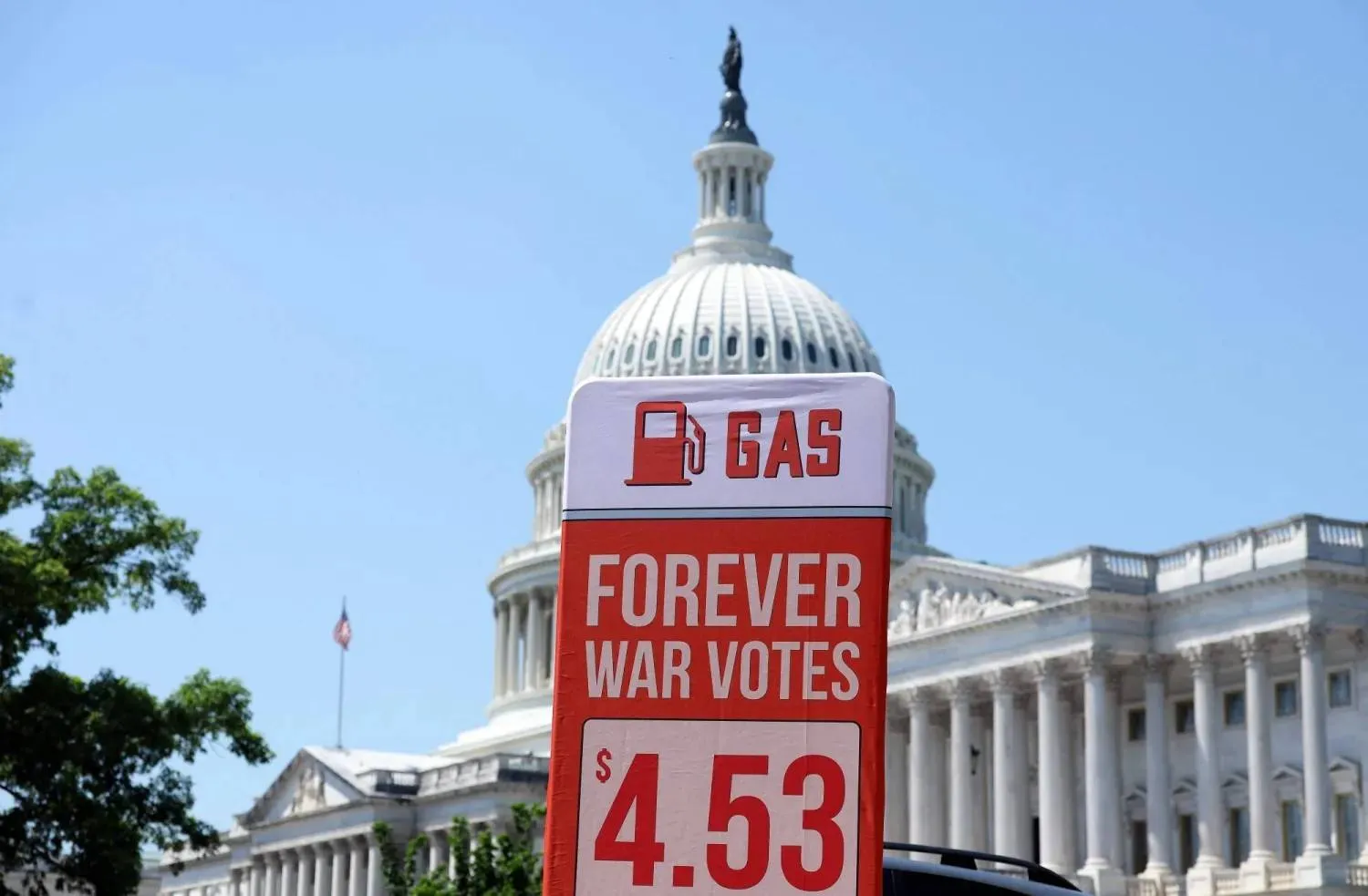
A sign protesting the Iran war and its impact on gas prices is seen during a protest outside of the US Capitol (AFP)
TT

Trump's Iran Deal Faces Wide Criticism and Some Fear it Could Cost Republicans the Midterm

A sign protesting the Iran war and its impact on gas prices is seen during a protest outside of the US Capitol (AFP)

US President Donald Trump’s interim agreement to end the war with Iran has dragged down his approval rating and garnered criticism across the political spectrum — even from his own supporters.

Recent interviews with 18 Americans who voted for Trump in 2024, a group that Reuters has interviewed monthly since he returned to office, show that most have doubts about the deal, which has reopened the Strait of Hormuz while temporarily lifting US oil sanctions on Iran and authorizing a $300 billion fund for its reconstruction.

“We need to truly weaken the Iranian regime instead of this, ‘beat them up a little bit and then step back and let them rebuild’,” said Terry Alberta, 65, a pilot in Michigan.

Overall, only a quarter of Americans believe the war with Iran was worth the costs, and a majority worry that the truce with Tehran is unlikely to last, according to the latest Reuters/Ipsos poll.

Many of the Trump voters feared his unpopular concessions to Iran would make it harder for Republicans to retain control of Congress in November's midterm elections, although those most critical of the deal had already begun to lose faith in the president before the war.

Six in the group believed he still had plans to bring down the Iranian government.

The group largely supported the war during its early days, believing US strikes were necessary to deplete Iran's stockpile of long-range missiles and cripple its nuclear program.

Lack of Trust in Tehran

Nearly four months later, with Iran politically emboldened and many of its military capabilities still intact, 14 of the voters criticized some aspects of the memorandum of understanding announced on June 14.

Most were skeptical that Tehran could be trusted to honor any agreement and dismayed by the prospect of granting it billions of dollars to rebuild.

The $300 billion fund will be a private investment vehicle rather than a government-funded plan, though exact details have not been released.

Juan Rivera, 26, said Trump “criticized his predecessors about negotiating with terrorists, and he’s basically done the same exact thing.”

Trump’s Midterm Endorsement now ‘Kiss of Death?’

Rivera still plans to support mostly Republican candidates in the midterms. But he said that when he volunteered recently to canvass Latino voters in his community near San Diego, many fellow Trump supporters were so disappointed by the president's handling of the war, among other issues, that they felt unmotivated to back his party in November.

“A lot of people say: ‘Why should I vote when the president's not doing what he promised?’” Rivera recalled.

Asked for comment, a White House spokesperson told Reuters that Trump's achievement “on the battlefield and at the negotiating table is nothing short of remarkable and will strengthen American security for many years.”

Steve Egan, 65, a promotional product distributor in Tampa, soured on Trump in early 2025 after tariff-triggered price hikes hurt his business. From the outset, Egan was skeptical of the president's rationale for the war and upset that it further jacked up the price of gas and other goods.

“Right now it doesn't seem like it's been worth it to go through all that,” he said, noting that the stated goal of regime change “didn't happen.”

His opinion of the president is now so low, Egan said, that Trump's endorsement would be “the kiss of death” for him when deciding which candidates to vote for in the midterms.

Brandon Neumeister, 37, a Pennsylvania state corrections worker and former National Guardsman, said the conflict seemed only to have benefited oil companies. Even before the war, though, Neumeister said he was unlikely to vote in November because he was disgusted with politics.

Robert Billups, 35, of ⁠Washington state, was cautiously optimistic the peace deal would hold. But he believed the war had spawned more hostility toward the United States rather than making the country safer.

Vice President JD Vance, tasked with leading US negotiations with Iran, has fallen in his esteem, and Billups said he no longer feels preferential toward Republican candidates. Come November, “whoever has a better strategy this time, I'm gonna vote for them regardless of their party,” he said.

‘A Bigger Plan’

Though Trump has been adamant about wanting to end the war, six ⁠of his more loyal voters expressed hope that he still had secret plans to bring Iran to heel.

Kate Mottl, 63, a secretary at a municipal office in the Chicago suburbs, said that “destroying” the regime in Tehran seemed like the only way to avert future conflict.

It would be “very disappointing” if Trump refrained from further military intervention, Mottl said, adding that she believed “there’s a bigger plan here.”

Rich Somora, 62, an engineer in North Carolina, agreed that Trump probably had more aggressive ⁠plans up his sleeve. “I can't imagine that he would have gone through all this and not found out a way to get rid of those mullahs,” he said.

According to diplomats and analysts, however, the war has only strengthened the grip of Iran’s clerical rulers. If they remain in power for another month, Somora said, he'll start to worry.

In Prescott, Arizona, 74-year-old retiree Joyce Kenney said she supported lifting sanctions and believed restoring Iran's ability to trade with other countries would ensure its leaders honored the truce.

But the reconstruction fund was a bridge too far: “That's not our responsibility,” she said.


NATO Chief Pledges to Defend Poland after Russian Missile Incursion

FILE PHOTO: NATO Secretary General Mark Rutte speaks to the media on the day of the Ukraine Defense Contact Group meeting at NATO headquarters in Brussels, Belgium,  November 17, 2026. REUTERS/Stephanie Lecocq/File Photo
FILE PHOTO: NATO Secretary General Mark Rutte speaks to the media on the day of the Ukraine Defense Contact Group meeting at NATO headquarters in Brussels, Belgium, November 17, 2026. REUTERS/Stephanie Lecocq/File Photo
TT

NATO Chief Pledges to Defend Poland after Russian Missile Incursion

FILE PHOTO: NATO Secretary General Mark Rutte speaks to the media on the day of the Ukraine Defense Contact Group meeting at NATO headquarters in Brussels, Belgium,  November 17, 2026. REUTERS/Stephanie Lecocq/File Photo
FILE PHOTO: NATO Secretary General Mark Rutte speaks to the media on the day of the Ukraine Defense Contact Group meeting at NATO headquarters in Brussels, Belgium, November 17, 2026. REUTERS/Stephanie Lecocq/File Photo

NATO Secretary General Mark Rutte on Saturday pledged to defend Poland after Russian missiles landed in the country, with the alliance's top decision-making body set to discuss the incident.

Warsaw said two Russian missiles hit its southeast on Friday, accusing the Kremlin of "intentional provocation" near where thousands of European troops are holding exercises.

Rutte, on a visit to Warsaw, said the alliance would determine what happened in the incident to identify any vulnerabilities, and pledged to defend Polish territory, in remarks to Polish media.

On Friday Rutte condemned what he said were "grave violations", calling the incident "clearly dangerous".

NATO's main political decision-making body will discuss the incident in Brussels on Monday "as part of regular consultations among allies", an alliance official told AFP.

Poland will be represented by its deputy defense minister, Pawel Zalewski, according to Polish public radio.

Polish Prime Minister Donald Tusk said on Friday that Warsaw would ask NATO to strengthen its detection and surveillance systems over Poland, as Russia frequently launches waves of missiles and drones at western Ukraine, near the Polish border.

The Institute for the Study of War (ISW), a US think tank, said it believed Russia "intentionally fired missiles and drones into Polish airspace".

The gesture was timed to coincide with exercises by the "Coalition of the Willing" taking place in Poland, the ISW said.

"Coalition of the Willing" refers to a group of Ukraine's European backers who are prepared to send peacekeeping troops to the country.


French Protesters Rally Again Over Living Costs, Public Services

Protesters carry banners and placards during an anti-government demonstration in Paris, France, 21 November 2026. EPA/MOHAMMED BADRA
TT

French Protesters Rally Again Over Living Costs, Public Services

Protesters carry banners and placards during an anti-government demonstration in Paris, France, 21 November 2026. EPA/MOHAMMED BADRA

France saw nationwide demonstrations for the sixth weekend in a row on Saturday, as protesters took to the streets to demand better public services and express anger over the rising cost of living and inequality.

The protest movement, sparked in mid-September by high school students demanding better learning conditions, fueled a nationwide campaign against soaring prices, inadequate public services and police brutality that spread across Europe, even as turnout in France has dwindled.

Several thousand people gathered in central Paris's Place de la Republique square in a festive atmosphere, with musicians playing, food trucks, costumes and homemade signs.

Flags and vests of trade unions and left-wing parties mingled with those of student organizations and the Yellow Vest movement, which is marking its anniversary eight years after it rattled President Emmanuel Macron's government.

On Friday crowds rallied across multiple countries to vent anger over issues from high living costs to military spending and the climate crisis, ramping up pressure on political leaders they accuse of ignoring the concerns of young people.

"I want to live, not survive," read one placard held by a protester in Paris.

Another read: "No to the license to kill", in reference to a law adopted by France's parliament on Friday increasing protection for law enforcement officers using their weapons -- heavily criticized by the left.

The protests have been largely peaceful but have seen fringe violence and accusations of police brutality.

At least 31 people have been seriously injured by security forces since the protests began, according to a count by AFP based on direct testimonies, victims' lawyers and NGO records. Authorities have not provided an official toll.

Last month, some rallies across France degenerated into clashes between riot police and demonstrators, with shops looted and buildings attacked and torched.

Interior Minister Laurent Nunez had warned regional authorities to be "particularly vigilant regarding the groups most hostile to law enforcement" after the police law was adopted.

Protesters marched on Saturday in cities from Lille in the north to Marseille in the south and Lyon in the southeast.

Clashes broke out on the sidelines of some protests as people set fire to vehicles and bins and police fired tear gas.

The interior ministry had said the demonstrations began in a "generally calm" atmosphere and turnout was "down compared to previous days".


Qatari Delegation Visits Tehran, Pezeshkian Admits that Iran Faces Tough Economic War

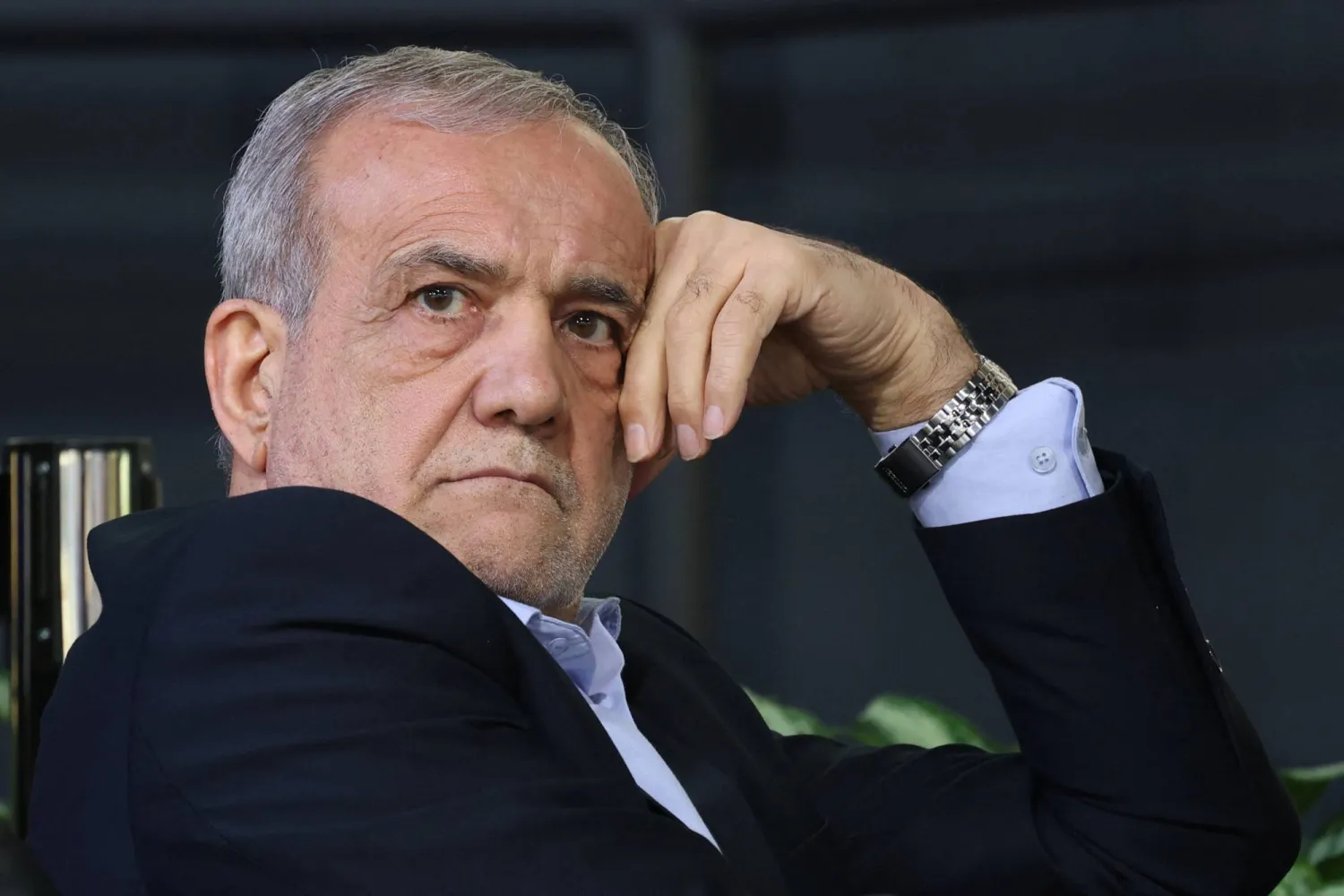
Iranian President Masoud Pezeshkian waits to make a speech during the UN Climate Change Conference (COP31) in Antalya, November 11, 2026. REUTERS/Murad Sezer
TT

Qatari Delegation Visits Tehran, Pezeshkian Admits that Iran Faces Tough Economic War

Iranian President Masoud Pezeshkian waits to make a speech during the UN Climate Change Conference (COP31) in Antalya, November 11, 2026. REUTERS/Murad Sezer

A Qatari delegation held talks in Tehran on Friday night, an Iranian official said, as diplomatic efforts continued to end the war.

Iranian Deputy Foreign Minister Kazem Gharibabadi said Tehran remained in contact with mediators.

"We are in contact with mediators, including the Qataris, both in person and virtually, and are holding ⁠the necessary discussions to see whether another opportunity can be given to diplomacy," Gharibabadi said, according to the semi-official Tasnim news agency.

Gharibabadi echoed remarks by Iranian Foreign Minister Abbas Araghchi in an interview with the state-owned Iran newspaper that Tehran still hoped diplomacy could end its war with the United States.

US President Donald Trump has said Iran wanted a deal, but one that was not acceptable to him.

In an interview published on Saturday by the state-run Iran Daily newspaper, Araghchi reiterated that Tehran would not allow its stockpiles of enriched uranium to leave the country.

"I believe a solution can be found, but we have clear red lines: the material will not be taken out of the country," he said.

Meanwhile, Iranian President Masoud Pezeshkian said on Saturday that Iran is facing a tough economic war.

“We are in a silent war, which is much more difficult than a war in which missiles are launched and destruction is carried out.

“It is an economic war that you, the economic activists, are dealing with, and it is not a simple war,” Pezeshkian told a meeting of investors and producers, according to Iran’s state-run news agency IRNA.