Saudi Real Estate Developers Move to Capitalize on New Foreign Ownership Rules

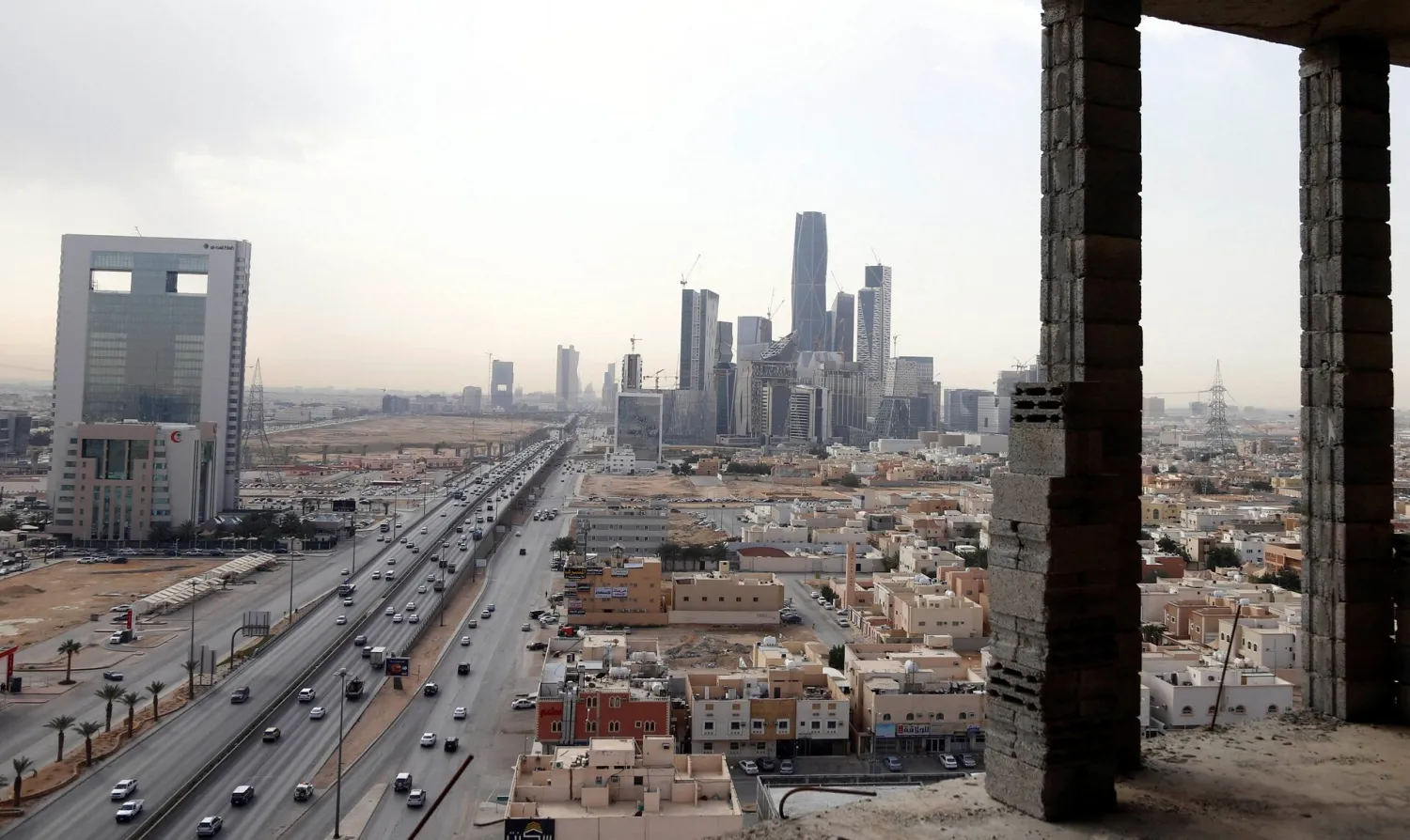
A general view of buildings and homes in the Saudi capital, Riyadh (File photo: Reuters)
TT

Saudi Real Estate Developers Move to Capitalize on New Foreign Ownership Rules

A general view of buildings and homes in the Saudi capital, Riyadh (File photo: Reuters)

Saudi Arabia's real estate market has entered a new phase of testing the practical impact of the executive regulations governing property ownership by non-Saudis, as listed developers move swiftly beyond welcoming the decision and the initial positive market reaction to translating it into strategic growth plans.

While the sector index has extended its early gains on expectations that the new rules will broaden international demand, the competitive advantage is beginning to shift toward companies with high-quality assets that are ready to be marketed and sold.

The real estate index on the Saudi stock market posted a sharp gain following the announcement, rising from 2,924 points to 3,044 points. The increase was driven by investor expectations that allowing non-Saudis to own property under specific regulations would expand demand for Saudi real estate assets, particularly in cities and projects with strong investment and religious appeal.

Real estate stocks led the market's gainers in the session following the announcement. Shares of Umm Al Qura for Development and Construction (Masar) hit the daily 10 percent limit, while Knowledge Economic City rose about 9.3 percent. Jabal Omar Development, Retal, Emaar The Economic City, and Makkah Construction and Development also posted strong gains.

Financial and economic adviser Dr. Hussein Al Attas told Asharq Al-Awsat that allowing non-Saudis to own property represents an important structural shift for Saudi Arabia's real estate market, but said the impact will not be uniform across all developers. Instead, the market will increasingly differentiate between companies with attractive assets and projects in locations targeted by international investors and those without them.
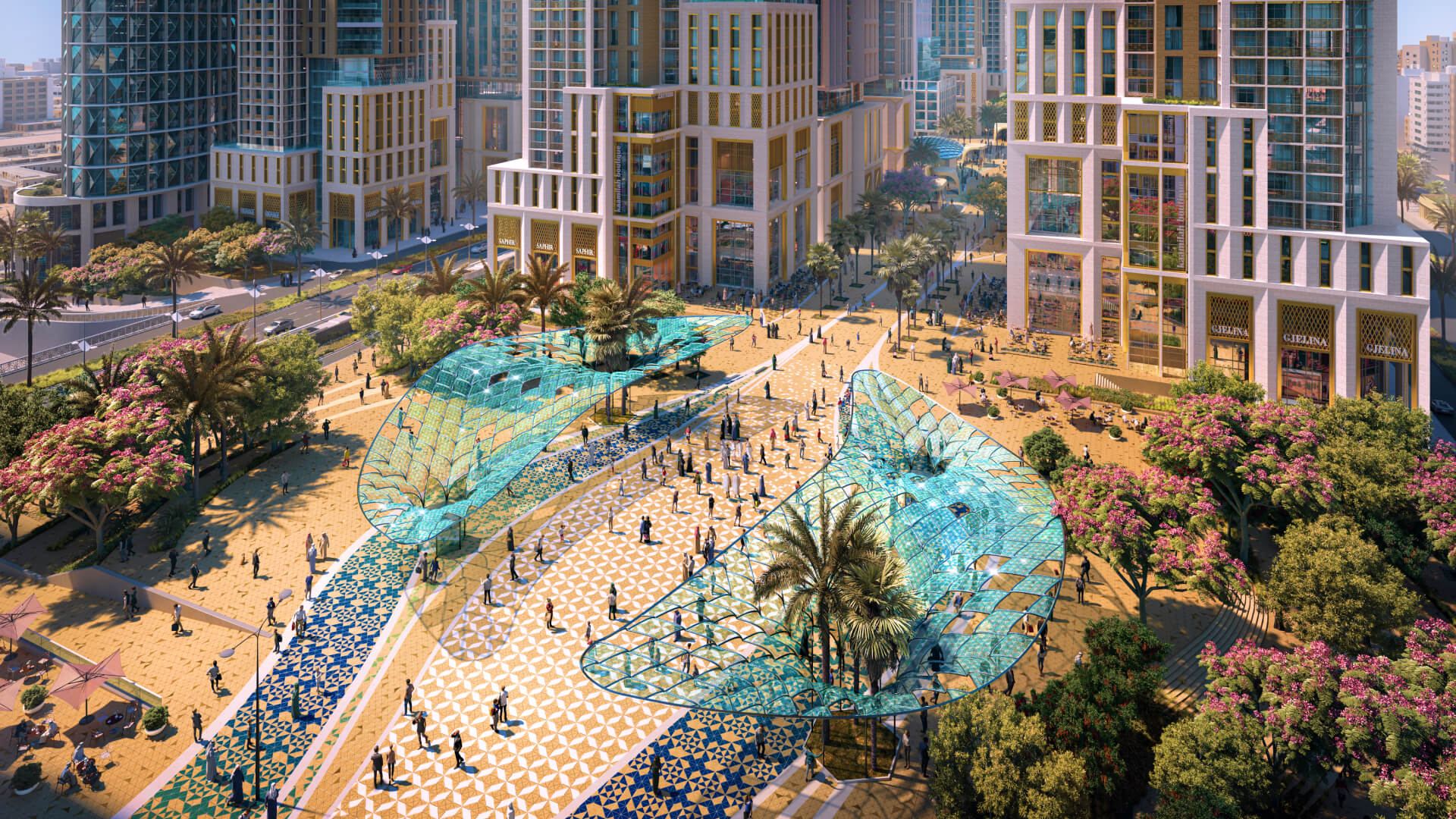
Master plan of the Masar Makkah destination (Masar)

He added that asset quality, location, financial strength, the size of developable land holdings, and the ability to attract international investors will be among the key factors determining how much companies benefit from the decision in the coming period.

Al Attas expects the sector to perform positively over the medium to long term. However, he said the real impact of the decision will ultimately be measured by companies' ability to turn this opening into actual sales, partnerships, and cash flows, rather than by the initial rise in share prices following the announcement.

In the first concrete move by a listed company since the regulations were approved, Jabal Omar Development on Sunday outlined its strategy for capitalizing on the decision after its project in Makkah was included within the geographic areas where non-Saudis are permitted to own property.

The company said the decision would broaden its base of potential investors and property owners among Muslims around the world, supporting demand for its real estate assets. It also announced plans to offer 400 existing hotel residential units for sale this year as the first phase of the program, with the proceeds earmarked to reduce debt and lower financing costs.

The company also plans to redesign the seventh and final phase of the project by increasing the number of hotel residential units available for sale while making greater use of off-plan sales programs to reduce financing requirements and strengthen reliance on internally generated liquidity.

Al Attas said the market's response to the regulations has unfolded in two stages. The first was a broad wave of optimism that lifted most real estate companies. The second has begun as investors seek to identify the companies best positioned to convert the decision into tangible growth in sales, cash flow, and profitability.

The decision to allow non-Saudis to own property forms part of a broader package of measures introduced by the Kingdom in recent months to restore balance to the real estate market and strengthen its investment appeal.

These measures include allowing the sale, purchase, and development of land in new areas north of Riyadh, increasing fees on undeveloped land, imposing fees on vacant properties, and freezing annual rent increases in Riyadh for five years.

The decision also coincides with signs of improving real estate and construction activity across the Kingdom. The construction sector returned to growth in May, supported by stronger residential building activity and renewed growth in new orders.

Although the full impact of the regulations will take time to emerge, recent moves by real estate developers indicate that the market has already begun shifting from expectations to execution as companies seek to attract a new segment of investors and buyers from outside the Kingdom.


Hapag-Lloyd Raises Outlook for Third Time on Strong Freight Rates

Hapag-Lloyd containers at a loading terminal at the harbor in Hamburg, Germany, July 13, 2025. (Reuters)
TT

Hapag-Lloyd Raises Outlook for Third Time on Strong Freight Rates

Hapag-Lloyd containers at a loading terminal at the harbor in Hamburg, Germany, July 13, 2025. (Reuters)

German container shipping company Hapag-Lloyd on Wednesday raised its full-year earnings outlook for the third time this year, citing strength in freight rates and a stronger-than-expected performance ‌in the ‌fourth quarter.

The stock was ‌up ⁠2.4% at 0925 ⁠GMT.

The upgrade adds to a series of positive outlook revisions across the European logistics sector, where resilient global trade, elevated shipping ⁠rates and persistent ‌supply-chain disruptions have ‌supported earnings and boosted profitability.

Hapag-Lloyd ‌now expects full-year earnings ‌before interest and tax of $2.0 billion to $2.4 billion, up from previous expectations of $1.25 billion to $1.75 ‌billion.

The company also lifted its 2026 earnings before ⁠interest, tax, ⁠depreciation and amortization guidance to $4.6 billion to $5.0 billion, from $3.9 billion to $4.4 billion previously.

The latest increase follows earlier upgrades in July and September, reflecting sustained strength in container shipping markets and management's improved expectations for year-end trading.


Gold Gains After Steep Drop, but Hawkish Central Bank Signals Weigh

People buy gold jewellery on the occasion of 'Dhanteras' as part of Diwali celebrations, the Hindu festival of lights, in Kolkata on November 6, 2026. (AFP)
TT

Gold Gains After Steep Drop, but Hawkish Central Bank Signals Weigh

People buy gold jewellery on the occasion of 'Dhanteras' as part of Diwali celebrations, the Hindu festival of lights, in Kolkata on November 6, 2026. (AFP)

Gold prices climbed on Wednesday, but remained anchored near the $4,000 level after a sharp selloff in the previous session following a hot US inflation print and hawkish policymakers' comments that tilted market expectations towards further and larger ‌rate hikes.

Spot ‌gold rose 0.5% to $4,051.31 per ounce ‌by ⁠0916 GMT after dropping ⁠as much as 3% to $4,013.29 on Tuesday. US gold futures for December delivery gained 0.7% to $4,059 per ounce.

"Gold is seeing some slight relief after its post-CPI declines," said Han Tan, chief market analyst at Bybit.

"However, it's a tough ask for gold bulls to keep pushing prices higher, given ⁠the prospects of more Fed rate ‌hikes in the pipeline."

Data released on ‌Tuesday showed US consumer prices rose more than expected in ‌October, with the CPI increasing 0.4%. Economists polled by Reuters ‌had forecast a 0.3% rise.

Traders raised the odds of a December Federal Reserve rate hike to 100% from 84% before the data, as per CME's FedWatch tool. Expectations of a ‌larger, half-percentage-point hike also increased.

Ahead of the data, Fed Governor Christopher Waller said a core inflation ⁠reading ⁠of 0.3% in October would prompt him to consider a half-point hike at the December meeting.

Other policymakers also maintained a hawkish tone, with Fed Bank of Philadelphia President Anna Paulson signaling further US rate hikes and Fed Vice Chair for Supervision Michelle Bowman reaffirming the central bank's focus on curbing price pressures.

Although gold is typically seen as an inflation hedge, higher interest rates diminish its appeal, as gold bullion pays no interest.

Among other metals, spot silver climbed 2.7% to $52.87 per ounce, and palladium gained 4.1% to $1,066.66 per ounce.


Oman Posts Third-Quarter Budget Surplus as Revenue Rises 16%

Visitors and locals gather at the Mutrah Corniche in Muscat, Oman, April 11, 2025. (AP)
TT

Oman Posts Third-Quarter Budget Surplus as Revenue Rises 16%

Visitors and locals gather at the Mutrah Corniche in Muscat, Oman, April 11, 2025. (AP)

Oman's ‌public revenue rose 16% by the end of the third quarter to 9.828 billion Omani rials ($25.53 billion), the Oman News Agency said in a post ‌on X on ‌Wednesday.

Public spending ‌rose ⁠9% to about ⁠9.74 billion rials, and the state budget recorded a surplus of about 90 million rials ⁠at the end of ‌the ‌third quarter.

Public debt ‌fell by more ‌than 600 million rials from a year earlier, to about 14.1 ‌billion rials from 14.7 billion.

Dues paid ⁠to ⁠the private sector and received through the financial system totaled more than 1.43 billion rials by the end of the third quarter.