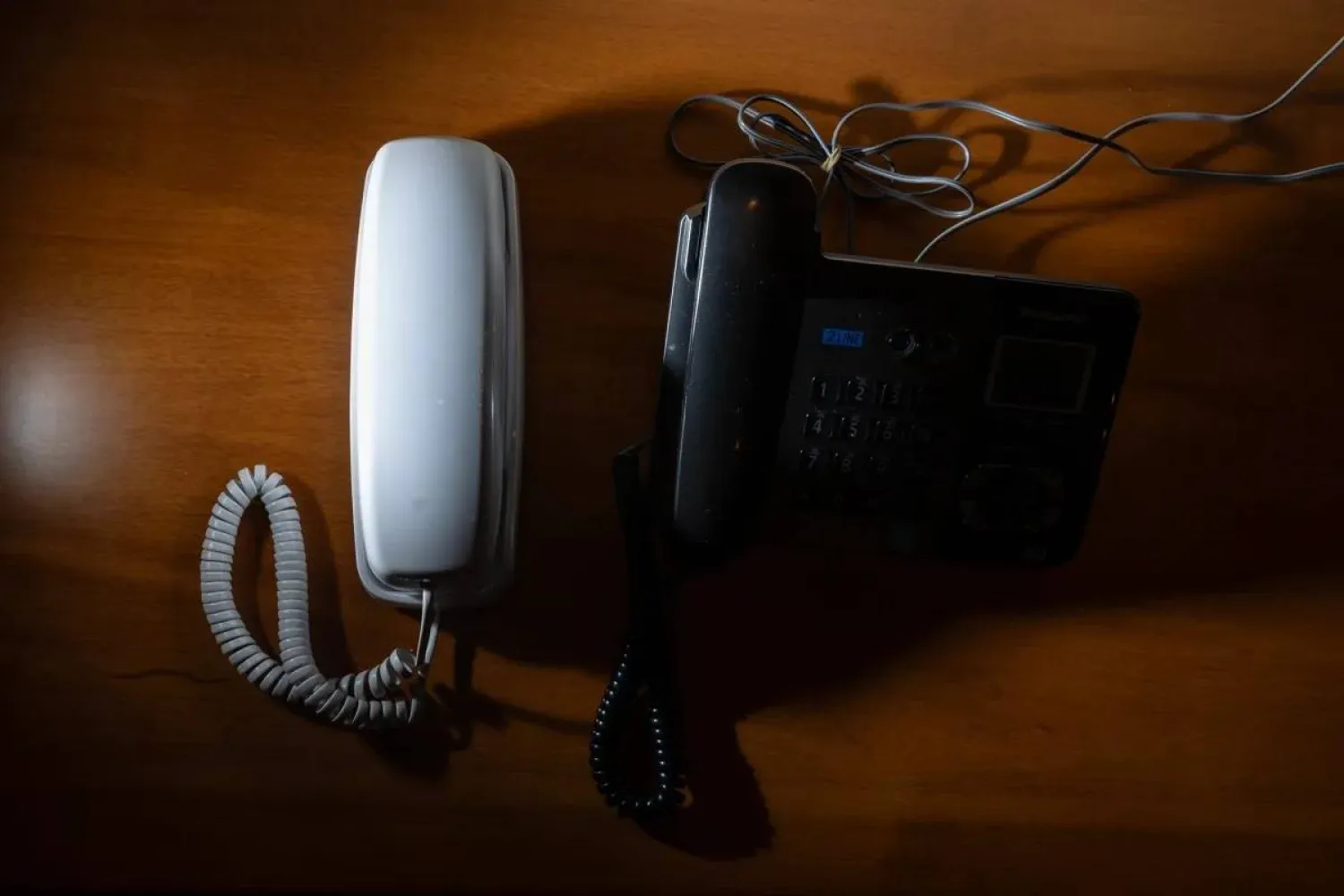

Finland on Tuesday pulled the plug on analogue landline phone calls after almost 150 years, the latest country to push forward in a global transition towards digital infrastructure.
Estonia, the Netherlands, Norway and Spain have already made the jump, as countries across the world roll out fiber optic cable that can handle both internet services and voice calls.
Finland's fixed-line network began operating in the 1880s, but like everywhere else the digital revolution has swallowed up the old technology based on copper wires.
And the Nordic country, home of mobile phone pioneer Nokia, has seen the use of landline phones gobbled up by mobile technology.
Elisa, the country's last major telecom operator with a fixed-line copper-wire network, marked the end of its service with a call between the firm's CEO Topi Manner and Jarkko Saarimaki, head of the country's communication and transport agency.
The two chatted about their memories of landline phones, with Manner recalling his time as a teenager in London in the 1980s when he would call home once a week at an agreed time to make sure the family were all there.
They also discussed the future of mobile technologies, before ending the call with a casual "kuulemiin", meaning "speak later" in Finnish.
When announcing its decision to retire the network in January -- a move its competitors had already made earlier -- Elisa said its customers had just a "few thousand" landline-only plans, with no new ones being sold in years.
After Tuesday, the only providers of landline plans in Finland will be local operators, currently covering a few thousand plans for local calls, public broadcaster Yle said.