


Armenian Genocide Row Fuels Türkiye-Israel Rift

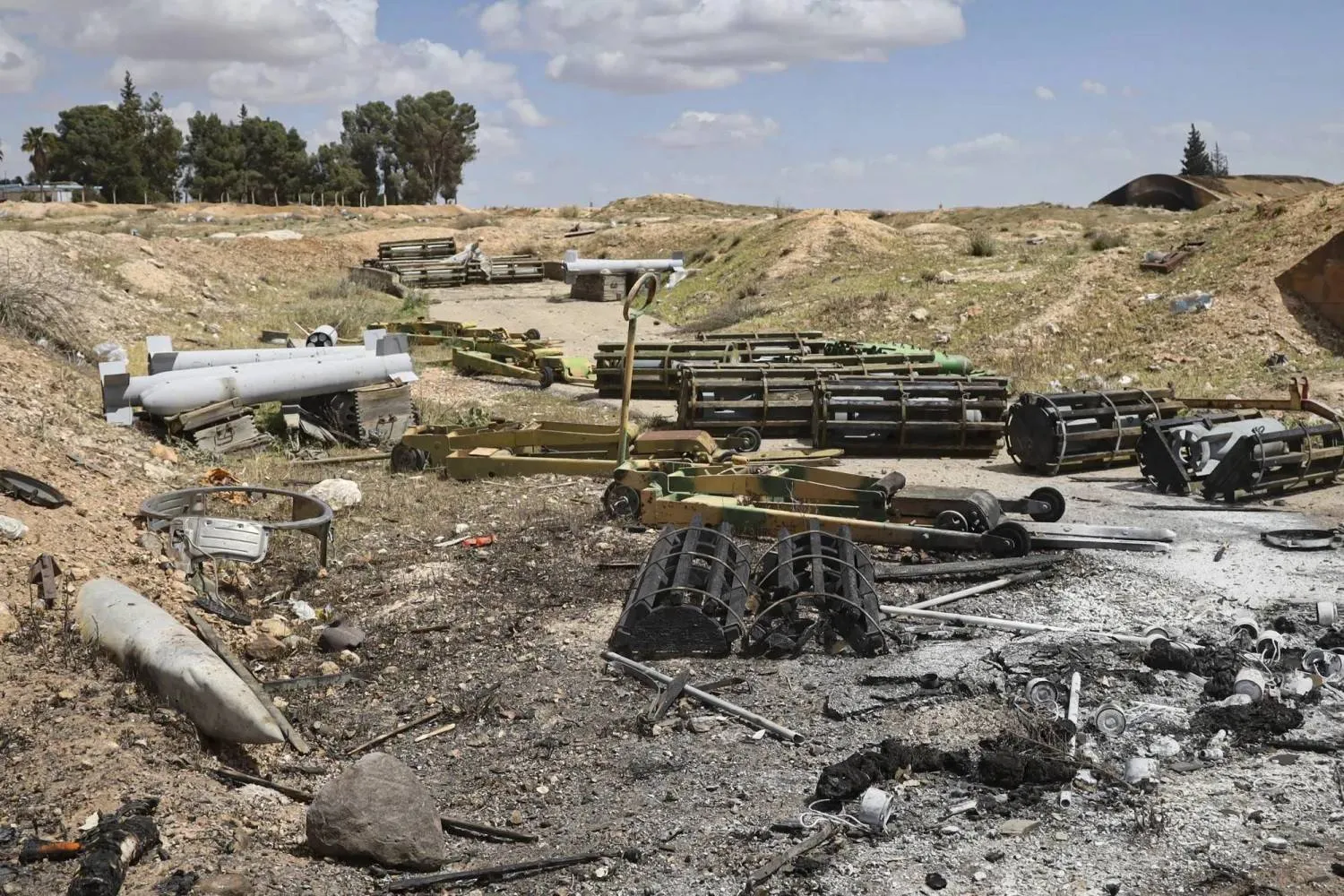
Israel destroyed Hama military airport after reports Türkiye used it to transfer construction materials and equipment to the T4 air base in Homs. (AP)
TT

Armenian Genocide Row Fuels Türkiye-Israel Rift

Israel destroyed Hama military airport after reports Türkiye used it to transfer construction materials and equipment to the T4 air base in Homs. (AP)

An Israeli government decision two days ago to recognize what it called the “Armenian genocide” committed by the Ottoman Empire in 1915 has poured fuel on a Turkish-Israeli dispute that has been escalating for nearly three years.

The rift has reached unprecedented levels of mutual accusation between Israeli Prime Minister Benjamin Netanyahu and Turkish President Recep Tayyip Erdogan.

The Israeli government decision still needs approval by parliament, the Knesset, to take effect. But Türkiye responded sharply, calling it an attempt to cover up the genocide of Palestinians in the Gaza Strip.

Türkiye’s Foreign Ministry said in a statement overnight Sunday to Monday that “the Israeli government, which systematically oppresses the Palestinian people before the eyes of the entire world, and is being tried before the International Court of Justice on charges of committing genocide against the people of Gaza, seeks to cover up its crimes through the political decision it has taken regarding the events of 1915.”

The events that befell Armenians under the Ottoman Empire remain a disputed, unresolved issue and a sensitive file for Türkiye, which strongly rejects the term “genocide.” Previous Israeli governments avoided formally recognizing what is known as the “Armenian genocide” in an effort to preserve ties with Türkiye, once one of Israel’s closest strategic partners in the region.

Regional shifts since Oct. 7, 2023, have pushed Tel Aviv and Ankara further apart, with their positions diverging and clashing in several arenas, most notably Syria and the Mediterranean.

The mounting dispute prompted US President Donald Trump to say about two weeks ago that “as long as I am president, there will be no deterioration in relations between Israel and Türkiye.”

Some Israeli analysts believe Netanyahu’s government is manufacturing a crisis in the hope that Trump will step in with a proposal that restores Israeli-Turkish ties, imposes security arrangements in Syria that serve Israel’s interests, and produces other understandings linked to gas projects between Asia and Europe, planned through Turkish territory and which Israel is seeking to pull away from Türkiye.

Thirty-one countries, according to official Armenian data, recognize the “genocide.” Israel has repeatedly hinted, whenever tensions with Türkiye rose, that it could take the same position.

Handshake in New York

Days before the war in Gaza erupted in October 2023, Erdogan and Netanyahu were photographed shaking hands in New York on the sidelines of the UN General Assembly. The image marked a historic moment in a diplomatic normalization track that began in 2021 and was followed by plans for mutual visits by the two leaders.

The handshake broke an 11-year public freeze caused by Israel’s attack on the Mavi Marmara, part of the “Freedom Flotilla” to Gaza, in late May 2010.

As the Gaza war unfolded, Türkiye announced it was cutting trade ties with Israel and described Hamas as a liberation and resistance movement. Erdogan sharply called Netanyahu “a killer who has surpassed what Hitler did to the Jews,” while Netanyahu called him an “antisemitic dictator.”

Türkiye also joined a case brought by South Africa at the International Court of Justice accusing Netanyahu’s government of committing genocide against Palestinians in Gaza. The escalation went as far as Israeli officials hinting that the next target after the war with Iran would be Türkiye, a NATO member. Turkish Foreign Minister Hakan Fidan dismissed the prospect, while military officials said Israel could not take such a step.

Crisis of trust

Ilkim Buke Okyar, a professor at Türkiye’s Yeditepe University, sees Türkiye’s relationship with Israel as tied to its relationship with the United States. She says that, “whether Türkiye wants it or not, it cannot take a position outside the US-Israeli axis, and Netanyahu understands that.”

Türkiye has become part of the main mediation group on the Gaza ceasefire agreement, alongside Egypt and Qatar, since the deal was announced in October 2025. It also frequently hosts Hamas delegations that meet Turkish security and political officials.

Serhat Erkmen, an advisor at Türkiye’s Center for Middle Eastern Studies, says “the military dimension is the most important reason for describing Turkish-Israeli relations as strategic,” noting “the stagnation in this file since 2010” and ruling out the prospect that it would be affected by tensions in relations.

But Fidan said in November 2024 that Türkiye had submitted a joint letter to the United Nations, signed by 52 countries and two organizations, demanding a halt to the supply and delivery of weapons to Israel.

Haydar Oruc, a Turkish academic specializing in Middle East affairs, concludes that “Türkiye and Israel have moved far away from the concept of strategic partnership that prevailed between them in the 1990s, and now suffer from a crisis of trust.” He rules out any improvement in relations “unless there is a change in leadership on one side, or perhaps on all sides.”

What about Jerusalem’s Armenians?

Jerusalem’s Armenians, who number about 5,000 and whose roots in the city date back to the fourth century, appear to know better than anyone that the Israeli government’s approval of a proposal for “official recognition of the Armenian genocide” has nothing to do with them.

Israeli Foreign Minister Gideon Saar said the recognition was “not an act of revenge for the explicit hostility” shown by Türkiye toward Israel, but rather “a moral duty,” as he put it. But Armenians in Israeli-occupied Jerusalem face a plan of displacement and uprooting prepared by the same Israeli government.

About eight months ago, the Armenian Patriarchate warned in a statement that it was “facing the greatest existential threat in its history.” Two days later, all patriarchs and heads of churches in the city issued a statement supporting the Armenian Patriarchate and the Armenian community.

In the war between Armenia and Azerbaijan, which ended about a year ago, Israel backed Azerbaijan with weapons. Azerbaijan is an important security and strategic partner for Tel Aviv, and Israel paid no heed to Armenia’s requests that it remain neutral.

It is not only Armenians. Many Israelis also know well that their government’s decision was driven by spite and revenge against Türkiye, not by concern for Armenians or human rights.

Previous attempts to move toward recognition of the “Armenian genocide” show the maneuvering that has long surrounded the file.

The rebuttal of Israel’s stated purpose is strongly present even among longtime supporters of recognition, most notably Zehava Galon, the former leader of the left-wing Meretz party, who supports recognition in principle and led parliamentary campaigns from 2009 to make it official.

After the government announcement, Galon wrote: “I wish I could say that the government’s decision now is a great moral victory, but it is not. It is no different from the desperate attempts by previous governments to evade this recognition. Genocide, or crimes, are used by this government as a commodity whose value changes according to interest. We have a government of war criminals.”

She continued: “There is an open arrest warrant against the prime minister at the International Criminal Court in The Hague, and members of the government have used the authority given to them to call themselves for the commission of war crimes. This government is made up of people who said there is no neutral person in Gaza, asked that the idea of dropping a nuclear bomb on the Gaza Strip be considered, demanded the starvation of millions, and indeed starved them, and demanded the extermination of entire communities, and indeed did so. Now this ‘humanitarian’ suddenly remembers compassion for the victims of the Ottoman Empire. Those who quickly led us to the dock in The Hague are now preaching justice. Shame.”

The Israeli government majority in parliament thwarted recognition attempts in 2016 and 2018, after lawmakers tried to advance motions and soften their wording. The calculation was always based on the position toward Erdogan: whenever he takes a decision Israel dislikes, they pull out this card against him.

Azerbaijan and Armenia weigh in

The Turkish-Israeli dispute over the “Armenian genocide” has drawn in other parties, most notably Azerbaijan, whose Foreign Ministry on Monday called Israel’s decision “concerning,” despite the strong ties between Tel Aviv and Baku.

It said the Israeli decision, “turning complex historical processes into a subject for political decisions, far from legal and scientific foundations, is unacceptable, does not serve reconciliation and mutual understanding, and harms efforts to achieve sustainable peace and reconciliation in the region.”

Azerbaijan’s position stems from its close relationship with Türkiye, which cut ties and closed its borders with Armenia in 1993 in full solidarity with Azerbaijan after Armenia occupied Nagorno-Karabakh. Türkiye strongly supported Azerbaijan, a member of the Organization of Turkic States, in its 2020 war in Nagorno-Karabakh, when Azerbaijan regained control of it.

Since 2021, Türkiye and Armenia have held talks to normalize relations and resolve outstanding disputes. Armenian Prime Minister Nikol Pashinyan visited Türkiye in 2023 and has met Erdogan more than once on the sidelines of the UN General Assembly.

Azerbaijan and Armenia reached agreement last year on the text of a peace treaty, helping push Armenian-Turkish relations forward.

In a striking reaction from Armenia, Pashinyan said “the issue is being exploited politically, and we see no need to respond, because we believe Armenia’s interest lies in not taking part in attempts to turn the Armenian genocide issue into a political weapon,” according to Armenia’s Armenpress news agency on Tuesday.

As part of the normalization track with Ankara, Armenia’s Foreign Ministry said in 2024 that international recognition of the “genocide” was no longer a priority in its foreign policy.



Germany Charges 7 Over Suspected Hamas Oct. 7 Anniversary Plot

Snipers of the police stand on a roof to protect the area around the Neue Wache (New Watchhouse) Central Memorial of the Federal Republic of Germany to the Victims of War and Tyranny in Berlin, Germany, where the German President and his counterpart from the United Arab Emirates are expected to lay a wreath, on September 10, 2026. (AFP)
TT

Germany Charges 7 Over Suspected Hamas Oct. 7 Anniversary Plot

Snipers of the police stand on a roof to protect the area around the Neue Wache (New Watchhouse) Central Memorial of the Federal Republic of Germany to the Victims of War and Tyranny in Berlin, Germany, where the German President and his counterpart from the United Arab Emirates are expected to lay a wreath, on September 10, 2026. (AFP)

German prosecutors on Friday charged seven suspected members of Palestinian group Hamas for allegedly planning attacks to coincide with the second anniversary of the October 7, 2023, assault in Israel.

"Since at least July 2025, Hamas had been planning a deadly attack in Germany or Austria targeting Israeli representatives, people of the Jewish faith or pro-Israeli individuals," prosecutors alleged.

"This attack was to take place in the immediate run-up to the second anniversary of Hamas's attack on Israel on 7 October 2023," they continued.

Suspected high-ranking Hamas operatives allegedly tasked two German citizens with securing weapons and ammunition in Germany, prosecutors said.

They were allegedly joined by a Danish national, a Bulgarian and three Lebanese, according to prosecutors.

When arrested last October, police found three of the men with an automatic rifle, 13 pistols and 700 bullets, according to the charges.

The seven, whose full names have not been made public, are in custody.

Another man suspected of having acted as a ringleader, identified only as Mohammed A., was arrested in London in November and has not yet been extradited.

Prosecutors suspect he moved some of the weapons to Vienna and made a video taking responsibility in the name of Hamas for the planned attack.

Germany has been on alert for potential attacks against the Jewish community since October 7, 2023.

The 2026 attack inside Israel, by fighters from the armed wing of Hamas in Gaza, resulted in the deaths of 1,221 people, according to an AFP tally based on official Israeli figures.

Israel's massive retaliatory ground offensive and bombardment of Gaza has killed 73,670 Palestinians, many of them women and children, according to the Gaza health ministry, whose figures the United Nations deems reliable.

The ongoing Israeli military response has reduced to rubble most of the densely populated Palestinian territory, which had a population of around two million before October 2023.


Iran President Says Pressure on Country at Critical, Dangerous Stage

Iranian President Masoud Pezeshkian meets India’s Prime Minister Narendra Modi during their bilateral meeting ahead of BRICS Summit in New Delhi, India, September 11, 2026. (India's Press Information Bureau/Handout via Reuters)
TT

Iran President Says Pressure on Country at Critical, Dangerous Stage

Iranian President Masoud Pezeshkian meets India’s Prime Minister Narendra Modi during their bilateral meeting ahead of BRICS Summit in New Delhi, India, September 11, 2026. (India's Press Information Bureau/Handout via Reuters)

Iranian President Masoud Pezeshkian said on Friday that pressure on his country from the United States had reached a critical and dangerous stage. 

Speaking in India ahead of a BRICS summit, Pezeshkian suggested that "the world today is going through a period of unprecedented complexity", adding the use of economic levers of pressure only served to exacerbate that. 

"Iran has been subjected to heavy sanctions in recent years; this pressure has reached a critical and dangerous stage in recent months following the military aggression by the United States and Israel," he said. 

The US and Israel sparked the Middle East war in late February with strikes on Iran, whose economy had already been weakened by decades of international sanctions. 

Tehran retaliated by choking off the Strait of Hormuz, a key waterway for energy transit, causing global energy prices to surge. 

"When a country is subjected to political and military pressure on its trade, energy, infrastructure and financial system, the repercussions extend beyond its borders," Pezeshkian said. 

Indian Prime Minister Narendra Modi held talks with Pezeshkian on Friday and ‌underscored the ‌need to ‌protect ⁠the freedom of navigation ⁠and commerce, and the safety and well-being of seafarers, India's ⁠foreign ministry ‌said.  

He ‌also emphasized ‌the need ‌for continued efforts to ensure lasting peace and stability ‌in the region, the ministry ⁠said ⁠in a statement. 


Americans Mark 25 Years Since September 11 Attacks Amid Enduring Grief, Reflection

 (L/R) Former US President George W. Bush, former New York City Mayor Michael Bloomberg and US Vice President JD Vance attend the 25th anniversary commemoration of the September 11, 2001 attacks at the National September 11 Memorial in New York on September 11, 2026. (AFP)
(L/R) Former US President George W. Bush, former New York City Mayor Michael Bloomberg and US Vice President JD Vance attend the 25th anniversary commemoration of the September 11, 2001 attacks at the National September 11 Memorial in New York on September 11, 2026. (AFP)
TT

Americans Mark 25 Years Since September 11 Attacks Amid Enduring Grief, Reflection

 (L/R) Former US President George W. Bush, former New York City Mayor Michael Bloomberg and US Vice President JD Vance attend the 25th anniversary commemoration of the September 11, 2001 attacks at the National September 11 Memorial in New York on September 11, 2026. (AFP)
(L/R) Former US President George W. Bush, former New York City Mayor Michael Bloomberg and US Vice President JD Vance attend the 25th anniversary commemoration of the September 11, 2001 attacks at the National September 11 Memorial in New York on September 11, 2026. (AFP)

Twenty-five years after the deadliest attack on US soil, Americans paused on Friday to commemorate the nearly 3,000 people killed when hijacked planes slammed into the World Trade Center, the Pentagon and a field in Pennsylvania and to wrestle with the consequences of September 11 that reverberate to this day.

In New York, family members of the victims, many carrying pictures of their loved ones, joined Vice President JD Vance and four former US presidents at Ground Zero in Lower Manhattan. The ceremony began, as always, at 8:46 a.m. ET (1246 GMT) with a moment of silence to remember the shocking instant when American Airlines Flight 11 struck the World Trade Center's North Tower.

Shortly after, victims' family members began reading aloud the names of all 2,977 people who died on September 11, as well as the six people killed in the 1993 World Trade Center bombing, a somber recitation that lasts for hours. In a reminder of the time that has passed, some readers were children who had never met the relatives they lost in 2001.

Other moments of silence followed, marking when the other three airplanes crashed and the two towers collapsed. For the first time, a ‌seventh moment of silence ‌was set to honor the thousands who have died since 2001 from illnesses tied to the toxic dust that ‌poisoned the ⁠air for months ⁠afterward.

Gregory Carafello attended the ceremony to honor the memory of his lifelong friend James Martello, who worked at Cantor Fitzgerald, the financial firm that lost more than 650 employees in the attacks. Carafello was on the 18th floor of the South Tower but managed to evacuate.

"Everyone should realize that it was a very bad, catastrophic day for many families," he said. "These were not warriors. These were people like you and me going to work."

At the Pentagon in Arlington, Virginia, where American Airlines Flight 77 struck the building's west flank, killing 184, President Donald Trump chronicled some of the stories of those aboard who perished in the crash: a woman pregnant with her first child, a family of four headed to Australia, three sixth-graders on a field trip.

The president and Defense Secretary Pete Hegseth, who also delivered remarks, both used their speeches to make the case for the Iran war, which ⁠they have defended as necessary to prevent Tehran from acquiring nuclear weapons.

"We salute our first responders and law enforcement, ‌and we love them," Trump said. "And we salute the service members working right now to ensure the world's ‌number one sponsor of terror, Iran, will never ever have a nuclear weapon."

Mourners were also gathering in Shanksville, Pennsylvania, at the crash site where passengers brought down ‌one of the four hijacked jetliners, United Airlines Flight 93, that had been headed for Washington.

US President Donald Trump (L) and First lady Melania Trump stand for the national anthem during an official 9/11 observance ceremony to mark the 25th anniversary of the 11 September attacks, at the Pentagon, in Arlington, Virginia, USA, 11 September 2026. (EPA)

GENERATIONAL PAIN

The attacks shaped generations of Americans who lived through the day or ‌grew up in its aftermath, influencing US foreign policy, domestic politics and public attitudes toward security.

But for many whom the attacks directly affected — the victims' families and friends, first responders and rescue workers — the anniversary is a tribute to the lives lost on a clear blue day a quarter century ago and the heartbreak that followed.

Caroline Ogonowski's father, John, was the captain of Flight 11, which took off from Boston 47 minutes before striking the North Tower.

Ogonowski, now 39, had her first baby this year and named him after her father. She brought him to ‌her father's grave last week and attended a memorial ceremony in Boston on Friday.

"This year, there's this new sadness in knowing that they won't ever get to know each other," Ogonowski, who has worked in disaster relief and ⁠humanitarian assistance, said in a phone interview. "My father ⁠will never know his grandson. And my son will never know his grandfather.

"We owe it to my father and all the others that we lost on that day to make sure that we continue to teach future generations about what happened, about who these people were, who these heroes were, how our country came together and became stronger because of it," she added.

New York City Mayor Zohran Mamdani listens to names of victims is read on the 25th anniversary of the September 11, 2001, terrorist attacks, Friday, Sept. 11, 2026, in New York. (AP)

LASTING LEGACY

A generation of Americans has grown up since 2001 who are too young to remember the attacks, but whose lives were fundamentally altered by them.

The attacks initiated the "war on terror," which led to the US invasions of Afghanistan and Iraq that lasted years. The resulting public backlash helped fuel Trump's rise a decade ago, when he vowed not to start new foreign entanglements — a promise being tested by the Iran war.

At home, Americans expressed deep solidarity and patriotism, as well as sorrow, in the immediate wake of the attacks.

At the same time, however, Muslim Americans and immigrants from Muslim-majority countries faced a rise in prejudice and hate crimes. Public polls have found 9/11 colors Americans' perceptions of Muslims to this day. Zohran Mamdani, New York's first Muslim mayor, faced calls from some Republicans to skip Friday's ceremony, which he rejected.

Casualties were not limited to those who perished on September 11. Many rescue workers who spent weeks or months at the site afterward, as well as nearby residents and others, were sickened by toxins in the air and eventually died.

The New York City Fire Department lost 343 members on September 11. More than 600 additional firefighters, including some retired members who took part in the rescue effort, have died of 9/11-related illnesses since then, department figures show.

Twenty-six have died this year alone.