


US Imposes Broadest Sanctions Yet on Hezbollah’s Financial Institutions

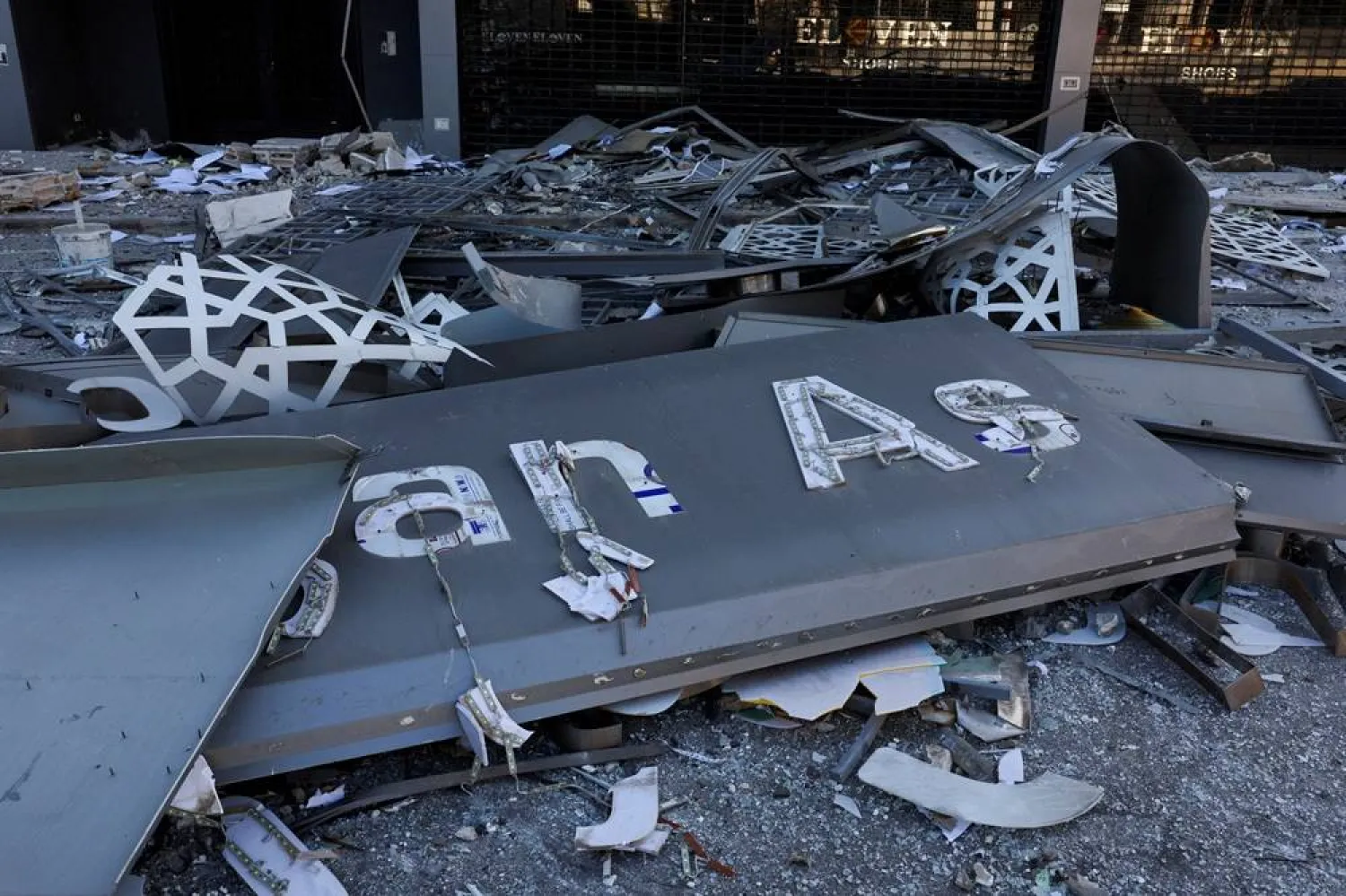
Debris lies at the site of a damaged branch of Al-Qard Al-Hassan, a financial institution linked to Lebanon's Hezbollah, in the aftermath of Israeli airstrikes that hit several branches of the institution, amid the ongoing hostilities between Hezbollah and Israeli forces, in Beirut suburbs, Lebanon, October 21, 2024. (Reuters)
TT

US Imposes Broadest Sanctions Yet on Hezbollah’s Financial Institutions

Debris lies at the site of a damaged branch of Al-Qard Al-Hassan, a financial institution linked to Lebanon's Hezbollah, in the aftermath of Israeli airstrikes that hit several branches of the institution, amid the ongoing hostilities between Hezbollah and Israeli forces, in Beirut suburbs, Lebanon, October 21, 2024. (Reuters)

The US Treasury announced on Tuesday that it was imposing sanctions on five financial entities and 16 individuals related to Hezbollah’s financial operations in the latest escalation aimed at curbing the Iran-backed group’s sources of funding.

The targets include major Hezbollah institutions Al-Qard Al-Hassan and Bayt al-Mal, as well as their senior leaders. “These coordinated actions underscore Terrorist Financing Targeting Center (TFTC) members’ shared commitment to disrupting Hezbollah’s ability to exploit the international financial system. All targets announced today were previously designated by the United States,” said a Treasury statement.

The networks designated on Tuesday “threaten regional stability, international security, mutual interests, and global trade. By restricting Hezbollah's access to funding, TFTC members are working to protect the integrity of the international financial system, support the Lebanese people, and counter terror networks,” it added.

“Al-Qard Al-Hassan masquerades as a non-governmental organization (NGO) under the cover of a Ministry of Interior-granted NGO license. However, it provides financial services similar to a bank, far beyond anything disclosed in its original registration documents, and in practice illicitly moves funds through shell accounts and facilitators,” it continued.

“Hezbollah uses Al-Qard Al-Hassan to facilitate its destabilizing militant activities, undermining the Lebanese people’s ability to rebuild while enabling the group’s own interests,” it stressed.

“By hoarding hard currency that is desperately needed by the Lebanese economy, Al-Qard Al-Hassan allows Hezbollah to build its own support base and compromise the stability of the Lebanese state.”

“Bayt al-Mal functions as Hezbollah’s unofficial treasury, holding and investing its assets and serving as intermediaries between the terrorist group and mainstream banks,” added the statement.

“Bayt al-Mal operates under the direct supervision of the Hezbollah Secretary-General. As one of Hezbollah's main financial bodies, Bayt al-Mal serves as a bank, creditor, and investment arm for Hezbollah.”

The sanctions were issued after Lebanon and Israel reached last week a “framework agreement”, with US mediation, aimed at restoring Lebanon’s sovereignty and disarming Hezbollah and dismantling its infrastructure.

American administration officials had said that protecting the agreement demands not only security arrangements on the ground, but increasing pressure on networks that use civilian fronts to try to empower Hezbollah or obstruct the implementation of the agreement.
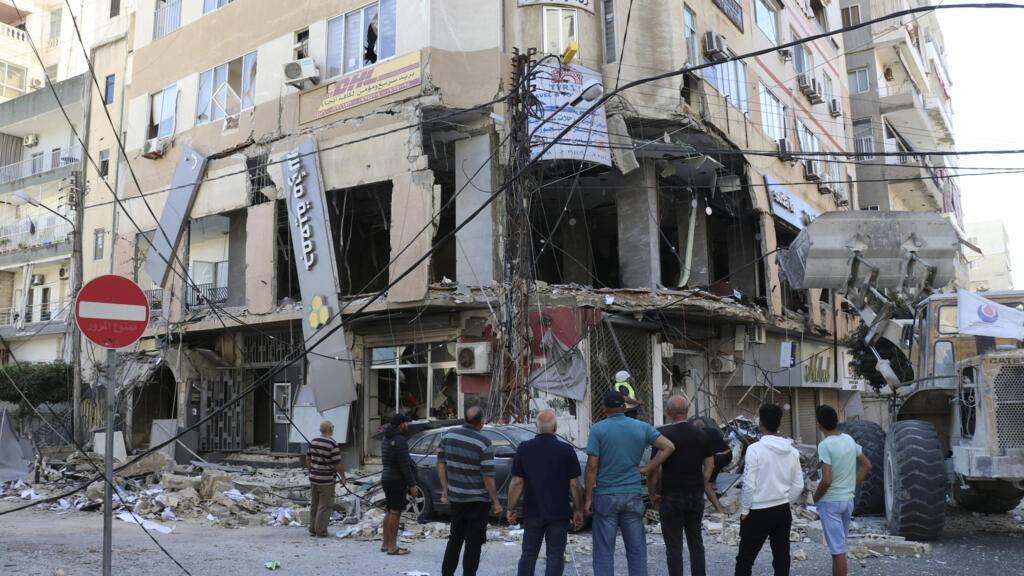
People inspect the damage at the site of an overnight Israeli airstrike that targeted a branch of the Al-Qard Al-Hassan in the southern city of Tyre on October 21, 2024. (AFP)

Commenting on the new sanctions, an official source in the administration told Asharq Al-Awsat that they send a strong message to Hezbollah that the time of benefitting from unofficial funding is over.

They also send a message to Lebanese authorities that any leniency in dealing with illicit financial networks will be met with even stronger US pressure, it added.

The targeted individuals include Ibrahim Ali Daher, “the Chief of Hezbollah’s Central Finance Unit, which oversees Hezbollah’s overall budget and spending, including the group’s funding of its terrorist operations inside and outside Lebanon.”

The Central Finance unit receives Hezbollah’s worldwide income and is responsible for managing and auditing the budgets of all Hezbollah units and departments, including coordinating the payment of all Hezbollah members, said the Treasury.

Daher and the Central Finance Unit operate within the group’s Executive Council and with direction from the Hezbollah Secretary-General on where to distribute funds. In this capacity, Daher has been a key figure in Hezbollah's financial infrastructure for well over a decade and a half.

Adel Mohamad Mansour is the Executive Director of Al-Qard Al-Hassan, a position that he has held for years. In addition to his role within Al-Qard Al-Hassan, Mansour has used his personal bank accounts to conduct transactions with various Hezbollah institutions.

Ahmad Mohamad Yazbeck is Al-Qard Al-Hassan's financial director. Yazbeck, along with Abbas Hassan Gharib, Mustafa Habib Harb, Ezzat Youssef Akar, and Hasan Chehadeh Othman have maintained joint bank accounts in Lebanese banks that has allowed them to transfer more than $500 million within the formal financial system for over a decade, despite existing sanctions against Al-Qard Al-Hassan.

Other targeted individuals include Samer Hasan Fawaz, Ali Mohamad Karnib, Abbas Hassan Gharib, Mustafa Habib Harb, Ezzat Youssef Akar, Hasan Chehadeh Othman, Nehme Ahmad Jamil, Issa Hussein Kassir, Ali Ahmad Krisht, Wahid Mahmud Subayti, Mohammed Suleiman Badir and Imad Mohamad Bezz. They were designated for their various roles in Al-Qard Al-Hassan.

Naser Hasan Neser, who managed Auditors for Accounting and Auditing, was also targeted for reporting to senior Hezbollah Executive Council and Central Finance Unit officials, including Daher, about the activities of Auditors.



Amnesty Says RSF Committed Ethnic Cleansing in Sudan

Abubakr Alsawi, right, waits during the exhumation of his brother Mohammed Alsawi, 73, who was killed in 2023 by the paramilitary group Rapid Support Forces in Omdurman, on the outskirts of Khartoum, Sudan, Monday, April 20, 2026. (AP)
TT

Amnesty Says RSF Committed Ethnic Cleansing in Sudan

Abubakr Alsawi, right, waits during the exhumation of his brother Mohammed Alsawi, 73, who was killed in 2023 by the paramilitary group Rapid Support Forces in Omdurman, on the outskirts of Khartoum, Sudan, Monday, April 20, 2026. (AP)

The Sudanese paramilitary Rapid Support Forces (RSF) committed crimes against humanity and ethnic cleansing during their attack on el-Fashir city between 2024 and 2025, Amnesty International alleged Wednesday.

Sudan has been mired since April 2023 in a brutal war between the army and the RSF, which has killed tens of thousands and forced millions to flee, according to the United Nations.

Both sides have been accused of atrocities, with a UN independent fact-finding mission in February concluding that the 2025 assault on el-Fashir bore the "hallmarks of genocide".

Amnesty's wide-ranging report found that the RSF "committed crimes against humanity and ethnic cleansing during its campaign to seize el-Fashir".

The NGO interviewed 247 victims or witnesses between early 2024 and October 2025 in North Darfur.

It said the RSF systematically attacked settlements around el-Fashir which housed the Zaghawa people, an ethnic group in western Darfur.

The report alleged widespread and deliberate violence against children including killing, abductions, forced recruitment, and rape.

"It is a stain on the conscience of humanity," said Amnesty chief Agnes Callamard in a statement.

RSF fighters burned homes long after residents had fled, the report said, "suggesting an intent to render the areas uninhabitable", consistent with "ethnic cleansing".

During the final RSF offensive on el-Fashir in October 2025, Amnesty said "hundreds were executed, and many others were tortured or detained" as they attempted to flee.

The report also noted violations happened "repeatedly and on a large scale", and suggested "those in positions of authority knew, or should have known, what was occurring, and failed to stop it or hold anyone accountable".

Amnesty International -- which stressed that its investigation into the incidents was ongoing -- also said such acts "may be relevant to the crime of genocide".

The international NGO urged an immediate ceasefire and deployment of an international force to protect civilians.

The report comes as the UN Human Rights Council held a debate over El-Obeid city in North Kordofan, where there are fears of an imminent RSF assault after weeks of intense attacks.


Source to Asharq Al-Awsat: 4 Issues at Cairo Talks Aim to Accelerate Gaza Ceasefire Implementation

 Palestinian man uses a sledgehammer on the rubble of destroyed buildings near a displacement camp in Nuseirat, in the central Gaza Strip, on June 28, 2026. (AFP)
Palestinian man uses a sledgehammer on the rubble of destroyed buildings near a displacement camp in Nuseirat, in the central Gaza Strip, on June 28, 2026. (AFP)
TT

Source to Asharq Al-Awsat: 4 Issues at Cairo Talks Aim to Accelerate Gaza Ceasefire Implementation

 Palestinian man uses a sledgehammer on the rubble of destroyed buildings near a displacement camp in Nuseirat, in the central Gaza Strip, on June 28, 2026. (AFP)
Palestinian man uses a sledgehammer on the rubble of destroyed buildings near a displacement camp in Nuseirat, in the central Gaza Strip, on June 28, 2026. (AFP)

Four “critical and decisive” issues are at the center of the latest round of Cairo-hosted negotiations aimed at accelerating the implementation of the Gaza ceasefire, according to a well-informed Egyptian source involved in the talks.

Israel has repeatedly violated the ceasefire announced last October, killing more than 1,000 Palestinians and assassinating senior Hamas leaders. Mediators led by Egypt, Qatar, and Türkiye are seeking to preserve the agreement and move it into its next phases in an effort to restore calm to the enclave after nearly three years of war.

A Hamas delegation and representatives of other Palestinian factions arrived in Cairo on Tuesday.

The Egyptian source told Asharq Al-Awsat that the talks, expected to continue through Wednesday, build on negotiations launched last week and are intended to settle four key issues.

The first is the immediate launch of the National Committee for the Administration of Gaza, with priority at this stage given to its work rather than the issue of weapons of factions.

The second involves establishing the framework for weapons storage and reconciling proposals for both disarmament and storage. The third focuses on redefining the mandate of the Board of Peace, particularly with regard to the guarantees it can provide.

The fourth concerns coordination over the planned International Stabilization Force, with several countries having already dispatched delegations to discuss the initiative. The identities of participating states are expected to become clear soon.

The source acknowledged that differences remain over several issues, but said Nickolay Mladenov, the High Representative for the Board of Peace, could travel to Cairo if the talks continue to progress positively and recent amendments gain momentum.

He added that the most encouraging development is Hamas’ constructive approach, noting that its delegation has full authority to make decisions and is participating alongside other Palestinian factions.

The source also pointed to intensive diplomatic efforts to ensure the success of the Cairo talks, highlighting the presence of Turkish intelligence chief Ibrahim Kalin in the Egyptian capital.

Egypt, Türkiye, and Qatar, he stressed, are coordinating to shield Hamas from pressure by other regional actors, including Iran, which has recently become more involved in the crisis, in an effort to speed up implementation of the Gaza agreement.

He continued that the immediate priority is completing the first phase of the ceasefire before moving to the second, which envisions the national committee assuming responsibilities in Gaza and the deployment of international forces.

By contrast, Israel remains focused on procedural matters, including compiling and classifying weapons inventories, while Arab mediators are pressing for agreement on the core political issues needed to enable international forces to assume their role.

Overall, the source described Hamas’ position as positive so far but remained skeptical that Israel would fully implement the agreement without further pressure from the US.

Hamas political adviser Taher al-Nunu said in a statement Tuesday that a delegation led by Zaher Jabarin had arrived in Cairo for meetings with Egyptian officials and mediators to continue implementing the ceasefire agreement.


Syria Drafts Law to Protect Victims’ Rights from Assad Era

Monday’s demonstration outside the Palace of Justice in Damascus called for criminalizing symbols of the Assad era (Facebook). 
TT

Syria Drafts Law to Protect Victims’ Rights from Assad Era

Monday’s demonstration outside the Palace of Justice in Damascus called for criminalizing symbols of the Assad era (Facebook). 

Syria’s Ministry of Justice has completed a draft law aimed at protecting the rights of victims of the Assad era, preserving the historical record, safeguarding the collective memory of future generations, and preventing the recurrence of abuses.

Justice Minister Mazhar al-Wais said Tuesday that the bill will be submitted to parliament as soon as it convenes to complete the constitutional process and secure final approval.

His remarks came a day after demonstrators gathered outside the Palace of Justice in central Damascus, calling for enforcement of Article 49 of Syria’s constitutional declaration. The provision criminalizes glorifying the former Assad regime and its symbols, as well as denying, praising, justifying, or minimizing its crimes.

Recent weeks have also seen protests in several parts of the country accompanied by violence and vandalism targeting supporters of the former regime and remnants of its security and military apparatus, raising concerns about social stability.

Al-Wais stressed that denying or justifying crimes committed by the former regime, or glorifying those responsible, violates the constitutional declaration because it undermines victims’ rights and Syria’s national memory. He said these principles form part of the country’s transitional justice framework.

He added that the Public Prosecution is pursuing such violations under existing law and urged the public to report acts or statements that breach the constitutional declaration so legal action can be taken.

According to legal sources, launching transitional justice proceedings before enacting a dedicated transitional justice law has created a gap between Syrians’ expectations for comprehensive accountability and current prosecutions conducted under the penal code.

Mohammed Suleiman Dahla, head of the Damascus Bar Association, told Asharq Al-Awsat that ongoing cases classify abuses as war crimes and crimes against humanity under international criminal and humanitarian law while simultaneously prosecuting them under the Syrian Penal Code.

He said the forthcoming transitional justice law — expected before the current trials conclude — would become the governing legislation, particularly regarding sentencing. Specialized judicial chambers handling such crimes have already begun operating in Damascus within the regular court system, from the Public Prosecution through investigative bodies to the criminal court, with plans to expand them to other provinces.

Dahla stressed that transitional justice legislation is essential for social recovery, institutional reform, closing the chapter on the past, preventing future abuses, and preserving historical memory. He also called for reviewing laws that helped the former regime consolidate control over the state, society, and the economy.